Homosexuality

Dedicated to debauchery: the life of Thom Gunn

From our UK edition

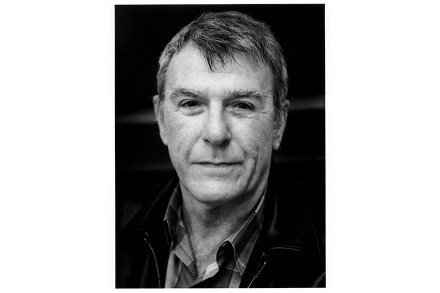
In 1876, writing to his friend Gertrude Tennant, Gustave Flaubert set down a principle that artists and writers should live by: Soyez réglé dans votre vie et ordinaire comme un bourgeois, afin d’être violent et original dans vos œuvres. (Be regular in your life and ordinary as a bourgeois, in order to be violent and original in your work.) The life of the English poet Thom Gunn had its disciplined aspect (he managed to hold down a job at least), but, overall, it was so dedicated to debauchery and excess that it’sa wonder it lasted as long as it did. The story, told in detail by Michael Nott, makes even the least censorious reader sometimes wonder why this seemed like a good idea. Gunn was born in Kent in 1929 to an upper-middle-class intellectual family.

The clue to Shakespeare’s sexuality lies in the sonnets

From our UK edition

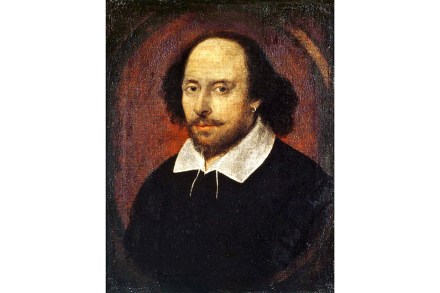
The question ‘Was Shakespeare gay?’ is not very rational. It might be a little like asking ‘Was Shakespeare a Tory?’. Some of his scenarios might coincide with later developments – Jaques trying to pick up Ganymede in As You Like It (gay), or Ulysses’s speech on degree in Troilus and Cressida (Tory). But the historical conditions are not there. No doubt there have been people keen on same-sex relations since the dawn of time. But the possibilities of a social identity embedded in the word ‘gay’ didn’t exist in the 16th century, nor the medical diagnosis from which the word ‘homosexual’ arose. Nor will ‘sodomite’ do. That describes some very different sexual tastes and practices through history.

What the Pope really thinks about frociaggine in the Vatican

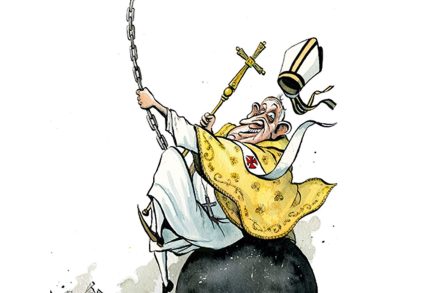
Pope Francis this week apologized for decrying the "frociaggine" — or "faggotry" — in the Vatican and in Catholic seminaries for the second time in a matter of weeks. On Tuesday in a private meeting, Francis mentioned the "air of faggotry" in the Vatican, which followed his May 20 comment that "nella chiesa c'è troppa aria di frociaggine" — "in our Church there is too much of an air of faggotry." The Spectator reached out to Frédéric Martel, an anchor at Radio France, a professor at the ZHdK University in Zurich and the author of twelve books, including In the Closet of the Vatican, his explosive New York Times bestseller about the widespread hypocritical homosexual behavior rife in the higher echelons of the Church.

frociaggine catholic church pope

‘God hates pride,’ from the Colorado GOP to you

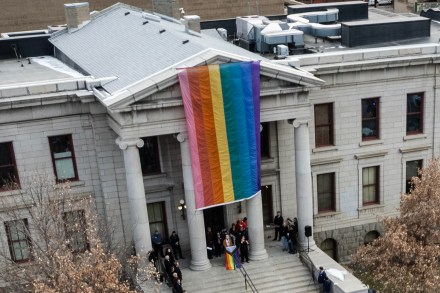
“The month of June has arrived and, once again, the godless groomers in our society want to attack what is decent, holy, and righteous so they can ultimately harm our children.” After starting his Monday morning with a nice cup of tea, Cockburn was surprised to open his email and find this attack on the alphabet community from Dave Williams, chairman of Colorado Republicans. The email, which also had last year’s email pasted below, was short and aggressive: “Thank you, and as we said last year, together, we can protect our children and future... but only if you get involved and defend the most vulnerable in our society from these woke creeps.” A clip of Pastor Mark Driscoll's sermon was linked in the email, in which he engages in a cute object lesson.

pride cockburn colorado gop

Peter Parker, Wayne Hunt, Nicholas Lezard, Mark Mason and Nicholas Farrell

From our UK edition

33 min listen

On this week’s Spectator Out Loud: Peter Parker takes us through the history of guardsmen and homosexuality (1:12); Prof. Wayne Hunt explains what the Conservatives could learn from the 1993 Canadian election (9:10); Nicholas Lezard reflects on the diaries of Franz Kafka, on the eve of his centenary (16:06); Mark Mason provides his notes on Horse Guards (22:52); and, Nicholas Farrell ponders his wife’s potential suitors, once he’s died (26:01). Presented and produced by Patrick Gibbons.

The heyday of the gay guardsmen

From our UK edition

In 1943 the music critic Desmond Shawe-Taylor placed an advertisement in Exchange & Mart offering a pair of trooper’s breeches for sale. A number of men replied, one asking ‘Have they been worn by a trooper or just yourself?’, while another observed: ‘It is always good to see the boys pulling themselves into tight troopers and then admire the “smashing finish”.’ Members of the Household Division of the British Army, in their figure-hugging breeches and scarlet coats, had always held a particular appeal for homosexual men. It was therefore fortunate that, though the military authorities publicly denied it, there was a long tradition in Guards regiments of combining ceremonial duties with casual prostitution.

A history of the LGBTQ+ aspects of the Boy Scout movement

Today, gay activism may seem synonymous with incompetent nonprofit employees shutting down traffic to demand you use ze/zir pronouns because made-up pronouns, and only made-up pronouns, will fix global warming. But once upon a time, gays understood strategy better than nearly any other special-interest group in America. They were the best in the game. Sarah Schulman’s masterful AIDS history, Let the Record Show: A Political History of ACT Up New York, 1987-1993, details how the HIV activist group ACT UP took a good-cop/bad-cop approach to fighting for life-saving medication.

Scouts

More Mr Pooter than Joe Orton: George Lucas’s gay life in London

From our UK edition

In January 1948, George Lucas, an unremarkable 21-year-old Roman Catholic who had just been demobbed from the Pay Corps, was living unhappily in Romford with his ill-matched parents, who relentlessly taunted him about his homosexuality. He would shortly get a job at the War Office and so embark on a lifetime’s career as a civil servant, commuting to central London every day to work at his desk and spend his evenings in search of sex and companionship, largely among the servicemen who hung around Marble Arch. In later life Lucas would trawl the pubs, streets and urinals of central London, more often than not paying for sex, and always keeping a detailed account of his exploits and expenses in his diaries.

How progressive will the new Doctor Who be?

The fourteenth series of Doctor Who returns to international screens imminently — and this time there’s a twist. Thanks to the heavy financial investment of Disney+, who have become co-financiers with the BBC, the show now has a considerably higher budget than it has done before, of around $130 million per season. Little wonder that the BBC’s director-general Tim Davie commented, only slightly tongue in cheek, that “we’ve got to thank – a lot – our partners, Disney+, who came on board so that the Doctor can travel even more widely across the planet in a slightly flashier Tardis.

doctor who

Sir Roger Casement never deserved to hang

From our UK edition

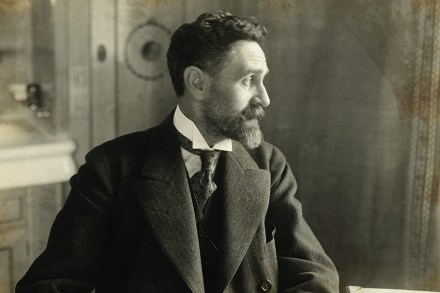
Telling the story of Sir Roger Casement’s life is a challenge for any biographer. In the land of his birth, he is remembered as a national hero. His remains lie in the Glasnevin Cemetery in Dublin beside the graves of Daniel O’Connell and Charles Stewart Parnell. He is there because he was hanged in Pentonville Prison in August 1916 as one of the leaders of the Easter Rising. The awkward fact that Casement had become opposed to the Rising and had tried to prevent it does not fit either the heroic Irish narrative of his life or the official English account of the wartime traitor who died on the gallows.

Victims of a cruel prejudice: the last two men to be executed for sodomy in England

From our UK edition

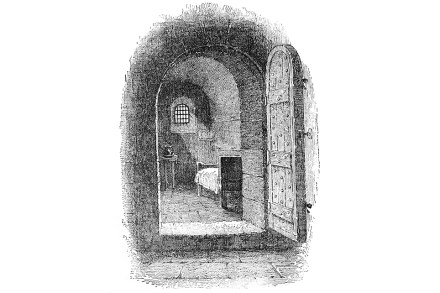
Seventy-three prisoners were condemned to death at the Old Bailey in 1835 at a time when there were more than 200 capital offences on the statute book. Nevertheless, all had their sentences commuted apart from two: James Pratt and John Smith, who were convicted of ‘the detestable and abominable crime’ of sodomy. The indictment stated that the accused had been ‘seduced by the instigation of the devil’ ‘The love that dare not speak its name’ may forever be associated with Alfred Douglas and Oscar Wilde, but the same reticence was clearly evident in the first half of the century.

Staffer filmed having gay sex in Senate office will not face charges

The Senate’s gay sex scandal started with a bang, but has ended with a whimper. This morning, the Capitol Police announced that they will not be pressing charges against Aidan Maese-Czeropski, the disgraced former Ben Cardin staffer filmed having sex with a male partner in the Hart Senate Office Building, as first reported by Cockburn. “For now, we are closing the investigation into the facts and circumstances surrounding a sex video that was recorded inside the Hart Senate Office Building on the morning of Wednesday, December 13,” the Capitol Police said in a statement. “Despite a likely violation of congressional policy — there is currently no evidence that a crime was committed.

hart senate gay sex

The data-spew about Bob Dylan never ends

From our UK edition

When it comes to Bob Dylan, Clinton Heylin is The Man Who Knows Too Much. Since publishing his first biography, 1991’s Behind the Shades, he has become the world’s most committed Dylanologist, doggedly untwining the facts from the artist’s self-serving fictions. When he describes Dylan’s wildly unreliable 2004 memoir Chronicles: Volume One as ‘all a put-on... all a lie’, he has the receipts. As he never tires of pointing out, scholars and diehards are in his debt, but amassing data from sessions, setlists and now 130 boxes of Dylan’s formerly private papers is not the same as telling a good story. For someone innocently hoping to understand one of the cultural giants of the last century, the reading experience might resemble drinking from a firehose.

How the Aeneid was nearly destroyed

From our UK edition

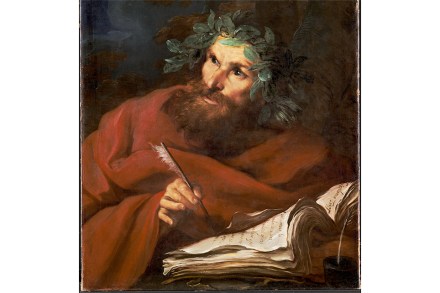
According to legend, Vergil declared of himself ‘Mantua me genuit, Calabri rapuere, tenet nunc Parthenope: cecini pascua, rura, duces.’ (‘Mantua bore me, Calabria took me; now Naples holds me: I sang of pastures, fields, and leaders.’) In her rigorously researched biography, the American classicist Sarah Ruden shows that this is largely true – even if the author of the Aeneid was in fact born 30 miles from Mantua, in a little village called Andes, in 70 BC.  Ruden must necessarily rely on Vergil’s most influential biography, written by Suetonius more a century after his death.

Like an episode of Play School: Dr Semmelweis, at the Harold Pinter Theatre, reviewed

From our UK edition

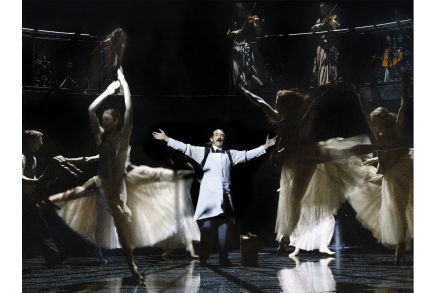
Bleach and germs are the central themes of Dr Semmelweis, written by Mark Rylance and Stephen Brown. The opening scene, set in the 1860s, presents the harmless old doctor as a charming oddball who adores playing chess with his happy, clever wife. This is code: Semmelweis is an intellectual and a feminist whom it’s safe to like. We flip back to 1837 and meet Semmelweis as a student at a Viennese maternity hospital where the male doctors kill three times as many patients as the female nurses. How come? Well, the males sport filthy aprons spattered with their victims’ blood while the nurses wear freshly laundered habits. So the high mortality rate is caused by germs. And germs can be treated with bleach.

Rooms with little left to view: the queer spaces of E.M. Forster and others

From our UK edition

In this intriguing and idiosyncratic book, which aims to present ‘a new history of queer culture and identity over the past 125 years’, Diarmuid Hester recalls how he went to look at E.M. Forster’s former sitting room in King’s College, Cambridge. This once ‘intimate space’, filled with possessions accumulated over a long life, in which Forster wrote and entertained many notable guests from 1946 to his death in 1970, had been repurposed as the college’s ‘grad suite’, filled with battered furniture from Ikea, a football table and a television set. The only remnant of Forster’s residency was a large mantelpiece designed by the writer’s father.

Cheerful meanderings: Caret, by Adam Mars-Jones, reviewed

From our UK edition

The novelistic tube or nozzle through which experience is squeezed in order to be bletted on the page in words, and in turn create the illusion of experience in the reader, is a slender one. Novelists have often perversely focused on the narrowest of lives. Xavier de Maistre wrote an entire travelogue in the 1790s about 42 days spent in his room, while Jean-Philippe Toussaint’s debut novel in 1985 was about a character refusing to leave his bathroom.  Should undertakers ever have suntans? And when does ‘mummy’ become ‘mum’ as a form of address? These spectacular exercises in technique present a parallel to what has always been the case, the existence that contains, as it were, few plot options.

Kevin Spacey is finally free

This morning in a London court, a jury handed down a verdict. The actor Kevin Spacey stood accused of nine counts of sexual assault, which had sparked up in the aftermath of #MeToo; six years later, the jury acquitted him of all of them. Though he had remained stoic during the trial, he cried as the final “not guilty” was read aloud. The two-time Oscar winner, star of House of Cards and American Beauty, former artistic director of the famous Old Vic theater and reluctantly outed gay man was free. He turned sixty-four years old today.   To some, this is a massive miscarriage of justice.

kevin spacey

‘We cannot turn back’ from the League of Nations, said Woodrow Wilson – but did just that

From our UK edition

It was a vision that President Woodrow Wilson could not resist. The Treaty of Versailles, and the League of Nations founded during the negotiations, were meant not just to end the first world war but all future wars by ensuring that a country taking up arms against one signatory would be treated as a belligerent by all the others. Wilson took his adviser Edward ‘Colonel’ House’s vision of a new world order and careered off with it. Against advice, Wilson attended Versailles in person and let none of his staff in during negotiations Against advice, he attended Versailles in person and let none of his staff in with him during the negotiations.

The new Rock Hudson doc shows the fun side of Hollywood’s Golden Age

There’s a quote often but falsely attributed to Oscar Wilde that reads: “Everything is about sex, except sex. Sex is about power.” It’s universal truth, but the attribution to Wilde is not incidental. It’s a line that could only come from a gay man. Certainly, there are boudoir power dynamics between men and women, but they’re directed outward; at somebody whose attraction comes necessarily through their difference from yourself. But to love men, as a man, is a constant form of self-evaluation. As Daniel Mendelsohn best captured in The Elusive Embrace: When men have sex with women, they fall into the woman. She is the thing that they desire, or sometimes fear, but in any event she is the end point, the place where they are going. She is the destination.

rock hudson