Homosexuality

The scourge of the sensitivity reader

From our UK edition

‘Something strange is happening in the world of children’s and YA [young adult] literature,’ writes Adam Szetela, and his horrifyingly compelling book certainly bears that out. It offers a sobering report from the front lines of how identity politics and online pile-ons against anyone who sins against the latest pieties actually play out in the world of American publishing. Such is the atmosphere that many of the interviewees, who include presidents of the Big Five companies, senior agents, directors of public library districts and award-winning writers, are almost paranoid about preserving their anonymity. At the heart of That Book is Dangerous!

The Spectator letter that marked a turning point in gay history

From our UK edition

On 3 June 1960, a letter appeared in The Spectator which began: Sir, We are homosexuals and we are writing because we feel strongly that insufficient is being done to enlighten public opinion on a topic which has for too long been shunned. The letter was prompted by the government’s failure to act upon the recommendation of the 1957 Wolfenden Report that homosexual acts between consenting adults in private should no longer be a criminal offence. This had led to the founding of the Homosexual Law Reform Society (HLRS) in 1958, and it was for this organisation that the letter’s three signatories worked as volunteers.

The ‘Senate Twink’ lands in Oz

A surprising item from Down Under: Aidan Maese-Czeropski, the former Senate staffer who was fired after he and his partner filmed themselves in flagrante delicto on Amy Klobuchar’s desk in Hart 216, has resurfaced in Australia after touring the world. Maese-Czeropski gave an interview to the Gay Sydney News about the fallout from his December 2023 rendezvous – which readers of this newsletter were the first to learn about. Maese-Czeropski, who worked as a legislative assistant for then-senator Ben Cardin of Maryland, says he spent “a little bit in the psych ward” after his firing, before moving to Sydney by way of South Africa, sub-Saharan Africa and the Mediterranean. https://www.instagram.

Senate Twink Aidan Maese-Czeropski

Is there ever a good time to discuss the care of the elderly?

From our UK edition

Not far into The Life, Old Age, and Death of a Working-Class Woman, Didier Eribon quotes from this balladesque 1980 track by the French singer-songwriter Jean Ferrat: We have to be reasonable You can’t go on living like this Alone if you fell sick We would be so worried You’ll see, you’ll be happy there We’ll sort through your affairs Find the photos you love It’s strange that a whole life Can be held in one hand With the other residents You’ll find lots to talk about There’s a TV in your room A pretty garden downstairs With roses that bloom In December as in June You’ll see, you’ll be happy there ‘You’ll see, you’ll be happy there’ presents us with an adult gently addressing a parent about the latter.

The weirdness of the pre-Beatles pop world

From our UK edition

Quizzed about pop by the teen music magazine Smash Hits in 1987, the year of her third consecutive electoral victory, Margaret Thatcher singled out ‘Telstar’, a chart-topper from a quarter of a century earlier, for special praise. She pronounced it ‘a lovely song… I absolutely loved that. The Tornados, yes.’ As a whizzily futuristic sounding instrumental ode to a transatlantic communications satellite, and only the second British recording to top the American Billboard charts, its charm for Thatcher was perhaps as much political as musical. That it was the work of an independent producer might also have appealed to her love of freewheeling, self-reliant private enterprise.

The queer traditions of King’s College, Cambridge

From our UK edition

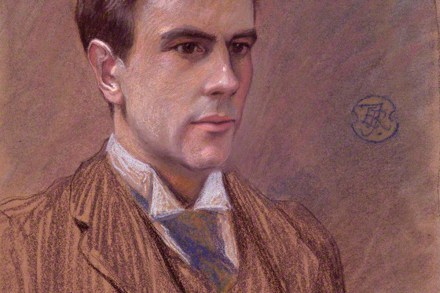
Interviewed on television for his 80th birthday in 1959, E.M. Forster said that one of the reasons he was so fond of King’s College, Cambridge, where he had lived as a Fellow since 1946, was ‘a very precious tradition, that the old people and the young can meet here very easily and without self-consciousness’. In this svelte and sprightly book, Simon Goldhill (himself a Fellow of King’s) traces this tradition over some 140 years, and describes the part it played in the creation of a remarkable, ever evolving community of gay men. He begins his story in 1885 when J.K. Stephen, the future tutor to Queen Victoria’s grandson Prince Albert Victor, became a Fellow of the college.

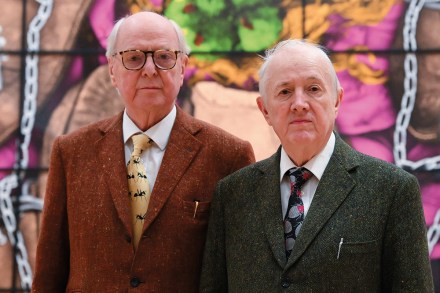
Red-letter days for Gilbert & George

From our UK edition

James Birch is a somewhat mysterious art dealer and curator, whose first great triumph was mounting a Francis Bacon exhibition in Moscow in 1988. He wrote a gripping book about that adventure, Bacon in Moscow, and has now written an even more gripping follow-up, about taking Gilbert and George to Moscow, Beijing and Shanghai. Mounting the Moscow exhibition meant getting drunk every night, but Birch carried it off with aplomb Birch was born ‘circa 1956’, according to Wikipedia, and grew up in Primrose Hill, London. Both his parents were artists and also communists, which he claims was not unusual in the 1960s (though I’d say it was, quite).

Exquisite: Tom Stoppard’s The Invention of Love, at Hampstead Theatre, reviewed

From our UK edition

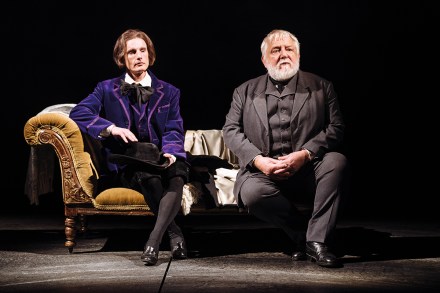
The Invention of Love opens with death. Tom Stoppard’s play about A.E. Housman starts on the banks of the Styx, where the recently deceased poet is waiting for Charon, the boatman, to ferry him across the water. Charon has been told to pick up ‘a scholar and a poet’ and he’s expecting two souls, not one. Houseman explains that he pursued both careers and is therefore a solo passenger. The play’s storyline emerges slowly and with immaculate taste. Stoppard is not one for cheap tricks This takes place in 1936, the year of Housman’s death, and we then flip back to Oxford in the 1870s. The river Styx becomes the Cherwell, where Housman and two chums are paddling upstream while discussing a flamboyant young intellectual, Oscar Wilde.

What’s preventing a repeat of the Senate twink scandal?

Gay-PMG Grüezi from Switzerland, friends. A Cockburn spy was recently hoping to enjoy a quiet lunch at an Irish pub in Zurich’s Old Town when he was sat next to a large group of somewhat intoxicated KPMG Switzerland employees. It was quite the liquid lunch, with beers and wine flowing for hours and one staffer suggesting a round of shots, a move that was quickly rejected from the already too-far-gone group. One American employee of the firm was waxing lyrical about KPMG’s alleged hopelessly bigoted management.

twink

Why does James Baldwin matter so much now?

From our UK edition

James Baldwin matters. To veteran Baldwin admirers, his renewed prominence comes as a surprise after decades of indifference. This year, in the centenary of his birth in Harlem, Baldwin has seemed to matter more than at any time since his heyday, when he combined the roles of writer and civil rights spokesman. Between 1961 and 1964 he produced three bestselling books – two collections of essays and the novel Another Country – as well as a stylish collaboration with the photographer Richard Avedon and a Broadway play. In May 1963, Time put him on its cover (Martin Luther King had to wait until the following January). Life called him ‘the monarch of the current literary jungle’.

Guadagnino is a true master of erotic desire

From our UK edition

Queer, which is based on the novella by William S. Burroughs, is the latest film directed by Luca Guadagnino (Call Me by Your Name, Challengers) and stars Daniel Craig as an American expat who is gay, horny, sweaty, drug-addled and becomes infatuated with a younger man. It’s not exactly Christmassy, but it is very Burroughsy, and it may be the best performance of Craig’s career. I can’t think of any other actor who could have shaken off Bond in such a sexually daring way, not even Roger Moore. I can’t think of any other actor who could have shaken off Bond in such a sexually daring way – even Moore Queer is Burroughs’s follow-up to his better-known Junkie and it’s a sad tale that is highly autobiographical, which makes it sadder yet.

The demonising of homosexuals in postwar Britain

From our UK edition

Not every human culture leaves clear and legible accounts of itself. Here we have a comparatively recent way of life which we know thousands of men led. It was proscribed, and those who lived within it had good reasons to conceal their participation and nature, usually taking care not to leave any records. Invisible and, even at this short distance, impossible completely to understand, the culture of male homosexuals in London was only partially legalised in 1967. Before that has to be interpreted through material which is intrinsically unsatisfactory. A comparison might be drawn to the textual means historians have of understanding another proscribed culture, the early Christians in Rome.

Familiar scenarios: Our Evenings, by Alan Hollinghurst, reviewed

From our UK edition

There’s a certain pattern to an Alan Hollinghurst novel. A young gay man goes to Oxford. He’s middle class and riddled with suburban self-consciousness – a kind of complicated awareness of his non-posh failings and resulting subtle superiority. He meets another young man – possibly gay – who is posh. An intricate dance ensues of social slip-ups and huge townhouses in Notting Hill, bags of money and country piles. It’s a formula which can be transposed between Edwardian drawing rooms and 1980s parties with only the slightest changes. Sometimes our protagonist is the aristocrat himself; sometimes he even went to Cambridge. He’s always cultured – interested in poetry, theatre and Henry James. Hollinghurst’s fiction was, for a period, radical.

The Christian view of sex contains multitudes

From our UK edition

Lower Than the Angels (that is the condition of man, according to the psalmist and St Paul) is a book that combines the two most fascinating subjects, religion and sex – but you do have to take both bits of the agenda. This is Christian history with an eye to marriage, sexual acts, sexuality, celibacy, feminism and gender. Diarmaid MacCulloch is primarily a historian of the Reformation but, as his A History of Christianity (2009) demonstrates, he’s up for the bigger picture. This history takes us from early Jewish concepts of God and sex (I was startled to find the God of Abraham was once assigned a spouse, Asherah) right up to current Anglican rows about homosexuality.

DC bar Political Pattie’s gets hazed for being bipartisan

A new DC bar dedicated to crossing partisan lines, “Political Pattie’s,” has taken the “political” out of its name... though Cockburn will note the removal is “temporary.” Owners Drew Benbow and Sydney Bradford dropped an Instagram post on Tuesday about their name and logo change, as the “representation of the red elephant was hurtful to the community.”  “Political Pattie’s aims to be a fun, inclusive space that pokes fun at politics, not the pain politics often causes,” the post read. The disclaimer and apology (or more accurately, apologia) came after “mean-spirited online backlash.” But here’s the tea: Benbow and Bradford bought out “the Dirty Goose,” an LGBTQ bar.

Political Pattie’s

Six politicians who shaped modern Britain

From our UK edition

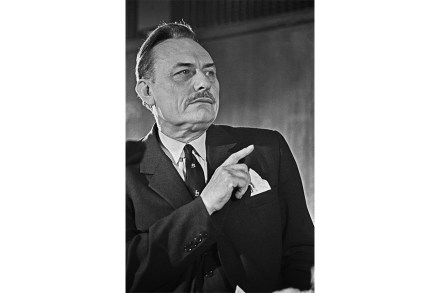
‘All political careers end in failure,’ said Enoch Powell. Maybe. But just occasionally our imperfect political system throws up someone whose impact on our way of life, for good or ill, outlives them. In a series of elegant essays, Vernon Bogdanor, professor of government at King’s College London, examines the careers of six politicians – three from left of centre, three from the right – who, in his view, changed the political weather of modern Britain. Only one, Nigel Farage, is still alive.  First up is Aneurin Bevan, the left-wing firebrand who, in the teeth of fierce opposition from the mighty, vested-interested British Medical Association, presided over the creation of the National Health Service.

Can W.H. Auden be called a war poet?

From our UK edition

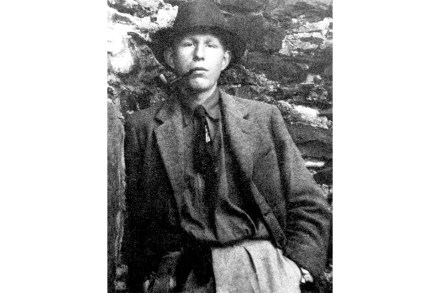
Nicholas Jenkins takes, as a point to navigate by in this rich and ingenious study of the early Auden, a remark by the poet’s friend Hannah Arendt. Auden, she said, had ‘the necessary secretiveness of the great poet’. You can’t always trust what Auden, in his prose and in his later interviews, claimed to have been getting at in the poems. And in Jenkins’s account, you can’t even trust what the poems think they’re getting at. Jenkins seeks to put Auden back in his own time, and embed the verse in his life. Auden said in public, for instance, that the first world war had little effect on him; and it’s seldom explicitly referenced in the verse. But in Jenkins’s version he’s a war poet.

Introducing Tchaikovsky the merry scamp

From our UK edition

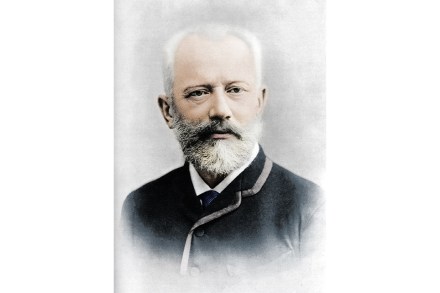
Some years ago, following a Christmas performance of Tchaikovsky’s Nutcracker, I sat in one of the dives near the theatre with a member of the corps de ballet, the gay son of close friends. The audience had been populated largely by children and teenagers, most of whom were either smitten by the intrepid, empathetic Clara or wanted to be her. Yet the mood perceptibly shifted when, at the end of Act I, the life-sized nutcracker doll transformed into a most handsome prince, all grace and gluts. ‘Do you think in that moment,’ I asked my dancer friend, ‘that a smattering of adolescent boys, out on a family treat, notice their affections shifting from Clara to the Prince and receive there and then the gentlest yet unmistakable insight into their future selves?

It’s Kamala Harris’s brat summer!

Endorsements for Kamala Harris have been rolling quickly since Joe Biden announced his withdrawal — chief among that of British pop singer Charli xcx.  On Sunday, she tweeted "kamala IS brat," which racked up 18 million views. Chronically online Gen Z-ers have been creating meme compilations of Kamala with songs from Charli's brat album such as "von dutch" and "360" ever since Biden's disastrous debate performance last month made his demise look likely. https://twitter.com/ryanlong03/status/1808510079382982870 The cover of the album is neon green with "brat" written in lower case black letters. Harris and her campaign were quick to respond.

brat summer memes influencers

The C of E needs to talk about sex

From our UK edition

My friend Andy is getting married. It’s about time – he and his girlfriend have a one-year-old daughter. He wants to get married in church, so I introduced him by email to the local vicar. I was copied in to their initial correspondence. The vicar told Andy that the Church of England prohibits sex outside of marriage, so a church wedding would not be possible unless the couple repented of their sin and lived apart in the run-up to the wedding. Of course I made up the last bit. The vicar congratulated him and his partner on their decision and started talking dates. But isn’t it true that the church teaches that sex should only take place in marriage? Yes and no. The ambiguity sheds important light on the current crisis over homosexuality.