Holocaust

How should we honour the ‘angels’ of the Holocaust when they’re gone?

From our UK edition

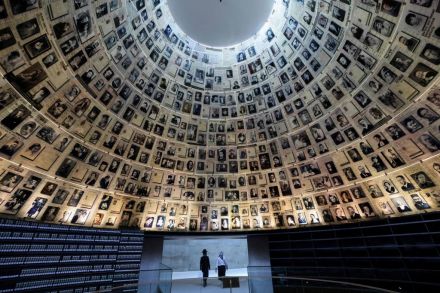
Yom HaShoa is Israel and the Jewish people’s day of remembrance for the Shoa, or Holocaust. It falls this year on 8th April. Its official Hebrew name means ‘Holocaust and Heroism Remembrance Day’, emphasising how we should remember not only the six million Jews who were killed by the Nazis, but also the heroes like those who rose up against their persecution in the Warsaw Ghetto. There is also another group of heroes we should remember. Their actions provide a model of human decency we should all seek to emulate. An apparently disparate group from varied backgrounds, they are known as the ‘Righteous Among the Nations’ – special people who have been recognised for saving the lives of Jewish people.
Why teaching the Holocaust still matters

From our UK edition

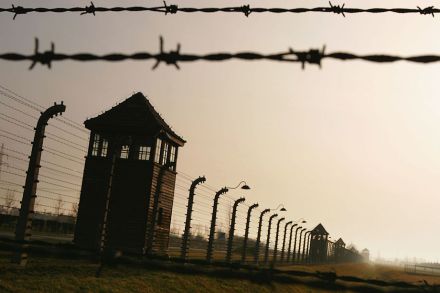
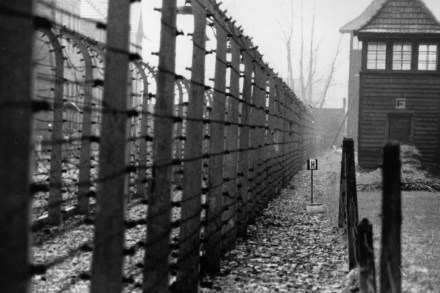
Pretzsch is a normal small town on the River Elbe, 35 miles north east of Leipzig, with little or nothing to suggest its dark past. Eighty years ago, in the spring of 1941, it became a mustering point for a cadre of men who would perform ‘special tasks’ during the forthcoming Nazi invasion of the Soviet Union. Over the spring and early summer months, around 3,000 men arrived in Pretzsch. Quartered in SS accommodation, the men eventually learnt they would be part of four Einsatzgruppen — special task forces — who were to move behind the German front line. Their task was framed as maintaining security and eliminating resistance.

How 20th-century artists rescued the Crucifixion

From our UK edition

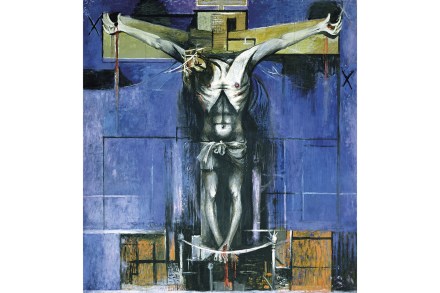
Two millennia ago, in the outer reaches of the empire, the Romans performed a routine execution of a Galilean rebel. Tortured and publicly humiliated in front of family and friends, Jesus of Nazareth was slowly asphyxiated over six hours. The Crucifixion is the centrepiece of Christianity. But artists have long adapted the devotional image of the Cross for their own purposes. As far back as the early 5th century, woodcarvers working on a door for the Basilica of Santa Sabina in Rome crafted a Christ whose palms are impaled with nails, but who is not hung on a cross. A devotional statue in Panama dating from the 17th century made Christ not Middle Eastern, but black African. James Tissot (c.

The painful question we must ask about the Holocaust

From our UK edition

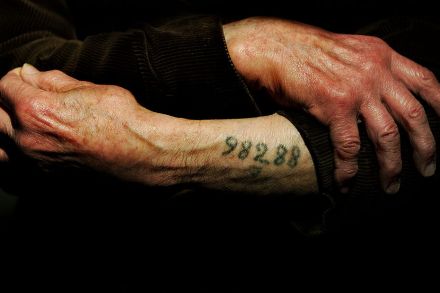
How should we remember the Holocaust? In the next decade or so, many of the last living Holocaust survivors will pass away. It will then fall to us later generations to confront what Hannah Arendt called ‘the abyss that opened up before us’ by telling their stories. In doing so, we aim to guard against the spectre of Holocaust denial. But when we vow to ‘never forget’ the terrible crimes of Nazism, what exactly is it that we seek to remember? What is sometimes forgotten is that the way we remember the Holocaust is as much a historical process as the event itself. Though the term ‘holocaust’ was used already in the 1950s, it was popularised (and capitalised) only in the 1970s, serving to distinguish the Nazi genocide from other wartime atrocities.

What it means to be descended from Holocaust survivors

From our UK edition

This is a short piece on Holocaust Memorial Day, and what it means to be descended from Holocaust survivors. Many, many people could write a story like this, but this one is mine. All parts of my family lost people in the war. My grandfather, though, lost pretty much his whole family. They were in Krakow, in Poland, and only he and one brother survived. His first wife, his baby daughter, his parents, aunts, uncles, nieces, nephews all died. To understand the immediacy, that’s my mum’s half-sister, grandparents, her whole extended family. All gone before she was even born. Recently, I’ve been trying to find out about them. It’s really hard. My grandpa died when I was three, and I gather he didn’t like to talk about the past much.

Remembering the Holocaust after the survivors are gone

From our UK edition

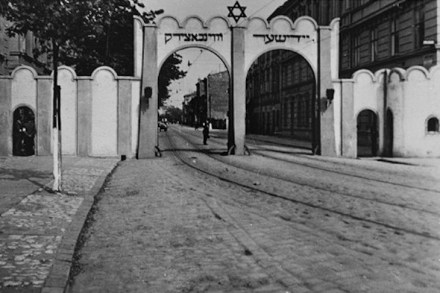
When Ziggy Shipper was 13, the Nazis forced him onto a train in the Lodz Jewish Ghetto bound for Auschwitz-Birkenau. In hideously camped, cold, dehydrated conditions, Ziggy’s journey was made even more uncomfortable by a fully grown man who was crushing him. Only when the train stopped did Ziggy become aware that it was a corpse. His first emotion, however, when the body was thrown off the train, was not one of horror that the man had died, but of relief – of joy, even – that he could breathe again. It was an experience that has haunted Ziggy ever since: incredulity and horror at how his own humanity had been broken down to such an extent.

Should you take your children to visit Auschwitz?

From our UK edition

Is the Auschwitz museum suitable for children? I pondered that question on a visit accompanied by a plane load of secondary school teachers, organised by The Holocaust Educational Trust. The Holocaust was first included on the UK’s National Curriculum in 1991 and the Trust charters aeroplanes for a professional development course for UK teachers, taking them to Auschwitz and back within a day. It aims to increase their understanding of the atrocity so that they can teach it more effectively.

History shouldn’t be used against us

From our UK edition

Can you feel the fascism yet? You ought to by now, more than a week after Britain leaving the EU. So many people warned us of this moment. There was the former journalist Paul Mason, who claimed to see crowds of fascists thronging the streets of London. The former Labour spin doctor Alastair Campbell became so disturbed by our national turn that at one stage he dressed up in a sort of regimental uniform and sang a song about Boris Johnson and Dominic Cummings. And then there was the cruelly titled Lord Adonis. The once-sensible former Blairite schools minister spent recent years so apparently worried about the dangers of Brexit that he became not just hysterical but homosexual too. It has been a disturbed few years for these, among other, people.

The journalists who scripted the golden age of Hollywood

From our UK edition

When talkies appeared in 1927, Hollywood went searching for talkers to write them. It turned to men like Herman J. Mankiewicz: to journalists. The greatest screenwriters of the golden age were journalists first; unlike novelists, they thrived in Hollywood — at least professionally. Good films and good journalism need brevity; novels don’t. Reading about F. Scott Fitzgerald struggling at MGM, 12 years after The Great Gatsby, is brutal, like trying to watch a man learn to walk. The film Mank, by David Fincher, tells the story of how Mankiewicz and Orson Welles created Citizen Kane — for which they shared an Oscar for the screenplay in 1942 — and how they bickered over the credit.

Horrifyingly beautiful – but I will never watch it again: Painted Bird review

From our UK edition

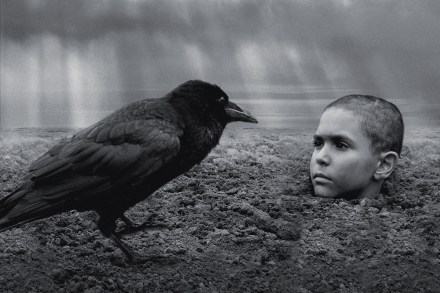
The Painted Bird opens with a young boy (Jewish) running through a forest and clutching his pet ferret. He is being chased by some other boys (not Jewish) who beat him to the ground, douse his ferret in petrol and set it on fire. The boy watches as his pet burns alive and I don’t know if you’ve ever witnessed a ferret being burned alive, but my God, I’m not going to get those high-pitched cries out of my head any day soon, just as I’m not going to get this film out of my head any day soon. You’d think, after those opening few minutes, things could only get better. But they don’t. They really, really, really don’t. And there are still two hours and 47 minutes to go.

A true story that never feels true: Resistance reviewed

From our UK edition

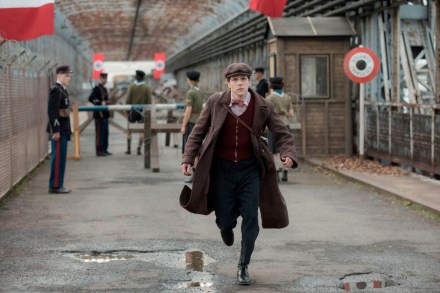
Resistance stars Jesse Eisenberg and tells the true story of how mime artist Marcel Marceau helped orphaned Jewish children to safety in the second world war. I had no idea. I had only ever thought of Marceau as ‘Bip’, who will live on for ever in my nightmares. (God, mime.) But while the story is remarkable, the film is considerably less so, veering between overtelling and undertelling, wavering in tone and never properly coming to any kind of life. If I had to do this review in mime I’d probably be miming nodding off on the sofa but, then again, I’m pretty sure I did that for real.

Britain doesn’t need another Holocaust memorial

From our UK edition

David Cameron announced five years ago that he was establishing a “Holocaust Commission”. The purpose? To “investigate what more needs to be done to ensure Britain has a permanent and fitting [Holocaust] memorial and the educational resources needed for generations to come.” Out of this Commission came a Holocaust Memorial Foundation; and out of this Foundation – technically an Advisory Board to the Ministry of Housing, Communities & Local Government – a breathtaking proposal has been issued: to construct within Victoria Tower Gardens (next to the Houses of Parliament) a gigantic edifice incorporating a learning resource centre to honour Jewish and other victims of the Nazi Holocaust, such as Roma, disabled and LGBT people.

Antisemitism for dummies

From our UK edition

Some people might argue that Deborah Lipstadt has given us the book we desperately need from the author best equipped to write it. After all, in just the past few weeks the dumpster fire over the Labour party’s hand-ling of anti-Semitism burst into acrid flame again over general secretary Jenny Formby’s release of Labour’s record in responding to the problem — 673 complaints, 96 members suspended, 12 expelled. Labour’s failure to act decisively against anti-Semitism was also cited by most of the nine MPs who left the party.

A pawn in a deadly game

From our UK edition

On 7 November 1938, the 17-year-old Herschel Grynszpan walked into the German embassy in Paris. Claiming to have secret papers, he was shown into the office of an embassy secretary, Ernst vom Rath. Drawing a tiny revolver — the price tag still attached from that morning’s purchase —  he fired five shots, shouting: ‘You’re a filthy Kraut, and in the name of 12,000 Jews, here is your document.’ Two of the bullets struck Vom Rath, who died two days later. The previous month, close to 18,000 Polish German Jews had been dumped by train on the Polish border. Among those  rounded up in Hanover for the Aktion were Grynszpan’s family: his parents Sendel and Rivka, his brother Mordecai and his sister Berta.

Squabbling over Kafka

From our UK edition

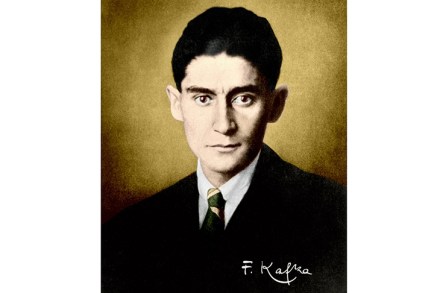
Benjamin Balint’s Kafka’s Last Trial is a legal and philosophical black comedy of the first water, complete, like all the best adventure stories, with a physical treasure to be won or lost. Balint lays out with cool, collected passion the full absurdity of the 2011 court struggle which climaxed when a couple of boxes of aged, yellowing jottings, upon which an elderly Tel Aviv lady had allegedly allowed her cats to sit for many years, were taken under armed guard, besieged by writs and counter-writs, to the highest court in Israel. Until 1973, you see, these boxes had belonged to Max Brod, best friend of Franz Kafka, the legendary Nostradamus of Prague who (as any fool knows) somehow predicted the Holocaust.

Life, death and everything in between

From our UK edition

The most striking and difficult aspect of this novel is its incredible scale. How can a reviewer best discuss an enterprise containing a vast survey of life in Germany, Britain and the United States and the transformations of these societies from the end of the 19th century to the 1980s? Two volumes cover the experience of age and youth, the rise of the Nazis in Mecklenburg, the second world war, life and death in a small German town, the evolution of East German communities and the emergence of a Soviet state after the war. The New York Times appears in more or less every chapter, as the conveyer of the story of the Vietnam war and events in the city of New York itself. There are accounts of Mafia dealings and other street crimes.

A world apart | 4 October 2018

From our UK edition

The most inspiring voice on radio this week belongs to Hetty Werkendam, or rather to her 15-year-old self as she talked to the BBC correspondent Patrick Gordon Walker in April 1945. He was with the British soldiers who entered the Bergen-Belsen concentration camp and witnessed the horrors of that scene: dead bodies in piles with no one to bury them, living people lying beneath them too weak to move, or using them as pillows. Hetty was one of several children interviewed by Gordon Walker, her voice so strong and resolute and light in spirit, in spite of all that she had seen and experienced. Talking now, aged 88, to Mike Lanchin for Children of Belsen on the World Service, she insists, ‘It is not a sad story I am telling you.

Mind over matter | 23 August 2018

From our UK edition

The return of Sue MacGregor’s long-running Radio 4 series The Reunion (produced by Eve Streeter) is a welcome reminder of just how good radio can be at taking us inside an experience while at the same time opening our minds to things we should know about. First there is MacGregor herself, such a vibrant, resonant voice, never too fast or too slow. Then there is her understanding of how to communicate. Each week she gives a short resumé of how and why the people she has gathered in the studio were first brought together, summarising complicated events in such a concise but clear way, giving all we need to know without burdening us with too much detail. When the conversation with her chosen guests begins, we know exactly why we should be listening to them.

For today’s young, the holocaust is ancient history – which poses huge danger

From our UK edition

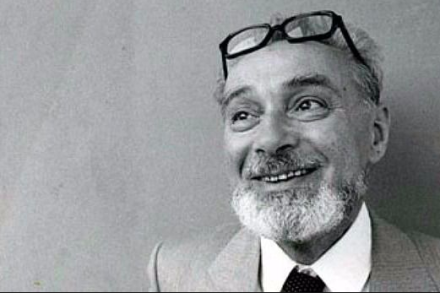
The first news about the Nazi annihilation camps began to spread in the crucial year of 1942. They were vague pieces of information, yet in agreement with each other: they delineated a massacre of such vast proportions, of such extreme cruelty and such intricate motivation that the public was inclined to reject them because of their very enormity. It is significant that the culprits themselves foresaw this rejection well in advance: many survivors (among others, Simon Weisenthal in the last pages of The Murderers Are Among Us) remember that the SS militiamen enjoyed cynically admonishing the prisoners: ‘However this war may end, we have won the war against you; none of you will be left to bear witness, but even if someone were to survive, the world will not believe him.

The art of deception | 9 November 2017

From our UK edition

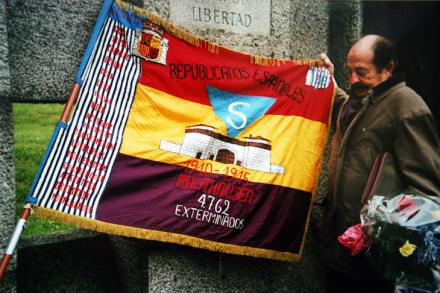
Enric Marco has had a remarkable life. A prominent Catalan union activist, a brave resistance fighter in the Spanish Civil War, a charismatic Nazi concentration camp survivor, and more. In January 2005 he addressed the Spanish parliament to mark the 70th anniversary of the liberation of Auschwitz. He is, everyone agrees, an extraordinary man. Heroic, almost. The thing is, his extraordinary, heroic biography is at least partly a lie. But which parts? In The Impostor, the novelist Javier Cercas seeks to disentangle Marco’s lies from those small provable truths supporting them.