History

Their finest hour

From our UK edition

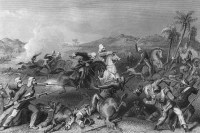
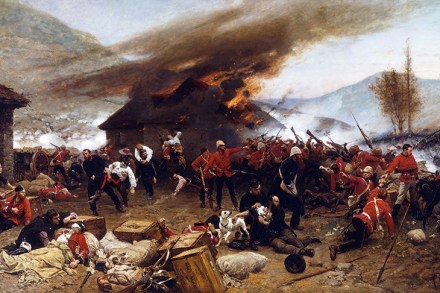
On 22 January last year, the entrance whiteboard at London Underground’s Dollis Hill carried a brief factual statement: On this day in history On the 22–23 January 1879 in Natal, South Africa, a small British garrison named Rorke’s Drift was attacked by 4,000 Zulu warriors. The garrison was successfully defended by just over 150 British and colonial troops. Following the battle, 11 men were awarded the Victoria Cross. A female passenger complained that it was ‘celebrating colonialism’. The board was wiped clean and a suitably opaque quote from Martin Luther King substituted: ‘We are not the makers of history. We are made by history.
The making of a monstrous metropolis

From our UK edition

When Bishop Guy of Amiens looked across the Channel in the 11th century he saw ‘teeming London [which] shines bright. A most spacious city, full of evil inhabitants, and richer than anywhere else in the kingdom’. Well, plus c’est la même chose. Even then those Mammonic associations were already old. Over 300 years earlier the Venerable Bede had called London an ‘emporium of many nations who visit it by land and sea’ — a place of markets and mints, of North Sea slave-traders and missionaries seeking martyrdom east of the Rhine, of wine and wool merchants trying to make ends meet. The hubbub and hum of the city had begun. London of the early middle ages has — like much early medieval history — often been ignored.

Little shots of sedition

From our UK edition

In this handsomely illustrated book Tobie Mathew makes a case for the lowly postcard’s role in the politicisation of pre-revolutionary Russia. Cheap to produce, easily transported and hidden, and conveying a simple graphic message, picture postcards were ideally suited to anti-government agitation. Too dangerous to post, these little shots of sedition were preserved and shared for years in the postcard albums that were a feature of any polite drawing-room and increasing numbers of peasant huts and workers’ barracks. Before 1905 revolutionary groups printed postcards abroad and smuggled them into the country, simultaneously spreading their message and raising funds.

The night has a thousand eyes

From our UK edition

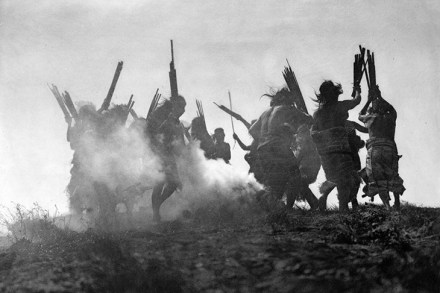
Edward S. Curtis’s 1914 photograph, ‘Dancing to Restore an Eclipsed Moon’, shows the Kwakiutl tribe of North American Indians circling a fire ‘to make a sky creature sneeze and disgorge the moon’. Raised arms are silhouetted against the sky, faces remain imperceptible, and bodies are shrouded in smoke. It is apt that such a mesmerising image should accompany the opening chapter of Nina Edwards’s beguiling book, which gallantly aims to subvert common views of darkness, both physical and metaphorical.

Death at the top

From our UK edition

Agatha Christie’s spirit must be loving this poisonous new historical entertainment. Eleanor Herman has already enjoyed the success of Sex with Kings and Sex with the Queen, thoroughly researched, gossipy revelations of promiscuity among monarchs and their noble retainers during the Renaissance. She is an American author and broadcaster, born in Baltimore, now living in Virginia, but, at 58, she still concentrates her professional attention on the historic immorality and disastrous vulnerability of western European royalty. In the Middle Ages, when monarchs commanded virtually absolute power, rivalry for every top job was sufficiently intense to motivate assassination, and the least difficult way to commit it was with poison.

Could they have tried harder?

From our UK edition

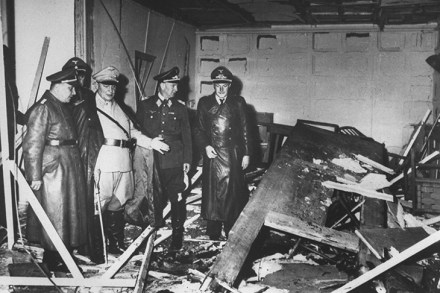
Awareness of German opposition to Hitler is usually limited to Colonel Claus von Stauffenberg’s attempt to blow up the wretched man on 20 July 1944. Hitler was at a briefing in his Wolf’s Lair, a secret forested redoubt, when Stauffenberg entered the room with his briefcase bomb (containing British plastic explosive), placing it beneath the table where Hitler was due to sit. Stauffenberg withdrew, pleading an urgent call, but the unsuspecting subordinate who took his place moved the briefcase further under the table and away from Hitler. Standing and smoking by his car, Stauffenberg — a one-armed, eye-patched veteran of the North African and Russian campaigns — watched as the wooden briefing hut erupted with a flash and roar.

‘We’re all travelling together’

From our UK edition

‘But what must it be like for the fish?’ We’re talking about cormorants, Neil MacGregor and I, and the spectacular way they dive for food, when he pauses to consider the situation from the perspective of a fish. ‘I mean just think, there you are swimming along with lots of chums and then suddenly there’s this great whoosh and the chum next to you has just disappeared! He’s vanished! And of course you can’t see the cause of it.’ MacGregor tilts his head. The sunlight in the offices of Penguin on the Strand seems to condense to a point in his eye. ‘Can you imagine it?’ he says. I can’t. It’s not easy to empathise with an anchovy, but MacGregor has a gift for inhabiting other points of view.

Pirates on parade

From our UK edition

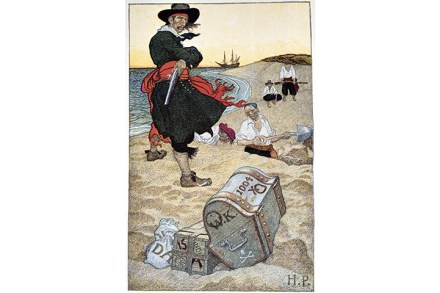
Avast there, scurvy dogs! For a nation founded on piracy (the privateer Sir Francis Drake swelled the exchequer by raiding the Spanish, who were in no doubt that he was a pirate), it is appropriate that Britain should give the international archetype of the pirate his language. The language of the Victoria & Albert’s exhibition A Pirate’s Life for Me at the Museum of Childhood in Bethnal Green is a banquet of humour and doggerel. Whether you arrive a slipperslopper sea-cook, reeking of Havanas, or pushing treasures in a pram, you will stare at walls, speak in tongues and smile. These master (and mistress) mariners of yore have their grappling hooks deep in the psyche of maritime nations. In their infancies, modern states needed pirates.

The reinvention of a nation

From our UK edition

When Japan hosts the Rugby Union World Cup next year, and still more so the summer Olympics in 2020, all eyes will be on its omotenashi (hospitality), perhaps its technology, certainly its efficiency, but there will be little thought of symbolism. Not so for the 1964 Tokyo games, when the Olympic flame was carried up its last 160 steps by a 19-year-old named Yoshinori Sakai, who had been born, near Hiroshima, on the day the atomic bomb was dropped. ‘Atom Boy’ bore twin messages: that Japan had been a victim of an unbelievable horror; and that it was now reborn as a modern, democratic state.

Riots in the stalls

From our UK edition

The age of Garrick, Norman Poser, a law professor, insists, gave us much of what we take for granted today in the theatre: ‘naturalistic’ acting, and, as Dr Johnson remarked, the very idea of the business of acting as a profession. Hence this book’s portentous title. Its curtain raiser trumpets themes of fame, personality, interiority and cultural self-knowledge, but regrettably Poser’s main show offers a trawl through anecdotes in a style and structure more wooden than the monopedal comic actor Sam Foote’s peg leg. Naturalism in acting, it is often said, originated in this era. But it’s a subject as large as it’s slippery.

A brief glimpse of utopia

From our UK edition

Today Munich is a prosperous and peaceful place — Germany’s most affluent, attractive city. Wandering its leafy avenues, lined with handsome apartments and shiny new BMWs, it’s hard to picture anything remotely revolutionary happening here. However, exactly 100 years ago this cosy bastion of conservatism was overrun by one of Europe’s most unlikely revolutions, led by an idealistic theatre critic called Kurt Eisner. For a British equivalent, imagine a socialist insurgency led by Kenneth Tynan. Of course, like all well-intentioned revolutions, it was doomed to fail.

Iron in the soul

From our UK edition

‘I hate Indians. They are a beastly people with a beastly religion’, said Winston Churchill as prime minister in 1942, to his secretary of state for India, Leo Amery. Like John Nicholson, Churchill had soldiered on the subcontinent as a young man, and both men saw fighting on the North-West Frontier. Nicholson was a career officer in the East India Company army. ‘I dislike India and its inhabitants,’ he said as a young man, and never changed that opinion. Duty, obligation and a career kept both men in a country they loathed; the graves of more than two million Britons in India demonstrate that it was not simply a place to get rich in, but a place, too often, to die in at an early age.

Mythic automata

From our UK edition

Among the myths of Ancient Greece the Cyclops has become forever famous, the Talos not so much. While both were monsters who hurled giant boulders at Mediterranean shipping, the Cyclops, who attacked Odysseus on his way home from Troy was a monster like us, the son of a god, an eater, a drinker, a sub-human with feelings. The Talos was more alien, by some accounts a mere machine, manufactured in metal by a god and pre-programmed only to sink ships and roast invaders alive, a cross between a Cruise missile launcher and an automatic oven. Talos began its existence just as early as the Cyclops. But it was only described with drama in the epic poem the Argonautica, by Apollonius of Rhodes some 500 years later. Homer’s readers have always been the more numerous.

A brief period of rejoicing

From our UK edition

Reflecting on the scenes of celebration, the ‘overpowering entrancements’, that he had witnessed in November 1918 on the first Armistice Day, Winston Churchill wrote that their memory was all too fleeting, and that the spirit of wild rejoicing that had erupted at the end of the first world war was in a sense irrecoverable. Throughout Britain it had been a magical day, repeatedly described as ‘wonderful beyond words’. Yet the spontaneous outpouring of joy, intensified by sadness, the feelings of relief and brotherhood, together with the conviction of a better future, left no permanent legacy.

The luck of the devil

From our UK edition

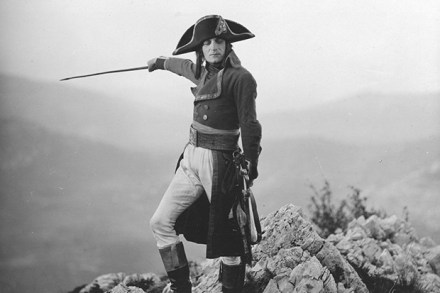
Who says that the ‘great man’ theory of history is dead? Following hard on the heels of Andrew Roberts’s magnificent biography of Churchill comes this equally well-written life of another superman who bestrode his era and all Europe like a colossus. Although Adam Zamoyski is at pains to insist that his subject was an ordinary mortal like any other, the simple facts of Bonaparte’s career somewhat belie any attempt to cut the little fellow down to size. How could this second surviving son of an impoverished minor nobleman from an obscure island come, within a few years, to dominate the entire continent, dictate terms to emperors, kings and popes, and set his own siblings on the thrones of the countries he had conquered?

The power of the poppy

From our UK edition

America has for years been struggling with a shortage of the drugs it uses to execute people, yet it was only in August, in Nebraska, that the first judicial killing using opioids was performed. Aside from moral questions about the death penalty itself, the resistance for so long to this obvious solution denotes a particularly sadistic puritanism, as though it’s an unacceptable risk that even the last moments of a condemned man should be at all pleasant. Opium and its derivatives and synthetic imitators constitute a miracle class of drug: nothing else is as good for pain relief, as Lucy Inglis’s bright and anecdote-packed history shows.

In cold blood | 18 October 2018

From our UK edition

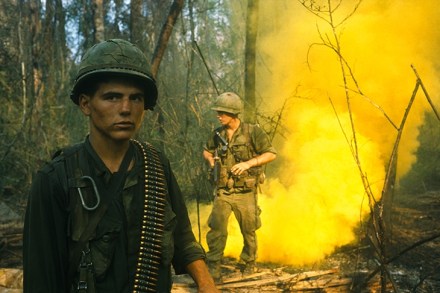
The 50th anniversary of the Vietnam war has produced an outpouring of books, along with Ken Burns and Lynn Novick’s 18-hour television spectacular, which sparked in the United States yet another round of heated debate on the war. The journalist and military historian Max Hastings’s fast-paced and often compelling narrative will surely rank as one of the best products of this half-century reappraisal. Vietnam: An Epic Tragedy is a monumental undertaking. Many books analyse major Vietnam war policy decisions. Others discuss military operations; still others recount personal experiences.

Relocate or emigrate

From our UK edition

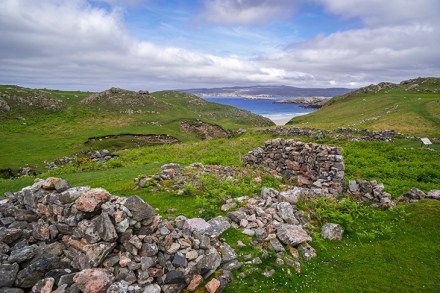
There is a degree of irony in the opening chapter of T.M. Devine’s history, lambasting popular previous depictions of the Clearances and citing ludicrous comparisons to Nazi genocide and the misty-eyed melancholy of John Prebble. Though it does not mention such iconography as Thomas Faed’s painting ‘Last of the Clans’, used for the paperback of Prebble’s book, or Erskine Nicol’s ‘An Ejected Family’ in all its schmaltzy Victorian glory, such depictions are clearly the target. Yet the book itself is called The Scottish Clearances: A History of the Dispossessed and not, which would actually be more accurate, ‘Patterns of Land Ownership, Agricultural Change as well as Internal and External Migrations in Scotland, 1600–1900’.

Tory table talk

From our UK edition

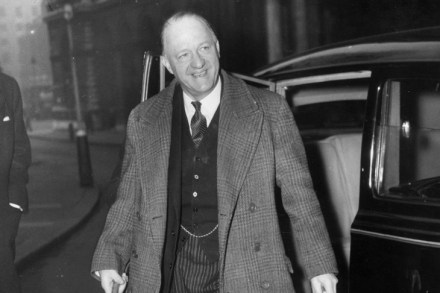
I bet that you are at best dimly aware of the Progress Trust, and that is what the members of this now-defunct fixture would have wanted. It was a misleadingly named group of comfortably off, often landed backbench Tory MPs, and its weekly discussions very rarely leaked. An unnamed member once explained why. ‘We have no shits,’ he said. The Trust, which would number Alec Douglas-Home and David Cameron, briefly, among its members, was secretive from the outset. It was established in 1943 to resume a more partisan style of politics, at a time when both main parties were still in theory committed to a ceasefire that the Conservatives felt Labour was breaking.