Hiroshima

Beware the Nagasaki and Hiroshima revisionism

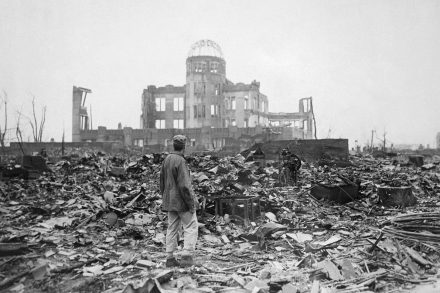
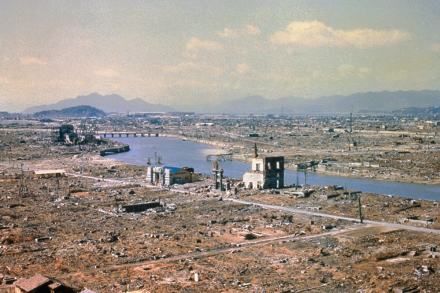
2025 is the 80th anniversary of the end of World War II, the most calamitous conflict in history. The victory over Nazism in Europe is universally fêted, but the triumph over Japanese militarism receives far less celebration. The atomic bombing of Japan, which forced unconditional surrender, has long been criticized by revisionist historians as unjust, unnecessary and morally depraved; that narrative has been absorbed as the truth of the matter. Decades of liberal education have shifted opinions massively, with only 35 percent of Americans believing the bombings were justified as compared to 85 percent in 1945. Those younger than 50 oppose the bombings by significant margins.
Hiroshima

Hiroshima and the continuing urgency of the atomic age

From our UK edition

In August 1945, Group Captain Leonard Cheshire was stationed on the Pacific island of Tinian as an official British observer of the dropping of the atomic bombs on Hiroshima and Nagasaki. Two decades later, he wrote for The Spectator about his experience. For him, the attack on the two cities represented ‘the ‘destruction of the impotent by the invincible’. Nevertheless, he argued that the Allies had been ‘undeniably’ right to carry out the bombings since the attack ended ‘the most terrible war’ and prevented an extremely bloody invasion of Japan.

The race against Hitler to build the first nuclear bomb

From our UK edition

Ettore Majorana vanished in March 1938. According to Frank Close in Destroyer of Worlds, the 31-year-old Sicilian physicist ‘probably understood more nuclear physics theory than anyone in the world’, and was hailed by Enrico Fermi as a ‘magician’, in the elevated company of Newton and Galileo. Majorana was also an ardent fascist; yet he was haunted by the destructive potential of his work on mapping the nucleus. His disappearance – perhaps a suicide; more likely a new, incognito life in South America – has been related to an anguished remark he made to a colleague: ‘Physics has taken a bad turn. We have all taken a bad turn.

Paul Wood, Matthew Parris, Ian Buruma, Hermione Eyre and Francis Young

From our UK edition

34 min listen

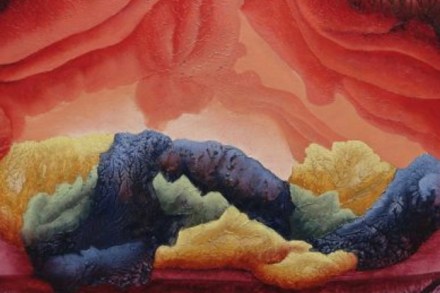
On this week’s Spectator Out Loud: Paul Wood reads his letter from the Vatican (1:17); Matthew Parris warns Conservatives from embracing causes that could lose them as much support as they would gain (7:31); reviewing Richard Overy’s Rain of Ruin: Tokyo, Hiroshima and the Surrender of Japan, Ian Buruma argues that the atomic bombs were not only immoral, but ineffective (15:35); Hermione Eyre examines the life and work of the surrealist artist Ithell Colquhoun (23:03); and, Francis Young provides his notes on Shrove Tuesday (29:12). Produced and presented by Patrick Gibbons.

Any form of saturation bombing is a stain on humanity

From our UK edition

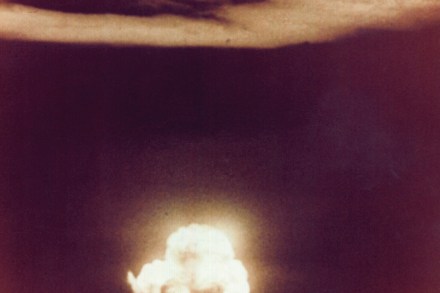
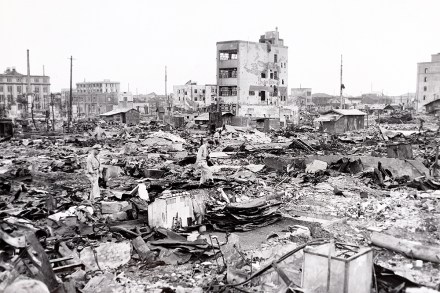
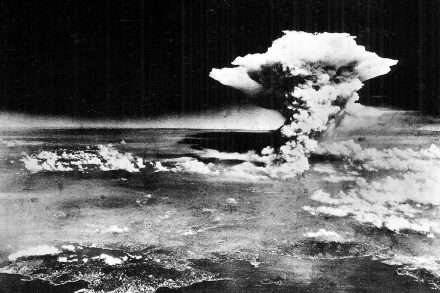
At 8.15 a.m. on 6 August 1945, a B-29 bomber called Enola Gay dropped ‘Little Boy’ over Hiroshima. The thermal radiation from the atom bomb was 900 times more searing than the sun. An estimated 118,661 civilians died, horribly. Survivors staggered about with their skin in shreds, their intestines hanging out and their blacked and bleeding faces grotesquely disfigured. Upon hearing the news, President Harry Truman called the bombing ‘the greatest thing in history’. Why the US unleashed the terrible bombs over Hiroshima, and three days later over Nagasaki, has been much debated ever since. In his excellent short book on the subject, Richard Overy writes: The question asked is usually ‘Was it necessary?

In search of kindred spirits: An Absence of Cousins, by Lore Segal, reviewed

From our UK edition

In Lore Segal’s An Absence of Cousins, Nat Cohn, a fellow at the Concordance Institute, a small college in Connecticut, browses through a children’s novel during a staff meeting and exclaims: ‘We don’t write stories like this any more. Chronic plot deficiency is our problem.’ The problem for contemporary novelists is that tightly woven plots of cause and effect belie the way their readers experience the world. Like her compatriot Elizabeth Strout in Olive Kitteridge and Olive Again, Segal addresses it by featuring a single protagonist, Ilka Weisz, a young Austrian émigrée, and various recurring subsidiary characters, in a series of closely interlinked stories.

Richard Flanagan rails against wrongs ‘too vast to have a name’

From our UK edition

‘Is it because we see our world only darkly that we surround ourselves with lies we call time, history, reality, memory, detail, facts?’ Richard Flanagan’s memoir opens at the Ohama coal mine in Japan, once home to his father and a host of other POW slave labourers. It then spirals outwards via his childhood (in a remote Tasmanian settlement), his much-put-upon mother (who hoped Richard would become a plumber), his semi-present, kindly, traumatised father Archie (enshrined in The Narrow Road to the Deep North) and on through all the now-familiar Flanagan themes.

Richard Flanagan: Question 7

From our UK edition

40 min listen

In this week's Book Club podcast, my guest is the Booker Prize winning novelist Richard Flanagan, talking about his extraordinary new book Question 7. It weaves together memoir, reportage and the imaginative work of fiction. Flanagan collides his relationship with his war-traumatised father and his own near-death experience with the lives of H G Wells and Leo Szilard, the Tasmanian genocide and the bombing of Hiroshima. He talks to me about the work fiction can do, the intimate association of memory with shame, and the liberations and agonies of thinking of non-linear time.

The atomic bomb saved Japanese lives, too

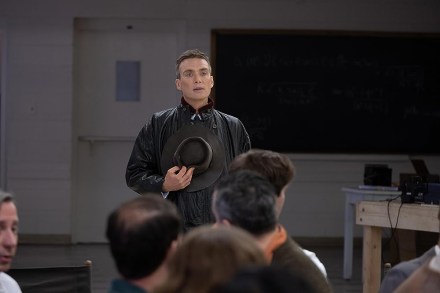
It’s August 6, which means that it is the anniversary of the atomic bombing of Hiroshima.   Every year at this time there are a spate of articles about that horrific event. Some of the articles are condemnatory; some hand-wringing; some are defiantly supportive.  This year, the recent release of Christopher Nolan’s new movie about J. Robert Oppenheimer and the making of the atomic bomb has given the controversy over the development and deployment of that awesome weapon a new urgency.   Something else that has contributed to the fraught atmosphere is the war in Ukraine. After all, one side in that conflict, Russia, controls the world’s largest arsenal of nuclear weapons, more than 6,000 warheads. My friend Roger L.

hiroshima atomic bomb japanese

Japan deserves to see Oppenheimer

As millions of people across the world rush into cinemas this week to see Christopher Nolan’s latest epic thriller Oppenheimer, one notable country will not be part of the film’s initial release window despite the relevant subject matter — Japan. For reasons that are still unclear, Universal Pictures has not announced a Japanese release date. Yet if any place deserves to see a film based on the life of the theoretical physicist who played an essential role in developing the atomic bombs which ended World War Two, it should be the country that was most affected by them. Hollywood films being delayed for release in Japan is a very common occurrence, and it rarely ever has anything to do with politics.

japan oppenheimer

How to spend 48 hours in Hiroshima

From our UK edition

Tourism is well and truly back in Japan, with packed flights and full hotels during the popular sakura (cherry blossom) season last month. And from today, all eyes will be on Hiroshima as it hosts the 49th G7 summit – an event that Japan’s Prime Minister Fumio Kishida has promised will showcase the ‘charms of our country’. So what can visitors expect from the city best known as where the world’s first atomic bomb was used in warfare in 1945? While Tokyo will no doubt be top of the to-do list for anyone on a flying visit to Japan, during a recent tour of the country it was western Honshu, where Hiroshima is located, that charmed us the most.

The myth that Hiroshima was necessary

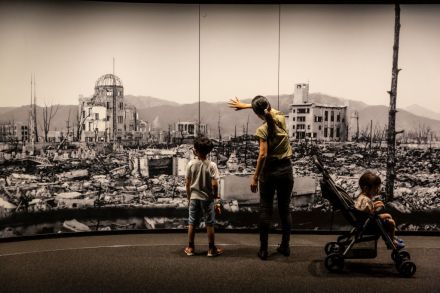
If you think the falsehoods spilling out of Ukraine about casualties and atrocities are shocking, meet the greatest lie of modern history. August 6 marks the seventy-seventh anniversary of the nuclear destruction of Hiroshima and death of some 140,000 non-combatants. Yet the only nation in history to employ a weapon of mass destruction on an epic scale, against an undefended civilian population, shrugs off the significance of an act of immorality. Beyond the destruction lies the myth of the atomic bombings, the post-war creation of a mass memory of things that did not happen. This myth has become the underpinning of American policy ever since, and carries forward the horrors of Hiroshima as generations pass.

The power of the translator to break nations

From our UK edition

No one ever raised a statue to a translator, disgruntled adepts of that art sometimes complain. I beg to differ, since I’ve seen one: the handsome monument to the 12th-century scholar-physician Judah ibn Tibbon, ‘patriarch of translators’, beneath the Alhambra in Granada. But if the brokers between languages and cultures still lack many bronze or marble tributes, the books that celebrate their calling have begun to pile higher. A few of them retaliate against the downgrading of translation skills with a mystagogic tone which repels curious civilians. Which makes Anna Aslanyan’s wide-angled and reader-friendly tour of her profession’s many roles, in literature, politics, law, diplomacy, business and data science, all the more welcome and appealing.