Herbert Hoover

The Wall Street Crash never ceases to fascinate

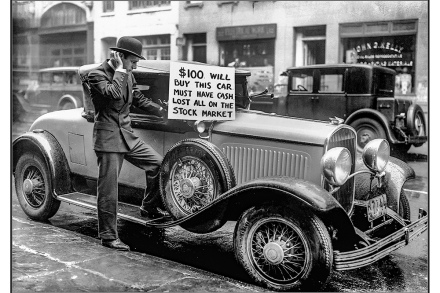
When Winston Churchill dined with the crème de la crème of American finance in New York on 28 October 1929, a facetious toast was made to ‘friends and former millionaires’. Despite a 13 per cent drop in the Dow after another day of market turmoil, the assembled banking titans felt they wouldn’t just survive the maelstrom, they would make more money from it. Churchill, whose finances were perennially chaotic, had caught stock market fever and lost today’s equivalent of almost $1.5 million. On returning to England, he declared the Wall Street crash ‘only a passing episode in the march of a valiant and serviceable people’. In the end, US stocks fell almost 90 per cent between their 1929 peak and 1932.
Trump is playing a high-stakes game of international poker

On what he called “Liberation Day,” President Trump announced a new tariff schedule. While the markets had been up in anticipation, they are down sharply, with the Dow dropping 2,200 points, perhaps surprised by the extent of them. Basically, Trump has laid tariffs equal to about half what other countries charge on US exports, inviting them to lower theirs in exchange for reciprocity. What the final result will be is anyone’s guess, for the Trump tariffs are chips in a high-stakes game of international poker. They have already had an effect. Canada has promised retaliatory tariffs while Israel has dropped all tariffs on US goods. A tariff is a tax laid on goods passing through a port.

trump

The villains of Silicon Valley

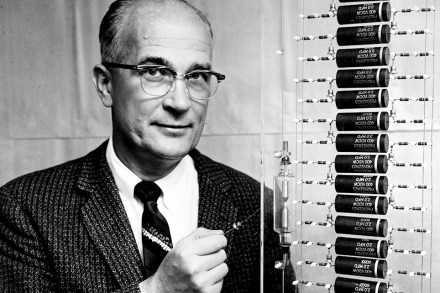
Historians joke that some parts of the world – Crete and the Balkans, for instance– produce more history than they can consume locally. The California town of Palo Alto produces more economics than it can consume, and therefore more politics, and therefore more culture. But this comes at a price. Malcolm Harris, a thirtysomething Marxist writer who grew up there, begins his book by citing the alarming rate at which his high-school classmates committed suicide, and argues that Palo Alto is haunted by the historical crimes on which it is built. He then itemises them across two centuries of history, tracing their influence from Stanford University and Silicon Valley out across the world.