Henry kissinger

The mixed legacy of Zbigniew Brzezinski, strategist of the Cold War

From our UK edition

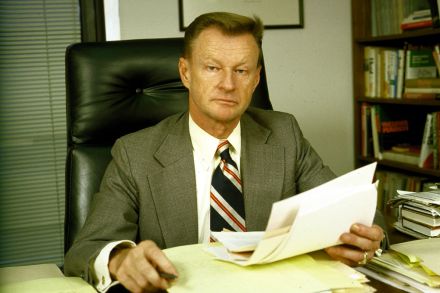
In the autumn of 1938, within nine weeks of each other, two boys arrived in New York, fleeing the gathering storm: a 15-year-old Jewish German and a ten-year-old Catholic from Poland. Both would repay the mortal debt they owed by dedicating their lives to the Land of the Free. The older boy was, of course, Henry Kissinger, later Grand High Poobah to Richard Nixon and Gerald Ford. The younger was Zbigniew Brzezinski, Jimmy Carter’s national security adviser from 1977 to 1981 and the subject of a magisterial biography bythe Financial Times’sWashingtonsupremo, Edward Luce. From the first, Zbigniew Brzezinski (pronounced ‘ZbigNieff BreshinSki’, as Carter helpfully informed his team) sat in Kissinger’s shadow, always a step or two behind the great Bavarian.

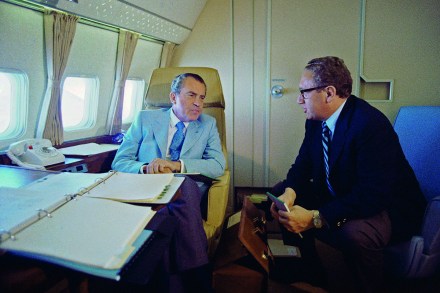
nixon 1974

Biden and Nixon: presidential history is repeating itself

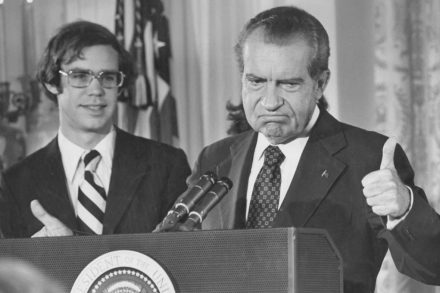
One of the advantages of not having been born yesterday is the ability to recognize certain trends of the news cycle when they come around again. Am I alone in thinking that every major American political manifesto since about 1848 has made a promise of reducing the taxation burden on its hardworking citizens, for example? Or that for Brits, like me, of a certain age (sixty-eight), our whole lives have been spent in the shadow of a stale and still unresolved debate about the nation’s place in Europe? More recently, I was struck by a sense of déjà vu all over again when comparing the final meltdown in Joe Biden’s White House to the events preceding Richard Nixon’s departure from office fifty years ago. The case for presidential history repeating itself isn’t hard to make.

Was Zbigniew Brzezinski a Cold War prophet?

From our UK edition

30 min listen

Polish émigré Zbigniew Brzezinski – known as ‘Zbig’ – rose to prominence in America during the Cold War as a key intellectual architect of US foreign policy. He was National Security Advisor to President Carter and was a trusted advisor to many US presidents from John F Kennedy onwards. Yet, despite helping to shape American foreign policy during critical moments, he is not as well-known or celebrated as his lifelong rival Henry Kissinger.   The Financial Times’ chief US columnist Edward Luce joins Freddy Gray on this episode of Americano to talk about his new book Zbig: The Life of Zbigniew Brzezinski, America's Cold War Prophet.

What does it take to be ‘an old friend of the Chinese people’?

From our UK edition

38 min listen

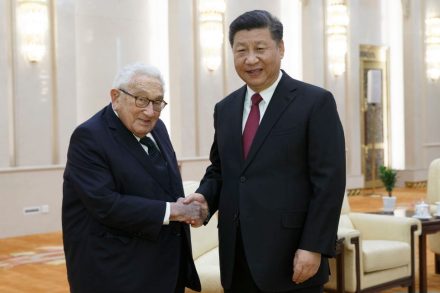
The term ‘old friend of the Chinese people’ might seem a colloquial, almost sentimental, phrase to appear in official diplomatic language, but in the Chinese context, those words have a very specific meaning. Most often, they refer to high profile foreigners whose actions have helped the Chinese Communist Party in one way or another. The most famous of these is Henry Kissinger, who led the way for American rapprochement with China. That the CCP gives various foreigners this honour is revealing of China’s priorities over the decades, but also of its attempts to co-opt foreign forces to its cause. Think back to the United Front strategy, which we looked at on the podcast earlier in the year.

Michael Gove, Mary Wakefield, Mitchell Reiss, Max Jeffery and Nicholas Farrell

From our UK edition

32 min listen

On this week’s Spectator Out Loud: Michael Gove offers up some advice to Keir Starmer (1:33); Mary Wakefield examines the rise of the ‘divorce party’ (7:28); Mitchell Reiss looks at the promise and peril of AI as he reviews Genesis: Artificial Intelligence, Hope and the Human Spirit, a collaboration between the former CEO of Google Eric Schmidt, the former chief research and strategy officer at Microsoft Craig Mundie, and the late US Secretary of State Henry Kissinger (13:52); Max Jeffery listens to The Armie HammerTime Podcast as the actor attempts to reverse his spectacular downfall (20:45); and, Nicholas Farrell reveals the time he got drunk with the ghost of Mussolini (25:24).  Produced and presented by Patrick Gibbons.

China will miss Henry Kissinger

A hero to some and a villain to others, the late Henry Kissinger impacted American foreign policy thinking in the last six decades more than anyone else. Of the former secretary of state and Nobel Peace Prize winner's contributions, one of the most significant was the strengthening of Sino-American relations. His détente policy was once celebrated by Nixonites when the Soviets were seen as the US’s main competitor. More recently, though, as anti-China sentiment has risen in America, Kissinger’s desire to soften relationships with the Asian giant has gained him some detractors on the right — and he already had more than enough on the left. Arguably his death will be mourned more in China than America.

Kissinger

The man who made Reagan

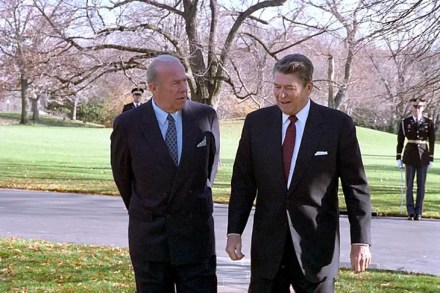
Ronald Reagan has been dead for nearly twenty years, but sometimes it still feels like he’s still the head of the Republican Party. The fortieth US president has been etched in American folklore as one of the country’s most effective and historic statesman, the man who stared down the Soviet Union and pursued policies that ultimately brought down the so-called “Evil Empire” in December 1991. Republican politicians of all stripes, from presidential aspirants to local councilmembers, utter his name at every opportunity. The first GOP presidential debate took place at the Reagan Library in Simi Valley, California, where multiple candidates looked back at the 1980s as a time when the mighty US shook off the cobwebs from the Vietnam War and rediscovered its self-confidence.

President Reagan walking with George P. Shultz outside the Oval Office (Wikimedia Commons)

The afterlife of Christopher Hitchens

In 2011, a terminally ill Christopher Hitchens faced death with droll stoicism: “To the dumb question ‘Why me?’ the cosmos barely bothers to return the reply: ‘Why not?’” he wrote. As his health declined and the end drew nearer, the skeptical Hitchens stuck to his atheist guns, clear-eyed in his confidence that death was final. Hitchens died in 2011, but his work and reputation live on. No paradox there, of course, but just how large Hitchens looms twelve years after his death would surely have surprised even this immodest author. It’s certainly a surprise to me, a reformed Hitchens fanboy. The face of twenty-first-century atheism is having quite the afterlife.

Hitchens

Henry Kissinger’s likely last book is on leadership

Leadership, Henry Kissinger writes in his latest book, is a medium by which a society moves from the past of its memory to the future of imagination. It is “indispensable.” As Kissinger says, “Decisions must be made, trust earned, promises kept, a way forward proposed.” Without leadership, ordinary people are, he argues, incapable of “reach[ing] from where they are to where they have never been and, sometimes, can scarcely imagine going.” But leadership is also, in Andrew Roberts’s phrase, “a ‘protean’ thing with little fixed definition.” Leadership is ultimately what leaders do; it goes in whatever direction they choose.

kissinger

Russia slogs through the Donbas

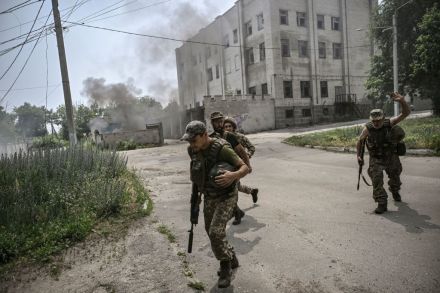
A brutal artillery battle: that’s what the latest phase of Russia’s war on Ukraine has become. Vladimir Putin failed in his original goal of seizing the entire country swiftly, beginning with the capital of Kyiv, and installing a puppet government. When Ukrainian resistance prevented that, Putin shifted to a smaller, more achievable objective: establishing complete control over two eastern provinces, Luhansk and Donetsk, which border Russia and are jointly known as the Donbas region. That’s where the war is being fought now, with an uncertain outcome. Victory will depend on who wins the artillery battle. Russia has more blunt firepower; Ukraine has more precise, longer-range weapons — or at least it will have them when more NATO supplies reach the frontlines.

artillery

The West is watching the war in Ukraine like it’s sport

From our UK edition

Every time I hear a politician speak of Munich, I suspect that something is amiss. Last week, President Zelensky accused former US Secretary of State Henry Kissinger of living in the ‘deep past’, and demanding that ‘a part of Ukraine be given to Russia’. ‘It seems that Mr. Kissinger has 1938 on the calendar instead of 2022’, Zelensky said. He wasn’t alone: figures from the Dutch Prime Minister Mark Rutte to the former chess champion Garry Kasparov put themselves on the record timidly or violently disagreeing with Kissinger. I wasn’t at Davos, but I learned of Kissinger’s revelations through Twitter.

How to fight a good war

From our UK edition

Serifos There’s no high life here, only family life, so I’ve been hitting the books about great Greeks of the past, and they sure make today’s bunch look puny. Philosophers, playwrights, statesmen, artists, poets, orators, sculptors; the ancients had them all. After 2,500 years, they’ve never been equalled. I was once walking around the Greek wing at the New York Met and I ran into Henry Kissinger, whom I knew slightly. He asked me what the population of ancient Athens was. ‘About 20 to 30,000 citizens,’ I answered. He shook his head in amazement. ‘And they produced all this,’ he said.

Impeachment doesn’t work

So, impeachment it is. Speaker Nancy Pelosi has announced that the House will begin articles of impeachment against President Donald Trump, and the vote will probably take place before the year is out. The inevitable is, it turns out, inevitable. Henry Kissinger knows something about impeachment. Not because his boss, Richard Nixon, was almost impeached, but rather because Kissinger is a realist. And the reality of impeachment is that it doesn’t work — the threshold for launching impeachment proceedings is low enough that it can be done frivolously, for merely partisan purposes. But the threshold for removing a president from office is so high that it has never been met, and it almost certainly won’t be met in the case of Donald Trump.

impeachment

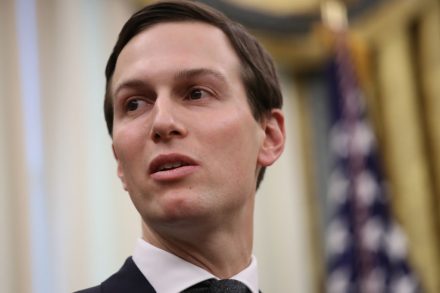
Kushner may not be Kissinger, but at least he’s not Kerry

Imagine a long list of leaders that liberal pundits love to hate. It starts with Donald Trump, followed by Vladimir Putin and a series of nationalist and populist politicians, with Israeli Prime Minister Benjamin (‘Bibi’) Netanyahu stuck in between Hungary’s Viktor Orbán and the Polish and Czech leaders. One of the reasons for the deep animosity towards the Israeli Likud Party chief, especially among many liberal American Jews and European lefties, has been the perceived love affair between the Donald and Bibi and the belief that if these two BFFs would only disappear from the political universe, we will finally have peace in our time in the Holy Land.

jared kushner

The confusion of the Confucians

The French fight it out in the streets, the British leave it to their politicians to stab each other in the back, and Americans turn to the market. This is normal service in abnormal times. The turbulence affecting Western societies isn’t going to stop soon, and the ship cannot be steadied by the hand of government on the tiller, whether by small changes to the tax code or big subsidized boondoggles. In fact, the voters suspect that government — not government in principle, but government as practiced — is the problem. And they’re right. I’ve been in Washington, DC for a couple of days, so excuse the world-historical reflections. Two big changes are afoot in the world now, digitization and the shifting of global GDP away from the Euro-Atlantic region to Asia.

Kissinger