Henry kissinger

Biden and Nixon: presidential history is repeating itself

One of the advantages of not having been born yesterday is the ability to recognize certain trends of the news cycle when they come around again. Am I alone in thinking that every major American political manifesto since about 1848 has made a promise of reducing the taxation burden on its hardworking citizens, for example? Or that for Brits, like me, of a certain age (sixty-eight), our whole lives have been spent in the shadow of a stale and still unresolved debate about the nation’s place in Europe? More recently, I was struck by a sense of déjà vu all over again when comparing the final meltdown in Joe Biden’s White House to the events preceding Richard Nixon’s departure from office fifty years ago. The case for presidential history repeating itself isn’t hard to make.
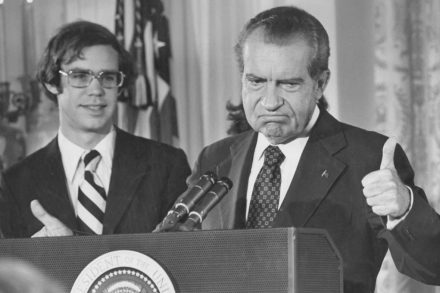
nixon 1974

China will miss Henry Kissinger

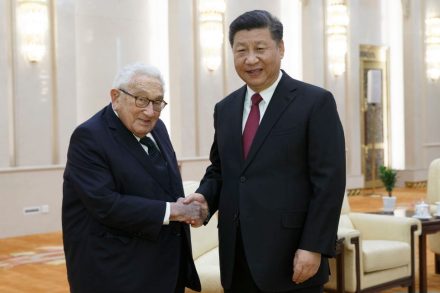
A hero to some and a villain to others, the late Henry Kissinger impacted American foreign policy thinking in the last six decades more than anyone else. Of the former secretary of state and Nobel Peace Prize winner's contributions, one of the most significant was the strengthening of Sino-American relations. His détente policy was once celebrated by Nixonites when the Soviets were seen as the US’s main competitor. More recently, though, as anti-China sentiment has risen in America, Kissinger’s desire to soften relationships with the Asian giant has gained him some detractors on the right — and he already had more than enough on the left. Arguably his death will be mourned more in China than America.

Kissinger

The man who made Reagan

Ronald Reagan has been dead for nearly twenty years, but sometimes it still feels like he’s still the head of the Republican Party. The fortieth US president has been etched in American folklore as one of the country’s most effective and historic statesman, the man who stared down the Soviet Union and pursued policies that ultimately brought down the so-called “Evil Empire” in December 1991. Republican politicians of all stripes, from presidential aspirants to local councilmembers, utter his name at every opportunity. The first GOP presidential debate took place at the Reagan Library in Simi Valley, California, where multiple candidates looked back at the 1980s as a time when the mighty US shook off the cobwebs from the Vietnam War and rediscovered its self-confidence.

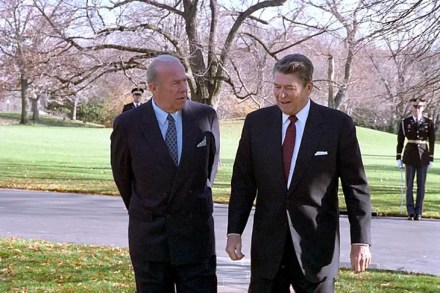
President Reagan walking with George P. Shultz outside the Oval Office (Wikimedia Commons)

The afterlife of Christopher Hitchens

In 2011, a terminally ill Christopher Hitchens faced death with droll stoicism: “To the dumb question ‘Why me?’ the cosmos barely bothers to return the reply: ‘Why not?’” he wrote. As his health declined and the end drew nearer, the skeptical Hitchens stuck to his atheist guns, clear-eyed in his confidence that death was final. Hitchens died in 2011, but his work and reputation live on. No paradox there, of course, but just how large Hitchens looms twelve years after his death would surely have surprised even this immodest author. It’s certainly a surprise to me, a reformed Hitchens fanboy. The face of twenty-first-century atheism is having quite the afterlife.

Hitchens

Henry Kissinger’s likely last book is on leadership

Leadership, Henry Kissinger writes in his latest book, is a medium by which a society moves from the past of its memory to the future of imagination. It is “indispensable.” As Kissinger says, “Decisions must be made, trust earned, promises kept, a way forward proposed.” Without leadership, ordinary people are, he argues, incapable of “reach[ing] from where they are to where they have never been and, sometimes, can scarcely imagine going.” But leadership is also, in Andrew Roberts’s phrase, “a ‘protean’ thing with little fixed definition.” Leadership is ultimately what leaders do; it goes in whatever direction they choose.

kissinger

Russia slogs through the Donbas

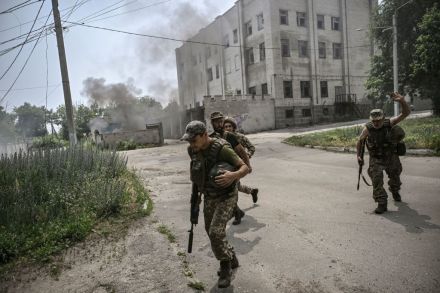
A brutal artillery battle: that’s what the latest phase of Russia’s war on Ukraine has become. Vladimir Putin failed in his original goal of seizing the entire country swiftly, beginning with the capital of Kyiv, and installing a puppet government. When Ukrainian resistance prevented that, Putin shifted to a smaller, more achievable objective: establishing complete control over two eastern provinces, Luhansk and Donetsk, which border Russia and are jointly known as the Donbas region. That’s where the war is being fought now, with an uncertain outcome. Victory will depend on who wins the artillery battle. Russia has more blunt firepower; Ukraine has more precise, longer-range weapons — or at least it will have them when more NATO supplies reach the frontlines.

artillery

Impeachment doesn’t work

So, impeachment it is. Speaker Nancy Pelosi has announced that the House will begin articles of impeachment against President Donald Trump, and the vote will probably take place before the year is out. The inevitable is, it turns out, inevitable. Henry Kissinger knows something about impeachment. Not because his boss, Richard Nixon, was almost impeached, but rather because Kissinger is a realist. And the reality of impeachment is that it doesn’t work — the threshold for launching impeachment proceedings is low enough that it can be done frivolously, for merely partisan purposes. But the threshold for removing a president from office is so high that it has never been met, and it almost certainly won’t be met in the case of Donald Trump.

impeachment

Kushner may not be Kissinger, but at least he’s not Kerry

Imagine a long list of leaders that liberal pundits love to hate. It starts with Donald Trump, followed by Vladimir Putin and a series of nationalist and populist politicians, with Israeli Prime Minister Benjamin (‘Bibi’) Netanyahu stuck in between Hungary’s Viktor Orbán and the Polish and Czech leaders. One of the reasons for the deep animosity towards the Israeli Likud Party chief, especially among many liberal American Jews and European lefties, has been the perceived love affair between the Donald and Bibi and the belief that if these two BFFs would only disappear from the political universe, we will finally have peace in our time in the Holy Land.

jared kushner

The confusion of the Confucians

The French fight it out in the streets, the British leave it to their politicians to stab each other in the back, and Americans turn to the market. This is normal service in abnormal times. The turbulence affecting Western societies isn’t going to stop soon, and the ship cannot be steadied by the hand of government on the tiller, whether by small changes to the tax code or big subsidized boondoggles. In fact, the voters suspect that government — not government in principle, but government as practiced — is the problem. And they’re right. I’ve been in Washington, DC for a couple of days, so excuse the world-historical reflections. Two big changes are afoot in the world now, digitization and the shifting of global GDP away from the Euro-Atlantic region to Asia.

Kissinger