Henry james

An American in Paris

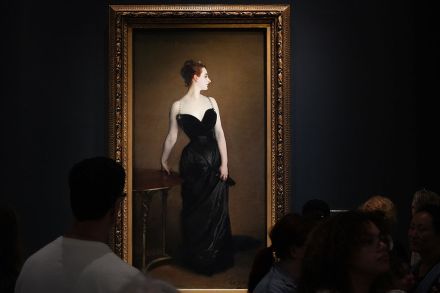
Oh, to be a 19th-century Parisienne! A creature like no other, she arose “like Venus from the waters of the Seine,” as one fanciful journalist put it, “the supreme fruit of civilization.” An elegant arbiter of taste, she could be seen attending plays, concerts and exhibitions, or walking along Haussmann’s airy boulevards. By the time of the Third Republic, she did not need blue blood, so long as she had thoughts on paintings, poetry and music. To a city recovering from the horrors of the Franco-Prussian War and the Paris Commune, which left thousands dead and monuments ravaged, she was a symbol of a brighter future. Artists flocked to paint the Parisienne (and expat wannabes), who in turn welcomed the opportunity to commission status-boosting likenesses.

Madame X

Saving Henry James’s Christmas ghost story from the critics

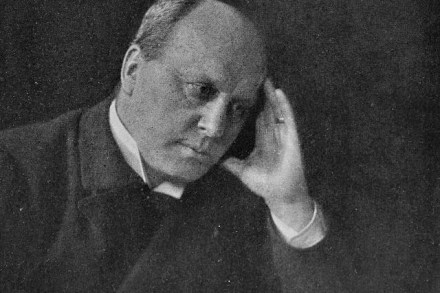
If you have a graduate degree in English, I’ll bet you my neglected copy of Jacques Derrida’s Dissemination, you’ve read Henry James’s The Turn of the Screw. It’s long been a favorite of critics because we don’t really know what happens in the end — everyone loves a puzzle — but the postmodern critics love it big time. You can superimpose any half-baked theory with impunity because no one will call you on it. In 1995, Wayne Booth wrote that he found more than 500 books or articles on the novella before he got tired of adding them up. It’s easily double that now. That’s not to say it’s a bad story. Quite the opposite. I think it’s one of James’s best. It is also a good example of how James has been misunderstood.

ghost

Mostly ghostly: Henry James haunts Bly Manor

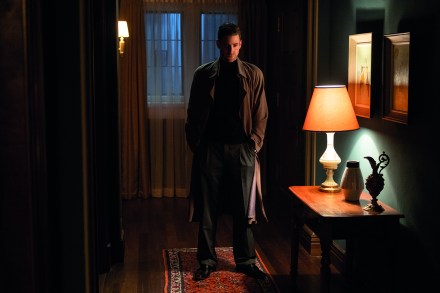
Halloween wasn’t quite the same this year: no trick-or-treating or bobbing for apples, no packed parties, not even a socially distanced haunted house. As a lover of all things horror, I had to rely on television to put the spooky in the season. Netflix’s new series The Haunting of Bly Manor is the sister show to last year’s wildly popular The Haunting of Hill House, created by Doctor Sleep’s Mike Flanagan. (Flanagan is also behind Hush, one of the smartest horror movies I’ve seen in a few years and definitely worth watching.

bly manor

A ticket to Rye

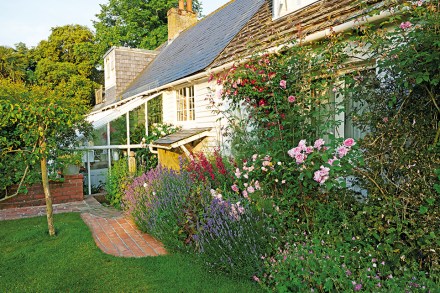
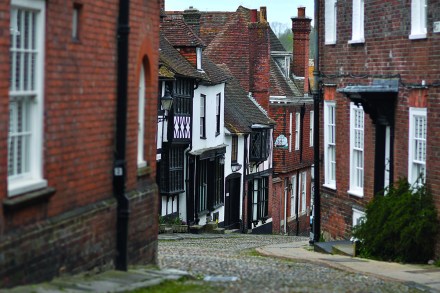
Earlier this year, before we went into lockdown, my wife and I set off on our final, farewell trip to Rye. I may go again, one day, but I know she never will. This quaint, archaic seaside town where we’d spent so many happy holidays had become a painful place for her. She was glad to say goodbye. I wanted to make a weekend of it, like we always used to, but she didn’t want to stick around. Her dad had died and her mom was in a nursing home. We’d come to clear out their house before the new owners moved in. It was her parents who had introduced me to Rye, 24 years ago. They’d just retired and needed a new adventure. The National Trust needed some new tenants for Lamb House, a grand old house in Rye where Henry James used to live.

rye

Getting Wilde in America

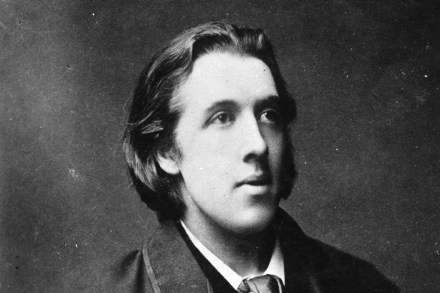
In January 1882, a still little known 27-year-old called Oscar Wilde began his year-long, coast-to-coast, 15,000-mile grueling lecture tour throughout America. The ostensible purpose was to publicise the US tour of Gilbert and Sullivan’s Patience, whose precious aesthete Bunthorne — ‘what a very singularly deep young man this deep young man must be!’ — was partly based on Wilde. The real motive was to advertise himself and become a celebrity while searching for his true sexual identity. Victorian men had to hide their homosexuality, but Wilde found a way to flaunt his real feelings. Wearing a theatrical costume while behaving outrageously on stage, he used his ambiguous sexuality to provide entertainment.

oscar wilde