Hamlet

Macbeth in Swahili? There might even be improvements

From our UK edition

Let’s start with some low-hanging fruit. When, in Henry V, the king inspires his army before Agincourt, the Danish translator – here, Niels Brunse – can hope for a relatively easy win: ‘Vi fa, vi muntre fa, vi flok af brodre.’ Or, in the classic Schlegel-Tieck version of Macbeth, now rooted in German literature, the cursed usurper finds that tomorrow and tomorrow ‘Kriecht so mit kleinem Schritt von Tag zu Tag’. Linguistic kinship, comparable speech rhythms, shared verse forms: sometimes the happy not-so-few, the global band of brothers (and sisters) who translate Shakespeare out of English, face a stiff but still feasible task. Even in familiar languages, though, pitfalls await in every line. Surely, Richard III’s opening soliloquy will slip smoothly into French?

The folly of Hamnet

Democracy has not been kind to William Shakespeare. His works may be read and performed more widely than ever, but readers and audiences understand less and less of what they see. Egalitarianism encourages narcissism, and narcissism interprets all art as autobiography. Shakespeare could only write about his own life, and if, in fact, he wrote about royal courts and noblemen, then Shakespeare must not have been Shakespeare, the actor from Stratford-upon-Avon. He must have been Edward de Vere, the earl of Oxford, or somebody like that. He could not have possessed the intelligence and imagination to transcend his personal identity, for none of us can do that. It would be superhuman. That’s one foolish contention arising from the idea that writing must always be memoir.

Even as literate adults, we need to learn how to read

From our UK edition

Few readers can claim to be what Samuel Taylor Coleridge called ‘Mogul diamonds’ – those who not only ‘profit by what they read’, but ‘enable others to profit by it also’. If such people were rare in Coleridge’s time, then today, when reading is in dramatic decline, they are scarce enough that even the white rhino might feel a little smug. Anyone seeking a glimpse of this endangered reader could be forgiven for thinking that a university English department was its most likely habitat, but they would be wrong. Behind the brown office doors where academics labour, one is more likely to find the common squirrel, hoarding information and burying it under dense soil.

Stephen Fry is the perfect Lady Bracknell

From our UK edition

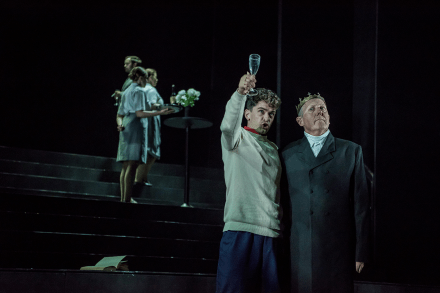
Hamlet at the National opens like a John Lewis Christmas advert. Elegant celebrations are in progress. The stage is full of dining tables draped in white linen and adorned with flowers and beautiful glassware sparkling in the candlelight. Elsinore is reimagined as the home of a multicultural royal family. Claudius, resplendent in a dark dinner jacket, toasts his Asian bride, Gertrude, who wears a banana-yellow sari. Enter Hamlet, hunched and mutinous, in a snaky black suit like a moody star at a film première. He cheers up when he reaches his first soliloquy which he delivers to the crowd like a larky routine at a comedy club. Hiran Abeysekera (Hamlet) is a talented and hyperactive clown who gets big laughs from unpromising material. But he lacks the substance for the role.

Brilliant rewrite of Shakey: Hamlet, at Buxton Opera House, reviewed

From our UK edition

‘There is good music, bad music, and music by Ambroise Thomas,’ said Emmanuel Chabrier, but then, Chabrier said a lot of things. I adore Chabrier – who couldn’t love the man who wrote España and turned Tristan und Isolde into a jaunty quadrille? – but it doesn’t do to take him too literally. Thomas ended his career as a notoriously crusty director of the Paris Conservatoire, and when the French musical establishment puts you on a pedestal younger composers invariably start hurling the merde. Scraps of Thomas’s music survive in all sorts of odd corners (a snippet from his opera Mignon crops up in The Life and Death of Colonel Blimp). I’ve always found it rather appealing.

4,000 pages of T.S. Eliot’s literary criticism is not enough

From our UK edition

This is Alice B. Toklas, ventriloquised by her partner, Gertrude Stein: I must say that only three times in my life have I met a genius and each time a bell within me rang and I was not mistaken, and I may say in each case it was before there was any general recognition of the quality of genius in them. The three geniuses of whom I speak are Gertrude Stein, Pablo Picasso and Alfred Whitehead [the mathematician]. Defiantly, flagrantly clairvoyant. Daring us to dispute the claim, the Big Lie flourishes. Size matters. Think George Steiner, Joseph Brodsky, Big Whoppers both, tirelessly fibbing.  Towards the end of his life, in 1963, T.S.

Fortitude, emotional intelligence and wit – the defining qualities of Simon Russell Beale

From our UK edition

The path to National Treasureland is no paved highway. Simon Russell Beale, the finest classical actor of his generation, was nearly lost to academia (he swerved a PhD in Victorian literature), and faced down pigeon-holing from an agent who wanted to change his name to Simon Beagle, the better to capitalise on a knack for dopily jolly comedy roles. Now – and not before time – he’s written an elegant study of Shakespeare that does double duty as a juicy actor’s autobiography. The pleasure here is in the mix of green room gossip and literary insight. There’s plenty of the former: dining next to Lauren Bacall at the chat show queen Barbara Walters’s place? Good. Watching Top Gun with Imelda Staunton and Penny Downie? Even better.

Why Shakespeare remains the great playwright

William Shakespeare’s tragedies stand apart. Their impact is profound and lasting, in cultural, artistic, emotional and psychological terms. Who could forget the ghost’s first appearance in Hamlet, or Lear bearing the dead Cordelia? No other dramatist has achieved what Shakespeare did: in subject matter, emotional heft, innovative usage of source material, character development and startling deployment of language Shakespeare is (and there is no other word for it) extraordinary. He surpasses both his predecessors (sorry, Thomas Kyd!) and those that came after him. He built on the foundations the classical playwrights established, and then, almost casually, bettered them, too.

Shakespeare

Eddie Izzard’s one-man Hamlet deserves top marks

From our UK edition

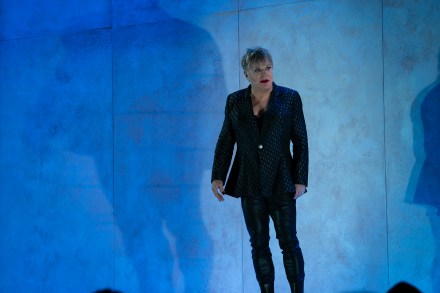
Every Hamlet is a failure. It always feels that way because playgoers tend to compare what they’re seeing with a superior version that exists only in their heads. And since disappointment is inevitable, it’s worth celebrating the successful novelties in Eddie Izzard’s solo version. He makes some valuable breakthroughs, especially in the comedic sections. Izzard makes some valuable breakthroughs. His Gravedigger is funny. Actually funny. That’s rare His Gravedigger is funny. Actually funny. That’s pretty rare. He plays Rosencrantz and Guildenstern as sock-puppets whose robotic yapping he imitates with his hands. Brilliant stuff. Well worth copying. His Osric is a greasy, cocktail-party flatterer with a faint Mexican accent. Osric, the Hispanic immigrant. That works too.

It feels somehow improper to witness an author groping for the right words

From our UK edition

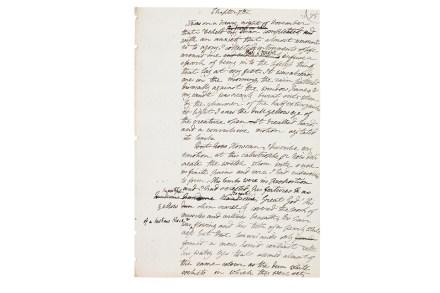
The early stages of a literary work are often of immense interest. It is perhaps a rather tawdry kind of interest, like paparazzi shots of a Hollywood starlet taking the bins out before she’s put her make-up on. Of course it’s extraordinary to think that some of the most famous characters, events and lines in literature weren’t as we now know them but had to be struggled towards. Sometimes these efforts have the anachronistic but unavoidable sense of somebody getting it wrong. Textual bibliographers have carefully classified the different steps a work takes from manuscript to first edition and subsequent versions. Perhaps we could go further in search of a writer’s progress.

Hamlet fans will love this: Re-Member Me, at Hampstead Theatre, reviewed

From our UK edition

A puzzle at Hampstead Theatre. Literally, a brain teaser. Its new production, Re-member Me, is a one-man show written and performed by Dickie Beau, whose name is a punning allusion to a bow tie. The oddly spelled word, ‘re-member’ refers to the process of reassembling the separated limbs of a dramatic character during the rehearsal process. The poster for the production centres on Mr Beau dressed in 1980s sports gear and wearing a T-shirt blazoned with the logo of ‘Wittenberg University’, written in German. Enfolding his skull is a rainbow headband. These details tell us that the play examines the character of Hamlet with a particular focus on the travails of gay actors performing the role during the 1980s Aids epidemic.

Robert Icke’s smart pairing

On a Saturday in August, stuck in Manhattan  and growing less enamored of the thought, I holed up at the Park Avenue Armory to catch English director Robert Icke’s Hamlet (2015) and Oresteia (2017), playing in repertory. Icke is a darling young thing on the British theater scene, “acclaimed,” as the program informs us, “for his intelligent and accessible productions” of classic texts. Hamlet runs for three hours and forty minutes, Oresteia for three fifteen, which gives you some idea of what is meant (or not) by “accessible.” These are big, bold productions. But for what it’s worth, the cavernous Wade Thompson Drill Hall proved accessible to a packed crowd.

hamlet

The Dane gets an interpretive dance makeover: Ian McKellan’s Hamlet reviewed

From our UK edition

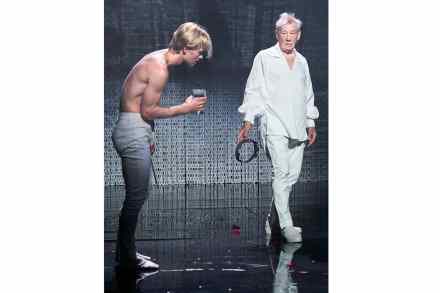
Ian McKellen’s Hamlet is the highlight of Edinburgh’s opening week. In this experimental ballet, Sir Ian speaks roughly 5 per cent of the lines, accompanied by a hunky blond dancer, Johan Christensen, who offers a physical interpretation of the Dane’s melancholy. The other roles are played by a ballet troupe in olde worlde costumes. The performing area is a black thrust stage, gleaming like patent leather, surrounded by low spotlights and swirling dry ice. It looks like Elsinore recreated by a cruise-ship designer. Newcomers will find the story mystifying. Hamlet smoulders longingly at Horatio and they dance like a hot couple at a gay night spot.

All a bit Blackadder: Hamlet, at the Sam Wanamaker Playhouse, reviewed

From our UK edition

Never Not Once has a cold and forbidding title but it starts as an amusing tale set in an LA apartment. We meet Allison, a happily married lesbian, whose grown-up daughter, Eleanor, arrives with a hunky new boyfriend to show off. This set-up has the makings of a flatshare sitcom. You combine a straight younger couple with an older pair of lesbians and you throw in the mother/daughter relationship for extra instability. It could be a laugh. But a new wrinkle appears. Eleanor learns that she was conceived during a one-night stand and she decides to track down her absentee father. But he’s extremely reluctant to discuss what happened that evening. Too much booze, he shrugs, and the major details escape him. Flora disagrees with this version. Eleanor’s father raped her, she claims.

A triumph: Young Vic’s Hamlet reviewed

From our UK edition

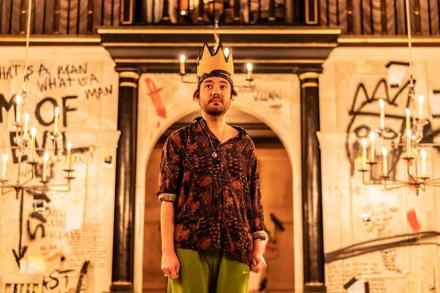
Here goes. The Young Vic’s Hamlet, directed by Greg Hersov, is a triumph. This is a pared-back, plain-speaking version done with captivating simplicity and perfect trust in the text. The star is Shakespeare and the production merely opens up an aperture to his dazzling account of human greatness and frailty. The action takes place on a small, level stage that could be covered by two bedspreads. Designer Anna Fleischle adds an oblong arch of distressed stone along with three tall blocks that rotate to create internal hiding places, corridors and cubby-holes. That’s all she needs to suggest a house of horrors, a court of nightmares, a royal palace beset by plots and whispers of secret killings.

Ian McKellen is riveting: Hamlet, at Theatre Royal Windsor, reviewed

From our UK edition

Ian McKellen in his early eighties plays the Dane in his mid-twenties. A production with such a strange innovation should be conventional in all other details so that the virtues and demerits of the experiment can be judged in the right context. But Sean Mathias’s show adds extra puzzles. Elsinore is a modern palace ruled by Claudius, in a charcoal suit, and Gertrude in a chic emerald dress, pinched at the waist. Nice togs. But the audience knows how a constitutional monarchy works and that a rightful heir succeeds automatically and peacefully. So why are these murderous nutcases roaming the corridors plotting to slit each other’s throats? That contradiction goes unexplained.

The reason of Jordan Peterson

If only Hamlet had known Jordan Peterson. To be or not to be, Dr Peterson believes, is indeed the burning question — but it’s a question that can be resolved decisively in favor of Being with a capital B. And he’s willing to walk any modern-day Hamlet who cares to listen through the math. This reasoned position in favor of existence is at the heart of Jordan Peterson’s latest book, Beyond Chaos: 12 More Rules for Life. It’s also, I’d argue, at the heart of his popular appeal. Sure, his undeniable charisma doesn’t hurt; and of course, he’s brilliant, well-read and articulate. But so are many other public intellectuals.

cultural marxism jordan peterson

Young Hamlet

Maggie O’Farrell is much possessed by death. Her first novel, After You’d Gone (2000), chronicled the inner life of a young woman who finds herself comatose following a near-fatal car accident. And a recent piece of non-fiction, I Am, I Am, I Am (2017), gave an account of O’Farrell’s own numerous brushes with mortality. Her latest novel returns to this preoccupation with the ‘undiscovered country. from whose bourn/ No traveler returns’. In it she sets out to tell the imagined story of the life and death of Shakespeare’s only son, Hamnet, who perished at the age of 11, four years before his father wrote the play that would share his dead son’s name — in Elizabethan England, the spellings Hamnet and Hamlet were interchangeable.

hamnet

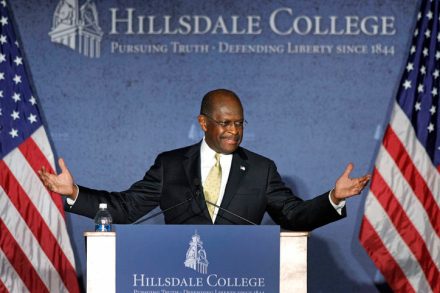
Thank goodness for Hillsdale College

Did you go to college? If so, then it is overwhelmingly likely that you have been the recipient of a nauseating communication like this one from 'Maud' (that would be Maud S. Mandel, President of Williams College) explaining how Williams will 'confront and fight racial and social injustice.’ I hope that you are impressed by both Maud’s bravery and her virtue. In an earlier communication, just as the wave of violent hooliganism began rolling over the country at the end of May, she let us know that she is 'disgusted, saddened and angered by ongoing racism in all forms and places’ (every last one!). What a paragon she is! Maud then went on to 'state unequivocally’ (unequivocally!

insects

Return to gender

From our UK edition

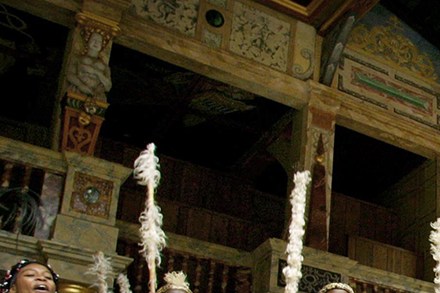
Regime change at the Globe. The new boss, Michelle Terry, wants a 50/50 ratio of males to females in each production. Rather eccentric. Why cast a drama to reflect the distribution of sexual organs across the general populace? Imagine hiring an orchestra to represent the ratio of citizens who can play an instrument. And didn’t the process of examining actor’s genitals at auditions land Harvey Weinstein in a spot of bother? Ms Terry’s gender fixation is called, curiously enough, ‘gender-blind casting’. She inaugurates her reign at the Globe by offering us a production of Hamlet in which, perhaps with a nod to gender-blind casting, she plays the lead. No one but Ms Terry would have hired Ms Terry for this role.