Hacking

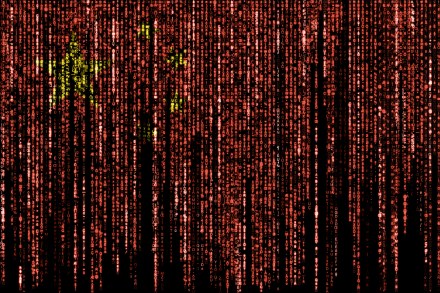
The real Chinese election plot

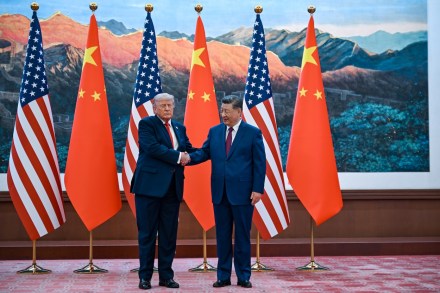
China’s political interference is in many ways worse than President Trump asserts, but the true nature and scale of Beijing’s activities may be obscured by his efforts to use it for partisan gain. Whatever Trump’s motives in accusing China of meddling in the 2020 presidential election – “the largest compromise of election data in history,” as he put it – Beijing has undoubtedly become more aggressive in its political interference. Beijing has adopted Russian-style disinformation operations in its attempts to undermine its western rivals, and the United States in particular. The pandemic was a turning point.

Iranian hackers breach the gates of Kash’s Valhalla 

“See you in Valhalla” is how Kash Patel said farewell to Charlie Kirk. Unfortunately, it now seems that Patel’s own sanctum has now been breached. Iran-aligned hackers have broken into the FBI director’s personal email inbox and released the contents online. What did they leak? The un-redacted Epstein files? The truth behind the Kennedy assassination? Not quite. None of the 300 purloined emails were even sent during Patel’s time at the FBI. The hackers, no doubt cackling manically while doing so, instead released according to the Guardian: a series of personal photographs of Patel sniffing and smoking cigars, riding in an antique convertible and making a face while taking a picture of himself in the mirror with a large bottle of rum. Take that!

Kash Patel

What Chinese hackers want

From our UK edition

27 min listen

Over the last week the UK has been rocked by allegations that China was responsible for two cyber attacks in recent years – one on the Electoral Commission, where hackers successfully accessed the open register, which has the details of 40 million voters; and a set of attempts to access the emails of a number of China critics within parliament. So what do we know about China’s cyber capabilities? What are its goals? And now that the UK knows about these attacks, what should we be doing? Joining me on the podcast today is Nigel Inkster, senior advisor for cyber security and China at the think tank IISS, formerly director of operations and intelligence at MI6, and author of China’s Cyber Power, a 2016 book on precisely this question.

How much steel does Britain produce?

From our UK edition

Double date This year, Orthodox Easter is on the same date as the western Easter, 20 April. How common is that? The Orthodox Church has a different date for Easter because it still calculates the date according to the Julian calendar, which runs 13 days behind the Gregorian calendar. But the dates coincide when the first full moon after the spring equinox occurs relatively late. The dates last coincided in 2017, but eight years is a relatively long run without this happening. This year is the ninth occasion this century when western and Orthodox Easters have been on the same day. A common date for Easter will next happen in 2028, followed by 2031, 2034, 2037 and 2041.

Bad air days: Savage Theories, by Pola Oloixarac, reviewed

From our UK edition

According to a 2016 report published by the World Health Organisation, Argentina is the ‘therapy capital of the world’, boasting 222 psychologists per 100,000 people. Reading the Argentine writer Pola Oloixarac’s Savage Theories, I can understand why. The novel is quick to mock the posturing of the academic world, especially in Buenos Aires The novel follows three characters, each more bizarre and beguiling than the last. First we have our narrator, Rosa. She is a philosophy student at the University of Buenos Aires who becomes obsessed with, and attempts to seduce, her elderly professor Augusto Garcia Roxler, whose ‘Theory of Egoic Transmissions’ charts man’s evolution from prey to predator.

Russia’s sabotage campaign against the West

From our UK edition

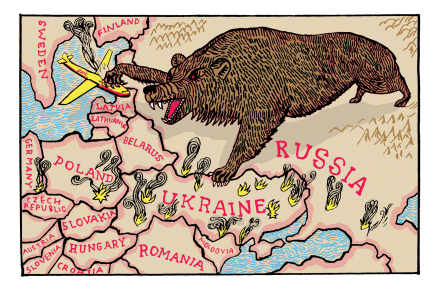
When a DHL cargo plane crashed while approaching Vilnius airport on Monday, killing one of the crew, it looked like technical failure, but given that Russia was believed to be behind a series of incendiary devices which ignited on DHL flights and in warehouses this summer, inevitably many feared Moscow’s hand. The suspicion is likely to be the point. In the past year, the Russians have stepped up their disruptive activities in Europe, from cyber-attacks to assassinations, with the apparent aim of generating chaos and a climate of fear as much as anything else.

Congressman’s campaign site suffers X-rated hack

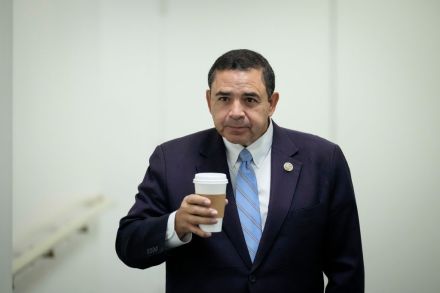
If you want casual sex in Australia, an online mistress, a “milf live chat,” or even just “local adult hookups now,” Congressman Henry Cuellar has got you covered.  It’s unclear what's going on with Cuellar’s campaign website, but it’s currently overrun with not safe for work topics. “Start a new adventure with local swinger couples now,” one post reads. “This really is a powerful way to explore new intimate fantasies and satisfy new people,” the Texas Democrat lets us know via his website. Separately, a post in Russian reads “Гоксбет 2 Ставь на свои цели!” telling readers that they should gamble their money. If you’re feeling adventurous and want to travel, Cuellar’s got you covered.

henry cuellar website hack

What we know about Beijing’s spies

From our UK edition

32 min listen

Two years ago, Richard Moore, head of MI6, said that China was now the organisation’s ‘single greatest priority’. Parliamentarians and the British public have been starkly reminded of this by last week’s news that a parliamentary researcher had been arrested on suspicion of spying for China. On this episode, we won’t be commenting on the ins and outs of that case, but talking more generally about Chinese espionage. What forms does it take, what are its goals and how successful are the Chinese secret services at achieving those? I’m joined by a brilliant and knowledgeable guest. Nigel Inkster is the former director of operations and intelligence for MI6.

The bored teenagers who can disrupt the world

From our UK edition

Most of us live a strange double life when it comes to hacking. We read headlines saying that our toaster might spy on us, that Russia is trying to hack into our social media, and that society as a whole could be under threat. At the same time, we install smart speakers in every room of our house, post more than ever to social media, and the worst we see of hacking attempts is the occasional email from a Nigerian ‘prince’. Trying to calibrate whether we should be terrified or unconcerned is a difficult task, so it’s refreshing when Scott Shapiro – a Yale law professor who also serves as the director of the university’s cybersecurity lab – says early in his book that neither is the correct approach.

House Republicans demand answers from TSA over No-Fly List hack

House Republicans will be investigating the Transportation Security Administration to work out how a prolific Swiss hacker who identifies as a “tiny kitten” was able to obtain over a million entries from the No-Fly List, The Spectator has learned. The hacker, a twenty-three-year-old who goes by Maia Arson Crimew, was able to access a 2019 version of the list after what she described as just a few hours of hacking.

tsa

New York Post hacked: ‘We must assassinate AOC for America’

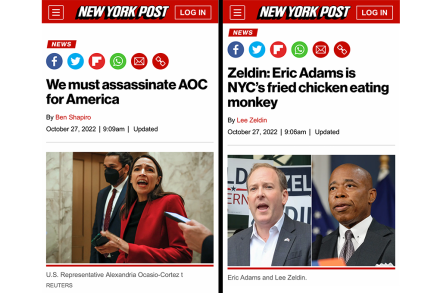
Cockburn has always been fond of a New York Post headline. Snappy, funny, eye-catching: that's why he reads the New York tabloid every morning. But today, even for Cockburn, some were too far. In what appears to be a hacking, a scroll down the Post's Twitter feed at around 9 a.m. revealed the following headlines: “Devine: We must murder Joe and Hunter Biden” “We must assassinate AOC for America” “Frank: I will beat up sorry ass Bergen bitches like Gottheimer and his family” “Zeldin: I will rape and batter Hochul’s sorry ass pussy” “Gov. Abbott: I will order border patrol to start slaughtering illegals” "Rufo: We must destory [sic] and imprison Union teachers" "Zeldin: Eric Adams is NYC’s fried chicken eating monkey” https://twitter.

new york post

I was held to ransom by hackers

From our UK edition

I’m the owner of two small galleries which sell 20th-century ceramics and artworks. One of the ways we’ve become known is through Instagram. We’ve got almost 50,000 followers and sell a lot of work through there. In May, I was away for the weekend with friends in Somerset. On Saturday morning, I saw an email in our shared work account (purporting to be) from Instagram. It was congratulating us for getting a blue tick — verification that confirms the account is an ‘authentic presence’. Thrilled, I clicked the link in the email to confirm. It took me to an official-looking Instagram page where I entered our login details. I was then met with a landing page thanking me for confirming our account’s status.

The heist: nobody is safe from Russia’s digital pirates

From our UK edition

In April, the Harris network of London schools was held to ransom by hackers. ‘The first thing I did was panic,’ said Sir Dan Moynihan, the chief executive. It wasn’t simply that their computers didn’t work; many of the 50 schools couldn’t function. Some couldn’t open because their internet-controlled doors were jammed shut. A demand for £3 million arrived. Moynihan pointed out this was a ‘completely insane’ amount for an educational charity to pay — but his pleas through an intermediary were ignored. The hackers insisted that unless Harris paid up, the schools would continue to be locked out of their networks, and sensitive data would be leaked online too.

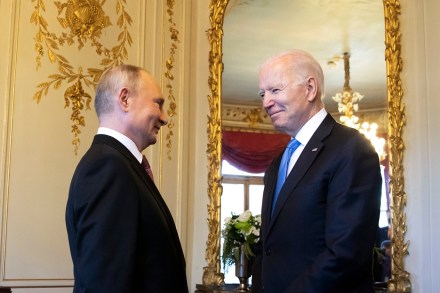
What does Vladimir Putin have on Joe Biden?

In May 2017, TIME magazine published a cover showing the White House being infected and taken over by Russian onion domes. The image meant to suggest that Donald Trump was a sleeper agent on behalf of Vladimir Putin. This sort of thinking was the driving force behind four years of media hysterics and seemingly endless cable news segments portraying Trump as a Russian puppet. ​With Joe Biden, naturally, the media has adopted a distinctly different tone — especially when it comes to the President’s relations with Russia: this despite six months of Team Biden’s complacency towards Russia, bad actors and even Putin himself. Gone are the accusations of ransom and pee tapes, or treachery — even as Russia makes aggressive moves on the world stage and towards the United States.

putin biden

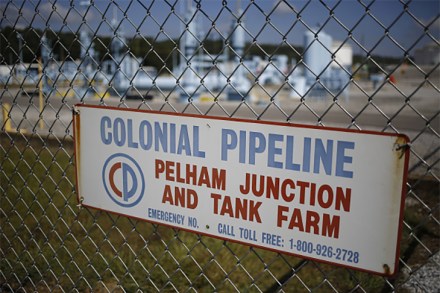
The dark side of DarkSide

On a normal day, the Colonial Pipeline carries up to three million barrels of oil 5,500 miles from the Southern United States to New York, providing 45 percent of the East Coast’s fuel needs. On Friday, the oil stopped flowing. The pipeline was shut down after the operating company was hit by a cyberattack. Two days later and the pipeline is still sitting idle, and companies are scrambling to try and secure supplies of oil, diesel, jet fuel and gasoline. The cyberattack raises international suspicions. Was it China? Russia? Those countries specialize in such actions. The NSA however has been briefing that the culprit was an unusual cybercrime outfit known as DarkSide. DarkSide’s business is ransomware.

darkside

The age of cyber warfare is a threat to us all

From our UK edition

In his recent State of the Nation address, Vladimir Putin said that if challenged by another state, Russia’s response would be swift, harsh and ‘asymmetrical’. An unusual word, but anyone who has been paying attention to the developments in cyber warfare will know what he means. Despite Russia pulling back more than 100,000 soldiers positioned on the Ukrainian border, British troops will shortly join Ukrainian counterparts to prepare for any misadventures from the Kremlin. And if a conflict were to escalate, the action may not be limited to faraway battlefields. It might involve cyberattacks, which would hit us at home. This, too, is a threat the Ministry of Defence seeks to prevent.

Beware the rise of state-sponsored cyberattacks

From our UK edition

In November 2014, a glowing red skeleton appeared on the computer screens of executives at Sony Pictures Entertainment. ‘Hacked,’ began the accompanying message. It went on to explain that Sony data had been stolen and would be released to the world. ‘This is only the beginning,’ it warned. Gossipy emails about Angelina Jolie, licensing problems around the character of Spider-Man, and the script of the next James Bond film were all leaked online and lapped up by showbusiness reporters. Then things became much more serious. The hackers threatened a terror attack against the premiere of Seth Rogen’s film The Interview, which mocked North Korea and its leader.

These Russian cyber-attacks are a wake up call for the UK

From our UK edition

Days before the release of the becalmed Intelligence & Security Committee (ISC) report on Russian political interference, we suddenly started to hear news of Moscow’s meddling on Thursday. It’s almost as if the government, sensitive about appearing like it wants to bury the report, suddenly wants to steal the thunder and look serious. Surely not. Putting cynicism aside, it is worth taking a proper look at these two new stories of Russian interference and what they tell us about what Moscow is and isn’t doing – and, more to the point, what it can and cannot do. The first story is a leak about a leak.

Trick or treat: the pros and cons of being hacked

From our UK edition

The phone rang at 9 a.m. on Monday, with an old friend from Italy saying: ‘Of course I’ll do you a favour, my dear, but you don’t say what it is.’ I thought he’d finally lost his marbles (always a possibility with friends my age) but he said I’d just sent him an email asking if he would do me a favour. I hadn’t sent any emails that morning so I was mystified. As soon as I put the phone down, another friend rang saying of course he would help, but he was on Hampstead Heath and it would have to wait till he got home. But what had to wait? ‘Sending the gift token you wanted.

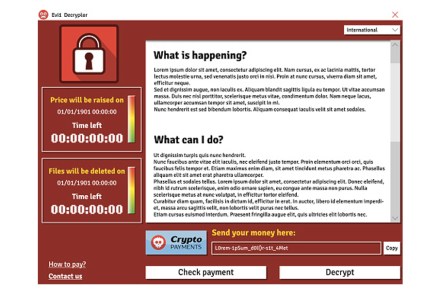
The risks and rewards of ransomware

Ransomware, the locking up of large networks through hacking until payment is made, is exploding. Recent attacks have crippled more than 200 city and local government networks in Baltimore, Albany and Atlanta, while specific hacking tools have been successfully used against mortgage companies, universities, hospitals, banks and consulting firms. A report this month from the cybersecurity firm, Emsisoft, reveals that the cost of ransomware in the US last year was over $7.5 billion, involving 113 state and local governments, 764 health care providers and 1,233 schools. In 2018, the FBI received reports of 1,500 ransomware attacks (the latest available FBI figures) which does not include hundreds of attacks that were never reported with ransoms secretly paid.

ransomware