Guy Pearce

American cinema at its best

From our US edition

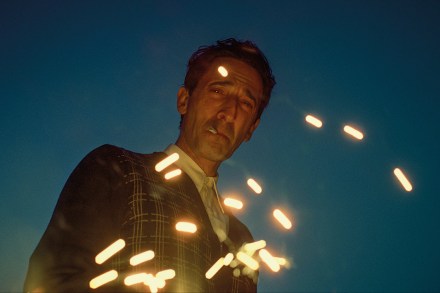
The extraordinary success of The Brutalist is not something that Hollywood, or anyone else, anticipated. When it was announced for last year’s Venice Film Festival, it was regarded with a degree of interest but not much else. After all, Brady Corbet’s previous two films — The Childhood of a Leader and Vox Lux — had attracted a degree of critical attention but neither had been an awards player, let alone making any money at the box office. Auteurs can auteur, but the wider Hollywood establishment will only take them seriously if their films make some decent bank. When Chloé Zhao won Best Picture and Best Director for Nomadland, her reward was to be given hackwork on Marvel’s first major flop, Eternals: fingers crossed that her next picture, Hamnet, restores her to critical favor.

Brutalist

It’s no Citizen Kane: The Brutalist reviewed

The Brutalist, which is a fictional account of a Jewish-Hungarian architect in postwar America, has attracted a great deal of Oscar buzz and has been described as ‘monumental’ and ‘a masterpiece’ and ‘an inversion of the American dream’ and ‘up there with Citizen Kane’. It’s three and a half hours (including a 15-minute intermission) and while the running time isn’t an issue, as it is engrossing enough, it did frequently feel familiar. What film about the American dream isn’t an inversion of the American dream? I couldn’t fathom if it had anything new to say. It felt more like classy potboiler – love! Sex! Money! Power! Raw concrete! What film about the American dream isn’t an inversion of the American dream?

Too in thrall to today’s dogmas: ITV1’s A Spy Among Friends reviewed

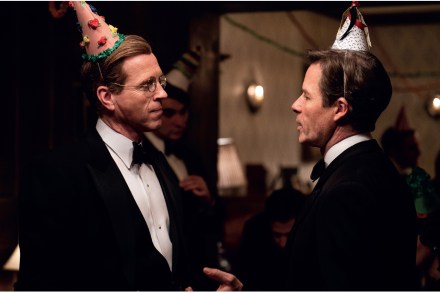
In 2014, Ben Macintyre presented a BBC2 documentary based on his book A Spy Among Friends: Kim Philby and the Great Betrayal. The programme managed to shed new light on a familiar but still irresistible story by concentrating on Philby’s relationship with his old chum – and fellow Cambridge man – Nicholas Elliott. Elliott was sent in 1963 by the Secret Intelligence Service (SIS) to question Philby in Beirut where Philby had become the Observer’s foreign correspondent after a long and successful career betraying his countrymen to the Soviets. Elliott did elicit some sort of confession, but a few days later, Philby absconded to Moscow.