Guilt

French letters – Albert Camus’s great epistolary love affair

From our UK edition

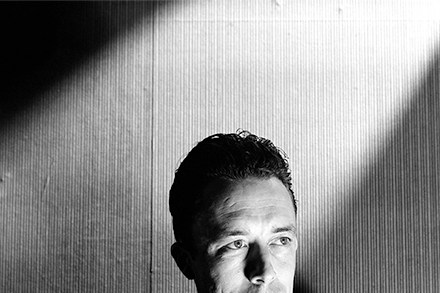
The extraordinary correspondence between Albert Camus and the love of his life Maria Casarès must rank among the most passionate ever written. Rarely can two lovers have expressed with such fervour a comparable range of emotions, from ecstasy to darkest despair. At times one shies away from the letters’ raw, searing intimacy, feeling like an intruder; but the sheer force of the feelings expressed and the finesse with which they are articulated propel one through. These letters were first published in France in 2017 by Camus’s daughter Catherine, who was given them for safe-keeping by Casarès shortly before her death in 1996.
Why Hitler’s suave architect escaped the noose at Nuremberg

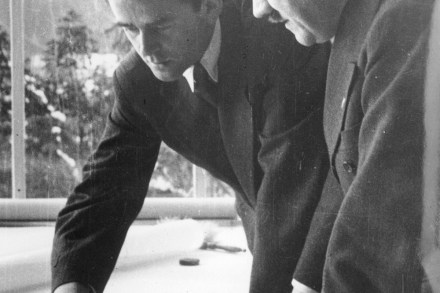
At the Nuremberg trial of the main Nazi war criminals, one man stood out: Hitler’s favourite architect and later armaments minister, Albert Speer. He cut a gentlemanly figure in a gallery of rogues. The strutting, smirking Hermann Goering reminded Rebecca West, who attended the trial, of ‘a tout in a Paris café offering some tourists a chance to see a black mass’. Julius Streicher, the Jew-baiting brute, was like ‘a dirty old man of the sort who gives trouble in parks’. On the same bench, all declaring their innocence in the face of overwhelming evidence of monstrous crimes, were the lantern-jawed SS leader Ernst Kaltenbrünner, the sour-faced ex-champagne salesman Joachim von Ribbentrop, Fritz Sauckel, the thuggish slave labour chief, and the rest of the sorry gang.

Caught between Hitler and Bomber Command – the Berliners’ cruel predicament

From our UK edition

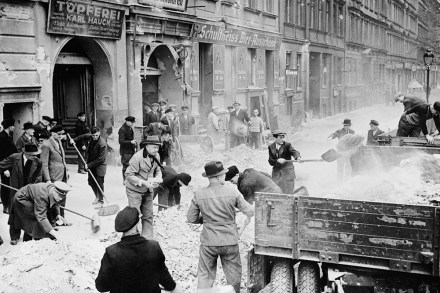
Can you be a true, thoroughgoing patriot and still want your country to lose in a war? It’s a dilemma that faced countless thoughtful people in the past century who lived under totalitarian regimes, and I know is torturing many Russians today. It’s the stark question at the centre of Ian Buruma’s subtly nuanced and beautifully written book about the lives of Berliners in the second world war as their city was being destroyed by a combination of aerial bombardment and the manic cruelty of their own leaders.

John Updike’s letters overflow with lust, ambition, guilt and shame

From our UK edition

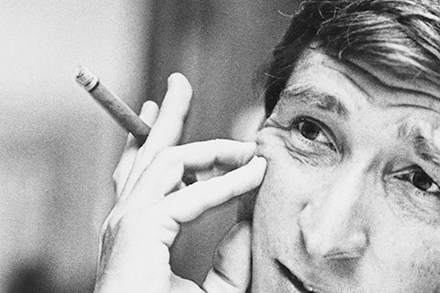
When John Updike died in 2009, aged 76, he left behind the last great paper trail. Novelist, short story writer, poet, essayist and art critic, he published with unstoppable fluidity in every genre. The sheer tonnage of his 60-odd books has now been augmented by A Life in Letters, a comparatively small sampling of the 25,000 or so epistles he sent out over the course of his life. This unwieldy volume serves up about 700 of them. I say he wrote with unstoppable fluidity (it was David Foster Wallace who dangled the question ‘Has the son of a bitch ever had one unpublished thought?’), but I should add that the letters and postcards (Updike loved a postcard) contain more than just pretty phrases.

The importance of feeling shame

From our UK edition

In several homilies, the late Pope Francis spoke of the ‘grace of feeling shame’. What a strange idea! Nobody wants to feel shame. Adam and Eve, after all, first felt shame only after being expelled from the Garden of Eden. Shame was God’s punishment: they felt ashamed of what had never troubled them before, namely their nakedness and their sexual desires. But what the Pope meant, I think, is absolutely salutary for our age. Shamelessness is ubiquitous. It is the accelerant of social media that encourages us to narcissistically fire up our victimhood to a gimcrack blaze. It is why so many of us are chained to the brazen idea that we can never be wrong. It’s the seeming life strategy of the most powerful man on Earth.

Anonymous caller: This Plague of Souls, by Mike McCormack, reviewed

From our UK edition

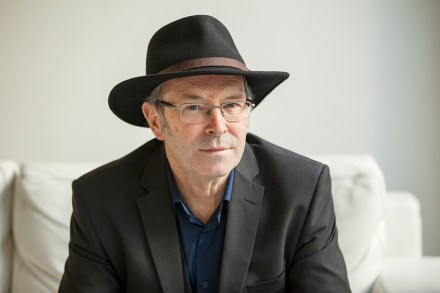
Mike McCormack is much garlanded. He won the Rooney Prize for Irish Literature with his first collection of stories; the Goldsmith’s Prize followed in 2016, along with the Irish Book of the Year Award and the International Dublin Literary Award, for his novel Solar Bones. A book-length, single- sentence analysis of a man’s life, that story sprang off the page with the force of a blow.  This Plague of Souls, his fifth novel, is more distanced. Not a story with a beginning, middle and end, it circles in widening gyres, swooping now and then on to a tightly focused moment as its ambiguous hero tries to make sense of an impossible situation. The basic carpentry is simple.

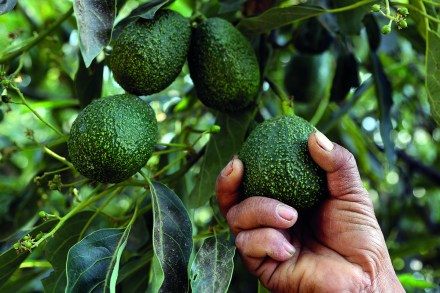
Avocado angst: is there anything safe to eat?

Your morning coffee is now an ethical minefield. Sure, you’ve remembered your reusable cup and are smugly avoiding adding to the 2.5 billion disposable cups dumped each year. But, ma’am, which milk would you like in your latte? Asked this question in my local coffee shop, I panic. Obviously not dairy, thanks to the methane-burping cows that produce it. Coconut is imported and food-mile heavy. Aren’t almonds causing drought in California? And isn’t the Amazon being razed to make way for soya plantations? Oat milk then, except I don’t like the taste. And isn’t coffee a pretty unethical product all told anyway? I recently stood at the counter for a full 20 seconds, lost in a moral milk maze.

avocado angst

Our collective nervous breakdown

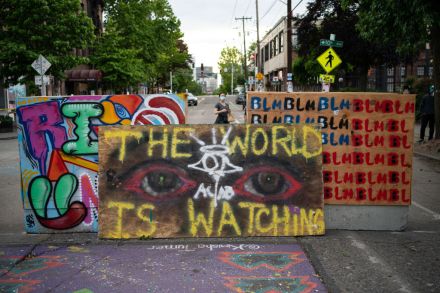
It’s being sold by some as a glorious revolution, but what Western culture is really experiencing is a garden variety nervous breakdown. It’s hard to pinpoint exactly when it began, but it’s certainly well progressed, wouldn’t you agree? The latest mania for gathering in furious mobs to denounce and expunge reminders of our past is what therapists call transference. We don’t hate our forebears anything like as much or as vigorously as we hate ourselves. How could we? They gave us everything we have. Instead, we are shamed by them. Born into what, statistically, is the easiest time in human history to be alive, what have we done or worked towards relative to the men and women cast in bronze or marble who came before?

nervous