Grief

Decluttering is the ultimate act of love

“You are going to die before me and leave me to deal with this, and I will curse your soul for all eternity,” I once said half-jokingly to my husband over a glass of wine. We were having one of our regular conversations about what he was going to do about his late uncle’s possessions, which had arrived at our house in lorry-loads about a year after we had married. “Why don’t you do half an hour of sorting every weekend? I will help you,” I would suggest in reference to the multiple barns, basements and attics at our farm, which were now piled high with three generations’ worth of male hoarding. But with an increasing number of children in the house and no sense of urgency, progress was slow.


declutter

The depressing rise of ‘direct cremations’

From our UK edition

Twenty per cent of last year’s funerals in Britain were direct cremations – up from 14 per cent in 2020. Numbers are continuing to rise, fast, for this most affordable, clinical form of body disposal: cremations with no ceremony and no attendees. Daytime advertising campaigns put out by corporate firms such as Pure Cremation promote the peace of mind of sprightly 75-year-olds at their laptops, or in their conservatories with mugs of tea, who have just pre-paid for the direct cremation package. In the adverts they gush about the future family knees-up, with cupcakes and balloons, that their relatives will splash out on with the money saved by not paying for an attended funeral.

The posh are persecuted for their accents

From our UK edition

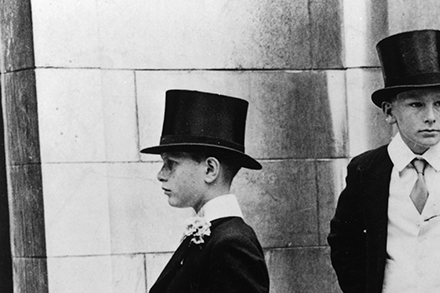
Mark Nowak, father of the murdered Henry Nowak, spoke powerfully in public after Vickrum Digwa was convicted of the crime. He said there was ‘no moment when the pain stops’ and he thought there never would be. This prompted a comparison in my mind. Last month, Daphne Hamilton-Fairley died, aged 95. Our families were neighbours and friends in Bayswater in the late 1950s, and kept in touch after we moved to the country. Daphne’s husband, Gordon, was a most distinguished oncologist at Bart’s. One morning in 1975, he was walking in Campden Hill Square. His dogs sniffed under a car. A bomb planted there exploded, killing Gordon (and the dogs). The IRA had intended to blow up the MP Sir Hugh Fraser, husband of the famous Lady Antonia, who lived next door.

Reading between the lines: the power of the unsaid

From our UK edition

This is the kind of book I wish I had the chance to sit down and discuss with the author. It is accessible without sacrificing academic rigour, astute and ingenious in its close readings and balances breadth with depth admirably. But why on earth does it have a singular title, given that the whole thrust of the argument depends on silence being a multifarious phenomenon? The reader encounters the enigma of silence as rapture, failure, slyness, avoidance, challenge. Silence is both built into literature and a kind of enwrapping, enclosing ocean, out of which words will emerge and back into which they will sink, rather like the primordial chaos at the beginning of Genesis. Speaking or writing about silence is inherently paradoxical. Many years ago I interviewed A.S.

Mourning becomes Siri Hustvedt

From our UK edition

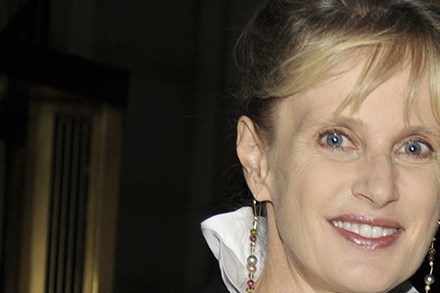
At 6.58 p.m. on 30 April 2024, Siri Hustvedt’s husband of 43 years, the novelist Paul Auster, died of cancer in the library of their Brooklyn home. He was surrounded by family, including his adored daughter Sophie, who three months earlier had given birth to his first grandson, Miles. Hustvedt and Auster met at a poetry reading in 1981 and married later that year. It was she who proposed to him. Auster, aged 34, was not yet famous and Hustvedt, aged 26, was still a graduate student. By the 1990s, when she too became a novelist, they were New York literary royalty. In the 1970s, Auster had been married to the translator and short story writer Lydia Davis, with whom he had a son called Daniel. If Sophie was a summer’s day, Daniel was darkness.

A poignant and perfect send-off 

From our UK edition

We knew the church would be packed as Shelley had died so young. We knew the church would be freezing, as her funeral fell during the Arctic spell that whitened the bracken and iced over puddles the colour of Dairy Milk. When we drove into Simonsbath just after lunchtime, the sun was only grazing the hilltops, leaving valleys in deep shadows. We’d allowed plenty of time, but the lanes were already crammed with vehicles. My husband and I had intended to stand at the back of St Luke’s so as not to take up precious places, but thanks to Ivo’s near-village-elder status we were ordered into the emergency seating in the chancel.

The brilliant, brave sister I never knew I had

From our UK edition

My own episode of Long Lost Family doesn’t involve a hug from Davina McCall or a visit from Nicky Campbell, armed with a box of tissues and the kind of tight smile that tells you that you’re about to cry your eyes out. It begins with an unexpected call from my brother who lives in the United States. Had I got a minute? Perhaps I should sit down… We have a sister living in Matlock in Derbyshire, he said. She was born in August 1976 – making her a year and half my junior – and had come to light through the wonders of a genetic match on the family history website Ancestry.com, which my brother had put his DNA on. Was I surprised? Not massively.

The enduring lure of Atlantis

From our UK edition

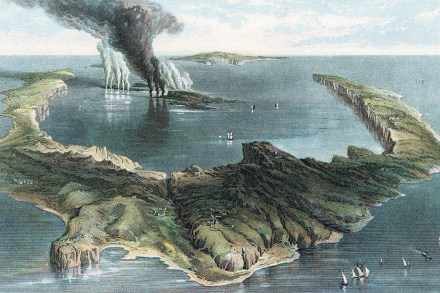
When you picture Atlantis, what do you see? For most people, this mythic city is a classical arcadia sunk beneath the sea – fallen columns, shattered arches and perhaps even an aqueduct. But that is not the place described by Plato, the original source of the Atlantis myth. His version consists of an immense Atlantic island, many millennia older than the Egyptian and Babylonian empires. The popular image of Atlantis was created by Jules Verne in Twenty Thousand Leagues Under the Sea. When that novel’s narrator, Professor Pierre Aronnax, joins Captain Nemo on his underwater exploration, they encounter a ruined city. He notices temples and even ‘the floating outline of a Parthenon’.

How my father’s bedtime stories shaped my life

From our UK edition

It’s half an hour before lights out when my dad arrives at my bedroom door holding Roald Dahl’s Danny the Champion of the World. He kicks off his shoes, loosens his tie and wedges himself next to me in my small single bed, his toes waggling in their socks as they regain freedom after a long day in the office. In the evening he smells of the menthol toothpicks he always carries in his top pocket (in the morning, when he drops me off at school, he smells of the spicy pink toothpaste which I once tried and which burned the roof of my mouth).

A scorched Earth: Juice, by Tim Winton, reviewed

From our UK edition

Late last year in Australia’s The Monthly, Tim Winton wrote an essay on the urgent need for writers to look the climate crisis in the eye. Quoting Amitav Ghosh’s observation about the ‘patterns of evasion’ that continue to conceal the scale of the catastrophe, he argued that writers must overcome the habits of mind that treat the natural world as an inert externality. Instead, they must find ways to recognise that we are part of nature, and our fate is inseparable from the world around us. ‘We have difficult work to do,’ he declared. ‘And we’re late to the bushfire.’ Of course, Winton is not someone who could ever be accused of treating the natural world as mere window-dressing.

The death of widowhood

From our UK edition

There were many tributes paid to the Jersey aid worker Simon Boas when he died of throat cancer in July, aged 47. In writing and speaking about his terminal diagnosis with courage and humour, he was admired on the island and beyond. My mother-in-law, having spent years working with aid charities, lives on Jersey and knew Simon well. So I listened with interest earlier this month to an item about him on BBC Radio 4’s Today programme. The host, Emma Barnett, had spoken to Simon days before he died. Now she was about to interview his widow. Or, as she referred to Aurelie Boas, ‘his wife’. As editorial mistakes go, this may not seem especially grievous. It is certainly common.

There is always Hope

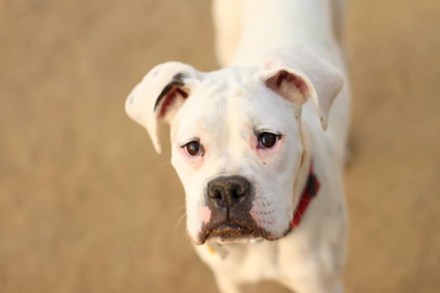
After a two-year battle with cancer, we had to put our beloved boxer, Hope, down. These are the first days in nine and a half years that I’ve woken up and haven’t had a dog. The world feels completely different. Flat. Dull. I’m deep in grief, but writing is how I process and I wanted to memorialize her in print. Print is corporeal; you can touch it and smell it. Physical presence is what death takes from us and the loss of a pet’s physical presence is all-consuming. Their sounds are the background soundtrack you take for granted — until they are gone. The silence is the first thing that strikes me when I walk in the door. It’s suffocating. It’s an emptiness so vast I want to scream into the void she left. My stomach is in knots and I want to crawl out of my skin.

hope

Next time, I’m swimming to Calais

From our UK edition

Friends in Calais invited me to their baby’s birthday party. He’s a year old. They suggested an overnight stay and I planned to reach France by about mid-afternoon and have a stroll, visit the sights, buy a bit of tat for the nipper and a litre of plonk for the proud parents. Clouds of sweet diesel vapour enveloped me. My pulse quickened. In the 1970s, it all smelt like this The morning express sped me south and I was entertained on board by the Bing-Bong Pixie who referred to the train as ‘this 10.02 service from London Victoria to Dover Priory’. She recited the name of every stop on the line and repeated it twice each time we reached a new station. Her chirpy tone concealed a rather malevolent side.

My (surprisingly) decent proposal

From our UK edition

‘Like being chained to a lunatic.’ That’s how a man feels in relation to his libido. And the lunatic latches on to anything, irrationally, and without warning. In Cambridge recently I dropped into a lecture given by a beautiful historian, Lea Ypi, from Albania, whose discourse included this observation about revolutionaries: ‘Once they attain power they lose all interest in revolution.’ Good point. Her blonde hair spilling over her shoulders absorbed far more of my attention than her political reflections and I was desperate to speak to her afterwards, but I had no way to orchestrate a meeting. She raised one eyebrow at me suggestively.

The end of days: It Lasts Forever And Then It’s Over, by Anne de Marcken, reviewed

From our UK edition

How do you picture the end of days? ‘When I was alive, I imagined something redemptive about the end of the world,’ muses the unnamed narrator in It Lasts Forever And Then It’s Over. ‘I thought it would be a kind of purification. Or at least a simplification. Rectification through reduction.’ But no: ‘The end of the world looks exactly the way you remember. Don’t try to picture the apocalypse. Everything is the same,’ she continues from her vantage point in an afterlife, brought into vivid existence by Anne de Marcken. It’s telling that the author’s biography states that she ‘lives in the United States on unceded land of the Coast Salish people’.

Scattering my father’s ashes in Santiago de Compostela

From our UK edition

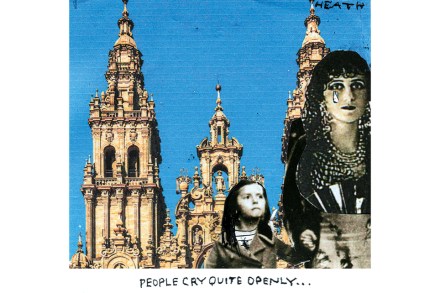
We are in the holy city of Santiago de Compostela to scatter our father’s ashes. He and my youngest sister had planned to walk the Camino, which finishes here at the resting place of Saint James, to mark the start of her adulthood and the beginning of his retirement. Instead, my two sisters have been walking the ancient pilgrims’ route for the past few weeks. I’ve flown into the city to meet them at the end. Most of Dad’s ashes went into a smart Regency tea caddy. The funeral directors had offered us a standard-issue urn but we decided he’d prefer something jolly and Georgian. The lacquered box didn’t quite hold all of his remains so the youngest put the rest in a Tupperware tub and brought him here to Spain.

Why I had to let go of my late sister’s house

From our UK edition

On the window ledge of my sister Carmel’s bedroom there’s a tray of cards inscribed with the months of the year, days of the week and numbers from 1 to 31. If you can be bothered to adjust the display every morning, you’ll have what’s called a ‘perpetual calendar’. I need to remember that I already have drawers full of Thompson memorabilia Sunday 3 October 2021 was the day Carmel’s calendar stopped being perpetual. That morning she woke up with a fever so alarming that her next-door neighbour called an ambulance. Before it arrived, Carmel changed the calendar; then she kissed goodbye to Otto, her Norfolk terrier, walked downstairs and left her house for ever. The next day, another ambulance took her from the Royal Sussex Hospital to Guy’s Cancer Centre.

That sinking feeling: The Swimmers, by Julie Otsuka, reviewed

From our UK edition

Julie Otsuka has good rhythm, sentences that move to a satisfying beat. Even as her tone shifts — from tender to funny to cynical to sinister — the beat goes on uninterrupted. In this, her third novel, the narrative has a steady flow. The Swimmers traces the cracks that develop in an underground pool, and in a woman’s mind, and the slow and unavoidable deterioration of both. It opens with an introduction to the pool that reads like a guided tour from the swimmers themselves. We learn about their rituals: ‘Some of us have to swim 100 laps every day, others… until the bad thoughts go away (Sister Catherine, lane two).’ There are dos and don’ts and people to watch out for — ‘tailgaters, lane Nazis, arm flailers’.

Bird-brained: Brood, by Jackie Polzin, reviewed

From our UK edition

This is not a novel about four chickens of various character — Gloria, Miss Hennepin County, Gam Gam and Darkness — that belong to the nameless narrator of Brood. That is incidental. It is a novel about a miscarriage — ‘our baby had been a girl’ — and, because it is a novel about the loss of a child pretending to be a novel about chickens, it is a brilliant novel about chickens. They have a biographer now, but they can’t be grateful, and that is why she loves them. ‘By the time a snowflake has landed, snowflakes are all a chicken has ever known.’ Or: ‘Gloria is wedded to the egg, not the idea of the egg. If the egg is removed, her memory of the egg goes with it.’ Or: ‘A chicken speaks of the moment.

Mourning sickness: our conspiracy of silence over grief

From our UK edition

No one can say that, over the course of the past year, we have not had the opportunity as a country to practise the grim arts of grief and mourning. We all know the figures — 127,000 Covid deaths and counting — but I wonder if, in the face of this onslaught, we have lost sight of the vital fact that behind each loss there will be a group of family members and close friends of the deceased setting out on the long, slow trudge down the boggy path of grief. How are we dealing with this suffering? When my father died extremely suddenly six years ago, there was one thing for which I was even more unprepared than the abrupt absence of the most cheerful person I had ever had the pleasure to know.