Government

White Dee’s diary: From Benefits Street to Downing Street?

From our UK edition

There’s no reason why you should have heard of me. No reason why you would have watched a Channel 4 television series called Benefits Street — with a title like that, I’d have changed channel if it came on my telly. But they didn’t tell us the title when they wanted to spend 18 months filming on our street. For reasons I can’t pretend to understand, five million people tuned in. It’s supposed to be the biggest hit Channel 4 have had since The Snowman. A fairly normal bunch of people — myself, Fungi, Black Dee, Becky and Mark — have become reality TV stars. It’s like Big Brother, except no one is evicted. Or paid.

Portrait of the week | 30 January 2014

From our UK edition

Home Britain’s gross domestic product grew by 1.9 per cent last year, the most since 2007, according to the Office for National Statistics. The last quarter’s growth was 0.7 per cent, a little less than the 0.8 per cent of the previous quarter. In the fourth quarter of 2013, construction actually declined by 0.3 per cent, and economic output was still 1.3 per cent less than in the first quarter of 2008. Ed Balls, the shadow chancellor, promised in a speech that Labour would restore the 50 per cent rate of tax on higher earnings.

iSPY: How the internet buys and sells your secrets

From our UK edition

You probably have no idea how much of yourself you have given away on the internet, or how much it’s worth. Never mind Big Brother, the all-seeing state; the real menace online is the Little Brothers — the companies who suck up your personal data, repackage it, then sell it to the highest bidder. The Little Brothers are answerable to no one, and they are every-where. What may seem innocuous, even worthless information — shopping, musical preferences, holiday destinations — is seized on by the digital scavengers who sift through cyberspace looking for information they can sell: a mobile phone number, a private email address. The more respectable data-accumulating companies — Facebook, Google, Amazon — already have all that.

High-speed fail

From our UK edition

A year ago the electoral strategies of the two main parties seemed set. The Conservatives would stand as the party of prudence, claiming to have saved Britain from a Greek-style meltdown through austerity measures which, though painful at the time, had eventually borne fruit in the shape of a private sector-led recovery. Labour, meanwhile, would stand as the party for public investment, promising to repair what it saw as the damage wrought by cuts. Since then, things have got better for the Tories than they could have imagined. Not only did a threatened triple-dip recession fail to materialise, but revisions to economic data concluded that Britain did not even suffer a double dip.

The great irony of the government’s transparency push

From our UK edition

David Cameron’s announcement that the government will publish a register of beneficial ownership should make it harder for companies to evade tax. This register of who owns what will make it harder for people to hide their earnings via complex ownership structures. This register of beneficial ownership is all part of the government’s transparency push timed to coincide with the Open Government Partnership. But what will have more of an effect on British voters’ lives than the register of beneficial ownership are the other measures that Francis Maude announced today. Allowing parents to see their child’s record in the national pupil database will give people a far more rounded view of how their kids are doing compared to others.

Arthur Laffer: cuts succeeded where stimulus failed

From our UK edition

 Nashville, TN All the drama coming out of Washington in the last few weeks has obscured some seriously good news: federal government spending is falling. And not at a trickle: think the White Cliffs of Dover. Not since the economic boom following 1945 have Americans seen such a rapid decline in the government’s claim on the nation’s resources — falling by a welcome $94 billion over two years. You need to go back to the end of the Korean war to find a time when US government spending has actually declined over two years. If Republicans in the House stick to the sequester and future caps already built into current budget law, federal spending will stay at this low level for years to come.

The German Greens might do so badly they end up getting in

From our UK edition

The German Green Party is having a torrid time. In an election campaign remarkable for static polls, come what may, the collapse of a third of the Green vote has been the most pronounced swing to be found. If in Sunday’s vote they do as poorly as it now looks like they will, this makes it more likely, not less, that they will end up in government. As it gradually became clear that Angela Merkel is staying put, and the real question was who she would end up with as coalition partners, the Greens looked like an unlikely option. For months they’ve put a wide gulf between themselves and Merkel’s Christian Democrats by calling for higher taxes and more redistribution.

Could making Whitehall smaller, better, faster, stronger save £70 billion?

From our UK edition

The government could save £70 billion from the Whitehall spending bill by moving into a new digitised age. That's the gist of a new report from Policy Exchange, detailing the amount of archaic waste that exists in the civil service. Some of the examples in the Smaller, Better, Faster, Stronger report are astounding — the Crown Prosecution Service prints one million sheets of paper every day. Two articulated lorries loaded with letters and paperwork drive into the DVLA every day. Policy Exchange suggests many of these wasteful paper-based services could be taken to a central online location, aka the GOV.UK website. Bringing the government’s online presence into once place has been divisive.

Unsullied and Untarnished: Lessons in Localism from Selkirk’s Past

From our UK edition

It is Selkirk Common Riding today. The biggest, most important, day in my home town's year. A day lent extra significance in 2013 since this is the 500th anniversary of the catastrophe at Flodden Field, a battle still recalled in these parts with a mixture of pride and melancholy. If you listen with due attention you can still hear the hoofbeats of history here. King James IV was the last British monarch killed in battle. As many as 10,000 of his compatriots fell with him that bleak September day in Northumberland. Among them were a handful bishops and many sons of the aristocracy. Scarcely a family in the country was untouched by grief. And few places, so the legends have it, suffered more grievously than the Royal and Ancient Burgh of Selkirk.

The madness of ring-fencing government spending.

From our UK edition

As ministers trooped one by one into George Osborne’s office last week for negotiations over the Spending Review, most looked pretty grim, steeling themselves against news of cuts to come. But three more cheerful figures stood out: the Secretaries of State for Health, Education and International Development. Their budgets, which between them account for more than a third of public spending, have been ring-fenced, with the result that the Chancellor is left scratching around elsewhere to hit his target of reducing spending by £11.5 billion. And although £11.5 billion sounds like a lot of money, in the context of what’s needed, it is a pitifully small gesture. Three years after an ‘austerity budget’, the government is not overspending by just £11.

6 steps to out-fox local government’s Sir Humphreys

From our UK edition

Shortly after the 2010 general election I attended an event where mandarins complained of 'swingeing cuts'. Then one NHS boss admitted that he had so much cash sloshing around he was having trouble spending his multi-hundred million budget. Local government, which accounts for one quarter of government spending, has the same mindset. Despite the rhetoric of cuts, little has actually changed. I have watched Sir Humphrey Whitehall and local government (both as a private contractor and as a councillor), and each year we witness a rush before the financial year ends to spend money which, if cuts were actually deep, would not exist. Fraser Nelson spelt out this reality before the budget. Public spending increased by sixty per cent during the last government.

Could a digital and more transparent NHS prevent another Mid Staffs scandal?

From our UK edition

Digital politics is all the rage. Take what Rachel Sylvester described in today’s Times as ‘digital Bennism’ — an online movement that is becoming increasingly influential to the Labour party’s campaign methods. And in the forthcoming Spectator, I’ve a piece discussing why policymakers are adopting internet-centric ideals to challenge the traditional way of doing things. The government’s digital ventures were discussed at Policy Exchange this afternoon. Rohan Silva — David Cameron’s senior policy advisor — said the government’s digital work is the ‘most radical thing people haven’t heard of’.

Jeremy Heywood, just call him very influential

From our UK edition

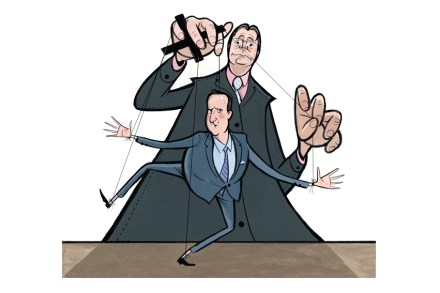
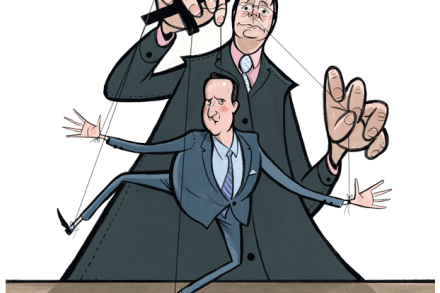
The main topic of conversation in Whitehall today has been The Guardian’s profile of the Cabinet Secretary Sir Jeremy Heywood. One particular passage has raised some eyebrows in several ministerial offices: He believes, they say, that reports of his power are overstated and the very suggestion that he might be making decisions on behalf of politicians makes him "cringe". He prefers to describe himself, they say, as simply very influential. Heywood, and this irritates some in Number 10, briefs journalists personally. He is known to be particularly concerned about his image. I’m told that after The Spectator cover depicting him as the PM’s puppet-master, there was much discussion over what should be done to finesse things.

The Conservative party has an empathy problem. Does it care about that? It should. – Spectator Blogs

From our UK edition

For people in the communication business politicians have an uncanny ability to confuse even their better intentions by resorting to clumsy, even stupid, language. Thus David Davis earlier today. When normal people hear the phrase "shock therapy" I'm pretty sure they associate it with pretty awful, even ghastly, measures that, most of the time, don't even have the saving grace of working. You wouldn't want any of your relatives to be given shock therapy. It's A Clockwork Orange or One Flew Over the Cuckoo's Nest stuff. Davis is not alone. Dominic Raab says the "talented and hard-working have nothing to fear" from removing "excessive" employee protections. I suspect many hard-working people, including talented hard-working people, might say it's damn easy for him to say that.

The problem with government

From our UK edition

David Frum offers a useful caution politicians might heed. Amidst the stupidity and vanity of politics it's occasionally worth remembering that government is an impossible business. It is much like George Kennan's description of the hazards faced by even weekend farmers: Here a bridge is collapsing. No sooner do you start to repair it than a neighbour comes to complain about a hedge row which you haven't kept up half a mile away on the other side of the farm. At that very moment your daughter arrives to tell you that someone left the gate to the hog pasture open and the hogs are out. On the way to the hog pasture, you discover that the beagle hound is happily liquidating one of the children's pet kittens.

Who funds think tanks?

From our UK edition

I was very interested to see the launch of the Who Funds You? website today. This is an intriguing new initiative to examine the transparency of think tanks. The tendency over recent years to outsource political policy to these micro-institutions makes it ever more important for the public to know the sources of their funding.   In keeping with the spirit of the exercise, the website’s founders are entirely transparent about the sources of its funding (it has none). And in the same spirit, I should disclose that one of the people involved is a friend of mine, Paul Evans, the founder of Political Innovation and editor of Local Democracy blog.

Hodge’s new nemesis: Sir Jeremy Heywood

From our UK edition

Margaret Hodge subjected senior civil servants to a fierce ear-boxing this morning. She accused them of trying to avoid the scrutiny of her Public Accounts Committee, and declared the current doctrine of ministerial responsibility unfit for the 21st century: ‘The senior civil service needs to acknowledge that we live in a different world from the world in which ancient conventions could prevail. Everybody wants greater transparency and accountability.’ Hodge also said she ‘has been rattling the cage too much for some’ and detailed some of the resistance she’s encountered.

Size Matters: Dysfunctional Government Edition

From our UK edition

Via Andrew, Francis Fukuyama has a new gig at Stanford University running a Governance Project. Introducing it, he lobs a hand grenade at one aspect of American Exceptionalism:   I would argue that the quality of governance in the US tends to be low precisely because of a continuing tradition of Jacksonian populism. Americans with their democratic roots generally do not trust elite bureaucrats to the extent that the French, Germans, British, or Japanese have in years past. This distrust leads to micromanagement by Congress through proliferating rules and complex, self-contradictory legislative mandates which make poor quality governance a self-fulfilling prophecy.

Uncivil service

From our UK edition

Political cultures differ. In Iran, for example, hyperbole is expected in all political conversations. So slogans always call for ‘Death to the US’, and nothing less. In Britain, of course, the use of language is more even-tempered, but other rules apply. Blaming the civil service for failure is considered OK, but charging an individual official, even a Permanent Secretary, for the same is considered off-limits. If a minister were to try it, then he'd be accused of trying to pass the buck on towards defenceless officials. But, as Camilla Cavendish points out in today's Times (£), failure is often also the fault of senior officials who, despite problems in the past, move seamlessly from job to job and from Department to Department.

The Legend of the Patriotic Drinker

From our UK edition

This is one hell of a statistic: In Britain, taxes on all types of alcohol contributed 36 percent of national revenue in 1898-99, but they were also 19 percent in France (1898), 18 percent in Germany (1897-98), and 28 percent in the United States (1897-98). That's from a new book by James Simpson Creating Wine, the Emergence of a World Industry 1840-1914. This seems hard to believe until one recalls how little governments spent on anything back in the late-Victorian era. Nevertheless, there you have it: boozers kept Britain afloat then just as drinkers and smokers do more than their bit to fund the government these days. Even so: 36%! There's something almost heroic about that.