Government

5 key ways the next government can deliver on its campaign promises

From our UK edition

Every government comes to power eager to deliver on its manifesto pledges and policy ideas. Yet our polling shows that just 1 in 6 of us believe politicians focus on fulfilling their election pledges. This mismatch between ambition and perception may be explained by another widely held opinion – most of us don’t believe that politicians make a priority of running government professionally. There is quite a bit of truth behind this view – governments too often fail to make the right decisions as they set up their systems, structures and relationships from the first day in office. If the next government wants to win the confidence of the electorate, it must deliver on its campaign promises.
James McAvoy is wrong – the arts are better off without subsidy

From our UK edition

The season of cringe-making acceptance speeches at arts awards ceremonies is nearly over, thank heavens. But it hasn’t passed without a most fatuous contribution from James McAvoy as he accepted a nomination for best actor at the Olivier Awards this week. He should have stuck to sobbing and thanking his agent. Instead, he launched a feeble and trite attack on the government for supposedly thwarting social mobility by failing to fund the arts. According to McAvoy’s thesis, ‘Art is one the first things you take away from society if you want to keep [people] down.

Why George Osborne wants to be the new Tarzan

From our UK edition

There is a subtle ideological shift going on in the Tory party. At the top of the party, there is an increasing appetite for a modern form of industrial strategy. As George Osborne argues in an interview in the current Spectator, ‘The Conservative party is at its strongest when it’s not the party that says there is no role for government and the state should just get out of the way… That is not a strand of Conservative thinking that, by itself, is enough. You need to have a bit of the Michael Heseltine: “I’m going to take the Docklands and build a financial centre here and build an airport here.” Or, “I’m going to take the Albert Docks in Liverpool and put the Tate Gallery here.

An uncomfortable interview for India

From our UK edition

British film-maker Leslee Udwin's video interview with one of the Delhi rapists may not make for comforting viewing, but there are some home truths in there that must be faced up to. In the past hour, the Indian government has banned the video - a move which is both cowardly and futile. They fear the rapist’s remarks that he has ‘no remorse’, and that he ‘blames the victim for fighting back’ might create ‘an atmosphere of fear and tension’. In the West, a similar message is being touted around: that the rapist should never have been given a platform. Don’t show the video and allow him to justify his actions. I visited Delhi’s Tihar Jail in 2012, where rapist Mukesh Singh is currently awaiting his death sentence.

Drugs Live drama: Channel 4 vs Home Office

From our UK edition

So far Channel 4's Drugs Live series has examined the effects of ecstasy while next month's installment will look into cannabis use. However, for those wondering which illicit substance will be next, the programme's host Dr Christian Jessen is unsure about the show's future. Speaking to Mr Steerpike at The Second Best Exotic Marigold Hotel premiere in Leicester Square, Jessen confessed that getting permission from the Home Office for each programme is proving a hard task. 'We're slightly limited by whether we can get the Home Office to give us permission because obviously these drugs are illegal so doing experiments on them requires all these complicated licenses. They're really difficult.

Immigration, not money, will improve Scotland’s most deprived schools

From our UK edition

I suppose we should be thankful that Nicola Sturgeon has acknowledged there’s a problem with Scotland’s public education system, even if she’s hit upon the wrong solution. Earlier this week, the First Minister announced that the Scottish -government would be trying out its version of ‘the London challenge’, a programme carried out by the last government, to address the chronic underachievement of Scotland’s most deprived children. In the past, the SNP has deflected criticisms of its education record by pointing out that Scottish 15-year-olds did marginally better than their English counterparts in the 2012 Pisa tests. But the difference between the two groups is minuscule and both have declined dramatically since Pisa first started testing in 2000.

The Enigma Gove?

From our UK edition

Chief Whip Michael Gove has given his first keynote speech since being politically assassinated last summer. Plucked from the frontline of reform, the former Education Secretary concluded his speech to Policy Exchange tonight, thus: 'It is often the case in history that individuals fail to appreciate the stability, the security and the steady progress they enjoy until it’s gone. It’s often the case that effective democratic institutions and progressive reforming Governments are taken for granted until they are subject to mistaken change. It is, sadly, all too often the case in politics that the urge to criticise what is in front of us rather than appreciate the risks of the untried alternative can pitch us into crisis.

The Laws according to David

From our UK edition

As Westminster clatters back to life after the Christmas break, so the steady stream of invitations land on Steerpike's mat. Don't all rush at once, but David Laws will be giving a speech this month at the Institute of Government on 'effective government in 2015 and beyond'. While this will no doubt be riveting feast of wonkery, it is a bold move by the senior Liberal Democrat minister. The speech is to launch the the Institute's 'Programme for Effective Government' report which 'outlines a series of practical measures for parties to adopt in making sure they honour their party manifestos'. Is this really something that a leading light of Nick Clegg's party is really qualified to lecture on?

How to fix the NHS: a doctor’s prescription

From our UK edition

I’m a doctor, and I don’t care about the NHS. In this country, that’s an almost heretical statement — but it’s true. What I mean is that I have absolutely no interest in ensuring its survival simply because it’s a great national treasure. What I care about is making sure that we have the best possible and most cost-effective healthcare system. And as it happens, despite the strikes, panic and doom-mongering, I think the NHS — by which I mean a nationalised healthcare model — is the best option available, if only someone were brave enough to make the right changes in the right way. Don’t expect this government to try.

If government doesn’t work, whose fault is it?

From our UK edition

The apparently eternal battle between politicians and bureaucrats for control of the government machine has been better for TV comedy writers than for the governance of Britain. Ministers complain that officials obstruct their plans to implement election promises; officials complain that special advisers drive a short-term media-obsessed agenda, and everyone objects to interference from the centre (except at the centre where everyone complains about off-message barons pursuing personal agendas). The first big divide that any minister faces is between policy advice and operational capacity. I will start with policy, because it is where the British Civil Service has always prided itself on providing a Rolls-Royce service. In most areas their pride is fully justified.

Justine Greening interview: ‘It’s about understanding what it’s like to start from scratch’

From our UK edition

[audioplayer src="http://traffic.libsyn.com/spectator/TheViewFrom22_4_Sept_2014_v4.mp3" title="Isabel Hardman, Fraser Nelson and James Forsyth discuss the Tory civil war" startat=60] Listen [/audioplayer]Justine Greening wants to talk about social mobility. If it is not immediately obvious why the Secretary of State for International Development wants to talk about this issue, it becomes clear. Growing up the daughter of a steel worker gave her an insight into what it’s like to struggle, she tells me, when we meet in a conference room overlooking Parliament Square. She says she feels that the Tories are not pushing as hard on social mobility as they ought to be. Ms Greening thinks the issue needs a champion.

Who cleans skyscrapers?

From our UK edition

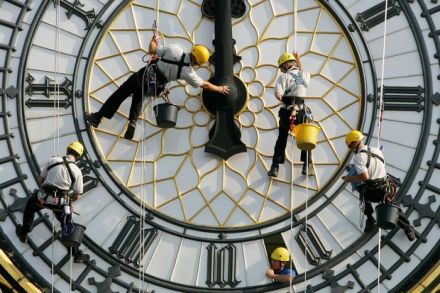
Tough at the top The clocks on Big Ben were cleaned by abseiling window-cleaners. Some other big cleaning/painting jobs: — Repainting the Forth Railway Bridge used to be a metaphor for never-ending work, but a new coating completed in 2012 is estimated to have a life of 25 years. — Sydney Harbour Bridge was, for the first 80 years of its life, cleaned by hand, but last year it was done for the first time by robot. — The world's tallest building, the Burj Khalifa in Dubai, is cleaned by a team of abseilers, with all 24,000 windows taking three months to get through. — Most New York skyscrapers are cleaned by hand. The World Trade Center had an automated cleaner, but it could not cover the corners or upper windows. Two window cleaners were among the victims on 9/11.

Asylum seekers are dying in British ports. It’s time we looked after them properly.

From our UK edition

The tale is now familiar: shouts are heard from inside a freight container and police are called. A cargo of human beings is discovered, some gravely ill. This happened last Sunday along the Thames at Tilbury docks. Thirty-five Afghans were discovered. One of them, Meet Kapoor, was already dead. Days later, 15 Kashmiris and Eritreans were found on a lorry pulled over in Somerset, dehydrated but alive. Dozens of people are now being found each week in these kinds of circumstances. It is not just economic migration: the Afghans found in Essex were Sikhs, for example, a group singled out for repression under the Taleban. Once they must have hoped that a stable government would emerge in Kabul, allowing for the return of the 1.4 million Afghans still in exile.

Government borrowing is up – the economic picture isn’t as rosy as the Tories say

From our UK edition

It's tempting given the optimistic mood on the Conservative benches at the moment to think that everything is just great with the economy. Not so, according to today's borrowing figures from the ONS, which show that government borrowing was higher than expected: George Osborne borrowed £13.3bn in May, up £0.7bn from the same month last year, and much higher than the £9.35bn forecast. Tax receipts have been weaker than expected, which has contributed to higher net borrowing. [datawrapper chart="http://static.spectator.co.uk/L158N/index.html"] Labour is saying that Osborne is now set to break his promise to balance the books by next year, while also arguing that it will balance the books but 'in a fairer way'.

Without Paxman, the BBC will have just one interrogator: John Humphrys

From our UK edition

In a double blow for the beleaguered BBC, the corporation has lost three of its most compelling attractions in little more than a month: the Newsnight presenter Jeremy Paxman, and Susanna Reid’s legs. Paxman has said he has had enough and announced his retirement from the thinly viewed current affairs programme. Susanna Reid’s legs have made their way over to ITV for its even more thinly viewed breakfast show called ‘Phwoar, Wake Up and Have a Look At This’ or whatever. The legs have attracted criticism for spending a substantial proportion of the show hidden from view under a desk while the rest of Susanna Reid jabbered about something with a slight smirk on her face in full view of the camera.

What do you get if you cross a suitcase with rollerblades?

From our UK edition

A 14-year-old at an American school recently caused a stir when he claimed that the US government could save over $400 million annually on the cost of printer ink if the default printer font were switched from Times New Roman to Garamond. Major effects can often be achieved by relatively trivial improvements. One of the things I have always hated about the European passport (apart from the word ‘European’, obviously) is the fact that the pages and the cover are all the same size. How much shorter would all immigration queues be were the photograph page just an eighth of an inch narrower than other pages, so the damned thing flipped open at the right place? But these little incremental improvements are not really the stuff from which really interesting innovations arise.

Curious lack of support for Miller in Cabinet

From our UK edition

Senior 1922 Committee members are quite surprised by the suggestion that tomorrow's end-of-term meeting with the Prime Minister represents the deadline for the Maria Miller problem to be resolved. But while you won't find a Tory backbencher who thinks the impact on the public of this story is negligible - one tells me that 'whatever happens now, we are losers' - there's an interesting attitude among Miller's own Cabinet colleagues. They had long suspected that she was vulnerable in any forthcoming reshuffle anyway, with one describing her as 'a bit quiet' in meetings and another suspecting that she was 'damaged goods' after Leveson and with the media after her anyway.

When posters told us our place

From our UK edition

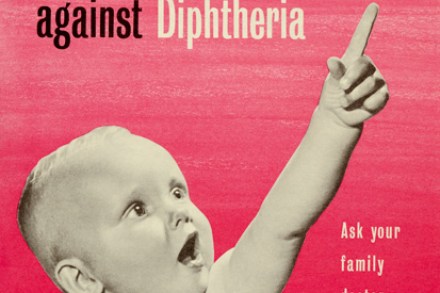
As a sign of the way things have changed, nothing could better this. Hester Vaizey, Cambridge history don and ‘publishing co-ordinator’ at the National Archives, has collated this splendid collection of posters issued by various government agencies in the 30 years or so after the second world war. This was, of course, the heyday and highwater mark of what furious red-faced men of my acquaintance now call ‘the nanny state’ — a phrase, incidentally, first used by an editor of The Spectator (Iain Macleod) in the pages of this magazine back in 1965. Although I never had a nanny myself, I know from repeated childhood viewings of Mary Poppins that Nanny Knows Best, and so these posters confirm.

Tory MPs dismiss minority govt hints as lacking ‘solid logic’

From our UK edition

While Number 10 is pouring cold water on suggestions that the Prime Minister might rule out a second coalition in the 2015 manifesto, his MPs have given it a rather icy reception. If the hints about him preferring a minority government to governing with the Lib Dems were supposed to reassure those on the Right that he does love them more than he loves Nick Clegg, they seem to have backfired rather. Instead, Conservative MPs I've spoken to today are annoyed for a variety of reasons. The first is that backbenchers feel any plan to rule out a coalition in the manifesto is counterproductive. It's worth noting that Number 10 sources are insisting that 'our manifesto is about policy' rather than giving any suggestion that there would be a commitment on minority government in the document.

Why America’s ivory ban won’t help elephants

From our UK edition

The Duke of Cambridge deserves credit for bringing his influence to bear on the growing tragedy of the elephant, whose population is being decimated by poaching. But his advisers should have been quicker to dissuade him from one aspect of his campaign: the threat to dispose of his grandmother’s ivory collection. That Africa’s elephant population is in peril from poachers is not in doubt. Of a total of 400,000 living in the wild, around 50,000 were illegally killed last year, way beyond the numbers which the population could naturally withstand. The future is looking bleak, too, for wild rhino, 1,000 of which were poached in Africa last year out of an estimated total of 25,000.