Government

Overreacting to Werritty

From our UK edition

The Werritty case has made everyone who believes that government is controlled by lobbyists and tycoons slaver. The Guardian screams that Ministers held more than 1,500 meetings with corporate representatives in the first 10 months of the coalition, which presumably the newspapers’ readers know to disapprove of. But how many unionists did Labour meet after a year in office — and how many corporations? The party that declared itself "relaxed" about profit-making presumably met one or two profit-makers. Or did Ed Balls, when he was City minister, stay away from the Square Mile?

Another voice: Dale Farm reprieved

From our UK edition

This is the second of our occasional 'another voice' series. Siobhan Courtney reports again from Dale Farm. The outcome was not what anyone expected: the bailiffs are not getting into Dale Farm. The atmosphere here now is very different to that of the weekend, when I was able to see what life was like inside Dale Farm. The travellers, cheering with joy and hugging each other have just won an injunction preventing Basildon Council from clearing the site pending a further hearing on Friday. Blockades, scaffolding and walls erected by the travellers and protestors stand defiant.

Department of Homeland Absurdity

From our UK edition

A telling admission from Janet Napolitano, heid-bummer at the ludicrous (though founded for obvious, understandable reasons) Department of Homeland Security: “We are moving towards an intelligence and risk-based approach to how we screen [people at airports],” Napolitano told Mike Allen during a morning forum at the Newseum. “I think one of the first things you will see over time is the ability to keep your shoes on. One of the last things you will [see] is the reduction or limitation on liquids.” In other words, current policy has nothing to do with intelligence or risk and is, by the US government's own admission, stupid.

Cameron makes poor start on the long road back

From our UK edition

This was David Cameron’s most difficult press conference since becoming Tory leader. The Prime Minister refused to distance himself from Andy Coulson, a man he said was still his friend. But this loyalty to his ‘friend’ placed Cameron in an almost impossible situation. Cameron remarked defiantly that you’d be ‘pretty unpleasant if you forgot about him’ but the longer Cameron defends Coulson and his decision to hire him, the more this scandal will stick to him. Cameron repeatedly said that he gave Coulson ‘a second chance’. This is an awful line because it sounds like Cameron thinks he deserves credit for hiring him. Cameron needs to say urgently that he now regrets the decision to employ Coulson.

Treasury notes reveal Osborne’s position on euro bailouts

From our UK edition

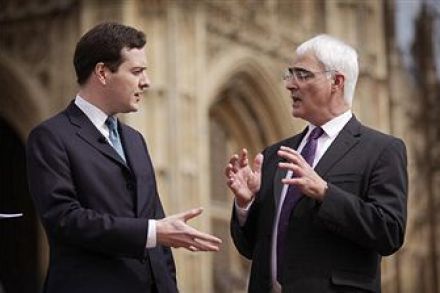
There has been much talk about what George Osborne told Alistair Darling about the EU bailout mechanism during those days in May between the election and the coalition being formed. But notes of a conversation between Osborne and Darling released today show that Osborne did urge Darling not to commit to anything that would have a lasting effect on the public finances. Osborne also suggested that the UK government might abstain due to the fact that the country was between governments. To which Darling’s reply was that the Cabinet Secretary’s advice was that the government was the government until a new one actually took office. It remains to be seen what Douglas Carswell, the Tory MP who has been pushing for the release of these documents, makes of the issue.

Tax versus philanthropy 

From our UK edition

I was on the panel of Any Questions last night in Saltaire, the most beautiful town I’ve seen outside of the Highlands. Jonathan Dimbleby always warms everyone up with a test question, which lets the panelists make their mistakes early. The first question was this: the town of Saltaire was founded by a philanthropist, Sir Titus Salt. What can be done to make today’s rich pay their fair share? Lucky for me that it was not recorded, because I went on for ages. Sir Titus was living in an era before the welfare state, where welfare was provided voluntarily, by people in the community. Had he been alive today, the government would be confiscating 52 per cent of what he earned – thanks to George Osborne’s recently increased tax.

Britain makes new senior diplomatic appointments

From our UK edition

From the Number 10 website: The Prime Minister is pleased to confirm the following senior appointments: Sir Peter Ricketts, currently the Prime Minister’s National Security Advisor, to become HM Ambassador to France; Sir Jon Cunliffe, currently the Prime Minister’s Advisor on Europe and Global Issues, to become the UK’s Permanent Representative to the European Union in Brussels; Sir Kim Darroch, currently the UK’s Permanent Representative to the EU, to become the Prime Minister’s National Security Adviser; and Sir Peter Westmacott, currently HM Ambassador France, to become HM Ambassador to Washington. These changes will take effect from January 2012.

Britain’s other, bigger debt problem

From our UK edition

And what about the other sort of debt? We spend so much time harrumphing about the national debt that an important point is obscured: personal debt, the amount owed by individuals, is even higher. I wrote an article on the subject for a recent issue of The Spectator, as well as the Thunderer column (£) for last Saturday's Times. But, really, a piece in the latest Spectator (subscribers here) by Helen Wood — the former prostitute who transacted with Wayne Rooney, as well as with a "married actor" who has slapped her with a superinjunction — puts voice to the problem in blunter fashion. "My mistake," she writes, "was to get into debt": "I borrowed £800 to go on holiday, followed by £500 to pay the rent — both from loan sharks.

The Portuguese fallout

From our UK edition

How much are we in for? That is the question that springs most readily to mind after Portugal's request for fiscal aid from the EU. And, sadly, the answer is difficult to work out. The figures being spread around range from £3 billion to £6 billion, with valuations in between. But, really, it depends on how much of the €80 billion package is agreed to by European finance ministers, and which lending mechanisms are used. The European Stability Fund, the EU's emergency fund and the IMF's pot of gold all have differing levels of UK involvement. If our country does end up making a significant contribution to any bailout package, then the government will certainly have some explaining to do.

What were the SAS doing in the eastern desert?

From our UK edition

When the official files are opened in 30 years time, we will see what series of decisions led the government to send a helicopter-born SAS team into eastern Libya when they could have sailed in on HMS Cumberland, disguised themselves as reporters or rung up Mustafa Abdel Jalil, Libya’s ex-justice minister who is said to head the “Transitional Government”. But it is easy to see how it happened. The perfectly sensible idea of sending a British emissary to Benghazi to make contacts must have clashed with bureaucratic protocol and the FCO’s duty of care arrangements. “What?” You can just imagine the officials exclaiming to the ministers. “You intend to send a single person to Libya. But what if he got killed? Or hurt?

Government to appeal on prisoner votes

From our UK edition

PoliticsHome reports that the government is to ask the ECHR to reconsider its verdict in the prisoner voting rights case. The website says: ‘In a response to a parliamentary question from Labour MP Gordon Marsden, Cabinet Office Under-Secretary Mark Harper said: "We believe that the court should look again at the principles in "Hirst" which outlaws a blanket ban on prisoners voting, particularly given the recent debate in the House of Commons."’ This is unsurprising. Last month, the government asked its lawyers to advise on the ramifications of noncompliance. The lawyers were unequivocal: the repercussions of such defiance was diplomatically impossible and extremely expensive.

Nick Clegg is Right. Again.

From our UK edition

Last week's civil liberties bill was hardly perfect but it's still a step in the right direction. And, frankly, it's bonny and startling in equal measure to have a Deputy Prime Minister who says things like this: "I need to say this – you shouldn't trust any government, actually including this one. You should not trust government – full stop. The natural inclination of government is to hoard power and information; to accrue power to itself in the name of the public good." I'm quite happy to oblige Mr Clegg. I don't trust this government either. I think it's intentions are often fine but I doubt whether it has the courage of those convictions.

Council gorillas get on the buses

From our UK edition

The cold war in Britain’s localities is warming up. Buried in the Telegraph and the Financial Times is the news that councils are cutting local bus services, and central government is being apportioned blame. An organisation called Better Transport has launched a campaign titled Save Our Buses. It claims that straitened councils have been forced to shed £34 million from the subsidised funding of local buses; 70 percent of routes have been affected so far.   This is a prime example of local government conniving to avoid responsibility for spending contractions. With adroit calculation, councils bastardise vital services to inconvenience those they represent.

A picture paints a thousand words

From our UK edition

Crime maps have formally reached England and Wales. The Home Office has unveiled www.police.uk and citizens can examine incidences and trends of crime in their local area. Naturally, the website is broken at the moment. Nick Herbert, the Policing Minister, told the Today programme that the site crashed under the weight of 4 million users in an hour. The government hopes that this interest will be sustained, inaugurating a revolution in transparency and accountability. People power will trump the unelected authorities of the past. Crime maps merely record the facts of crime, but extensive trials suggested that they improve peoples’ knowledge of their neighbourhood and encourage locals to influence police strategy in troubled areas.

Palace intrigue

From our UK edition

Plunging into the second volume of Alastair Campbell’s diaries is like opening a Samuel Richardson novel. Plunging into the second volume of Alastair Campbell’s diaries is like opening a Samuel Richardson novel. The tone is breathless and excitable and the dramatic world of backstabbing, tittle-tattle and palace intrigue is instantly captivating. Historians will scour the book for valuable new information. Practitioners of media management will regard it as a classic. Downing Street rivalries dominate from the start. The impression that ‘the TB-GB riftology’ developed after 1997 is inaccurate.

Government Efficiency vs Cost of Government? Why not try both!

From our UK edition

Hey ho, it's the State of the Union speech tonight and as usual there's no shortage of advice for President Obama. Via Steve Benen, here's Ruy Teixeira: Make no mistake: a more effective government is the public's priority, not a smaller government. In a survey I helped conduct for the Center for American Progress's Doing What Works government reform project, we found that, by a decisive 62 to 36 margin, the public said their priority for improving the federal government was increasing its efficiency and effectiveness, not reducing its cost and size. Significantly, we found an identical result among the independents in our survey.

From the archives: The resignation of Alastair Campbell

From our UK edition

No need to explain why we're looking back on the resignation of Alastair Campbell for this week's entry from The Spectator archives. The piece itself is merciless stuff from the pen of Stephen Glover. Alastair Campbell's redtop values have contaminated our politics, Stephen Glover, The Spectator, 6 September 2003 When I learnt of Dr Kelly's suicide, my first thought was that he had been fatally drawn into Alastair Campbell's world. It is what many people felt. It was a reasonable assumption that Mr Campbell or his office or someone responsible to the Prime Minister's director of communications had deliberately put Dr Kelly's name in the public domain - with disastrous results.

Central government and local government lock horns over bin collection

From our UK edition

It seems that Cardinal Walter Kasper was right: parts of Britain are suggestive of the Third World. The Sun has been leading the tally-ho against council leaders in Exeter and Birmingham, who have allowed rubbish to lie in the streets for more than a month. And today, Local Government Minister Bob Neil joined (£) the fray, condemning councils for failing to deliver ‘one of the most basic services’. (He also mentioned executive pay, again.) Recalcitrant councils have issued a plethora of meteorological excuses, but these are mostly a distraction. Many councils managed to remove rubbish over Christmas; David Cameron commended them for their efforts.

What’s with the Wiki-fuss?

From our UK edition

The whole Wikileaks scandal reminds me of a recent conversation I had, at his request, with a member of a foreign diplomatic service. The country he represented is a long-standing British ally and I saw no harm in talking to him as I didn’t say anything which I hadn’t said, or wouldn’t say, in print. Most of the chat was the usual stuff: what are Cameron’s prospects, what does he believe, will the Lib Dems last out five years, who are the real powers in Downing Street, what will happen to Andy Coulson, who are the new MPs worth watching etc. I suspect that what we discussed, along with many other conversations this man will have had, will have shaped the analysis he sent back.

What the new peerages tell us about the party leaders

From our UK edition

Today’s peerage list contains more interesting names than usual. Jullian Fellowes — Downton Abbey, Gosford Park, Snobs — is the one who will get the most attention. It is a sign of how confident David Cameron is feeling that he has risked the reopening of the whole class question. But perhaps, the most intriguing Tory appointment is Patience Wheatcroft. One imagines that she wouldn’t have taken the role unless it was a way to allow her to serve on the political front line. Howard Flight’s appointment to the Lords rights a wrong: his sacking as a candidate before the 2005 election was as unfair as it was hasty.