Government

Camila Batmanghelidjh comes to the government’s aid

From our UK edition

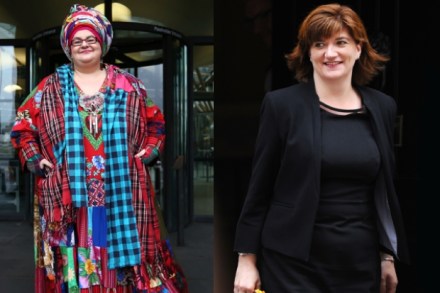
Since Mr S's colleague Miles Goslett blew the whistle on Kids Company – and its founder Camila Batmanghelidjh -- in The Spectator earlier this year, the charity has been closed down and Batmanghelidjh has been summoned to a select committee hearing. With Batmanghelidjh's former cheerleader David Cameron now doing his best to distance himself from the disgraced charity chief -- after his ministers were accused of brushing aside civil servants' concerns about Kids Company's finances, could she still have one cabinet minister on side? Mr S only asks after an email popped into his inbox this morning from 6 Hillgrove PR saying that Batmanghelidjh was helping to inspire children as part of an Entrepreneurs4Schools scheme allegedly backed by the education secretary.

Pry another day

From our UK edition

Were David Cameron in any way adept at spin, it would be tempting to think that the publication of the Investigatory Powers Bill had been deliberately timed so as to coincide with the opening of Spectre, the new James Bond film. The debate over the bill has turned into a question of whether we trust our spies, which by and large we do. But the real question to be asked is whether we trust the taxman, the police and our town halls with the powers of espionage — and that is another matter entirely. The Investigatory Powers Bill does not actually contain new powers for the security services, who can already tap phones and access emails and have done for decades.

Here’s what’s wrong with the ‘public sector ethos’

From our UK edition

An infuriating benefit of readers’ online comments beneath the efforts of a columnist like me is that as you read the responses an understanding dawns of the column you ought to have written. Some readers are stupid, unpleasant or obsessive; but most are not. As you learn their reactions you see where your argument was not clear, where you were short of information, and where you were simply wrong. But more than that, you sometimes tumble for the first time to where the nub of a problem that perhaps you danced around may lie. Last Saturday I wrote for the Times about the self-righteousness of spokesmen for public services threatened by government cuts; about veiled threats by the police to stop policing, and by barristers enraged by cuts to legal aid.

Lords of misrule

From our UK edition

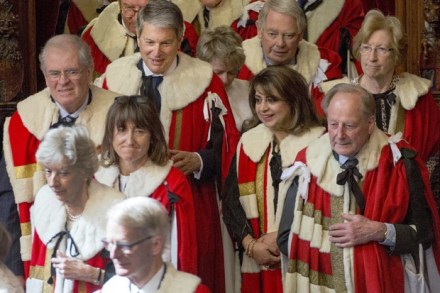
A few days after the general election, I bumped into one of David Cameron’s longest-standing political allies, one of those who had helped him get selected for Witney back in 2000. I remarked that he must be delighted that Cameron had now won a majority. To my surprise, he glumly replied that it would only be significant if Cameron were to create a hundred new peers. Without them, he warned, the govern-ment’s most important measures would end up bogged down in the Lords, where Labour and the Liberal Democrats combined comfortably outnumber the Tories. Now, normally when people urge the Prime Minister to create new peers it is because they hope that they will be on the list themselves.

Britain should not mistake its allies for friends

From our UK edition

It would be hard to dream up a more absurd piece of political satire than an agency of the British government called Just Solutions International winning a contract to train prison officers in a country that has executed 175 people in the past year, many of them in public beheadings for offences such as sorcery, witchcraft, adultery and political activism. That it sought this contract in the first place is a sign of the great void at the heart of our foreign policy. This week, the Justice Secretary, Michael Gove, pulled out of the deal with Saudi Arabia — thereby attracting the ire of the Foreign Secretary, Philip Hammond, who called him ‘naive’ for doing so. That is a word better applied to Mr Hammond.

The Met have found no evidence for an abuse network linked to No10. It’s time they admitted it

From our UK edition

Almost exactly three years ago, Tom Watson stood up in parliament and demanded the Metropolitan police investigate ‘clear intelligence suggesting a powerful paedophile network linked to Parliament and No. 10’. It was an incendiary claim which, because it was made during Prime Minister’s Questions and broadcast on live television, set hares running on social media and beyond. We know, now, that the police found no evidence to support an allegation of rape made against Leon Brittan by a woman known as ‘Jane’. But the question remains: what about that link to No. 10? I have spent much of the past three years looking into this. Working for BBC Panorama means following the evidence — no matter how tough and painful the process.

Spectator’s Notes | 3 September 2015

From our UK edition

Was there ever a more unilluminating political idea — for voters rather than practitioners — than triangulation? For those readers so pure and high-minded that they have not followed politics for 20 years, I should explain that triangulation came from Bill Clinton, was imported by Tony Blair, and is now practised by David Cameron. Clinton’s adviser, Dick Morris, put it thus: ‘The President needed to take a position that not only blended the best of each party’s views but also transcended them to constitute a third force in the debate.’ The Tories’ adoption of the Living Wage is the latest example.

Fracking Lancashire

From our UK edition

That democracy is a superior form of government to any other goes without saying. But in order to function, it has to be conducted in such a way and on such a scale as to ensure that the people or their elected representatives are making decisions based on genuine alternatives. With this week’s decision by Lancashire County Council to reject a second application for fracking on a site near Blackpool, something has gone seriously wrong. An important national issue has been allowed to be settled according to purely local concerns.

Spy if you must, but don’t give the game away

From our UK edition

The Snoopers’ Charter. I ought to care about this. I’m a sort of libertarian. I believe in personal freedom. I’m a trustee of Index on Censorship. The state as Big Brother is everything I’ve always fought in politics. So why can’t I quite summon the requisite indignation? Why do I find all this Edward Snowden stuff vaguely irritating? Why does the crusading column for the Times, railing against state surveillance, somehow keep failing me, though time and again I’ve opened my laptop and tried to make a start?

Elysian fields

From our UK edition

There is a phrase that has been fashionable for years in wonkland — places like the upper echelons of the civil service and high-end think tanks. The phrase is ‘evidence-based policy-making’. There, I bet that’s got you going. When I was a citizen of wonkland and heard those words from the Sir Humphreys and Lady Susans I would typically roll my eyes or head for the door, because you can generally gather whatever evidence you want to justify whatever policy you want. In the end, you have to believe in something. Have the courage of your convictions and be judged by the results.

Tony Blair takes a dig at chillaxing Cameron

From our UK edition

Tony Blair popped into King's College London this morning to discuss ‘how to run a government’ with his former adviser Michael Barber. Amongst other things, the former Prime Minister discussed David Cameron’s efforts to remodel No.10 to make it more Blair like, as James reveals in his column this week. But he made no attempt to disguise the fact that he thinks structures are no substitute for the ‘guy’ at the top being on the case 24/7 when looking to deliver change: ‘It works when you have the clearest possible sense of priorities and what you want to achieve … you’ve got to have the Prime Minister’s authority behind this all the time.

Osborne’s welcome conversion to the advantages of a budget surplus

From our UK edition

There should always be celebration when a sinner repents, and so it’s great to see George Osborne’s belated conversion to the cause of budget surpluses. As the above graph shows, he has not seemed in a rush to hit surplus himself – giving him many more years of increasing the national debt. James Forsyth summed it up brilliantly: Osborne is the St Augustine Chancellor: give me fiscal responsibility, but not yet! And today, he will add something: when I get there, let's make it illegal for anyone not to balance the budget again! In economics, as in much else, converts are always the most zealous. Osborne's new plan—to have surpluses mandated by law—makes a lot of sense.

Does anyone really expect the EU referendum to resolve anything?

From our UK edition

I suppose, if you could look deep into the mind of somebody who was passionately keen that Britain should leave the European Union then, in among things like old episodes of Dad’s Army and unassailable convictions that Cornwall produces some perfectly good vintages, and so on, you might also spot a vision of the future. In this vision, our referendum will have been and gone and Britain will have seen the light and left the EU. Everybody will have been convinced. Even Nick Clegg. The question will have been settled for a generation at least, and there will be no need to talk about it anymore and we’ll be able to get on with doing all the things that those blasted Europeans have been preventing us from doing for the past four decades. Whatever they were.

Katmandu Notebook

From our UK edition

After the first earthquake we were told that the chance of another one was 200 to 1. A fortnight later, when we were just beginning to recover, the second one hit. Perhaps I’m getting better at this, because this time I was able to control my body enough to run outside and join the crowd in the street. Standing with my family, looking back towards our home, I could see dust billowing from the foundations of the houses. They seemed to be dancing back and forth. The chances of a third strike, we’re told, are minuscule. Should we believe this? No one feels ready to relax. Nearly all of us here in Kathmandu are now sleeping outside. There are tents and simple shelters everywhere.

Portrait of the week | 7 May 2015

From our UK edition

Home The country went to the polls. David Cameron, the Conservative leader, prepared by going around with his sleeves rolled up. Ed Miliband, the Labour leader, said that his pledges had been cut into an eight-foot slab of limestone. Nick Clegg, the Liberal Democrat leader, took a bus for John O’Groats. Stuart Gulliver, the chief executive of HSBC, said it would take ‘a few months, not years’ to decide whether to move its headquarters out of Britain. Sainsbury’s reported a loss of £72 million for the year, after writing down a fall in the value of some of its shops. Three tons of cocaine, worth perhaps £500 million, were recovered from a ship intercepted 100 miles east of Aberdeen; the nine Turkish crew were arrested.

Miliband’s tablet of stone may cost him my vote

From our UK edition

You have the advantage over me. You know the result of the general election, whereas I do not — a consequence of the moronically linear progression of time. Indeed, you may already have fled to one of those countries with a much lower tax rate and less fantastically irritating politicians — Algeria, for example, or Benin. Or Chad. And you are reading this digitally on some patched-in fibre-optic service, the electricity generated by goats trotting forlornly around a gigantic hamster wheel outside — but you are nonetheless delighted with your new life, despite the flies and the occasional gang of marauding, maniacal jihadis. At least you’re not here to experience Britain being well and truly sturgeoned.

Tory backbenchers increasingly reconciled to another coalition

From our UK edition

Speaking to various senior Conservative backbenchers in the past 24 hours, I’ve been struck by how much support there is for the formation of another coalition. There is a recognition that if the Tories have around 290 seats on Friday morning—which is at the optimistic end of the election projections, it is simply not realistic for them to try and run any kind of minority government. The view among those I have spoken to is that Cameron should be given a decent amount of flexibility to negotiate a deal with the Liberal Democrats as that is the most likely way for the Tories to be able to begin to put together a majority in the Commons.

State of play

From our UK edition

Writers and producers have shown little appetite for putting the coalition on stage. Several reasons suggest themselves. In 2010 wise pundits assured us all that the Rose Garden duo would squabble and part long before the five-year term expired, and theatre folk were persuaded not to gamble on a ship that might sail at any moment. And the conduct of parliamentarians has been pretty unhelpful to dramatists. Chastened by the expenses scandal, MPs have reinvented themselves as models of probity and self-restraint. The Commons has been all but free of sin. Eric Joyce cracked a few skulls. Nadine Dorries bunked off for a fortnight in the jungle. The occasional ex-minister has been caught hustling undercover hacks for a day or two’s work. Even the cabinet have behaved like nuns.

Numbers, not arguments about legitimacy, will decide who enters No.10 after May 7

From our UK edition

Lyndon Johnson’s first lesson of politics was to be able to count. It’s something that many of those commenting on the various post-election scenarios could do with remembering. Let’s start with those who think that there is some overriding importance in being the largest single party and that this gives you the right to form a government, even if you lack a majority. It is never clear what people expect the other parties to do in such a scenario. Assume, for example, that after the election the Conservatives are the largest party but without a majority, and there is an anti-Conservative block that is larger. Do we really expect the anti-Conservative parties just to shrug their shoulders, say ‘oh well’, and put the Conservatives into power?

Cautious Miliband doesn’t want to talk about borrowing

From our UK edition

Labour is proposing to balance the current not the overall budget. This is presumably because they think that borrowing to spend money on capital projects is a sensible policy. But you wouldn’t have known that from watching Ed Miliband on BBC1 just now. In response to questions from Evan Davis, Miliband was determined not to say that Labour would borrow to invest. In a highly disciplined performance, Miliband would also not engage with Davis’ questions about inequality and whether it was a good thing if everyone got richer even if the gap between rich and poor widened. Indeed, Miliband was so cautious that you began to wonder if he’s started to think that this is now his election to lose.