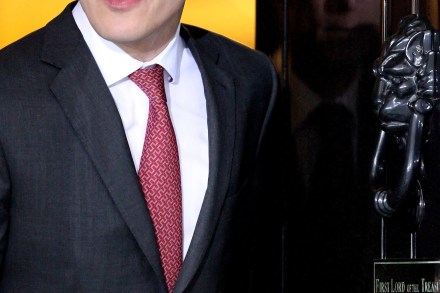
Gordon brown

Osborne looks to the long-term

There are plenty of details for Budget-spotters to look out for tomorrow, but among the most important is just how far Osborne reaches into the future.  The current expectation in Westminster is that he will offer quite a few glimpses into the long-term.  A possible commitment to reduce the main rate of corporation tax to 20 percent over the next five years, perhaps.  Or similar provisions for making the first £10,000 of income tax-free. There are, of course, economic and political motives behind this.

Miliband turns Brownite

Well done David Miliband, for writing an article in the Guardian that is free of wonkery and abstractions. Miliband deserves applause for being the first Labour leadership contender to address public spending cuts with reasoned analysis, not ideological retorts. Also, he is right to urge George Osborne not to sell the public stakes in RBS and Lloyds at a bargain price. But his central thesis merits censure. He perverts recent history to fit an avowedly left-wing analysis of public spending. Miliband writes: ‘Let's take the deficit argument head on. We need to remember what the Tories want the country to forget: it was falling tax receipts – not rising spending – that primarily caused the deficit to rise.

Osborne gets upfront about our debt burden

A couple of weeks on holiday, and there's plenty to catch up on.  First, though, George Osborne's speech to Mansion House yesterday evening.  In terms of substance, it was fairly radical stuff.  And it's encouraging that so many of the Tories' solid plans for reforming the financial regulatory system have survived the coalition process.  But, really, it was one simple, little sentence which jumped out at me.  This: "Debt [is] set to still rise even at the end of this five year Parliament." "So what?" you may be thinking, "we knew that already."  Ah, yes, but we've rarely heard a politician be quite so upfront about our debt position before – at least not voluntarily.

Darling has a point

I had expected Alistair Darling to have slumped off to spend more time with his memoirs after the election, but here he is, fists aloft, fighting the government. About the only member of the Labour front bench effectively doing so. He has a point. The economy is looking better than expected, not worse - as David Cameron has been pretending. Each new forecast for the deficit seems to give a less ghastly picture. British house prices are on the rebound. And when the Office of Budget Responsibility announces its forecasts on Monday, it is likely to give a better picture than that in Darling's budget. Already Darling is telling the Guardian that he wants "an apology" if this is so.

Hain: the Liberals demanded that we cut now

Andrew Neil interviews Peter Hain for this week's BBC Straight Talk. Mastering the obvious, Hain argues that Duffygate cost Labour dear: 'PH:  The damaging incident of course was the Duffygate incident. AN:  In Rochdale, the old aged pensioner? PH:  In Rochdale, and that had a palpable effect.  I think we were just beginning to get a bit of traction - not necessarily to win but possibly to be the biggest party in the election - and that was a real hammer blow, and everybody knew it. AN:  You really think that affected the public’s perception of the then Prime Minister?

No politician visits the frontline

A few years ago, when I was serving with the Grenadier Guards in Iraq, I was part of a team tasked with looking after the visiting Secretary of State. There were five Defence Secretaries during my short spell in the army – a sign, perhaps, of the lack of attention the last government paid to the armed forces. Some were impressive, some less so. One was famous for falling asleep during briefings, but the one I was accompanying in Basra was wide awake. He wished to carry out of the most important missions facing Cabinet members in a warzone: conduct an interview with the Today programme on BBC Radio Four. He asked if we could turn off our own radios, so as to reduce the background noise – and seemed amazed and a not a little put out when we refused.

The previous government’s economic failure laid bare

As Ben Brogan notes, there was a clean symmetry to David Cameron’s speech this morning: the crisis was Labour’s fault; therefore, Labour is to blame for the painful measures needed to restore stability. As Cameron put it: ‘I think people understand by now that the debt crisis is the legacy of the last government. But exactly the same applies to the action we will take to deal with it.’ Cameron made constant reference to the actions of the ‘previous government’. As a foretaste of what the Independent Office for Budget Responsibility will expose, Cameron alleged that Alistair Darling withheld estimates that Britain will be repaying £70bn per annum in debt interest by 2015.

The long haul starts here

Sunshine might have won the day but today was also the start of the age of austerity, as George Osborne and David Laws laid out £6.243bn of cuts. Despite the fact that they were cutting ‘wasteful’ and ‘low priority spending’, both men were keen to insulate themselves against the Labour attack that the coalition is cutting for ideological reason. Osborne said that ‘controlling spending is not an end it itself.’ While Laws stressed that the Coalition would ‘cut with care.’ Within its first fortnight in office, the government has found savings with commendable celerity. But the fact that the whole package was agreed on at 11.

Osborne’s inflationary problem

Only a week into his new job, and George Osborne has already had to exchange letters with Mervyn King about inflation.  And here's why: the CPI index hit 3.7 percent in April, up from 3.4 percent in March.  Which is worrying enough when looked at in isolation – but when put alongside headline rates from other countries, it becomes damning.  In China, it's 2.8 percent.  In France, 1.9 percent.  In Germany, 1 percent.  In the Eurozone as a whole, 1.5 percent.  And in the US, 2.3 percent (for March, with the latest figures out tomorrow).  Indeed, thanks in part to quantitative easing and the removal of the VAT cut, inflation in the UK is now well ahead of almost any other major economy you could care to mention.

We should judge Bercow at the end of this Parliament

Well, the news that Sir Menzies Campbell is lobbying to be made Speaker – as revealed by Iain Dale last night – certainly adds a dash of spice to proceedings.  But I'd still expect John Bercow to comfortably survive any re-election vote today.  On paper, all the arithmetic works in his favour.  And there's a sense that many Tory backbenchers are holding their fire for bigger battles with the party leadership ahead. But does Bercow deserve to stay?  I must admit, I'm rather ambivalent about the issue: I didn't really want him as Speaker, but I didn't really not want him as Speaker either.  And after his solid enough first year in the Speaker's chair, my thinking remains more or less the same now.

Why Labour is still within striking distance

Things are looking good for Cameron – his coalition has 60 percent approval rating, he has managed to persuade the Lib Dems to support what always was a liberal Tory agenda. There is plenty for Conservatives to celebrate, especially on welfare reform and education. But, still, things could be a lot worse for the Labour Party than they are now. I say in my News of the World column today that, rather than being “out for a generation” as Tory strategists were hoping only a month ago, Labour remains (amazingly) in striking distance of winning the next election. And there is no telling when that election will be. Clegg and Cameron say their pact will last until 2015 – but only a tenth of voters believe it.

Why fraternal rivalry will be good for Labour

With the Sun reporting that Ed Miliband is going to stand for the Labour leadership, it's probably a good time to dig out Anne McElvoy's profile of the Miliband brothers for the Sunday Times last month. To my mind, its opening neatly encapsulates the choice between the wonkish one and the slighty-less-wonkish one that Labour may have to make: "When David and Ed Miliband were teenagers, their north London household rang to the chatter of some of the most prominent left-wing names of the era: Tony Benn, Tariq Ali, the ANC leader Joe Slovo and the late Michael Foot. David, one regular guest recalls, would sit 'absorbing it all' and asking interested questions of the grandees.

The government takes shape

Here are some details of the LibCon deal, and my brief comments: 1. Clegg as Deputy PM. It’s a non-job, but a senior one – it means Clegg will take PMQs in Cameron’s absence, and will defend all those nasty cuts (sharing the blame for these cuts is the main rationale for coalition). This follows the 1999 Lib-Lab deal in Scotland, where Jim Wallace was made Deputy First Minister to everyone’s surprise. 2. Laws replaces Gove in education. This has not been confirmed yet, and I will not believe it until I see it. Of all of tonight's moves this is potentially the most concerning – especially for all those (including myself) who had said that the Gove schools policy was the best single reason to vote Tory.

Brown resigns as Prime Minister

That No.10 lectern has had a lot of use over the past two days. Yesterday, it was wheeled out for Brown's resignation announcement; today, for his resignation proper. It was quite dignified, as it happened. He said that he he loved the job for its "potential to make this country fairer, more tolerant, more green, more prosperous and more just," and wished his successor well. And he finished by paying tribute to his wife and his children, who he said represented the "most important job" he could ever hold. So that is that, as one T Blair once said. The end.

The waiting game | 11 May 2010

Westminster is working itself into a frenzy as we wait for the official announcements, statements and rituals of state which will surely come in the next few hours.   The very latest is that Cabinet ministers are saying Brown will go either tonight or tomorrow morning; Vince Cable has suggested a Lib-Con deal is "very close"; and all the noises are about a full coalition, perhaps with Nick Clegg as deputy Prime Minister. But enough of that: we shall soon have something more concrete to grasp than all the rumours and helicopter imagery.  And it will be nothing less than the end of 13 years of Labour government.

The Tories should shine a light on Labour’s leadership machinations

One striking aspect to this evening's brouhaha is how senior Labour figures are going out of their way not to endorse anyone as Gordon Brown's successor.  Brown himself has said that he won't back an "individual candidate," and Peter Mandelson and Alastair Campbell have made similar noises in television interviews. There are, I imagine, two main reasons for this.  First, it's all too soon: Labour won't want to engage in full internecine combat while there's still the chance of a deal with the Lib Dems.  And, second, they will want to create the impression that – contrary to Gordon Brown's ascension to power in 2007 – the next Labour leader has been chosen in an open and clean contest.

How can the Lib Dems deal against the backdrop of a Labour leadership contest?

And so it begins. With Brown's statment earlier, the Labour leadership contenders are already creeping out of of the Downing Street woodwork.  Paul Waugh tweets that David Miliband will announce his candidacy tonight.  The News of the World reports that Ed Balls has his campaign primed and ready to detonate.  And I'd be very surprised if there aren't more names about the enter the fray. All this activity is sending electic currents through the Westminster air – and it could end up burning Labour and the Lib Dems.  Both sides are are saying that they want to create a "strong" and "stable" government.  But how can Clegg & Co. see anything stable in this situation?