Gordon brown

Brown saves the worst till last

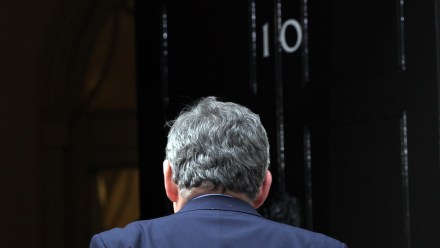
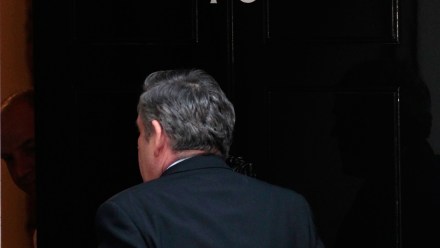
We have just witnessed Gordon Brown’s last and most audacious confidence trick. “Gordon Brown to resign” says the television newsflash: but the story was the very opposite. Gordon Brown is staying on, saying – pretty much – that it will take an SAS operation to get him out of No.10 before the autumn. He declared a "constitutional duty" to stay until a new administration is formed "with majority support in the House of Commons". Untrue. You just need a majority to pass laws. One can govern with a parliamentary minority (see Alex Salmond in Edinburgh, and Harold Wilson in 1974). Cameron won the right to govern, when he last week secured a greater share of the vote than Blair in 2005 and two million more votes than Brown.

Brown statement: now with added video

And here's a transcript of the statement "We have a parliamentary and not presidential system in this country and as I said on Friday, with no party able to command a parliamentary majority arising from the general election, my constitutional duty as prime minister is to ensure that government continues while parties explore options for forming a new administration with majority support in the House of Commons. "The business of government has continued including concerted action in Europe today to avert the financial crisis in the Euro area. Alistair Darling the chancellor spent much of his time yesterday in the European finance ministers meeting in Brussels.

The best possible news for the Tories

Gordon Brown’s announcement that the Liberal Democrats have requested formal coalition talks is the best news that the Conservative party has had since the polls closed on Thursday. David Cameron can now say that his party has negotiated in good faith and that his broad, comprehensive, and open offer to the Lib Dems is on table and they can take it or leave it. If the Lib Dems do end up going into coalition with Labour they would completely discredit themselves and be slaughtered at any subsequent election, remember getting PR through the Lords would take at least a year. The markets would also not be impressed by a coalition that would not be able to take any tough decisions on the deficit.

Gordon Brown announces his resignation

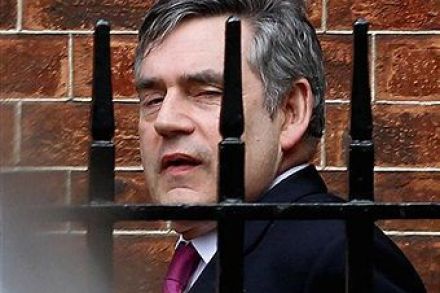
You're witnessing history, CoffeeHousers: Gordon Brown has just announced his departure from frontline politics.  In a statement outside Downing St, he confirmed that he would be stepping down as Labour leader by September – triggering a leadership contest in the process.  It's clear that he's using himself as a bargaining chip, making a Lib-Lab deal more palatable to Nick Clegg.  Indeed, he even said that formal talks between the parties are now commencing. This threatens not just to shake the kaleidoscope, but to smash it to pieces.  Until 17:05 this afternoon, most folk thought that a Lib-Con deal was imminent.  But surely Brown wouldn't have taken this step if there wasn't a chance – however slight – of sabotaging those efforts.

A long day’s journey into night

Sky News are reporting that Brown is to hold a meeting with Cabinet ministers tonight. Lord Ashdown made it pretty clear on Andrew Marr this morning that there would be no 'progressive coalition' with a Labour party that has been comprehensively rejected at the polls, and which would rely on backroom deals with celtic nationalist parties prepared to sell their support for a measure of protection from necessary spending cuts. You'd have thought that tonight's meeting is the beginning of the end for the Labour government.

Swords around a throne

The Sunday Times reports that the Cabinet is suggesting to Gordon Brown that he resign as Prime Minister, and that Labour goes into opposition against a weak Conservative government facing an unenviable economic task. The ‘Caretaker Prime Minister’ did not fly to Scotland to consider a re-shuffle, though that would have provided some light entertainment. And his swift return to London this afternoon suggests that Brown’s premiership is gasping its dying breaths. With the exception of a brief lapse on the telephone, Brown’s conduct has been dignified in recent days. For once, he has led. Will he remain as Labour leader if he resigns as PM? He might; he's stubborn whilst the pretenders to his crown are lachrymose. Tactical considerations also favour Brown.

Where are Labour’s manners?

For all the feverish political activity in Westiminster today – and beyond the occasional voting reform protest – there's a strange, impermeable calm to the situation.  Everything is going on behind closed doors, and everyone is remaining relatively tight-lipped.  Signs are, we may have to wait a couple of days before any light breaks through the fog of discussion and counter-discussion.   One thing, though, is already becoming increasingly clear: 13 years of tribalism haven't done Labour much good when it comes to cross-party negotiations.  There are, of course, the rumours that Gordon Brown had an – ahem – "unconstructive" meeting with Clegg last night.

Time for a National Government? (Revisited)

If there is one lesson to be drawn from the television debates, it is that people have grown tired of politicians slagging each other off. David Cameron promised an end to "yah-boo" politics, but the institution of parliament makes this near-impossible in practice. However, while parliament is out of action, there just might be the possibility of creating something genuinely ground-breaking: a government of national unity. I first suggested this idea in the New Statesman during the 2008 Labour Party conference: "If the financial crisis is as serious as many in the government suggest, then extraordinary times require bold solutions.

It’s obvious that Brown’s the impediment, why doesn’t Labour strike?

Well, Brown the Statesman was a short-lived incarnation. The BBC reports that Brown and Clegg exchanged ‘angry words’ yesterday evening and that Brown delivered a characteristic private political conversation: ‘a diatribe laced with threats’. Clegg and Brown simply cannot work together. This inability to put aside personal differences is far from magnanimous of both men, but it is plain that Brown no longer commands the authority to shape the nation’s future. If there’s no hope of a Lib-Lab coalition with Brown at the helm, then the knives will be sharpening - again. From Labour’s perspective, delaying the inevitable would be fatal as it gives Cameron more time to negotiate with Clegg knowing that he is Clegg’s only option.

Cameron offers the hand of coalition to the Lib Dems

Woah, I didn't think Cameron would go that far.  In his statement just now, the Tory leader started off by talking about minority government, as one might expect.  But he soon skipped past that, and onto what sounded like a more formal coalition with the Lib Dems.  He called it the Tories' "Big Comprehensive Offer". This offer trumped the one that Brown put forward ealier by virtue of its clarity.  Where Brown had hints and innuendo, Cameron had an itemised list of policies and specifications.  And so the Tory leader set out the areas where he wasn't willing to compromise with the Lib Dems: Europe, cutting the deficit and immgration.

The situation is ominous for Gordon Brown

Let's just consider three of today's events: i) Gordon Brown has led his party to Michael Foot-era levels of support. ii) Peter Mandelson has very publicly knifed his boss on national televsion. And, iii) Nick Clegg has said that the Tories have the "first right" to form a government. Senior Labour figures are suggesting that a deal with the Lib Dems remains possible – but Brown's fingernail grip on the premiership looks to be weakening by the minute.

Nick Clegg gives the Tories the go-ahead

So Nick Clegg has finally spoken – and his words will be welcomed by the Tories.  In an address outside of the Lib Dem HQ on Cowley St, he reiterated his previous argument that "whichever party gets the most votes and the most seats, without gaining a majority, has the first right to form a government."  But added that "it seems this morning that the Conservative Party have the most votes and the most seats ... it is for the Conservative Party to prove that it is capable of governing in the national interest." What this means in practice isn't 100 percent certain – although it doesn't sound good for Labour.

Massive Failure by the Tories and Lib Dems to Manage Expectations

The old political hands in the Labour Party at least knew that they had to talk down their prospects (beyond the usual nonsense about fighting to win). Lord Mandelson was right to fight this election as the underdog because this now looks in some ways like a victory.  In fact this is a massive achievement for the Conservative Party. When David Cameron took over in 2005 many Tories would have settled for this result. They should always have been fighting a two-election strategy. But the Conservative Party allowed itself to get overexcited about the possibility of outright victory. The Liberal Democrats allowed themselves to dream and find themselves bitterly disappointed this morning.

Peter Mandelson is open to the idea of Brown going

Peter Mandelson has just tossed a firecracker in to the arena.  Asked on the Beeb whether Labour might get rid of Brown to accommodate the Lib Dems, he replied: "There will be a number of permutations ... I'm not ruling anything in, or anything out." So, in other words: yes.

Let the recriminations begin

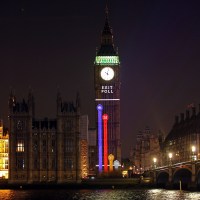
Let's rewind to 10pm yesterday evening, when the exit poll was released.  Most politicos - myself included - were incredulous.  We could just about believe that there might be a hung Parliament with the Tories as the largest party, but a reduced number of Lib Dem seats?  After Cleggmania and all those recent opinion polls?  Gedouttahere. But, this morning, that exit poll is looking a good deal more prescient.  After an evening of erratic results, Sky's projection matches it almost exactly: 309 seats for the Tories, 259 for Labour, and 54 for the Lib Dems.  So we're on for a hung parliament, and all the backroom discussion and subterfuge that that entails. Already, the dividing lines have been traced across Westminster.

Best and worst of the campaign: Gordon Brown

As we wait for the polls to close, and the final countdown to begin, we at Coffee House thought it would be a good opportunity to look back on the campaign as a whole. And, so, here's the first in a series of three posts identifying the best and worst moments for the main party leaders. We've started with the man who remains Prime Minister for the time being: Gordon Brown. Brown's best moment: the Citizens UK speech As it happens, choosing Brown's best moment of the campaign is easy. Alongside so many gaffes, scowls and lies, the flashes of proficiency tend to stick out - and none more so than his speech to Citizens UK earlier this week. Yes, the audience was heavily inclined towards him.

The party leaders vote

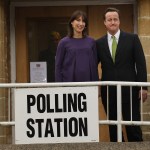
David and Samantha Cameron leaving the polling station in Spelsbury Gordon and Sarah Brown arrive to vote in North Queensferry Nick and Miriam Clegg vote in Sheffield.

Message to the Tories: Grow Up About the New Labour Era

I have been deeply disappointed by Tory negative campaigning in the past few days. The Cameroon coup was inspired, in part, by Tony Blair, so to decry 13 years of New Labour is deeply hypocritical. The message, pioneered by Oliver Letwin, was that praise would be given where it was due. Britain has become a better place since 1997 and that is true for readers of the The Spectator as much as (and perhaps more than) anyone else. At the same time, Brown's leadership of the country and his party has been woeful. The Labour Party has only itself to blame for this. It should have put up a candidate against Gordon Brown in 2007 and it should have removed him a year later.  This blog is here to give you an insight into thinking on the left.

As the polls open, a topsy-turvy campaign closes

Now's the time, dear CoffeeHouser. After nearly three years in Number Ten, Gordon Brown is finally subjecting himself to the wishes of the British public. And, signs are, he won't like what they've got to say. Putting the strong possibility of a hung parliament aside, last night's opinion polls had Labour on or around Michael Foot levels of support. A few folk, like Marbury, have observed that it's almost like the campaign didn't happen. And they're right: there is a peculiar symmetry to the electoral calculus. After all the mood shifts of the past four weeks, we're back broadly where we started: with the Tories looking to gain either a small majority, or be the largest party in a hung parliament. But it's worth remarking on some of the changes which have stuck.