Google

Will Disney strike a deal to end its YouTube TV blackout?

A war has taken over media coverage. No, not one of actual consequence. This war, however, is imminently affecting your national pastime and your wallet. This is a civil war within media. The combatants are the Walt Disney Company with it’s channels – including ABC and ESPN, plus the SEC and ACC networks – and Google, YouTube TV’s parent company. The two entities failed to meet a carrier agreement, and all Disney channels are blacked out on YouTube TV. That means that much of the nation will not have access to most of the weekend’s football content, as has been the case since the showdown a couple weeks ago.

youtube tv disney

The Trump-Kamala showdown

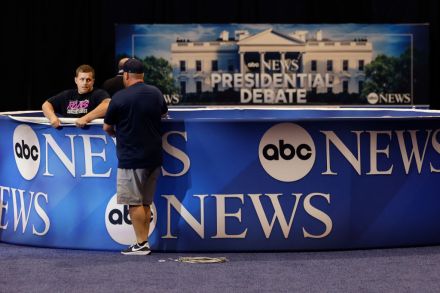
The long-awaited debate between former president Donald Trump and Vice President Kamala Harris is kicking off Tuesday night at 9 p.m. ET on ABC News. This is a high-stakes moment, mostly for the Harris campaign: Kamala’s predecessor at the top of the ticket, President Joe Biden, was forced by his own party to drop out of the race after an abysmal performance against Trump in June, and Kamala has only done one unscripted event on camera since launching her own campaign. Unlike that CNN interview with Dana Bash, Kamala will be challenged and will not have her running mate, Tim Walz, sitting next to her for support.

President Biden’s plan to overhaul SCOTUS

President Biden unveiled his outline for changes to the Supreme Court, which includes term limits for justices and a new code of ethics. He also called for a constitutional amendment saying former presidents do not have immunity from any federal criminal indictments, trials, convictions or sentencing — a direct dig at the Court’s recent immunity ruling in Trump’s favor. The plan comes amid a series of landmark decisions by the Supreme Court that favored conservatives, such as the overturning of Chevron and rulings on abortion and affirmative action, that sparked Democrats to criticize the 6-3 conservative controlled-court for an alleged lack of impartiality.

The Supreme Court on not standing for standing

Human beings are animals that often operate by proxy. Here’s a familiar example from the world of — well, I was going to say “the law,” but what I have in mind is not the law but its perversion, so let’s say “the legal bureaucracy.” Everyone has heard the phrase “the process is the punishment.” It covers a multitude of sins. In its core signification, the phrase describes an increasingly common situation in which the machinery of the law is deployed to harass, enervate, stymie and otherwise hobble someone the regime does not like but whom, for the time being anyway, it chooses not to incarcerate. Sometimes it is easier to bankrupt and demoralize an opponent into submission.

standing

Why everybody should have seen the Google Gemini blunder coming

Has it ever bothered you that all the Founding Fathers were white? Fear not: Google Gemini AI is here to save the day. In February, Google updated its artificial intelligence LLM, or Large Language Model, releasing one called Gemini. The hope was that tech companies could build off each other’s platforms and that Google’s new AI would correct earlier mistakes made by Microsoft’s Bing, which in turn corrected mistakes made by OpenAI. Shortly after Google released Gemini to the public, internet users began quizzing the AI. Immediately problems were apparent, especially within Gemini’s image creation. When asked to replicate portraits of medieval British kings, for example, Gemini provided images containing historically inaccurate ethnicities.

gemini

The tech I’m looking forward to in 2024

The Consumer Electronics Show in Las Vegas, the first and biggest tech convention of the year, took place earlier this month, where the strangest, newest products were shown off. As usual, there was a lot of fluff — pointless gizmos that work on a show floor but never make it to stores — but there were also core signs of the technology trends we’re going to see this year, and products I’m excited to try. Screens are always a strong point at CES, and this year proved no different, from pure quantum dot prototypes, translucent televisions and yet another laptop with a glasses-free 3D display; but it’s the arrival of great OLED screens to mainstream laptops that truly excites me.

tech

The new corporatism that’s killing capitalism

Over the years since the financial crisis, economic power and wealth has become ever more concentrated in fewer hands. This is something leaders have acknowledged, and policymakers have tried to do something about. And yet, despite brave talk of breaking up mega-giant companies, anti-trust efforts have been anemic, as most recently demonstrated by the failure to stop Microsoft from swallowing game maker Activision. The future looked a little brighter in the immediate aftermath of the pandemic. There were signs of a grassroots resurgence, with a strong uptick in new business formations in the United States. But since then, as interest rates have risen and regulatory pressures have increased, there has been a slackening off of new firms.

the new corporatism

Is YouTube TV about to fumble NFL Sunday Ticket?

Over the past few years, the NFL, a professional sports behemoth built largely on the backs of broadcasting deals with the major TV networks, has thrown its lot in with Big Tech to grow its game. In 2022, it was Amazon securing the broadcasting rights to Thursday Night Football. Now, in 2023, it's YouTube TV — and parent company Google — getting in on the pigskin profits. YouTube TV has just landed one of the juiciest plums of all: NFL Sunday Ticket.  From its debut in 1994 until this past year, Sunday Ticket was the domain of satellite cable provider DirecTV. The service was a way for NFL fans to watch every game on the Sunday slate, as opposed to just the two or three offered by the networks in local markets.

nfl sunday ticket

Congress’s half-baked assault on Big Tech

A major anti-Big Tech bill is heading to the floor of the Senate after a frustrating markup session in the Judiciary Committee. The American Innovation and Choice Online Act, as it's called, majorly changes how online retailers can sell and promote their own branded wares and apps. It even bans Amazon and Google from suggesting their own products over those of a third party. Supporters from both sides of the aisle are portraying the bill as a great leveler of sorts. They believe it helps consumers and the so-called “little guy” against the Big Tech companies.

antitrust hipsters

Big Tech is censoring the climate change debate

'The limits of my language mean the limits of my world.’ — Ludwig Wittgenstein, Tractatus Logico-Philosophicus, 1922 Wittgenstein wrote that as an ontological and epistemological foundation for his larger belief in freedom of speech. He who controls the language also controls reality, something that today's left understands brilliantly, even devilishly. America historically has not limited freedom of thought and speech, and the resulting clash of ideas has improved our national discourse. The language police makes us weaker intellectually by limiting the world in which we live. The language around climate change and the green movement is one more area the left wants to control, especially given that trillions of dollars in spending are on the line.

big tech

What’s the point of trying to break up Big Tech?

The ‘antitrust’ law suit launched by US authorities against Google has been reported as a potential turning point in the dominance of Big Tech — and an echo of the courtroom dramas that diminished the excessive power of America’s late 19th-century oil, steel and railroad barons. But I wonder how much impact it will really have.The allegation, in brief, is that Google has created an illegal near-monopoly by paying large sums to Apple and other smartphone makers to secure its position as the default search engine for billions of consumers, its grip reinforced by ownership of Android, the phone operating system, and Chrome, the popular browser — all of which also gives it a stranglehold on the digital advertising market.

big tech

California won’t let a good crisis go to waste

Oakland, California In April, when spring fever ran high and California saw protests against the unending lockdowns, Gov. Gavin Newsom promised that ‘politics and protests will not drive our decision making. Science, data, and public health will drive our decision making. #StayHomeSaveLives.’ As it turns out, the anti-lockdown movement was right to be suspicious of tyranny. Not only are the decisions about opening up — or, more accurately, not opening up — political, but local and state governments are intent on taking the crisis as an opportunity to alter our way of life forever. Newsom has now tied reopening to ‘racial equity’, through reduction of COVID rates in black, Hispanic and Pacific Islander communities.

california

Bovard: yes, big tech censorship affects election outcomes

Cockburn had just returned home from his Wednesday evening stroll when he found something curious in his inbox. There tucked away was Rachel Bovard's prepared testimony for Thursday's hearing on internet antitrust laws in front of the House Judiciary's Subcommittee on Antitrust, Commercial and Administrative Law. The Conservative Policy Institute senior director's testimony focuses on the gatekeeping power of Big Tech companies like Google, Facebook and Twitter who suppress political content in ways that is harmful to free speech and democracy. Cockburn felt a sense of duty to share his scoop with readers of The Spectator, who have surely felt the sting of social media censorship.

bovard

Four main takeaways from the House’s Big Tech antitrust sideshow

Here’s a terrifying thought: Mark Zuckerberg is the only person in Silicon Valley that the political and intellectual right can trust when it comes to ‘Big Tech’. Wednesday’s ‘Antitrust’ House hearing resembled a group of Neanderthals trying to reason with Data from Star Trek. The worst of both sides was on show as Democrats and Republicans jockeyed for the news cameras, rather than getting real answers on antitrust practices or how Silicon Valley bows to the authoritarian regime in China. I watched the grueling insurance seminar so you don’t have to: here are the four big lessons.1.

big tech

Another fine media mess

When I spoke with NBC News earlier this week to talk about the media industry’s role in combating misinformation, I worried that the story might gain undue traction if any footage happened to get posted from my Zoom interview. In it, I was sitting in front of a bookcase full of chainsaw operation manuals and guides to dealing with invasive plant species. (Hello from COVID exile in rural Maine, where every day is Groundhog Day. Literally. A family of groundhogs has taken up residence outside the living room window.)Instead, the story turned out to be the fruits of a partnership between NBC News and a nonprofit called the Center for Countering Digital Hate.

nbc news
Google logo

Who doesn’t fund the Federalist?

One of the internet's most elusive questions — who funds the Federalist? — has finally been answered. Well, sort of. NBC announced Tuesday that Google would be banning the Federalist from its ad platform, meaning the conservative website will no longer be able to earn money from running Google ads. The Federalist was targeted alongside ZeroHedge, a right-wing financial blog. Or so NBC claimed. 'We have strict publisher policies that govern the content ads can run on and explicitly prohibit derogatory content that promotes hatred, intolerance, violence or discrimination based on race from monetizing,' a Google spokesperson said of the decision. 'When a page or site violates our policies, we take action.

The Spectator’s guide to video conference etiquette

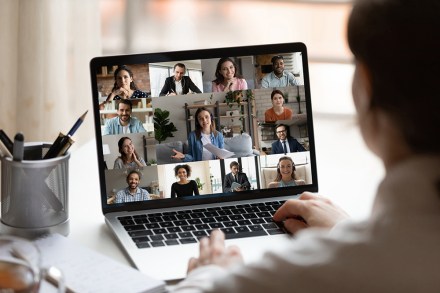
Video conferences are like all business meetings — 95 percent pointless and usually arranged and dominated by some self-important twerp. Still, humans attach strange importance to management habits and, now that we are living in the age of the coronavirus, many of us will have to do a lot more video conferences for work. Ever the public servant, Cockburn has compiled the following guide to video conference etiquette. 1) Dress Cockburn prefers formal attire, yet in times of isolation, the rules can be relaxed. Nudity is too much, no matter how matter impressive one's physique. Pajamas are a no-no, too. Sporting a kaftan on the call may make you feel like a charismatic tech billionaire dialing in from Mustique. But everybody knows you aren’t — so put a shirt on.

video conference

How Google’s tunnel vision cost us all

As a member of the marketing team for Google’s once-hyped Google+ social network (remember that?) I can recall only one occasion when I encountered concerns about objectionable or controversial content. It was circa 2012, and it involved beer. Craft breweries and homebrew enthusiasts had created a pleasant little home for themselves on Google+, using its Hangouts video technology to run tutorials and virtual tastings, even announcing new collaborations with other breweries around the world. To a product marketer, this was thrilling: actual user engagement!

google

Silicon Valley is your government now

The Federal Trade Commission’s decision to fine Facebook $5 billion for privacy violations is an expensive slap on the wrist that will do little to change anything in what is developing as a titanic struggle between the nation states (governments) and the new market states (technology companies). Across the world, the nation states are struggling to keep pace with technology developments and largely failing. Meanwhile, the nation states are proceeding at breakneck speed to develop a world of their choosing where countries become less and less relevant to the course of our future history. The FTC fined Facebook for a series of ethics and privacy violations and imposed the largest fine in the FTC’s history.

silicon valley

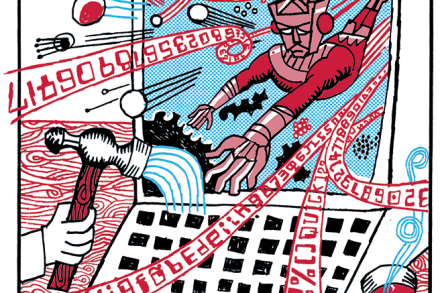
Microsoft, Google and the artificial intelligence race

The decision by Microsoft to invest $1 billion in OpenAI, a company jointly founded by Elon Musk, brings closer the time when machines threaten to replace humans in any tasks that humans do today. OpenAI, which was founded just four years ago, has pioneered a range of technologies which have pushed the frontiers of massive data processing in defiance of the physical and computer capabilities that governed such developments for generations. Now, with the investment from Microsoft, the pace of technological change is likely to accelerate rapidly. Today, Artificial Intelligence is at a level of what is known as 'weak AI’ and relies on humans to create the algorithms which allow for the crunching of massive amounts of data to produce new and often predictive results.

artificial intelligence