Global warming

The green policies that kill what they’re supposed to protect

From our UK edition

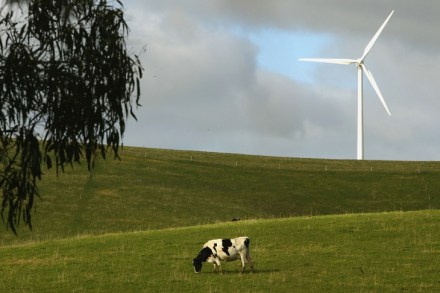
The politics of climate change will eventually turn, partly because the policies are often so un-Green in their effects. Wood-burning is not good for the environment. Nor is diesel. The government paid people to switch to diesel cars to help save the planet, thus damaging the breathing of thousands. At the Global Warming Policy Foundation last week, Fritz Varenholt, an environmentalist, scientist and SPD adviser in Germany, reported the increasing split between Greens and conservationists there. You can either have constantly functioning wind farms or healthy bird populations, but not both. The common buzzard and the red kite are now endangered in Germany.
The death of the global warming ‘pause’ has been greatly exaggerated

From our UK edition

The global warming 'pause' never existed, say the headlines. It's a claim that has been made before, only to be refuted, yet now it's back again. If there is one topic that sends a small subset of climate scientists' temperature into the stratosphere, it's the topic of the global warming 'pause' or 'hiatus'. This is the idea that global surface temperatures haven't changed much for almost 20 years. Never in my experience of science have I come across a topic like it, and that's because it means nothing, and everything. Global warming is about energy imbalance. Greenhouse gasses stop heat leaving the earth, so the planet is getting warmer. This is fundamental physics. Temperature goes up; oceans warm up, expand and sea level rises; pole caps melt.

Global temperatures have fallen – so why isn’t it being reported?

From our UK edition

Remember how rises in global temperatures were reported earlier in the year? Here is a taste from the Guardian in July. Funny thing is, though, global temperatures are now falling equally sharply – and no-one, with the exception of the Mail on Sunday last weekend, seems to be bothered about reporting it. Not even Nasa seems interested in reporting its own data for global temperatures. Instead, Nasa last week put out a press release about a study which claimed to have found a reason to explain the hiatus in global temperatures between 1998 and 2013 – the conclusion of which was, in as many words: it was all an illusion. The oceans were still warming up, but they were storing much of the Earth’s increased heat, which will be spewed out into the atmosphere in due course.

The moral arc of the universe bends towards me

From our UK edition

So I made £250 betting on Trump to win the presidency. It would have been more, except that every time I got close to topping up my stake, this boring, mimsy, responsible voice in my head kept saying: ‘Now, now James. Don’t be silly. All your sensible friends who know much, much more than you do about politics have been telling you that President Trump just isn’t going to happen.’ One of them was m’learned colleague Toby Young. Until recently we used to do a podcast together.

Climate of ignorance

From our UK edition

Global greening is the name given to a gradual, but large, increase in green vegetation on the planet over the past three decades. The climate change lobby is keen to ensure that if you hear about it at all, you hear that it is a minor thing, dwarfed by the dangers of global warming. Actually, it could be the other way round: greening is a bigger effect than warming. It is a story in which I have been both vilified and vindicated. Four years ago, I came across an online video of a lecture given by Ranga Myneni of Boston University in which he presented an ingenious analysis of data from satellites. This proved that much of the vegetated area of the planet was getting greener, and only a little bit was getting browner.

The Spectator’s notes | 20 October 2016

From our UK edition

Vote Leave was the most successful electoral campaign in British history. Against the opposition of all three political parties, it won, achieving the largest vote for anything in this country, ever. But voting to leave is only the essential start, not the fulfilment, and now there is no Vote Leave. After victory, the campaign’s leaders went their various ways. Some were lulled into a false sense of security by Mrs May’s clear declaration of Brexit intent, and by the fact that one of their top colleagues, Stephen Parkinson, is now installed in 10 Downing Street. Nick Timothy, now all-powerful in Mrs May’s counsels, was running the New Schools Network during the campaign.

The science – and politics – of climate change

From our UK edition

Matt Ridley, well known to Spectator readers, is giving the Global Warming Policy Foundation’s Annual Lecture on 17 October, at the premises of the Royal Society. The venue has annoyed New Scientist magazine. How dare the great home of science give house room to ‘those who deny climate science’, asks the paper’s ‘biology features editor’, Michael le Page. He hates the ‘false balance’ which presents opposing views. Revealing his own opinions to be more political than scientific, he cites the example of the US presidential election, where ‘the media’s abject failure to tackle Trump has let him get within spitting distance of the presidency’.

Why the FT’s Martin Wolf is wrong about the EU

From our UK edition

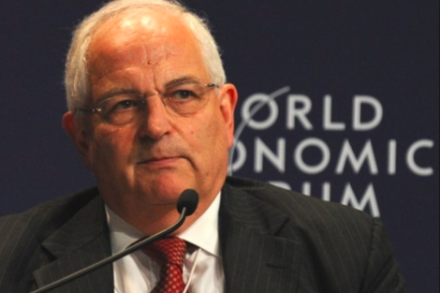
Last week, I wrote about the fevered state of mind of the Financial Times as British voters threaten to throw off their EU chains. Here is another example. Martin Wolf, usually the best columnist in the paper, wrote a column giving ten reasons to remain. He said: ‘Above all, those promoting departure ignore what the UK’s European partners think about the EU. Their political elites, particularly of Germany and France, regard the preservation of an integrated Europe as their highest national interests. They will want to make clear that departure carries a heavy price, which is likely to include attempts to drive euro-related financial markets out of London.’ Those who want to leave don’t ignore this at all!

Acid trip

From our UK edition

There was a breathtakingly beautiful BBC series on the Great Barrier Reef recently which my son pronounced himself almost too depressed to watch. ‘What’s the point?’ said Boy. ‘By the time I get to Australia to see it the whole bloody lot will have dissolved.’ The menace Boy was describing is ‘ocean acidification’. It’s no wonder he should find it worrying, for it has been assiduously promoted by environmentalists for more than a decade now as ‘global warming’s evil twin’. Last year, no fewer than 600 academic papers were published on the subject, so it must be serious, right?

The Great Barrier Reef is dying. Why does nobody seem to care?

From our UK edition

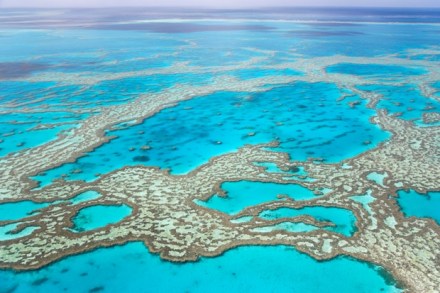
We seem to be wilfully blind when it comes to nature. Right now, Australia is in the grip of an unprecedented environmental disaster. The largest living structure on Earth, the Great Barrier Reef, is mortally sick. Across hundreds of miles of ocean, from Papua New Guinea and all the way southwards along the east coast of Australia, the reef is dying. Famously, the GBR is the only living structure visible from space – almost two thousand miles long and about the size of Germany. It’s suffering what the scientists call ‘bleaching’, a process where corals eject the algae that give them their bright colours, and turn white. They do it when they suffer stress, most commonly when the water in which they live warms up by more than 1°C above what they are accustomed to.

A new paper in a prestigious journal proves a 15-year hiatus in global warming. Why is it being ignored?

From our UK edition

This article, in Nature magazine, ought to have been front page news - and might have been, had it suggested that global warming was worse than we had thought.  Instead, it underlines the sound science behind an inconvenient truth: that there has been a 15-year hiatus in global warming. To those of us who have been following the debate, this is no surprise. In 2007 I pointed out that it was curious that in recent years the global annual average temperature had not increased at a time when greenhouse gasses were increasing rapidly and when the media was full of claims that the earth's temperature was getting higher and higher. I proposed no explanation but said that it was a curious observation that would probably change in the near future.

Time to put my money where my mouth is

From our UK edition

'As oil crashes, is it time to short solar stocks?’ Gosh, I wish I’d read that headline a year ago. The solar stock it tipped for doom in January 2015 has since plummeted from $19 to $2.65. Yes, hindsight can be a wonderful thing. But what if there were an area of the markets which you knew to be grotesquely overvalued as a result of ignorance, dishonesty, and false sentiment? You’d be mad not to bet against it, wouldn’t you? It would hardly be gambling: more like plain common sense. This is how I’ve felt for quite some time about the climate change industry. Very often when I read the expert commentators writing on the subject in the City pages, I’m shocked by how much more I know than they do.

A different species of argument

From our UK edition

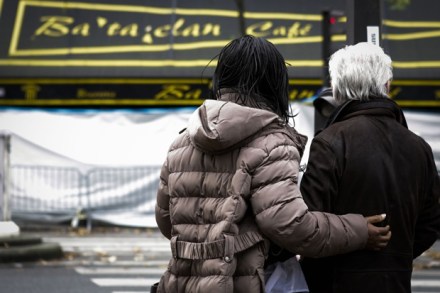
Because I used to go to venues like Bataclan an awful lot myself, I’ve been dwelling a great deal on what the fans must have gone through that night. And the conclusion I’ve reached is how utterly random the whole business must have been: whether you survived or died was almost entirely dependent on being at the right or wrong bit at the right or wrong time. Even the band Eagles Of Death Metal, it turns out, only escaped by the skin of their teeth. The bassist barricaded himself into a room; the singer and guitarist escaped into the street and went briefly back to look for a missing girlfriend only to meet a gunman lowering his assault rifle at them; the drummer crawled out using his drum kit for cover.

BBC ‘environment analyst’ explodes on Twitter as BBC presenter mocks Met Office’s climate prophecies

From our UK edition

Climate change is the subject of a complex debate in which, increasingly, experts disagree with each other. Nearly all of them believe in man-made global warming, but they're not sure how bad the problem is or how to tackle it. Meanwhile, the 'sceptics' are no longer dominated by scientifically illiterate amateurs. Many of them believe in anthropogenic global warming, though they don't think it's happening today. So you'd expect the BBC's 'Environment and Energy Analyst', Roger Harrabin, to proceed with caution. Not so. Here are two tweets he sent out yesterday (links here and here): Quentin Letts is the Daily Mail's parliamentary sketchwriter and theatre critic, celebrated for his sometimes caustic but more often gentle wit.

Was the global warming pause a myth?

From our UK edition

Is the world still getting warmer? If so, how fast? Has there been a global warming ‘pause’ or ‘hiatus’ or not? Or has the recent warming rate been as fast, or even faster, than that measured in the 1990s? These are fundamental questions. They depend not on the complex computer models on which scientists base their projections of the future, but on simple measurement, on readings from thermometers sited in thousands of locations across the world, on land, on buoys in the oceans and in balloons and satellites. Yet their answers are far from simple, and like many other areas of critical importance in climate science, subject to uncertainty and fierce debate – not that you would know this if you relied on almost all media reports.

Brave Cardinal Pell challenges Pope Francis’s dogma on climate change

From our UK edition

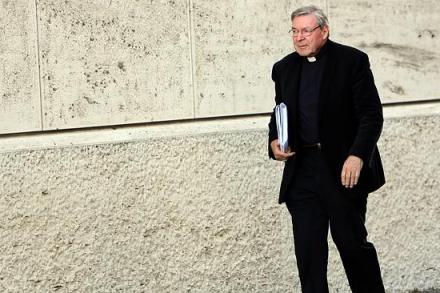
'The Church has got no mandate from the Lord to pronounce on scientific matters.' In that one sentence, Cardinal Pell puts his finger on what is wrong with Laudato Si', Pope Francis's encyclical on the environment. In that document, Francis waded into an argument about climate change and took sides. Moreover, he gave the impression that he was speaking for all Catholics when he did so; and, if by any chance he wasn't, errant faithful should fall into line. In an interview in Thursday's Financial Times, the Prefect of the Secretariat for the Economy stepped out of line. See above. It was a brave thing to do: Pell's wholesale reform of the Vatican's finances is making him plenty of enemies as it is, and now he's even more vulnerable to attack. Why take the risk?

Is animal extinction really the end of the world?

From our UK edition

‘Each year sees the disappearance of thousands of plant and animal species which our children will never see’, says Pope Francis in his gloomy encyclicalLaudato si. Can this possibly be true? Over the past 500 years, 1.3 per cent of birds and mammals are known to have become extinct — 200 species out of 15,000. There are far, far more species of invertebrates and plants in existence of course. The latest ‘predicted number’ of species is 8.7 million, of which 7.7 million are animals. (The remaining million are plants, fungi and microbes.) If you assume — which the great Matt Ridley assures me is unlikely — that an equally high percentage of these has become extinct, it averages out at about 350 a year.

The Pope and climate change: Francis is slapping his conservative critics in the face

From our UK edition

Pope Francis's encyclical on the environment comes down firmly on the side of the global warming consensus/lobby (delete according to taste) and is a slap in the face to climate sceptics of every hue. Thwack! It's very much this Pope's style. Laudato si' says several important things about climate change. Here's the Catholic Herald's summary, based on the infamous leak: According to a translation by the Wall Street Journal, the Pope says there is a 'very consistent scientific consensus' that we are in the presence of 'an alarming warming of the climatic system'. He writes that there is an 'urgent and compelling' need for policies that reduce carbon emissions, such as 'replacing fossil fuels and developing sources of renewable energy'.

Diary – 30 April 2015

From our UK edition

I have escaped this rather depressing election campaign by retreating to my home in la France profonde — to be precise, in Armagnac, in the heart of Gascony. My only outing, from which I have just returned, was a brief visit to New York, travelling there and back in the giant Airbus 380. The purpose of the trip was to drum up US support for the thinktank I founded in 2009, the Global Warming Policy Foundation, and its campaigning arm, the Global Warming Policy Forum, in the company of our outstanding director, Benny Peiser. Thanks to the wonders of the internet, the GWPF has a global reach, and its international influence is growing.

They sought paradise in a Scottish field — and found hunger, boredom and mosquitoes

From our UK edition

Dylan Evans, the author of this book, was one of those oddballs who rather looked forward to the apocalypse, because it promised ‘challenging times ahead’. If, in the not too distant future, famines and droughts more or less wipe us out, that will be our own fault for allowing population levels to reach an unsustainable nine billion — the predicted figure for 2050. How much better the planet will be with a select handful living in their villages of yurts, log cabins, teepees and straw-bale huts, the children gambolling happily ‘amidst the bracken and the trees’. The air will be cleaner. Wildlife ‘will make a comeback’. Neighbours will help each other out. People will be fitter as a result of their manual labour.