Global warming

At long last the mainstream media are paying attention to global warming sceptics

From our UK edition

The failure of the Earth to warm since the start of the century has been a talking point for global warming sceptics for many years, but it is only in the past few months that the mainstream media have started to pay attention too. In recent weeks the Economist, Channel Four News, and even ultra-green writers like the Telegraph’s Geoffrey Lean have sat up and taken notice. And on top of the pause, a series of recent studies of how fast temperature will rise in response to carbon dioxide emissions has produced estimates that are decidedly un-scary.
What’s strange about this weather? Nothing at all

From our UK edition

How can we stop weather hyperbole? I am so staggeringly bored of waking up each morning to headlines which insist we’re all going to be killed – on the roads, or through freezing to death, or in a flood. There have been four weather hyperboles already so far this year; warmest January, or warmest day in January ever, wettest February, coldest March. There are so many criteria for awarding a hyperbole sticker that almost every day of the year could qualify. So, snow in March? An unheard of experience? Nope, it happens every other year, more or less – and that’s in the south of the country. Last year at this time we were just entering a very mild and rather pleasant phase – warmest April on record! Global warming! We’re all going to die!

Seeing red

From our UK edition

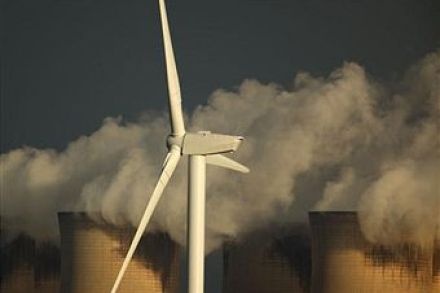
With each passing year it becomes clearer that the cure for global warming is worse than the disease. While wind power and biofuels devastate ecosystems and economies, temperatures and sea levels rise ever more slowly, just as the greenhouse theory— minus feedbacks — predicts. As James Delingpole acutely observes, the true believers are left with a version of Pascal’s wager embodying a ‘dismally feeble grasp of cost-benefit analysis’: that, however unlikely it is, the potential cost of global warming is so high that anything is justified. Not only does this argument apply to the cure as well as the disease; it also applies to every small risk of something big happening.

An important intervention on energy policies, but will the Lib Dems pay attention?

From our UK edition

The economist Dieter Helm is one of the few policy thinkers respected on both sides of the coalition. Oliver Letwin is a long-standing friend of his and Clegg’s office views him as one of the best economic brains in the country. All of which makes Helm’s attack on Chris Huhne’s energy policies in The Times today as interesting as the anti-wind farm letter signed by a 101 Tory MPs. Helm argues that the policy of huge subsidies for renewables is a mistake and that shale gas is a game-changer. Helm writes that, while renewables have a role to play, ‘Coal burning is not going to go away because of wind. Gas is one transition option, a bridge to decarbonisation.

Whatever Chris Huhne says, Durban hasn’t changed anything

From our UK edition

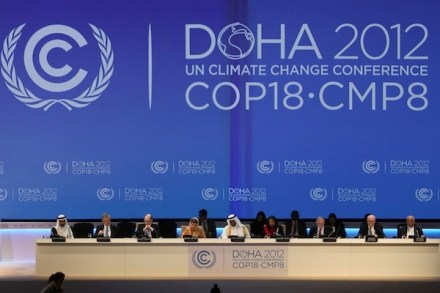
This morning the Department of Energy and Climate Change (DECC) told us that the climate summit in Durban, which concluded over the weekend, has been ‘heralded a success’. As they say, the ‘talks resulted in a decision to adopt the second commitment period of the Kyoto Protocol next year in return for a roadmap to a global legal agreement covering all parties for the first time’. Should anyone be heralding that as some kind of step forward? Was I wrong to be sceptical last week? As it happens, the various parties were actually trying to secure that ‘global legal agreement’, covering all of them, two years ago in Copenhagen — not just talking about securing it in the future.

Good news! Sea levels aren’t rising dangerously

From our UK edition

This week's Spectator cover star Nils-Axel Mörner brings some good news to a world otherwise mired in misery: sea levels are not rising dangerously – and haven't been for at least 300 years. To many readers this may come as a surprise. After all, are not rising sea levels – caused, we are given to understand, by melting glaciers and shrinking polar ice – one of the main planks of the IPCC's argument that we need to act now to 'combat climate change'? But where the IPCC's sea level figures are based on computer 'projections', questionable measurements and arbitrary adjustments, Mörner's are based on extensive field observations.

Monbiot’s mission

From our UK edition

George Monbiot is undergoing an astounding and very public transformation. Last week he overcame the habit of a lifetime and fully endorsed nuclear power as a safe energy source. He went further this week, attacking the anti-nuclear movement for perpetuating lies and ignoring the consensus around scientific facts. He levels special criticism at the allegedly lax scholarship of Dr Helen Caldicott, a decorated primate of the anti-nuclear communion.  He also debunks the myths surrounding the disaster at Chernobyl and laments that campaigners have abused that tragedy by exaggerating its consequences. Monbiot’s tone is neither arch nor righteous. Rather, he’s disappointed and the piece has a dignified poignancy.

When it comes to global warming, rational debate is what we need

From our UK edition

We had a sell-out debate on global warming at The Spectator on Tuesday and, as I found out this morning, the debate is still going on. The teams were led by Nigel Lawson and Sir David King, and I was in the audience. I tweeted my praise of Simon Singh’s argument as he made it: it was a brilliant variation on the theme of "don’t think – trust the experts". He seems to have discovered the tweet this morning, and responded with a volley of five questions for me. Then David Aaronovitch weighed in, followed by Simon Mayo. At 8.35am! I had the choice between replying, or carrying on with my gourmet porridge. I chose the latter, and promised to blog my response later on to Simon Mayo and the Breakfast Crew. So here goes.

A flooded world

From our UK edition

It looks like the opening of a Hollywood disaster film. The South African government has declared parts of the country disaster areas, after 40 people died in floods in a month. At the same time, the UN is to launch an appeal for emergency flood aid for Sri Lanka, where at least 32 people have died and more than 300,000 have been displaced. Meanwhile flood waters in Australia have left a trail of destruction, at least 18 dead and a billion dollar bill for reconstruction. And in Brazil, survivors of the floods that have killed more than 600 people are frustrated by the lack of government help. Are these floods causes by climate change? Well, yes and no.

I told you so

From our UK edition

It’s jolly nice to be proved right about everything The most important, and comforting, thing to emerge from all that Wiki-Leaks business was that, by and large, we were right. All the things we suspected, or knew either instinctively or through common sense, were proved to be correct. Prince Andrew — arrogant, rude and with the IQ of a corgi? Yep. The oil company Shell effectively runs Nigeria? Sure thing. Gulf state Arab leaders are a tad duplicitous? No kidding, bub. It is always uplifting to discover that you were right all along, and that, in secret at least, the establishment agrees with you.

Carbon omissions

From our UK edition

With the latest round of international climate change negotiations at Cancun less than a week away, Policy Exchange has published research showing that the UK’s and EU’s performance in reducing carbon emissions is not quite what it seems.   According to the official measure, used to determine performance against the Kyoto agreement, the UK’s emissions have fallen.  The UK is set to exceed its Kyoto target of 12.5 percent reduction from 1990 levels.  But, in our new report Carbon Omissions, Policy Exchange has estimated that total UK carbon consumption emissions in fact rose by 30 percent between 1990 and 2006.

King Coal Will Reign For Years Yet

From our UK edition

Like Andrew says, James Fallows' Atlantic article on clean coal - and China's advances in developing the stuff - deserves to be read in full. But it's also a useful corrective to the notion that "alternative energy" sources (with the exception of nuclear power) can come at all close to meeting our energy needs either now or in the foreseeable future. For all that relatively few people talk about coal anymore (and of course we no longer mine the stuff ourselves) it's still the King of Energy: “Emotionally, we would all like to think that wind, solar, and conservation will solve the problem for us,” David Mohler of Duke Energy told me. “Nothing will change, our comfort and convenience will be the same, and we can avoid that nasty coal.

Hunt the heretic

From our UK edition

Eureka, the science magazine from The Times, is in many ways a brilliant accomplishment. Advertising is following readers in an online migration - but James Harding, the editor, personally persuaded advertisers that a new magazine, in a newspaper, devoted to science would work. And here it is: giving the New Scientist a run for its money every month. That's why it's such a shame that today's magazine opens on an anti-scientific piece denouncing those who disagree with the climate consensus. My former colleague Ben Webster, now the paper's environment correspondent, is an energetic and original journalist - so it's depressing to see his skills deployed in a game of hunt-the-heretic.

Global Warming Fail

From our UK edition

Long-time and recent readers alike will have noticed that I almost never write about climate-change or global warming or whatever you want to call it. That's because I think it an unusually tedious subject about which I lack both the ability and the interest to either care or make an informed judgement. Like many people, then, I take the view that it may well be a biggish problem but, as that wise man Mr Micawber nearly said, something may turn up to help us out of the jam. It is the Iran-Iraq War of policy debates in which one wishes that the most passionate advocates on either side could, well, just shut up. Nevertheless, it's good to discover that Richard Curtis, long-time purveyor of smug, self-satisfied tripe, has produced this ad for something called the 10:10 campaign.

Why we shouldn’t worry about overpopulation

From our UK edition

Perhaps the most sinister side of the environmentalist movement is the idea of an “optimal population,” where human life is seen as a menace. The Optimal Population Trust has today said that there are 45 million too many people living in Britain – which, for a country of 60 million, is quite some statement. The peculiar thing is that this “problem” may well have a solution in the form of the human race failing to reproduce. The hands of the world population clock are slowing. The natural population replacement level, 2.1 kids per woman, is achieved by no European country (pdf here). England stands at a respectable 1.75, Scotland at 1.6 and Italy at a dismal 1.2.

Countdown to Copenhagen

From our UK edition

How seriously are we to take Lord Stern on the economics of climate change? At the LSE yesterday, he rather hysterically claimed that the Copenhagen summit will be "the most important international gathering since the Second World War". Crucially, he added that the cost of dealing with the problem may reach 5 percent of GDP. Even so, "it would still be a good deal," he said. Really? Losing world economic growth condemns millions in the Third World to poverty: the globalisation of the last 15 years has been the greatest anti-poverty tool ever invented. So we should not be blasé about sacrificing growth, as if all it means is smaller cars for the rich. Poverty kills, and so will forfeited economic growth. Stern would argue that climate change also kills.

What about Climategate?

From our UK edition

A reader writes to complain that I haven't written anything about "Climategate" (please, can we stop the use of the suffix "gate"?). Well, the main reason I haven't is that climate change is even more crushingly tedious than health policy, the European Union or, for that matter, just about anything else. Worse, the bad faith of the participants, on both sides, and their certainty on matters about which we cannot possibly or plausibly be certain is dispiriting. That being the case, Megan McArdle writes my reaction to this "scandal" for me: Scientists are human beings.  They react to pressure to "clean up" their graphs and data for publication, and they gang up on other people who they dislike.

Is the world cooling or not – and what is to blame?

From our UK edition

The Financial Times supplement this weekend contained profiles of the world’s leading climate experts, including - the magazine promised - the world’s leading sceptic. I quickly leafed through the pages to see who had been picked as the whipping boy, expecting to see a Danish name. No, not that of Bjørn Lomborg, who became (in)famous for his book The Sceptical Environmentalist, but that of Professor Henrik Svensmark. In the end, it was Richard Lindzen. But it is Svensmark’s research that may prove the greatest challenge to the prevailing consensus on climate dynamics. The Danish scientist, author of The Chilling Stars, become noted because of his research into cosmic rays and their effect on cloud formation.

A wild goose chase

From our UK edition

The conventional view of global warming originates in the environmentalism of the Sixties. Alone, the Green movement might have done little more than raise awareness among consumers and legislators of the need to limit pollution and conserve natural resources. But in the Seventies environmentalism joined forces with the continuing backroom campaign of international bureaucrats for world government. At the time, temperatures had been falling, sparking fears of a new Ice Age. By the Eighties the trend had reversed. Runaway warming and cities submerged by rising seas replaced the spectre of Chicago and Rome buried under miles of ice. No matter.