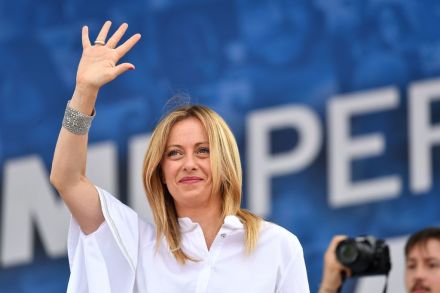
Giorgia meloni

Can Italy reverse its falling birth rate? 

From our UK edition

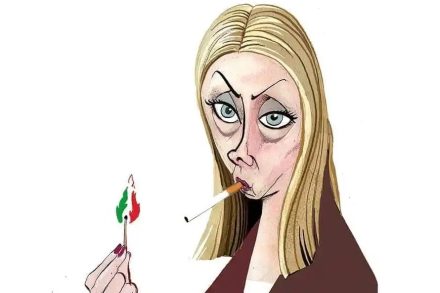
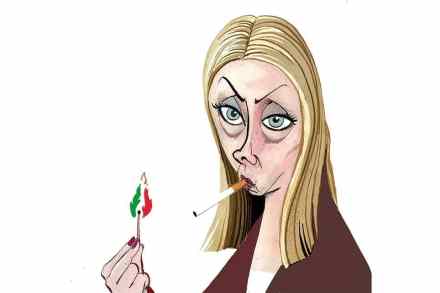
Anne McElvoy is on the road again, exploring the state of modern Europe. Following her Radio 4 programme, The Reinvention of Germany in April, the Politico journalist has travelled to Padua, in northern Italy, where reactions to the rise of the right-wing populist Giorgia Meloni appear to vary. Is the 46-year-old PM a breath of fresh air – the best chance Italy has for a future – or a hypocritical dyed-in-the-wool traditionalist? The reinvention (or rather restoration) of Italy is very much Meloni’s goal. Clinging to the familiar principles of faith, flag and family, she has eschewed measures that would allow those born in Italy to define themselves as Italian, ostensibly believing that to be Italian is to have Italian blood.

‘We must defend our territory’: on the frontline of Europe’s migrant woes

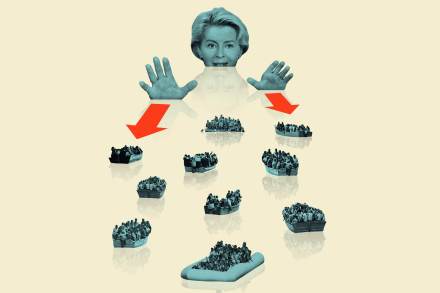
Lampedusa, Italy The motorcade carrying Italy’s prime minister is being held up by a wild-eyed pirate. With a bushy black beard, sun-blasted face, tattooed forearms and a single earring, he stands in front of the convoy of a dozen police cars, extending a flattened palm. Blue lights flash, engines idle and somewhere behind blacked-out windows sit Giorgia Meloni, the prime minister, and her important guest, Ursula von der Leyen, president of the European Commission. The pirate is Giacomo Sferlazzo, leader of the protests that began on the island of Lampedusa after around 100 small boats carrying migrants arrived there on a single day in September. Really he’s a local musician, professional puppeteer and, as he describes himself, a Marxist-Leninist follower of Antonio Gramsci.

lampedusa

Why we’re all populists now

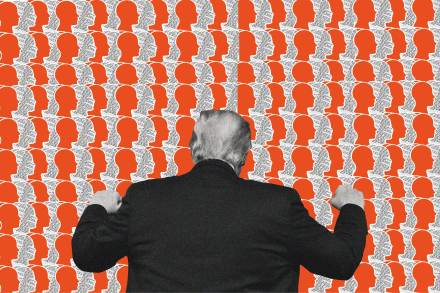
Fifteen years ago, populist politicians and parties were seen as a reactionary blip which would soon fade. They are instead not only still present but rapidly gaining strength and power across the developed world. It’s well past time to wonder if populist sentiments will fade. It’s rather time to consider the heretofore unthinkable: perhaps populism will be to the twenty-first century what labor union-backed social democracy was to the twentieth. All of us grew up in the world that social democracy created, so it’s hard to grasp that it has not always been with us. But that’s not so. As late as the 1890s, social democratic parties were either weak or non-existent in most of the (admittedly small) democratic world. That changed quickly as industrialization gained steam.

populists

Italy is under attack from a killer crab

From our UK edition

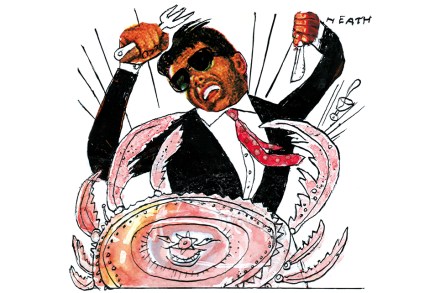
Italy is under maritime siege by a foreign invader known as the granchio blu (blue crab). Like some terrifying alien that lies undetected for decades in a hideous secret lair, untold millions of the crustaceans (whose shells can grow up to nine inches wide) have suddenly emerged and are causing havoc in the country’s delicately balanced marine environment.  The blue crab arrived in Italy from America in the late 1940s in the -ballast tanks of merchant ships, but no one talked about it much until the past couple of years, during which its numbers have exploded. Some blame global warming, but the blue crab is not especially bothered by water temperature one way or the other. It lives in a whole range of climates, from Nova Scotia all the way down to Argentina.

Britain is stuck in a fertility trap

From our UK edition

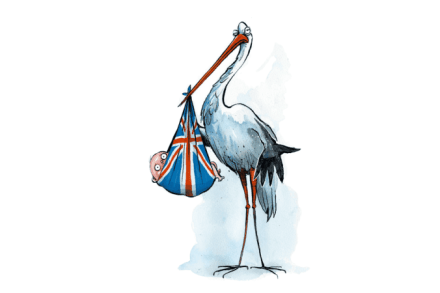
Pope Francis wants you to have sex. Or at least he wants Italians to have more sex. The country, he says, is facing a ‘Titanic struggle’ against demographic doom. Last year, the population dropped by 179,000 people – and Italy is projected to lose another five million by 2050.  What’s happening in Italy is, to a greater or lesser extent, being repeated across the western world. In the UK in 2020, there were four workers per retiree. By 2041, the ONS projects there will be just three. We’re getting older, there are fewer of us and, all other things being equal, we’ll poorer for it. Either we tax the declining population more to maintain the same level of welfare or we will have to cut back on things like care and pensions.

Giorgia Meloni’s first 100 days have proved her critics wrong

From our UK edition

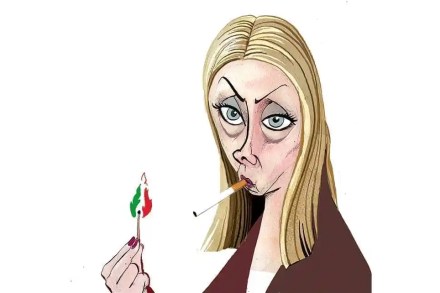
Macho Italy’s first woman prime minister Giorgia Meloni has now governed for 100 days and I cannot help but notice the enormous elephant in the room: the failure of the global media even to acknowledge, let alone apologise for, how wrong they were to warn the world that Italy was on the verge of a far-right, ergo fascist, take-over.   During the election campaign and immediate aftermath the crème de la crème of the world’s media were chock-a-block with warnings that Meloni and her party – Brothers of Italy – were the equivalent of a Biblical plague of locusts in jackboots about to engulf Italy and from there Europe.

Why does the media never call world leaders ‘far left’?

Italy is about to have its first female leader and the American left is furious. Giorgia Meloni grew up in a working-class neighborhood in Rome and was raised by a single mother, after her father, a communist, fled to the Canary Islands and was later convicted of drug trafficking in Mallorca. She wrote in her autobiography that her mother planned to have an abortion when she was pregnant with her but changed her mind at the last minute. Meloni worked as a nanny, a waitress, and a bartender before getting into politics, but she’s no AOC. Meloni, 45, is the leader of the right-wing populist Brothers of Italy party, which recently won Italy’s general election with 26 percent of the vote. She’s widely expected to be named Italy’s first female prime minister.

Giorgia Meloni and the reactionary axis that wasn’t

One is a blonde, photogenic woman who grew out of a youthful infatuation with Benito Mussolini to become the first female prime minister of Italy. The other is anything but photogenic, a grizzled veteran of more than three decades of political combat, who began his career as a student activist and became a respectable center-right statesman, only to reinvent himself as a populist firebrand. But if you were to judge Giorgia Meloni and Hungarian Prime Minister Viktor Orbán by the frequency with which they appear together in media coverage, usually with adjectives like “far-right” and “extreme” attached, you might assume that the two conservative heads-of-state are basically indistinguishable. The European Union and its assorted sympathizers certainly seem to think so.

giorgia meloni

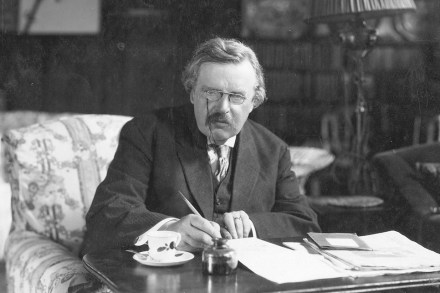
What does it mean when Giorgia Meloni quotes G.K. Chesterton?

From our UK edition

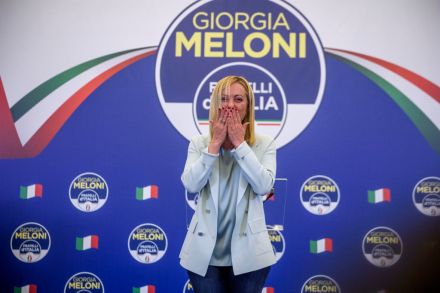
For a UK audience, the most striking moment in the new Italian PM Giorgia Meloni’s victory speech will have been that she anchored its peroration to a quote from G.K. Chesterton. ‘Chesterton wrote, more than a century ago,’ she said, ‘“Fires will be kindled to testify that two and two make four. Swords will be drawn to prove that leaves are green in summer.” That time has arrived. We are ready.’ G.K. Chesterton? The creator of the excellently herbivorous Father Brown mysteries, the Isaac Newton of what we now call ‘cosy crime’? That G.K. Chesterton? The author of a poem, memorised by many a previous generation of English schoolboys, about how ‘the rolling English drunkard made the rolling English road’? That one?

The BBC’s Meloni problem

From our UK edition

Here is a quote from the BBC Europe Editor, Katya Adler’s, very short piece on the BBC Radio 4 Six O'Clock News this evening, concerning the electoral victory of Giorgia Meloni in Italy: Millions of Italians didn’t vote for her. They say they do not recognise themselves in her nationalist, protectionist proposals, her anti-immigration rhetoric and her conservative family mores. Isn’t that remarkable? Can you imagine the awful Adler, or indeed any correspondent, commenting on the victory of a left-wing candidate:  Millions of people didn’t vote for her.

Giorgia Meloni should inspire American conservatives

Giorgia Meloni and her Brothers of Italy party were swept into power in elections this weekend, a development that the media complex in America greeted with all the subtlety of a bird smacking into a sliding door. The New York Times managed to call her a “fascist” 28 times in a single article. Meloni stands to become Italy’s first female prime minister — but I suppose it’s only good for women to break glass ceilings if they’re the correct kind of women.

Giorgia Meloni is no springtime for Italian fascism

Is it springtime for fascism in Europe? First, it was Sweden. Now, it’s Italy. To judge by the reaction to Giorgia Meloni’s victory in the Italian elections on Sunday, the moment to say arrivederci to democracy has arrived. “Giorgia Meloni will be a minister-president whose political examples will be Viktor Orbàn and Donald Trump,” Katharina Barley, the vice-president of the European Parliament, declared. Maybe so, but will she actually be able to transform her country? Fratelli d’Italia, the Brothers of Italy, is a nationalist party that traces its roots back to Mussolini and is led by the charismatic Meloni. It's about to play a starring role in the Italian political firmament.

Why are only Italy’s ‘far right’ opposing vaccine passports?

From our UK edition

Dante’s Beach, Ravenna Here is your starter for ten. Which Italian political party believes that individual liberty is sacred? Answer: the party invariably defined by the international media as ‘far right’ or ‘fascist’ and jointly Italy’s most popular party in the opinion polls: in other words, the Fratelli d’Italia (Brothers of Italy). Here in Italy, birthplace of fascism, the 44-year-old leader of the right wing Fratelli d’Italia – Giorgia Meloni – has been busy promoting distinctly anti-fascist values. In defence of human liberty, she has spoken out passionately against the decree issued on 22 July by Italian premier Mario Draghi which will introduce the ‘Green Pass’ to Italy.