Ghost story

Lazy: America is Beautiful, Chapter 1 reviewed

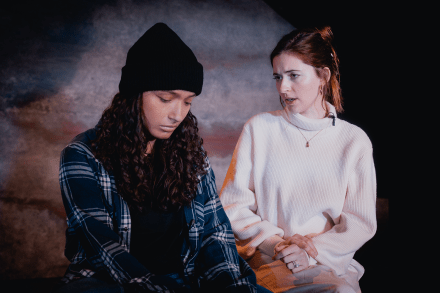
Neil LaBute is one of America’s most provocative and interesting playwrights. His best-known work, The Shape of Things, was made into a movie starring Rachel Weisz and Paul Rudd. America the Beautiful consists of nine plays in three chapters, the first two of which are being staged at King’s Head, the third at the Greenwich Theatre. This complex arrangement sends a signal that LaBute is a mercurial and elusive artist whose fans must chase across London to savour the full richness of his talent. The lesbian stares and leers aggressively while her victim cowers and bleats in protest The first show, Chapter 1, consists of three unconnected skits about sexual jealousy.
Tantalisingly ambiguous – or just plain baffling: Hallow Road reviewed

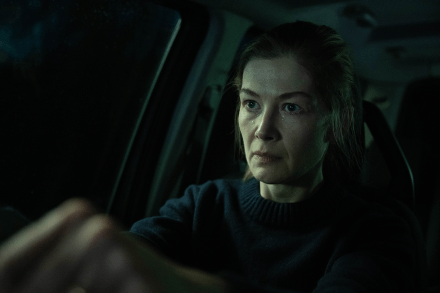
An 80-minute film which for almost all of the time features two people in a car mightn’t sound particularly ambitious. In fact, though, Hallow Road is bursting with so many ideas and genres that by the end they risk blowing it apart completely. At first, it looks as if we’re in for a mix of family drama, psychological thriller and anxiety dream – which indeed we are, but only for starters. After some characteristically disorientating (it turns out) shots of an apparent crime scene – an abandoned meal, glass strewn across the floor – Maddy Finch (Rosamund Pike) receives a 2 a.m. phone call from her distraught daughter Alice (the voice of Megan McDonnell). Following a row over dinner, Alice has driven off in her dad’s car.

Urban gothic: I Want to Go Home, But I’m Already There, by Roisin Lanigan, reviewed

A horror story in three words: London property market. That’s the starting point for Roisin Lanigan’s brilliantly creepy debut novel, set in the sheer hell of being a young renter. Because once you’ve run the gamut of carbon monoxide-leaking boilers, coked-up estate agents, absentee landlords and frosty housemates (and been gouged in rental costs for the privilege), maybe a haunting isn’t a deal-breaker. The main character, Aine, is adrift in her twenties with a vaguely online job and a prescription for unspecified mental health issues. She’s also pathologically passive: she ends up in London because Laura, her best friend from university, asks to flatshare and Aine can’t think of anything else to do. ‘So why not London?

Scholars and spectres: The Runes Have Been Cast, by Robert Irwin, reviewed

It could be said that the power of a horror story depends on the possibility, however minute, of it being true. This is partly why so many masters of the genre, from Bram Stoker to Robert Louis Stevenson, have given their narratives the semblance of believability by including epistolary passages, ‘found’ documents and the commentaries of ‘editors’ in their books. In The Runes Have Been Cast, Robert Irwin takes the opposite approach, writing in a prologue: Should any of my readers incline to a serious study of the subject of this book, it is only right to urge them most strongly to refrain from being drawn into the practice of the Secret Art... My own observations have led me to an absolute conviction that to do so would be a complete waste of time.