Germany

The one thing that might ensure a Greek deal: fear

From our UK edition

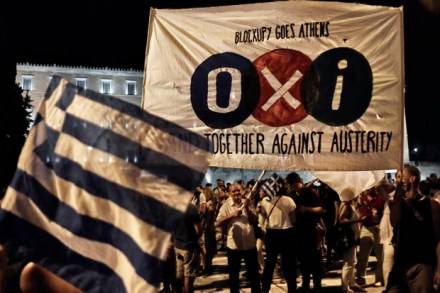
On a narrow, sloping street in downtown Athens sits a graffiti-strewn wall that has captured the spirit of a nation. Amidst the spray-painted slogans and flaking posters, a black-and-white stencilled image of Greek Prime Minister Alexis Tsipras looks down benignly (beneath a perfectly-observed monobrow) at passers-by. His arms outstretched, dressed in flowing robes and with a halo circling his head, he is Christ come to redeem Greece. Such is the bitter humour that now pervades the country’s capital city as the prospect of financial implosion nears. Tsipras came to power promising to get rid of austerity and take the fight to Greece’s European partners. Reality, alas, proved less accommodating. The partners didn’t budge. Syriza, the party Tsipras leads, has had to.

Greece may soon face a humanitarian crisis of its own

From our UK edition

Normally, the phrase ‘continent in crisis’ is hyperbole. But it seems appropriate today as we contemplate the situation Europe, and more specifically the EU, finds itself in. In the next few days, Greece could default, triggering its exit from the single currency and financial disruption across the Eurozone. Meanwhile, Rome is on the verge of unilaterally issuing Mediterranean migrants travel documents enabling them to travel anywhere in the Schengen area because—as Nicholas Farrell reports in the magazine this week—Italy simply cannot cope with many more arrivals. Those involved in the British government’s preparations for a Greek exit put the chances of it at 50:50.

Country house opera

From our UK edition

I stole a blanket last night. Rather a nice one, in fact. I feel bad about it, of course, but guilt is less inconvenient than pneumonia; and after trying to blow-dry my waterlogged dinner jacket with the winds howling through Garsington Opera’s ‘airy’ pavilion, it seemed like pneumonia or the blanket were the options. Forgive the melodramatic, self-justificatory tone. That, too, has its roots in the evening’s diversions, which included a performance of Intermezzo, Richard Strauss’s melodramatic and self-justificatory autobiographical account of a marital misunderstanding. It’s an odd piece, lovely in some ways, trite and misogynistic in others.

David Starkey defends his comments comparing the SNP to the Nazis

From our UK edition

Over the weekend, David Starkey caused outrage in Scotland when he compared the SNP to the Nazis. While the SNP MP Kirsten Oswald was quick to dismiss Starkey as a 'serial utterer of bile and bilge', others called for an apology from the historian. So, how did Starkey feel this morning having had time to reflect on his comments? Turns out, he didn't feel all that different. Answering a question on Sky News about whether he regretted his comments, Starkey said he did not, explaining that he stood by what he had said: Starkey said the SNP were a 'virulently nationalist party' and blamed political correctness for the backlash: 'It's time we call things by their proper names. That's all I'm trying to do.

Cameron’s friend in Brussels

From our UK edition

The Spanish, in their local elections, just elected a bunch of radicals who oppose the austerity needed to keep Spain in the euro. Poland on Monday elected a Eurosceptic challenger from the conservative Law and Justice party. And leaks from the Euro-summit suggested that David Cameron will respond to this rare combination of crisis and opportunity by demanding… well, not much in the way of reforms and concessions. Admittedly these leaks may be feints to mislead all sides about London’s negotiating strategy. It’s early days. Nor is Poland yet a reliable ally for Britain in such negotiations: its government will be divided between a Eurosceptic president and a pro-Brussels administration until at least October.

Cameron’s EU charm offensive must seem genuine

From our UK edition

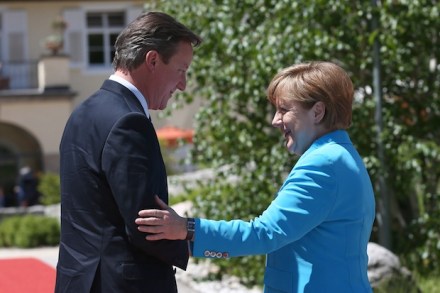
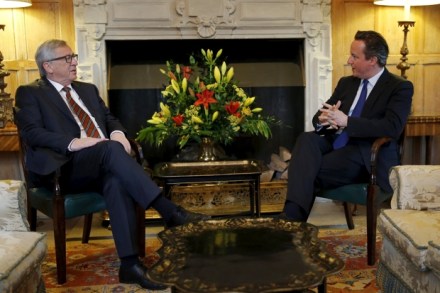
There is so little detail on David Cameron’s talks with Jean-Claude Juncker that it is almost outweighed by the briefing on what the pair ate while at Chequers (a spring salad, followed by pork belly and vegetables and a dessert of lime bavarois). What we were told was that ‘Mr Juncker reiterated that he wanted to find a fair deal for the UK and would seek to help’ and that ‘they talked through the issue at some length in the spirit of finding solutions to these problems. They agreed that more discussion would be needed, including with other leaders, on the best way forward’.

Two batons better

From our UK edition

The morning after the Berlin Philharmonic Orchestra failed to elect a music director, I took a call from Bild-Zeitung, Berlin’s most popular tabloid, seeking analysis. Later, they asked me to write a full-page op-ed. Now shut your eyes a moment and try to imagine any circumstance in which the Sun would ever shine an inch of space on an orchestral conductor — unless, of course, he or she was snapped pants down by paparazzi in an M4 layby. Nothing will ever convince British tabloids to overcome their class-based scorn for art and, while we may think of German media as less counter-elitist, Bild readers consume no more Beethoven per head than Sun browsers. So why the sudden interest? Because, for Germans, this is existential. In Germany, culture defines nation.

Germans propose linking the British renegotiation to Eurozone reform

From our UK edition

Wolfgang Schäuble’s decision to link the British renegotiation to changes to the governance of the Eurozone is highly significant. In an interview the German Finance Minister told the Wall Street Journal that he has discussed George Osborne ‘coming to Berlin so that we can think together about how we can combine the British position with the urgent need for a strengthened governance of the eurozone’. Schäuble went on to say that ‘the structure of this currency union will stay fragile as long as its governance isn’t substantially reinforced. Maybe there is a chance to combine both goals’. Schäuble’s comments are the most encouragement that the government has had on the renegotiation front.

Children of Gomorrah

From our UK edition

In the early hours of 25 July 1943, nearly 800 RAF Halifaxes and Lancasters launched a 50-minute bombing raid on the Third Reich’s second largest city, Hamburg. The pilots used the neo-Gothic spire of St Nikolai’s church in the city’s historic heart as a landmark and killed 1,500 people. Three nights later, just after midnight, the bombers returned. What was to follow was immeasurably worse. The RAF’s target was the city’s overcrowded working-class districts, Hammerbrook, Hamm and Borgfelde, to which many of those who had lost their homes in the previous bombardment had fled. Unusually warm weather and heavy loads of incendiaries combined to create a hurricane-like firestorm.

The devil’s devoted disciple

From our UK edition

It is ironic that this weighty biography of Hitler’s evil genius of a propaganda minister is published on the day of a general election filled with Joseph Goebbels’s hallmarks: mendacity, media manipulation and the big lie. Seventy years after the spectacular suicide of Goebbels and his wife Magda, and their murder of their six children, in the Berlin bunker, the ‘little doctor’ is still a byword for the black arts of political spin and politicians regularly accuse each other of telling fibs ‘worthy of Goebbels’.

Letters | 23 April 2015

From our UK edition

Enemies within Sir: I thought Matthew Parris was typically incisive in his last column, but perhaps not quite as much as the person who wrote its online headline, ‘Scotland knows the power of a common enemy. We English don’t’ (18 April). It is true that ‘the wish to be the underdog’ is a defining urge of our age, even in relatively prosperous polities such as Scotland and Catalonia. But Parris is wrong when he claims that the closest the English come to the ‘Braveheart feeling’ is in their collective memory of the second world war. If only that were true. Would any other country make so little of its crucial role in the defeat of the most evil ideology the world has known?

Is this the greatest sculpted version of the Easter story? It’s certainly the strangest

From our UK edition

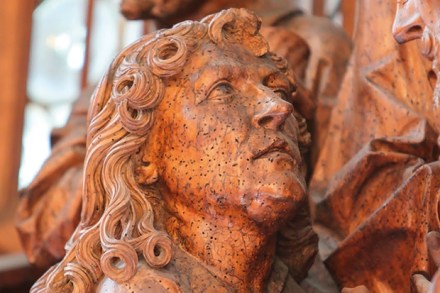
In April 1501, about the time Michelangelo was returning from Rome to Florence to compete for the commission to carve a giant marble David, a very different sculptor named Tilman Riemenschneider agreed to make an altarpiece in the small German town of Rothenburg ob der Tauber. Since then, things have not changed much in Rothenburg. Though battered during the war, it has been restored to postcard perfection (or rather turned into a perfect place for tourists to take selfies of themselves against a Disneyesque medieval background). And the Altar of the Holy Blood is still there, in the place for which it was made, at the west end of the church of St James or Jakobskirche. This is a sculpted version of the Easter story both great and strange.

Here’s what a real reform of business rates would look like

From our UK edition

Of all the measures talked up ahead of the Budget, the reannouncement of a ‘radical’ review of the business rates was the least concrete in content but the most important in potential impact on the domestic economy, and especially on business investment. This column has banged on for years about the iniquity of a system that imposes the highest local taxes on businesses of any EU country, based on pre-crash rental assessments and bearing no relation to the value of diminishing local authority services. It’s a system that, on top of other economic woes, has brought devastation to town centres — and gets away with all this because it has no democratic accountability, since businesses have no votes.

Miriam Gross’s diary: Why use Freud and Kurt Weill to promote Wagner?

From our UK edition

Last week I went to the exhilarating English National Opera production of Wagner’s The Mastersingers — five hours of wonderful music and singing whizzed by without a moment’s boredom. But there was one odd and perturbing factor, I thought. In place of a curtain, there was a huge ‘frontcloth’. It was covered with a collage of 103 faces of well-known artists. These same faces appeared again, during the finale, this time in the form of portraits held aloft by members of the cast. They included Joseph Roth, Stefan Zweig, Sigmund Freud, Kurt Weill, Billy Wilder, Richard Tauber, Oskar Kokoschka, Hannah Arendt, Simone Weil, Lotte Lenya, Max Ernst, Marlene Dietrich.

Never mind Ukip’s immigration policy, Britain has an emigration problem

From our UK edition

Ukip has unveiled its new Aussie-style immigration policy, just a week after the latest bad immigration news for the government. The news was bad only in a sense, as high immigration levels are a symptom of a healthy economy; after all, the Venezuelan government doesn’t break into a sweat every time the immigration figures come in, thanks to the genius of Chavenomics. But it’s all bad news for the Tories because most people would like restrictions on the rate of population growth, and of immigration-led social change, and the government made promises it clearly couldn’t keep.

MI5 didn’t make Jihadi John; he made himself

From our UK edition

Poor Mohammed Emwazi. One day he’s your average 'beautiful' young man, nose buried in his computer studies books, looking for a job and looking for love. The next he’s being harassed by the security services, so intensely that — BOOM — he weeps and wails his way to the deserts of Syria where he changes his name to Jihadi John, dons an Islamic ninja outfit and starts chopping people’s heads off. Happy now, MI5? See what you did? Shame on you for pushing this studious, handsome London lad to become the Charles Manson of the Middle East. That, at least, is a rough outline of the script being hawked by the organisation Cage.

Paul Mason’s diary: My Greek TV drama

From our UK edition

It’ll be a Skype interview, says the producer from Greek television, and not live. In TV-speak that usually means not urgent and not important, but I’ve become vaguely interesting to Greeks because of the ‘Moscovici draft’ — a doomed attempt to resolve the crisis, leaked to me amid denials of its existence. The interview goes on a bit and the tone is deferential. At the appointed time, I fire up Greek television to see how many clips they’ve used. Instead of me, a panel of five bearded men in an expansive studio are conducting an earnest preview of my interview.

The Greek crisis isn’t over

From our UK edition

The more you read about the deal between Greece and the Eurozone, the clearer it becomes how temporary a deal it is. First, the Syrzia-led government has to submit on Monday a list of the reforms that it intends to implement over the next four months before the bailout is extended. Then, negotiations will have to start on a third Greek bailout for when this one runs out in the summer. These negotiations will be particularly fraught because of the lack of goodwill on all sides. Last night, Wolfgang Schauble, Germany’s finance minister, declared ‘The Greeks certainly will have a difficult time to explain the deal to their voters.

If Greece leaves the euro could others follow?

From our UK edition

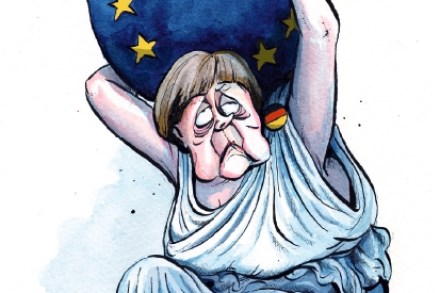
Germany wants nothing less than an unconditional surrender from the new Greek government. It is hard to draw any other conclusion from Berlin’s decision to reject Greece’s proposal for a six month extension of the current bailout, which counted as an almost total climb-down by the Syriza-led government. But it seems that the Germans—with an eye on the Spanish elections later this year —want to show that voting for radical, anti-austerity parties gets you absolutely nothing. However, the Germans may well have miscalculated. The Greek Finance Minister wants Greece to leave the euro but, because the vast majority of Greeks wants to stay in the single currency, he has had to stop agitating for that.

Taki’s recipe for the survival of the Greek nation

From our UK edition

The good news is that a Greek suppository is about to relieve the EU’s economic constipation. The bad is that there’s a Castro in our midst posing — just as Fidel did 56 years ago — as a democratically elected populist. Back then it was Uncle Sam who was the bogyman. Now it’s the EU. Back then the Soviet Bear came to Fidel’s rescue. Now it’s Putin. Personally, I’d take Vlad over the faceless unelected Brussels gang anytime. The problem is Tsipras, a vulgar-sounding name if ever there was one. Add to it the fact that he has two sons, one named after Che Guevara, the other after Carlos, the murdering Venezuelan terrorist at present languishing in a French jail.