Germany

What would peace with Iran look like?

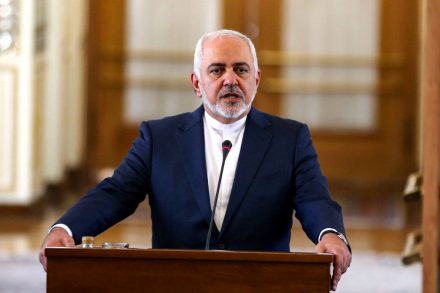
Heiko Maas, the German foreign minister, was in Tehran on Monday. The ‘Iran conflict’, Maas said, is ‘one of the biggest conflicts of our time’. No one wants war with Iran. But what would peace with Iran look like — and what exactly needs to be pacified? The degree to which Maas’s statement was at once accurate and not accurate suggests the tricky nature of the ‘Iran conflict’. Iran’s forces are minimally engaged in conflict, but Iran’s proxies, Hezbollah especially, are everywhere engaged: in Lebanon, in Syria, in Yemen, and across Europe. On Sunday, news from London showed how the Iranian regime uses its proxies to play a double game with the West.

peace iran

Muslims aren’t Europe’s new Jews

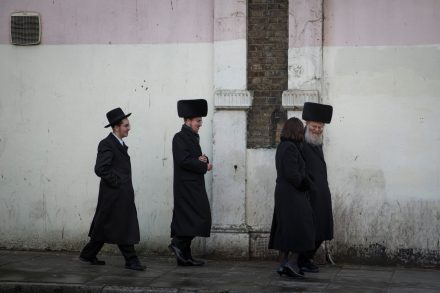
Last weekend, Felix Klein, Germany’s anti-Semitism commissioner, said that he can no longer ‘recommend to Jews that they wear the skullcap at all times everywhere in Germany.’ This statement betrayed two devastating truths. First, that anti-Semitism is back with a vengeance in Germany, as elsewhere in many European states. Second, that no one with any knowledge of the situation has any confidence that things will get better anytime soon. Instead of working to change the latter, Jews are instructed to hide their faith. This is abhorrent for several reasons. The kippah or yarmulke is, like the hijab, an external signifier. It proclaims to the world that the wearer identifies with a particular group and a particular set of ideas.

jews

Diary – 23 May 2019

From our UK edition

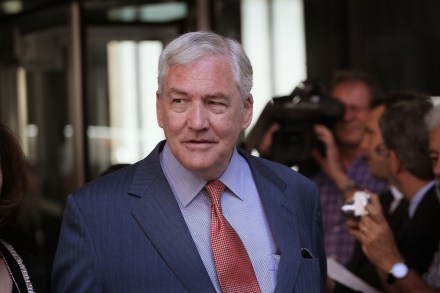
I owe my return to these pages to the pardon I have received from the President of the United States. When he called me, he referred to my ‘miraculously shrinking crime’ of 17 counts, to 13 (including racketeering), to four, to two; and to the quantum of my alleged transgressions from $400 million to $60 million, to $6 million, to $285,000 (which was approved by independent directors and published in the company’s filings). The President stressed that the White House counsel and his legal staff had analysed the legal material and concurred that I received ‘a bad rap (and) an unjust verdict’.

Barometer | 4 April 2019

From our UK edition

German customs The original customs union, or Zollverein, was established by Prussia along with 17 other states which make up modern Germany in 1834. Prior to that, traders crossing what is now Germany, were obliged to make multiple declarations and pay taxes as they moved across state borders. — It had taken 15 years to establish, but achieved a big step towards realisation in 1828 when Prussia formed a union with neighbouring state Hesse-Darmstadt, Bavaria formed its own union with Wurttemberg, and Saxony with Thuringian. — Not everyone was convinced. Hamburg and Bremen, which conducted much external trade by sea and made a lot of money from import duties, were not persuaded to join until 1888, by which time they had already been part of the German Empire for 17 years.

Why Greek, Italian and Cypriot banks can go to the wall, but German ones can’t

From our UK edition

It would only encourage irresponsible lending. Deficits would run out of control. The rules of the single currency would be undermined, and voters would lose faith in the euro. Over the last few years, the Germans, the European Central Bank, and the EU itself, have been adamant that banks shouldn’t be bailed out inside the eurozone. Along the way, Greek, Cypriot, Italian and Irish banks have all been allowed to go to the wall or squeezed to extinction. But hold on. There seems to be an exception to that austere financial regime. Big German banks. With the once mighty Deutsche Bank in serious trouble, it turns out there is nothing wrong with the government orchestrating what amounts to a rescue after all.

‘Working late at the Bauhaus’

From our UK edition

Walter Gropius (1883–1969) had the career that the 20th century inflicted on its architects. A master of the previous generation in the German-speaking lands, Otto Wagner, could create his entire oeuvre without venturing outside the city limits of Vienna. Gropius found himself thrust into one unprecedented role after another, uprooted and exiled repeatedly. His work was carried out wherever he landed — in Germany, England or America. Despite the huge disruptions of history, he displayed extraordinary single-mindedness. From the 1914 Fagus factory onwards, his buildings argued for the modernist position of function over ornament. By the time of his death, in America, the vast majority of practising architects, if not the public, were converted to his position.

Merkel’s immigrant boom wreaks havoc in Germany’s prisons

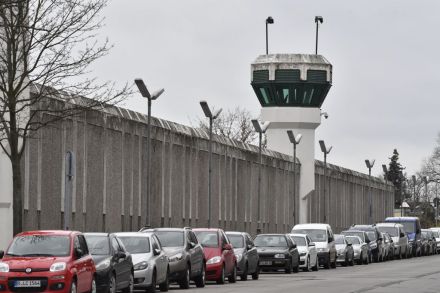
Angela Merkel’s decision to allow more than one million migrants into Germany has caused a crisis in Germany’s prison system. About half the prisoners in Berlin and Hamburg are now foreign-born, according to the latest figures in the German press, and in prisons across the country, German is becoming a foreign language. This surge in outsiders on the inside coincides neatly with the 2015 decision to allow in migrants from the Middle East, Africa and Asia. All regions of Germany report a ‘very strong increase’ in the number of foreign and stateless prisoners, according to data from the past three to five years. Prisons throughout Germany are overcrowded and struggling to handle the influx in population.

germany prisons

Both sides will blink

From our UK edition

What can the EU do to help the Britons out of their Brexit quagmire? Until very recently, the answer would have been ‘little, if anything’. There is a deal on the table, which Theresa May herself pronounced to be non-negotiable. Well, parliament directed her — and by implication, the EU — to think again and to reconsider the vexed question of the Irish backstop. Does anybody on either side of the channel really want to wreck the future relationship between the UK and the EU over the unsolved issue of the Irish border, as well as risk creating renewed enmity along it? God forbid.

How Germany helped shape the conditions for Brexit

From our UK edition

German political leaders, industrialists, artists and sportspeople wrote to the Times last week urging Brits to reconsider and stay in the EU. The letter was a mixture of gratitude that Britain had been willing to let Germany rejoin the ranks of civilised nations after the horrors of war, and a rather patronising list of the oh-so-adorable British quirks and foibles: our black humour, our curious habit of drinking tea with milk, drinking ale, driving on the left and pantomimes. But what really struck me was that, for all the warm words, there was no recognition that modern German politics might have played a role in Brexit, let alone a hint of contrition.

The weakness behind Macron and Merkel’s love-in

From our UK edition

Emmanuel Macron spoke for three hours, almost without pause, at the first of his grand débats national in Normandy last week, in an attempt to respond to recent protests, while 8,000 policemen kept the gilets jaunes at bay. Yesterday, in the splendour of the Palace of Versailles, Macron hosted scores of international business leaders, many on their way to Davos, to reassure them that France was open for business. They were polite but it is fair to say sceptical, having seen on television the Porsches of bankers burning on the streets of Paris. Today the peripatetic president is with Angela Merkel in the German city of Aachen, known still to the French as Aix-la-Chapelle, Charlemagne’s capital.

Matteo Salvini is doing Brussels a favour with his harsh migration policy

From our UK edition

Matteo Salvini, Italy’s deputy prime minister and interior minister, is one of the most controversial politicians in Europe. The 45-year old chief of the League party exudes a down-to-earth demeanour with his common-man social media posts, in which he shares pictures of himself eating Barilla pasta and Nutella. To his many opponents, Salvini is a thick-headed, semi-fascist ideologue who wants to turn back the clock and return Europe to a dangerous form of nationalism. But to his supporters, in and out of Italy, he is a straight-talking, no-nonsense defender of his country's sovereignty against the northern elites in Berlin and Brussels.

How Cameron’s misreading of Merkel led to Brexit | 29 October 2018

From our UK edition

It is impossible to overstate Angela Merkel’s significance, to Germany, to the EU, and to Britain. Others are better qualified than me to talk about the first two of those, but as she announces her (slow, deliberate) departure from office, I offer a thought about Merkel and Britain, which is that the modern history of Britain’s European policy has been a story of misunderstanding Angela Merkel, and therefore Germany. This story starts in 2005, when David Cameron stood for the Tory leadership. As a moderate, he was keen to woo the Right, especially on Europe. So he promised to pull the Tory MEPs out of the European People’s Party grouping in the European Parliament.

Angela Merkel is already making life difficult for her successor

From our UK edition

“May Day, May Day. We are sinking.” “This is the German Coast Guard. What are you thinking?” This advert for Berlitz, the language school, is a good metaphor for German politics and the decline of Angela Merkel. After this weekend’s election blow in Hesse, where support for her Christian Democratic Union (CDU) party fell by 11 points, she is now standing down as the leader of her party. Merkel also announced that she will quit as chancellor in 2021. This isn’t surprising. In the past few months, Merkel has defended her position as party leader and repeatedly said that she should stay in that job as long as she leads the country.

A meeting of remarkable men

From our UK edition

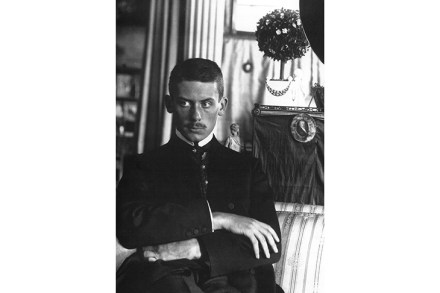
In 1945, with the second world war won bar the shouting, Bertrand Russell polished off his brief examination of Friedrich Nietzsche’s contribution to Western thought with the splendid phrase: ‘His followers have had their innings.’ Russell knew that Nietzsche’s followers didn’t just mean the Nazis. Ten years before Hitler’s acolytes started editing special volumes of Nietzsche’s aphorisms about the Will to Power, the Blond Beast and suchlike, Leon Trotsky declared that ‘the Nietzscheans’ were his natural allies in the creation of the socialist ‘superman’.

Europe ‘resurgent’

From our UK edition

When I reviewed the first volume of Sir Ian Kershaw’s wrist-breaking history of the last 100 years of Europe, To Hell and Back, in these pages exactly three years ago, I compared our continent in 1945 to a punch-drunk boxer rising from the canvas with both eyes blacked. How, I wondered, would Kershaw handle the battered old bruiser coping with a not-so-brave new world in which he was no longer the undisputed champ? The image of the wounded fighter, I think, was apt, for the red thread running through Europe in the first half of the century, as Kershaw rightly saw, was violence. States waged catastrophic war on each other and on their own citizens. Belonging to the ‘wrong’ race, religion, or political persuasion could mean imprisonment, torture and violent death.

Ich bin ein Frankfurter

From our UK edition

Things I learned about the Germans after a fortnight living as a non--tourist in Frankfurt:   1. Germans, and Germany generally, are among the world’s most underrated things. True they are not so adept at wit, snark, banter, jocularity or general frivolity. But they are kind, welcoming, generous and unlike, say, the French, charmingly grateful when you attempt to speak their quaint, guttural, impossibly inflected language even though — stimmt! — they speak yours so much better.   2. Here’s what happened when I lost my wallet. I got back to my hotel — cursing each step of the way the hours I would have to spend cancelling and re-ordering my cards — to find a message from the front desk.

Angela Merkel prepares for a rematch with Vladimir Putin

From our UK edition

German chancellor Angela Merkel has a lot on her plate. In addition to keeping her rabble-rouser junior coalition partners in the tent, constantly looking over her shoulder for the increasingly renegade Horst Seehofer, and trying to come up with a European solution to the headache that is illegal migration, Merkel will be sitting down with Russian president Vladimir Putin this weekend to talk state business at the Meseberg. Merkel and Putin have a lot to discuss. The war in Ukraine’s Donbas region continues at a steady clip, notwithstanding the short-term ceasefires that usually collapse after a few hours or (if one is lucky) days.

Angela Merkel sacrifices her principles to make a migration deal

From our UK edition

There was a time not too long ago - less than three years to be exact - when German Chancellor Angela Merkel was at the very top of her game. She dominated German and European politics for over a decade with her clear, effective, but cautious leadership, watching as the German economy solidified its place as Europe’s economic engine. When Merkel decided to open Germany’s doors in August 2015 to hundreds of thousands of refugees fleeing war and persecution in Syria, she became much more than the steward of Berlin’s economic power - she transformed overnight into the moral beacon of the European continent.

The Spectator’s Notes | 12 July 2018

From our UK edition

Why do the British turn to the Germans in their moments of European trouble? It never works. When Jacques Delors conceived his single currency plans, Mrs Thatcher over-relied on Karl Otto Pöhl at the Bundesbank to squash them. Dr Pöhl preferred to side with Helmut Kohl. When Britain was struggling to stay in the ERM in the late summer of 1992, the Major government put faith in what they thought were German promises to help them out. These failed to materialise. When David Cameron sought a new EU deal which would win him the 2016 referendum, he placed his greatest hopes in Angela Merkel, who offered him concessions so feeble that even he quickly gave up trying to sell them. Last week, Mrs May flew to Berlin.

Donald Trump is wrong about Germany being a ‘captive’ of Russia

From our UK edition

"What good is Nato if Germany is paying Russia billions of dollars for gas and energy?" tweeted Donald Trump on 11 July. Trump was surely referring to Nord Stream 2, the controversial deal between Russia and Germany, whereby Russia will pump natural gas direct to Germany through a new pipeline across the Baltic Sea. Trump reckons such arrangements make Germany a 'captive' of Russia. Is he right? America isn't the only country that's getting hot and bothered about Nord Stream 2. Denmark and the Baltic States have also voiced concerns. The most vociferous opponent of the scheme is Ukraine.