Germany

Angela Merkel prepares for a rematch with Vladimir Putin

From our UK edition

German chancellor Angela Merkel has a lot on her plate. In addition to keeping her rabble-rouser junior coalition partners in the tent, constantly looking over her shoulder for the increasingly renegade Horst Seehofer, and trying to come up with a European solution to the headache that is illegal migration, Merkel will be sitting down with Russian president Vladimir Putin this weekend to talk state business at the Meseberg. Merkel and Putin have a lot to discuss. The war in Ukraine’s Donbas region continues at a steady clip, notwithstanding the short-term ceasefires that usually collapse after a few hours or (if one is lucky) days.

Angela Merkel sacrifices her principles to make a migration deal

From our UK edition

There was a time not too long ago - less than three years to be exact - when German Chancellor Angela Merkel was at the very top of her game. She dominated German and European politics for over a decade with her clear, effective, but cautious leadership, watching as the German economy solidified its place as Europe’s economic engine. When Merkel decided to open Germany’s doors in August 2015 to hundreds of thousands of refugees fleeing war and persecution in Syria, she became much more than the steward of Berlin’s economic power - she transformed overnight into the moral beacon of the European continent.

The Spectator’s Notes | 12 July 2018

From our UK edition

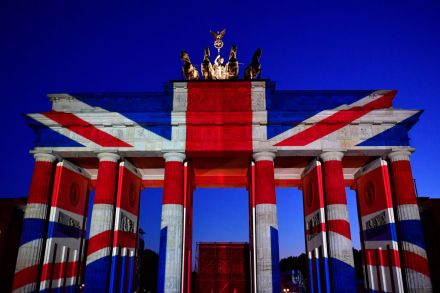
Why do the British turn to the Germans in their moments of European trouble? It never works. When Jacques Delors conceived his single currency plans, Mrs Thatcher over-relied on Karl Otto Pöhl at the Bundesbank to squash them. Dr Pöhl preferred to side with Helmut Kohl. When Britain was struggling to stay in the ERM in the late summer of 1992, the Major government put faith in what they thought were German promises to help them out. These failed to materialise. When David Cameron sought a new EU deal which would win him the 2016 referendum, he placed his greatest hopes in Angela Merkel, who offered him concessions so feeble that even he quickly gave up trying to sell them. Last week, Mrs May flew to Berlin.

Donald Trump is wrong about Germany being a ‘captive’ of Russia

From our UK edition

"What good is Nato if Germany is paying Russia billions of dollars for gas and energy?" tweeted Donald Trump on 11 July. Trump was surely referring to Nord Stream 2, the controversial deal between Russia and Germany, whereby Russia will pump natural gas direct to Germany through a new pipeline across the Baltic Sea. Trump reckons such arrangements make Germany a 'captive' of Russia. Is he right? America isn't the only country that's getting hot and bothered about Nord Stream 2. Denmark and the Baltic States have also voiced concerns. The most vociferous opponent of the scheme is Ukraine.

Why Sebastian Kurz is Europe’s most important politician

From our UK edition

Austria assumes the Presidency of the Council of the European Union this Sunday, and normally the response among rightminded Britons would be a resounding ‘Who Cares?’ Even before we voted Leave, this rotating six month stint was generally regarded with indifference. Now we’re on our way out, why should we be bothered whose turn it is in the EU chair? Well, the big difference this time around is that Austrian Chancellor Sebastian Kurz is rapidly emerging as Europe’s most influential politician. And for the EU, his spell in the hot seat could hardly have come at a more crucial time. Like Trump’s America and Brexit Britain, Europe is divided.

Is there life after Merkel for German conservatives?

From our UK edition

German conservatives are in disarray. Caught between the migrant crisis and Merkel’s looming departure, they are fighting over their own political future. On the surface, Angela Merkel’s Christian Democrats (CDU) and their smaller sister-party, the Bavarian Christian Social Union (CSU), argue over whether German police forces should be allowed to reject certain asylum seekers at the border. But the actual conflict runs deeper: it is not simply about whether or not to reject a few thousands refugees at the border; this is about the very future of German conservative politics. Merkel has now led German conservatives for thirteen years.

On Germany, Trump is right about the big picture, wrong about the detail

From our UK edition

Time was, a US President wouldn’t dream of criticising the government of one of its Nato allies in public – but that was a long, long time ago, before the Age of Trump. ‘The people of Germany are turning against their leadership as migration is rocking the already tenuous Berlin coalition,’ tweeted President Trump yesterday. ‘Crime in Germany is way up. Big mistake made all over Europe in allowing millions of people in who have so strongly and violently changed their culture. We don’t want what is happening with immigration in Europe to happen to us.’ Of course Trump is being terribly undiplomatic. No surprise there. That’s his thing – that’s what he does. But is he right?

The future of Scandinavia

From our UK edition

From ‘The Baltic question’, 15 June 1918: The future of Scandinavia and the Baltic must depend on the outcome of the war. If indeed Germany were to emerge victorious, then all the evils on which the pessimists delight to ponder would come to pass… The Baltic would be a German lake, and its commerce would be a German monopoly. Swedes and Danes and Norwegians would gradually be converted by Prussian schoolmasters and Prussian police into docile Germans, and their distinctive civilisations and literatures would disappear. Such is the prospect if the Allies were to fail in their task. But, fortunately for Scandinavia and for the rest of the world, the Allies will not fail.

Becoming German

From our UK edition

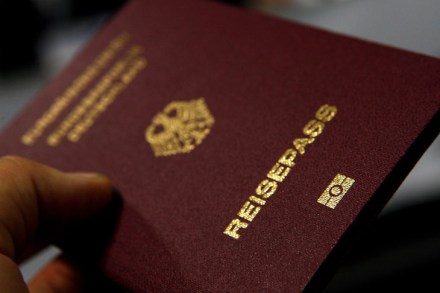
In the end, after all the waiting, the document didn’t look like much — a sheet of A4 paper adorned with a German eagle, and one of those tongue-twisting Germanic compound nouns beneath it: Staatsangehörigkeitsausweis. At last, my Certificate of German Citizenship had arrived. How did I feel? Elated, tearful, overjoyed. It was at this moment that I finally understood how so many Brexiteers must have felt when Britain decided to leave the EU. When Britain voted Leave I was distraught, but I wasn’t at all surprised. For anyone with eyes and ears, it was clear that a great many Britons were passionate about leaving, and that a lot of Remainers were merely lukewarm.

The dilemma of Germany’s Turkish footballers

From our UK edition

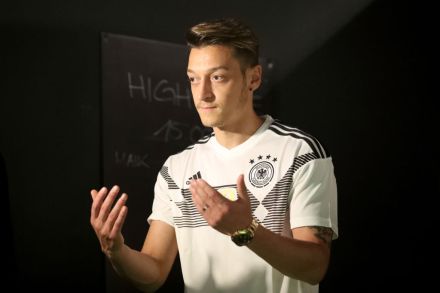
What’s the German for ‘The best laid schemes of mice and men gang aft agley’? Mezut Özil (Arsenal) and İlkay Gündoğan (Manchester City) are two of the finest footballers in England’s Premier League. They’re both of Turkish descent, so when Turkey’s president Erdoğan came to London on a state visit, a friendly meeting and a photo opportunity must have seemed like a good idea. However Özil and Gündoğan were both born in Germany, and both play for the German national team. The Deutscher Fussball Bund (and some German politicians and journalists) weren’t best pleased. Özil gave Erdoğan a football shirt, which was bad enough, but Gündoğan went one stage further.

What Brexit Britain can learn from German Reunification

From our UK edition

Obscured by the hubbub of rolling news and the cacophony of Twitter, an important anniversary has passed by virtually unnoticed. The Berlin Wall has now been down for longer than it was up. Berlin’s ‘Anti-Fascist Protection Barrier’ (as the Communists used to call it) stood for 28 years and three months, from August 1961 to November 1989. It’s now been down for 28 years and four months. Its fall reunited the two Germanies, and changed the course of history. So, 28 years on, what can Brits learn from German Reunification? What lessons does the Wiedervereinigung hold for us today? I filed my first report from Berlin in the first year of Reunification. Since then, I’ve returned to eastern Germany more times than I can count.

Is Sebastian Kurz Germany’s most important politician?

From our UK edition

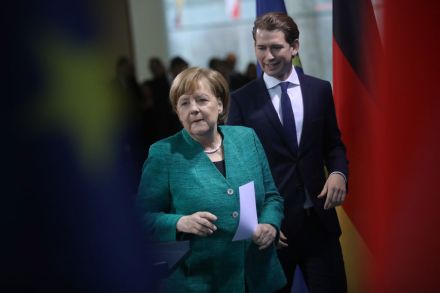
Who is the most important politician in Germany? Angela Merkel? No, it’s the Austrian Chancellor, Sebastian Kurz. Merkel remains a colossus on the world stage, but domestically her power is much diminished. Meanwhile German eyes are on Kurz, the world’s youngest national leader, as he strives to bridge the gulf between centrists and populists – and between east and west. Despite their vastly differing ages (Merkel is 63; Kurz is just 31), the German and Austrian Chancellors actually have quite a lot in common. They’re both leaders of centre right parties in prosperous Central European nations, where immigration is a growing concern, and the far right is on the rise.

Angela Merkel is back in office but not back in power

From our UK edition

How did she do it? How has Angela Merkel hung on for a fourth term as German Chancellor after being written off so many times? When she's sworn in as Bundeskanzlerin today it'll be nearly thirteen years since she became leader of the Bundesrepublik. She's been read the last rites so often, yet after almost six months of backroom talks she's back in office. But is she really back in power? Merkel has promised Germany 'a grand coalition for the little people.' It's a catchy catchphrase but can she deliver? Yet another cosy alliance between her centre right CDU and the soft left SPD hardly feels like a new beginning for the millions of voters who deserted the two big parties at last September's election.

The new German grand coalition will be dull and dreary

From our UK edition

There’s no success like failure, as Bob Dylan once observed. Nearly six months after Germans went to the polls and gave the country’s coalition government a bloody nose, the same two parties are back in government in another ‘grand coalition’ – yet another unholy alliance of Christian Democrats and Social Democrats, with Angela Merkel at the helm again. Haven’t we been here several times before? Well, yes and no. Merkel’s centre-right CDU agreed a coalition deal with the soft-left SPD last month, but SPD protocol demanded they put this deal to their 464,000 members, and after an all-night count the result of that postal vote was announced this morning.

Merkel’s left-right coalition has given the AfD exactly what it wanted

From our UK edition

Angela Merkel will get her fourth term as Germany’s chancellor. Members of the Social Democratic Party, the SPD, voted to get into government with her again. Yet neither the SPD nor Merkel’s Christian Democratic Union are cheering the idea of four more years in power. Merkel may not be a ‘dead woman walking’, but she’s reaching the end of her remarkable career. Barely a year ago, she was being talked about as the leader of the free world. Now she is blamed by her own party for upending German politics and, in the process, allowing the far-right to become a real political force for the first time since the 1940s. Germany will now get a majority government, but the country’s politics are in a state of crisis.

Germany’s diesel ban is a victory for the Green party

From our UK edition

So much for Germany’s mighty automobile lobby. Today Germany’s Federal Administrative Court ruled that Stuttgart, home of Mercedes-Benz and Porsche, has the right to ban diesel vehicles from its city centre. This sets an important precedent. If Germany’s motor city can outlaw diesel, other cities will surely follow their example (indeed, the ruling also applies to Düsseldorf, which brought a similar case). Naturally the German car industry opposes this ban, and so do the German government, but their chances of overturning this ruling seem slender. The Federal Administrative Court (or Bundesverwaltungsgericht, if you want to brush up on your knowledge of tongue-twisting German compound nouns) is the highest court in the land.

The Spectator Podcast: Germany’s nightmare

From our UK edition

On this week’s episode, we look at Germany’s political nightmare, speak to one of the world’s most eminent psychologists, and get excited by the Winter Olympics. First up, since last year’s election, Angela Merkel’s chancellorship has seemed to be on thin ice. Her party, the Christian Democrats, have a coalition offer pending with the SPD, which would, at best, see the far right AfD become the main opposition. What is fuelling this unrest? And how long can Merkel continue in the current climate? Thomas Kielinger writes on the future of Germany’s leadership in the magazine and he joins the podcast along with Anne McElvoy, head of Economist Radio. As Thomas writes: "On Monday, Angela Merkel did something quite extraordinary.

Angela Merkel’s new coalition is united by fear of AfD

From our UK edition

Here we go again. More than four months after Germans went to the polls and gave both main parties the thumbs down, Germany’s Christian Democrats and Social Democrats have finally agreed the terms of yet another Grand Coalition. True, the CDU and the SPD are still Germany’s two biggest parties. Between them they still command (just) over 50 percent of the national vote. But it’s a bitter irony that these two centrist parties are back in power together, after both recorded their worst election results since the war. Barring a catastrophe or a miracle (depending on your point of view) Angela Merkel will be Chancellor again, for a fourth term, but her centre-right CDU has made some big concessions. The SPD has retained control of the Foreign Affairs and Labour Ministries.

Is Angela Merkel finally closing in on a fourth term?

From our UK edition

Is there anything quite so ponderous as the German political process? It certainly provides a useful illustration of the gulf between the British and German way of doing things. Theresa May took only a few days to hatch a deal with the DUP to stay in power. By contrast, Angela Merkel has been trying to build a new coalition since September, and there’s still no end in sight. The latest chapter in this epic saga was yesterday’s vote by Germany’s Social Democrats, on whether to approve the party’s preliminary coalition talks with Merkel’s Christian Democrats. After much agonised debate, SPD delegates voted in favour. So now, at long last, the SPD can finally enter formal coalition talks with the CDU.

Germany’s ‘grand coalition’ looks set to return

From our UK edition

Oh dear. More than three months since Germans went to the polls, and gave the CDU-SPD government a bloody nose, its politicians have finally emerged from the latest coalition talks - and the result is yet another cosy alliance between the CDU and the SPD. You’ve got to feel for German voters. In the Fatherland it seems no matter who you vote for, the so-called ‘grand coalition’ of Christian Democrats and Social Democrats almost always wins. It wasn’t meant to be this way. In September’s election the CDU and SPD both recorded their worst result since the Second World War – 33 percent for the CDU (down nearly 9 percent) and 20.5 percent for the SPD (down by more than 5 percent).