George osborne

2014: the year of ‘hard truths’ that are easy for George Osborne to say

From our UK edition

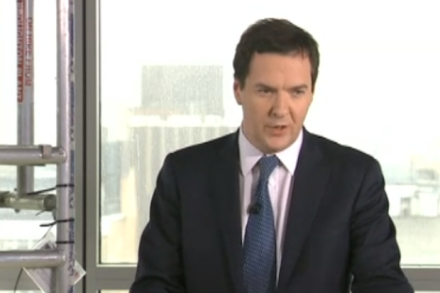
George Osborne has a funny way of saying 'happy new year'. In his speech in Birmingham this morning, the Chancellor will describe 2014 as the year of 'hard truths' about how much more spending needs to be cut in order to close the deficit. So why is the Chancellor kicking off what most commentators are billing as an extremely long general election campaign with a bleak message about more cuts to come? In 2010, the three main parties did everything they could do avoid talking about the detail of the challenge on public spending.
Six moments that hardened up the Tories in 2013

From our UK edition

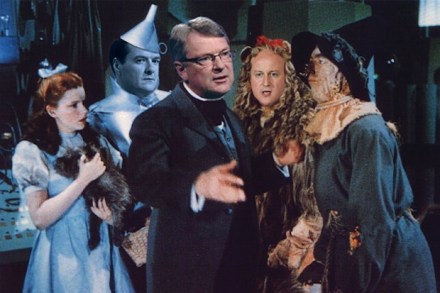
For the Conservative party, 2013 has been the year of Lynton Crosby. Just over a year ago, the Wizard of Oz was appointed David Cameron’s chief election strategist. Now he’s full-time. His brief is to make sure the Tories in government have a clear message – something that eluded them in the 2010 campaign. And to see that the message is articulated in deeds, not words. In April, the Prime Minister described his own strategy by using a quote from the late Keith Joseph: ‘the right thing to do is to address the things people care about; to fix yourself firmly in what Keith Joseph called the “common ground” of politics’. As opposed to the middle ground of Westminster. Here’s the six top incursions into this middle ground. 1.

ONS admits UK economic recovery is stronger than it thought

From our UK edition

The ONS has today revised upwards its growth for most of 2013, to show a recovery far stronger than it admitted at the time. This fits a trend: in economics, good luck tends to come in waves. And the tools economists have to work out what's happening are so crude (and often useless) that it takes years to work out what really happened. Only in 2011, for example, was it clear that Gordon Brown had incubated the worst economic overheating since the war - hence the crash. But by the time this was clear, everyone blamed bankers for the crash - when, in fact, it was just reckless economic management. Which all the economists, with their 'output gap' spreadsheets, missed. Remember the triple dip? The above graph, from Citi (pdf), shows what nonsense that turned out to be.

Despite the improving economy, George Osborne is still unpopular

From our UK edition

Now that the economy is recovering and George Osborne has overtaken Ed Balls in the polls for having the best economic policies, he may be forgiven for wondering if wider rehabilitation is next. The Chancellor's allies have long seen him as the man who will succeed David Cameron, perhaps in 2018, and imagine that his problem — looking too young — will remedy itself and that his personal popularity will recover along with the economy. Today's polls suggest this isn't happening - at least, not yet. While the Chancellor's professional reputation is recovering from the omnishambolic 2012 budget his personal reputation is still pretty low.

George Osborne thickens his welfare dividing lines

From our UK edition

We already knew that welfare would be a key dividing line for George Osborne at the next election. He set up the dividing lines in the emergency budget and comprehensive spending review in 2010, and they have largely stuck, which is a testament to the Chancellor's skill as a strategist. But at today's Treasury Select Committee, Osborne thickened those dividing lines with Labour by saying that the welfare budget must take another billions of pounds' worth of cuts. It was the language that Osborne used, as much as anything else, that revealed how the 2015 debate will pan out. He said: 'My view is that welfare expenditure cannot be excluded from the difficult decisions that need to be made.

Coffee Shots: George Osborne, action Chancellor

From our UK edition

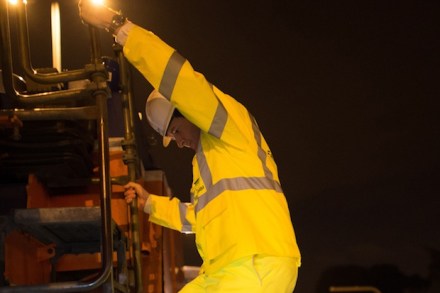
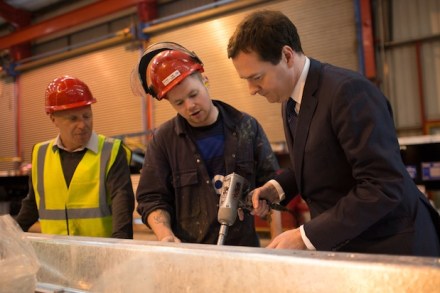
When George Osborne paid tribute to the 'march of the makers' in his 2011 Budget, few thought the Chancellor was secretly plotting to join the march himself. But as part of his tour of #hardworkingpeople, Osborne hasn't just been pointing at things, like normal politicians: he's been making things too. Today he made a cake: But he's also made bread: And made parts for JCB, working in this picture with a stud gun: In fact, Osborne likes making vehicles.

The Tories have to fight on their ground, not Labour’s

From our UK edition

At the beginning of the autumn, strategists from all three parties assumed that the theme of the season would be Labour’s poll lead narrowing as the economic recovery picked up pace. But that hasn’t happened. Instead, Labour’s lead has remained and its own poll numbers have actually ticked up. This is, largely, thanks to Ed Miliband’s reframing of the political debate about the economy, making it about living standards But the autumn statement showed that when the political conversation is focused on the broader economy, the Tories have the better of it. Thursday has weakened Ed Balls, strengthened George Osborne and begun to move the political debate off Labour’s turf of living standards and back onto the Tory question of economic competence.

George Osborne’s jubilant ‘yes, but’ Autumn Statement

From our UK edition

Just because George Osborne had some very good figures indeed to read out at today's Autumn Statement doesn't mean that he had an easy job. There's Labour's campaign on the cost of living, which the Chancellor and his colleagues have given enough ground to that it has credence. Then there are the worries of his senior colleagues that Osborne might 'bank' the recovery too early. But Osborne did deliver a statement that addressed all these concerns.

Autumn statement: Labour’s only safe attack line

From our UK edition

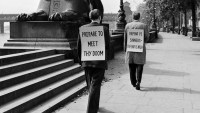
George Osborne wants to use today's Autumn Statement to focus on the good figures and his government's responsible approach to the economy. This, Tory strategists hope, will leave Labour with nowhere to go: Ed Balls has been a prophet of doom whose predictions now look as useful as those offered by a chap with a sandwich board offering the definite date for the end of the world, and voters are still suspicious of Labour's instincts when it comes to spending. Labour has obliged this morning by releasing the below poster, which shows its top dogs accept that for the time being the party has nowhere to go either, other than to complain about the cost of living by stealing a decades-old Tory campaign message: But there's one caveat to this.

David Cameron’s craven surrender to China follows a pattern

From our UK edition

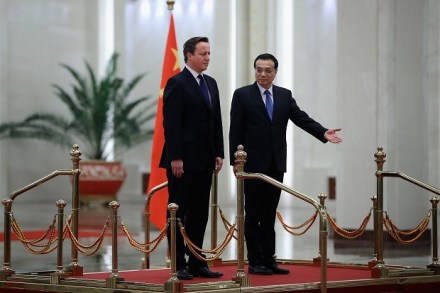
‘This week I make a visit to China. I come with a clear ambition: to build a lasting friendship that can become a blueprint for future cooperation between our countries. We have a responsibility through our ongoing dialogue to work together on a range of wider international issues – from negotiations with Iran, to counter-terrorism and climate change.’  North Korea’s President Kim on the verge of his latest visit to Beijing? It must be. North Korea is China’s only ally in the normal sense of the word. With all other countries, Beijing’s relationship waxes and wanes depending on how ‘friendly’ Beijing deems them to be. But no, actually.

Osborne wants to talk about ‘the responsible recovery’ but energy bills are still Topic A

From our UK edition

In the minds of government strategists, the autumn statement is the moment when the coalition gets to turn the conversation back to the broader economy and away from Ed Miliband’s focus on the cost of living. But the first five minutes of George Osborne’s pre-statement interview with Andrew Marr were dominated by the action the government is taking in response to Miliband’s pledge to freeze energy bills. The problem for the coalition on energy bills is that the £50 it is taking off bills now might well not be enough to stop bills rising next year. If household bills go up again in 2014, Miliband’s price freeze is going to continue to look attractive to voters.

Will George Osborne play Santa next week?

From our UK edition

When George Osborne stands up next week to deliver the autumn statement, he’ll have some good news to deliver. Not only is autumn, the dreariest of the British seasons over, but borrowing has come in lower than expected and the OBR will upgrade the growth forecasts. But the return of growth, as I say in the magazine this week, poses a strategic dilemma for Osborne. If he declares the economic emergency over, the public might conclude it was safe to turn back to Labour. But equally he has to show voters that he’s sharing the proceeds of growth. I suspect that Osborne will steer clear of too many sweetners.

Filming Bono, fighting Balls – how George Osborne’s preparing for his autumn statement

From our UK edition

James Forsyth and Isabel Hardman discuss George Osborne's 2013 Autumn statement: [audioboo url="https://audioboo.fm/boos/1763353-isabel-hardman-and-james-forsyth-discuss-george-osborne-s-autumn-statement"][/audioboo] Next week’s autumn statement looks at first as if it should be easy for George Osborne. For the first time, he’ll arrive with unambiguously good news. He can announce an upgrade of the growth forecasts and that borrowing has come in lower than expected. Politically, however, his task is as difficult as ever. He has to wrestle back the initiative from Labour. Preparations for this ‘fiscal event’, to use the Whitehall parlance, have been intense.

Cui Bono? George Osborne’s video shame

From our UK edition

Poor, dear, awkward George Osborne. Just when he seems to be doing things right — the economy, for instance — he gets something wrong. Very wrong. In The Spectator this week, James Forsyth reveals that, at Matthew Freud's now notorious 50th birthday bash, when Bono and Bob Geldof sang a duet, Osborne insisted on whipping out his mobile telephone and filming the performance. Just what the Chancellor was doing there is one question. But if this were a 15- year-old and not, er, the Chancellor, his Bono-worship might be endearing. Perhaps the proper response is one of pity. But politicos are not a forgiving bunch.

Cameron, Osborne and Crosby grilled by backbenchers: exclusive details

From our UK edition

Last night David Cameron, George Osborne and Lynton Crosby held a meeting with the Conservative parliamentary party. Coffee House has exclusive details of what took place. There was a presentation on how well the party was doing from the Prime Minister (without any new information), and one from Lynton Crosby in which the strategist asked Tory MP James Morris to stand up and take a round of applause for passing on the 'nightmare' email from the Ed Miliband's office to the Mail on Sunday. Sir George Young brought less exciting news that MPs will have to pull their weight a great deal more by serving on more statutory instrument committees. But backbenchers also had a chance to quiz their leaders on some of their big worries.

Crap and courage of convictions: the political problem with Osborne’s payday loan plan

From our UK edition

There is still a great deal of heat and rather a little less light over George Osborne's decision to 'step in where government needs to step in' and cap the cost of payday loans. Does this mean he's actually a lefty? What is he up to? Writing for the Telegraph, David Skelton, founder of the very thoughtful Renewal campaign to broaden the Conservative party's appeal, argues that this is 'the right thing to do and it sends a powerful signal that the party will tackle rip-off companies and help the vulnerable'.

George Osborne adopts Labour’s language on markets

From our UK edition

Stella Creasy sees today's announcement that the government does want to cap the cost of payday loan credit as a recognition that Labour was right to campaign on this issue and that consumers are suffering as a result of the current arrangements. But listen again to George Osborne's Today interview and you'll note another recognition: that Ed Miliband and colleagues are enjoying some success when they talk about markets not working for consumers.