George Mallory

The quest for the world’s highest peaks

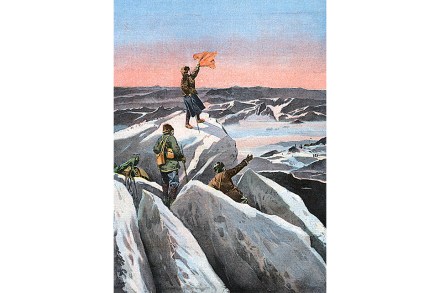
What makes men and women climb high? Most commonly, according to Daniel Light, ‘the prosecution of science or the advancement of empire’. It might also be general flag-waving or just personal fulfilment, as in the case of ‘private traveller’ Godfrey Vigne, who opened his English eyes to the wonder of the Karakoram in the baleful 1930s. London-based Light – ‘a keen climber, not a serious mountaineer’ – has produced a colourful survey of mostly 19th-century mountaineering across the globe, starting with the geographer and natural philosopher Alexander von Humboldt and his five-year expedition to South America.
A mystery on Mount Everest

From our US edition

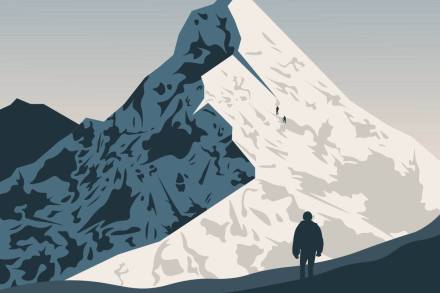
On June 8, 1924, veteran climber and geologist Noel Odell mounted the crest of a Himalayan crag and gazed up toward the tallest peak on Earth. Taking in the awe-inspiring sight, he noticed two tiny “objects” far ahead on a snowy slope “going strongly for the top.” To Odell, a trained and talented observer, the pair of ascending dots appeared to be a mere thousand feet or so below the summit. He later wrote that as he stood intently watching this dramatic appearance, the scene suddenly became enveloped in cloud and the “objects” vanished from his view. It was the last sighting of his fellow expeditionaries, George Mallory and Andrew “Sandy” Irvine, alive.

Mallory