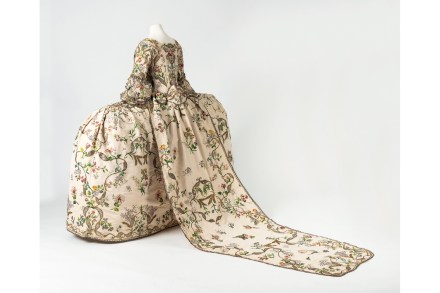
The Georgian fashion revolution
Normally, when you look at portraits you feel obliged to focus on the sitter. But quite often you’re thinking, ‘Ooh, what a lovely frock.’ Or, ‘Fabulous breeches!’ Here it’s the costumes that take centre stage. The point that this exhibition makes is that costume spoke volumes about society, particularly in the long 18th century, over the course of the reigns (and regency) of the four Georges. Compare the flounces and silk of a portrait of Queen Caroline in 1771 with the simple classical white muslin cotton of Princess Sophia in 1796 and you find nothing less than a revolution. The change resembles what happened in dress after the Great War: bye-bye Edwardian hourglass, hello flapper. Here cotton, a fabric inexorably associated with slavery, tells a larger story.