Geopolitics

Trump has Iran over a barrel

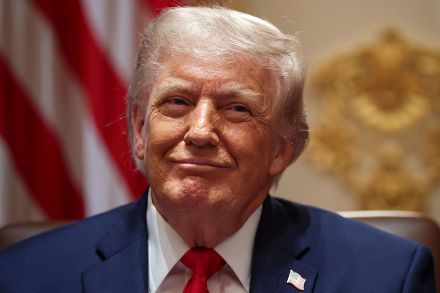
When is a ceasefire not a ceasefire? When the person declaring it is Donald Trump. Opinions differ about the wisdom of the President’s activities with respect to Iran. Some observers tell us he is playing four-dimensional chess. Some say it more like checkers with no kings. What, after all, is he up to? The commentariat proffers several conflicting narratives. The one common thread is the certainty with which these opinions are uttered. Trump is an idiot. Trump is a genius. For those who say that he has thrown in the towel – that Iran has “won” – I’d offer two observations.

Trump Iran

Will the war in Iran really weaken China?

Analogies in international politics are tricky and easily abused, yet they remain irresistible because they can illuminate patterns that are otherwise hard to see. Consider the present moment.  Just as Ukraine has become a growing burden for Washington and its Western allies, Iran is now a strategic burden for Moscow and Beijing. The US, particularly under the Trump administration, appears to be placing less emphasis on supporting Ukraine. Something similar may be happening in reverse with Iran.  Moscow continues to provide Tehran with assistance – most notably intelligence on US military targets – but the broader pattern suggests caution rather than deep commitment.

China Iran

NATO’s Suez moment

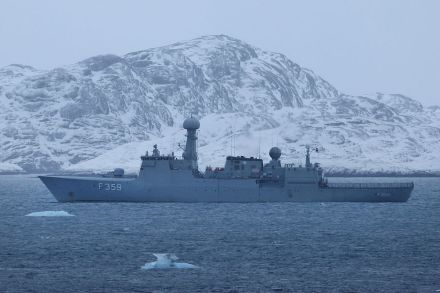
In 1969, Charles de Gaulle told his friend André Malraux that America’s “desire – and one day it will satisfy it – is to desert Europe. You will see.” It has taken nearly six decades, but de Gaulle’s prophecy now looks uncomfortably close to fulfillment. After years of diplomatic effort to manage, placate and charm successive American presidents – and Donald Trump in particular – European leaders are coming to a grim realization: the United States is, at best, indifferent to their interests and sensibilities and, at worst, openly hostile to them. Some, such as Italy’s Giorgia Meloni, still believe Trump can be cajoled, that the transatlantic relationship can somehow be salvaged.

Greenland

China is holding the West to ransom over rare earths

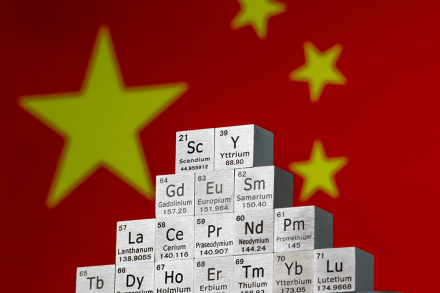
China’s naked weaponization of rare earths brings to mind Mao Zedong’s "four pests" campaign, the old tyrant’s fanatical effort to exterminate all flies, mosquitoes, rats and sparrows, which turned into a spectacular piece of self-harm. Sparrows were always an odd choice of enemy, but Mao and his communist advisors reckoned each one ate four pounds of grain a year and a million dead sparrows would free up food for 60,000 people. The campaign, launched in 1958, saw the extermination of a billion sparrows, driving them to the brink of extinction. But the sparrows also ate insects, notably locusts, whose population exploded, and the ravenous locusts wreaked far more damage to crops than the sparrows ever did, hastening China’s descent into the deadliest famine in human history.

ian williams china rare earths

Trump, Putin, and the hidden power of the Bering Strait

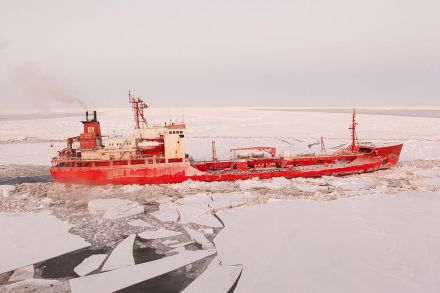
Ahead of the Trump-Putin summit in Alaska to discuss Ukraine, President Trump said there would be “some land swapping.” He waxed lyrical about “prime real estate.” The summit’s location is a good example of land swaps and prime real estate and is in a region of growing geopolitical importance.   In 1867 Russia "swapped" Alaska for $7.2 million in a deal mocked as Seward’s Folly after Secretary of State William H. Seward who negotiated the exchange. It turned out to be a snip. Commercially viable oil was discovered three decades later and has brought in more than $180 billion in revenue since Alaska became a state in 1959.

Trump Putin Alaska Bering Strait

Facing the facts of the West

The century began with a global celebration — the West’s belief in liberal democratic capitalism had battled foes for centuries and emerged victorious. All that remained was for the rest of the globe to melt into the West’s soft and loving embrace. Two decades in, things look much less rosy. China’s rapid rise has not spurred democratization, as many suggested it might; instead it has nourished a massive ideological and political competitor that may supplant the West not only economically but as an arbiter of global culture and behavior. Western decline is not yet inevitable, but Western values will survive and spread only if leaders recognize two clear facts. The first is that the spread of Western values has in large part been due to the dominance of Western power.

west

What Ukraine means for Asia

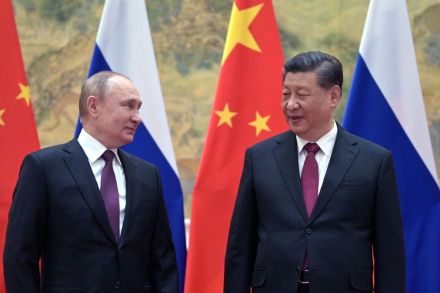
If Asia has entered the debate over the war in Ukraine, it is primarily through questions over the role China is purported to be playing in supporting Russia. Given the now-infamous declaration of a “partnership without limits” by Vladimir Putin and Xi Jinping during the Beijing Olympics just weeks before the invasion, many observers have searched for signs of Chinese aid, military or economic, to Russia in the conflict. The scope of devastation in Ukraine and the probable war crimes being committed by Russian troops understandably mean less attention has been paid to how the conflict might affect geopolitical stability in the Indo-Pacific region. The exception is Taiwan — there has been considerable speculation over the influence of Ukraine on Beijing’s calculations there.

asia

Energy is the most important issue in the world

One issue more than any other will dominate airtime and influence policy in 2022: energy. Americans are seeing the highest prices at the pump in seven years. Since Biden took office, average gas prices are up by more than $1 a gallon. In November, gas prices in Mono County, California hit more than $6 per gallon, forcing some residents to drive to Nevada (where gas taxes are lower) to buy fuel. The price of natural gas in the US is at its highest in seven years, and up more than 180 percent in the last year alone. In Europe, the situation is even worse. Europe’s gas reserves are at record lows. In Germany, which already had the EU’s highest energy prices, bills are up 30 percent in a year.

energy

Central Asia’s geography after America’s defeat

However much it is denied, we still live in an imperial age, at least metaphorically. Just as the withdrawal from Afghanistan registers the momentary decline of the American empire, it registers the momentary rise of the Russian and Chinese ones. America failed in Afghanistan because its military, while capable of fighting high-tech wars on land and sea, could not fix complex Islamic societies on the ground. Indeed, Afghanistan demonstrated how the deterministic elements of geography, culture and ethnic and sectarian awareness can vanquish Western ideals of democracy and individual liberty.

central asia