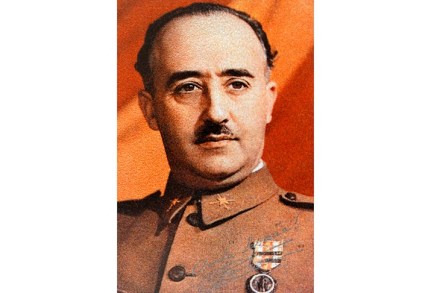
General franco

The disgrace of Juan Carlos of Spain, a modern-day Don Juan

The life of Juan Carlos I, Spain’s 88-year-old former king, who reigned from 1975 until his abdication in 2014, falls into two parts: richly deserved triumph followed by richly deserved disgrace. Building on his 2004 biography, Juan Carlos: A People’s King, Paul Preston’s account of this extraordinary life is magisterial. The son of Don Juan de Borbon, the exiled heir to the Spanish throne, Juan Carlos was born in Rome in 1938. With a view to the eventual restoration of an authoritarian monarchy, he was sent to Spain, aged ten, to be indoctrinated in General Franco’s political tenets. He also had to endure the dictator’s long lectures on the mistakes made by previous Spanish monarchs.
Spain’s growing culture war over General Franco

There are hundreds of mass graves dotted around the Spanish countryside. In roadside ditches, down hillside gullies, dumped in pits and down disused wells lie thousands of bodies: civilians murdered in cold blood by Franco’s death squads during the civil war that convulsed Spain between 1936 and 1939. Over the nearly forty years of Franco’s dictatorship, few spoke of what had happened during the war; silence and selective amnesia were safer. And even when Franco died in 1975, the overriding priority was the transition to democracy. The old Francoist establishment indicated that it would make way for the new era — provided that there was no digging up of the past and no reprisals. Spaniards were happy to look to the future.

Haunted by the past: Last Days in Cleaver Square, by Patrick McGrath, reviewed

At the risk of encroaching on Spectator Competition territory, what is the least surprising thing for any given narrator in a particular author’s work to say? (For one of Irvine Welsh’s, a single word of four letters might be enough.) In the case of Patrick McGrath, I’d suggest, the answer comes on page 55 of his new novel: ‘I confess I feel that my sanity is under threat.’ McGrath famously grew up in the grounds of Broadmoor, where his father was the medical superintendent, and his consequent lifelong interest in psychiatry is reflected in pretty much all of his fiction.