Gdp

How does this World Cup compare with the first?

From our UK edition

Football fiasco With 48 teams, this is the largest World Cup ever. How does it compare with the first? – The inaugural World Cup was held in Uruguay in 1930. It should have had 16 teams, in a format which endured until 1970. However, only 13 turned up. Siam (now Thailand) and Japan accepted invitations but then withdrew. – Egypt were supposed to travel by ship with the French team, via Marseille. However, a storm in the Mediterranean prevented them making the connection. – England didn’t compete until 1950, when they were eliminated in the group stage after defeats to the US and Spain. Health and safety How have defence and welfare spending changed as a proportion of GDP?

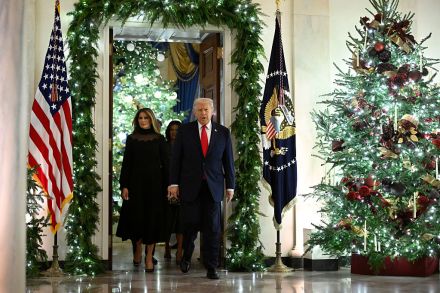
Santa Trump’s Christmas economy cheer

I hate to be the bearer of good news, but the US economy is doing quite well. A delayed government report shows that third-quarter GDP grew at 4.3 percent, hardly a record, but still healthy, the highest growth rate in two years. Last week’s inflation report showed a lower-than-expected number, and wage growth is exceeding inflation. Consumer spending is up, and, yes, the stock market is booming. Happy days are here again. The sky above is clear again. Many accounts on my X feed, which are either run by Democratic partisans or Iranian trolls or both, say that food-pantry lines are reaching record numbers this holiday season, and that poverty and homelessness are increasing even as the rich get richer. “Trump lies,” they said. Yes, and the sun is hot. What’s the point?

Trump

Is Rachel Reeves’s headroom shrinking?

From our UK edition

13 min listen

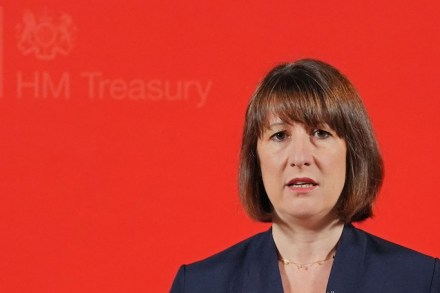
There were clear winners and losers in Rachel Reeves’s spending review yesterday but some of her announcements around capital spending and investment saw her dubbed the ‘Klarna Chancellor’ by LBC’s Nick Ferrari for her ‘buy now, pay later’ approach. Clearly trying to shake off the accusations of being ‘austerity-lite’, Labour point to longer term decisions made yesterday, such as over energy policy and infrastructure. But will voters see much benefit in the short-term? And, with the news today that Britain’s GDP shrank by 0.3% in April, will the decisions Rachel Reeves have to make only get harder before the October budget? Lucy Dunn speaks to Michael Simmons and Claire Ainsley, former director of policy to Keir Starmer and now at the Progressive Policy Institute.

Mixed signals for Labour as GDP rises but the rich leave

From our UK edition

13 min listen

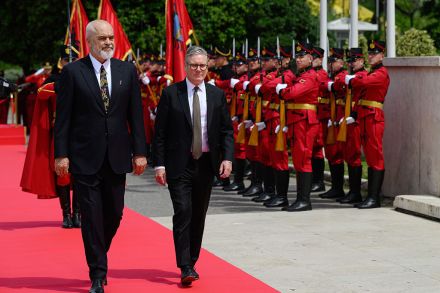
The Prime Minister is in Albania today to focus on immigration: the government has announced that the UK is in talks to set up 'return hubs' with other countries to send failed asylum seekers abroad.  Unfortunately for the government though, also going abroad are Britain's millionaires. In the cover article for this week's Spectator, our economics editor Michael Simmons writes that London lost 11,300 dollar millionaires last year alone. These figures run in stark contrast to today's news that GDP increased by 0.7% in the first quarter of 2025. This continues a trend of mixed signals for Britain's economy.

Recession? What recession?

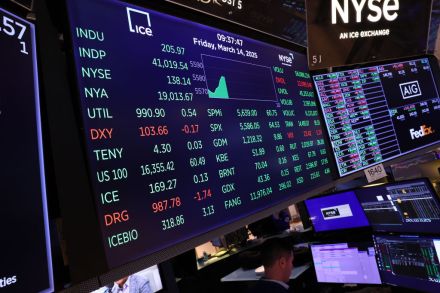
The stock market, traditionally a leading indicator, entered correction territory last week. But does that indicate that a recession is coming? Well, it’s an old saying on Wall Street that the market has predicted ten of the last three recessions. Markets hate uncertainty, and no one knows how President Trump’s efforts to use American tariffs to force our trading partners to lower theirs will turn out. But foreign trade is increasingly important to all countries, so it’s likely that, after some political Sturm und Drang, deals will be struck and international trade will continue the strongly upward path it has been on since the end of World War Two. By definition, a recession is two consecutive quarters of contraction.

shares

Team Trump’s incoherent plan to change GDP measurements

If there is anything that all governments watch carefully, it is GDP growth. Without substantive and ongoing increases in what GDP measures — the total monetary value of all final goods and services produced in the economy over a specific time period — societies are in big trouble. That’s one reason why recessions usually result in electoral death for whoever holds office at the time. To accurately estimate total growth in an economy, everything that contributes to GDP must be measured. That presently includes consumer spending, private domestic investment, net exports, and, lastly, government consumption and spending. Now, however, Trump officials ranging from Elon Musk to Howard Lutnick are stating that we should consider excluding the latter category.

Reversing our economic decline is not easy, but it is simple

From our UK edition

Our immiseration came swiftly and stealthily. At the start of the 21st century, Britain was a prosperous country. Ambitious people fought to come here. We trusted that, over time, we would become wealthier – an expectation that had been accurate for most of the previous two centuries. Since the millennium, Britain and western Europe have pretty much stopped growing – especially if we ignore the impact of immigration and calculate GDP per head. Reversing this slowdown should be the top issue at every election, but it is surprisingly under-discussed. In theory, almost all our politicians want growth. Keir Starmer and Rachel Reeves keep describing it, nasally and tautologically, as their ‘number one priority’.

The one bright side of the looming debt crisis

By almost every historical indicator, the US is clearly approaching a debt crisis. The federal government’s aggregate liabilities now exceed its gross domestic product. The annual interest required to service federal obligations is greater than what Congress spends each year on defense. And projected annual deficits for the next decade are well ahead of estimated revenues by more than $2 trillion. Many state legislatures are deeply underwater as well, despite receiving generous Covid related bailouts from President Biden’s 2021 American Rescue Plan Act. California’s temporary $100 billion surplus in 2022, for example, has morphed into a projected deficit of $68 billion over the next two years.

dollar debt

Has GDP growth come at the wrong time for Labour? 

From our UK edition

11 min listen

The broader story this morning paints a positive picture for the UK economy. While growth in June took a pause, growth in Q2 for this year is estimated to be 0.6 per cent, roughly in line with what markets were predicting, as forecasts for UK growth have been repeatedly revised upwards since the start of the year. Growth was 0.8 per cent in the three months to May, indicating the positive upward trend only paused at the start of the summer. This sounds like great news, but has it come at the right time for Labour?  Today we have also had A Level results and top marks have risen despite a return to pre-pandemic levels. What do the numbers say?  James Heale speaks to Farser Nelson and Kate Andrews.  Produced by Oscar Edmondson.

Could we be heading for a second Covid recession?

From our UK edition

The political story for the moment is the cost of living crisis. But by the end of the year could we be talking about a recession instead? We shouldn’t read too much into one year’s economic growth figures, especially given how often they are revised upwards or downwards. But February’s figures, published this morning, have caught many people unawares. They show that the economy just about ratcheted upwards in February, growing by 0.1 per cent. That’s compared with healthy growth of 0.8 per cent in January, as the country emerged from the Omicron scare. Notably, in two areas the economy contracted: construction fell by 0.1 per cent and production by 0.6 per cent. It was only the services sector, where growth was 0.

The UK economy has returned to its pre-pandemic size

From our UK edition

Nearly two years after the UK experienced its biggest economic collapse in 300 years, the economy has returned to pre-pandemic levels. GDP is estimated by the ONS to have grown by 0.9 per cent in November, almost twice what had been expected – making it 0.7 per cent larger than it was in February 2020. The US and Sweden managed to pass pre-pandemic levels last spring. China took just a few months. But Britain, whose economy fell further than almost any developed country in 2020, is catching up. Britain, whose economy fell further than almost any developed country in 2020, is catching up The below chart shows how UK growth is now at the top end of forecasts (shaded area) better than envisaged in any Budget since that of March 2020.

Covid pingdemic takes its toll on Britain’s economic bounce-back

From our UK edition

The arrival of ‘freedom day’ on 19 July enabled people to return to concerts, festivals, and ditch social distancing, but these rediscovered freedoms did not revive the economy. The ONS said this morning that growth was just 0.1 per cent in July, far lower than the consensus forecast. It was particularly disappointing given the growth seen in the locked-down months of June (one per cent) and May (0.6 per cent). The Pingdemic – and concerns about the Delta variant – cancelled out any animal spirits around reopening. August’s GDP boost is going to need to be much stronger for the more bullish forecasts to pan out Nightclubs reopened and the entertainment sector was up nine per cent, but the end of stamp duty hit real estate.

Britain’s economic bounce back is less impressive than it seems

From our UK edition

The UK economy is rebounding at the fastest rate in Europe, and faster even than the United States: that is the general tone of reporting of today’s GDP figures, which show that the UK economy expanded by 4.8 per cent in the second quarter of 2021. That is compared with 0.9 per cent in France, 1.5 per cent in Germany and 1.6 per cent in the US. But hang on, dig a little deeper and there is something a little odd going on with the figures. Compare nominal and real changes in GDP during the second quarter and it produces the following: UK, nominal growth in second quarter: +3.6 per cent; real growth in second quarter: +4.8 per centFrance, nominal growth in second quarter: +1.0 per cent; real growth in second quarter: +0.

The economic case for ditching mask mandates

From our UK edition

After many months of hardship and sacrifice, freedom is finally within grasp. Boris Johnson has reclaimed his buccaneering, libertarian spirit and punctured the hopes of zero Covid zealots who wanted more working from home, social distancing and masks. When it comes to face coverings, however, lockdown fans have been working hard to convince the public that they ought to wear them voluntarily — on the off-chance they have the virus and unwittingly hop on to a tube carriage with the unvaccinated. Are they right? Masks are undeniably inconvenient. They’re a pain to wear and a nuisance if forgotten. They reduce the ability to communicate, interpret and mimic the expressions of those with whom we engage.

In defence of the foreign aid cut

From our UK edition

It says something for the persuasive powers of former international development secretary, Andrew Mitchell, that he mustered enough potential votes to inflict defeat on Boris Johnson’s government, if only his amendment had been permitted and a vote had been held. Mitchell’s consolation prize, awarded by the Speaker in recognition of the strength of feeling in the Commons, is an emergency debate on what would have been the substance of his amendment: to reinstate foreign aid at 0.7 per cent of GDP from next year, rather than the reduction to 0.5 per cent that was set in the Budget.  The rift this row has exposed among Conservative MPs could embarrass the Prime Minister as he prepares to host G7 leaders in Cornwall.

France’s latest fiscal trade-off

From our UK edition

France’s deficit is set to reach 9.4 per cent of GDP this year, more than last year, even though France's first lockdown was more severe and lasted for a longer time. This may relate to accounting issues, as some spending is only reported this year even if it is related to last year. But these are details – the main issue is something else entirely. The journalist Dominique Seux wonders whether France has maxed out its spending capacity at the moment when environmental challenges require extraordinary efforts. Were France's spending choices last year done with full awareness of how they would compromise future fiscal room for manoeuvre? France was always amongst the high deficit countries in the EU.

When will the economy recover to pre-pandemic levels?

From our UK edition

New growth figures were released this morning show that the economy contracted 1.5 per cent in Q1 this year and remains 8.7 per cent smaller than it was in Q4 2019 (the last quarter not to be impacted by the pandemic). Alongside this update, the Office for National Statistics also released its latest set of monthly figures, which saw GDP rise by 2.1 per cent in March — the biggest boost since August last year — taking the economy to 5.9 per cent below pre-pandemic levels. That GDP fell by just 1.5 per cent overall once again illustrates the extent to which businesses have developed a resilience to lockdowns. The first quarter of this year saw much economic activity either wildly distorted or banned outright.

Will Britain’s economic recovery break records?

From our UK edition

It’s been a good week for seeing the vaccine factor at work. We’ve had multiple real-world updates on the Pfizer vaccine’s effectiveness against new variants of Covid-19 (this bodes well for the UK, which was the first country in the world to use the vaccine to protect its most vulnerable residents). And today we’ve had a revised economic forecast from the Bank of England, suggesting the UK’s impressive vaccine rollout could translate into the strongest growth since records began in 1949. The Bank of England now predicts that the economy will expand by more than 7 per cent in 2021, up from its forecast of 5 per cent in February.

Have unemployment fears subsided?

From our UK edition

Over the past few months, each labour market update from the Office for National Statistics has suggested forecasts predicting mass unemployment were wide of the mark. In the three months leading up to February, unemployment was estimated to hover at 4.9 per cent, 0.9 per cent higher than the previous year but down 0.1 per cent from the previous month. Where credit is due is debated – and likely shared. The jobs retention scheme continues to shield five million workers, who cannot yet return to their jobs, from unemployed status. That GDP has not taken anywhere near the same tumble this winter as it did last spring speaks to innovative businesses that have managed to adapt to extremely strict lockdown conditions.

Is the UK taking advantage of its vaccine success?

From our UK edition

UK GDP ever so slightly edged up in February, growing 0.4 per cent according to today’s update from the Office for National Statistics. No surprises here: there were no changes to lockdown restrictions between January and February, which gave the economy little room for manoeuvre. The ONS has revised January’s GDP fall from 2.9 to 2.2 per cent: still a contraction, but another good indicator that businesses have significantly adapted to lockdown rules, which has meant that this winter’s lockdown didn’t plunge GDP down to record levels as it did last spring.