Games

Nintendo and the plumber who conquered the world

It’s not more than a parlour game, perhaps, to speculate about history’s most crucial inventions. One invention often makes the next possible. Electric light revolutionised human productivity, allowing us to work well beyond sundown. The combustion engine and later the turbine engine collapsed our sense of distance, putting other continents within a day’s travel. We’re still debating what the internet’s done; how social media offers the double-edged sword of instant communication and addressability for good and ill; how it encourages the avatarisation of ourselves as online presences. We’re both ourselves online and not quite ourselves, entirely embodied and yet psychically elsewhere. But then again, we’ve always experienced this on some

The serious business of games: Seven, by Joanna Kavenna, reviewed

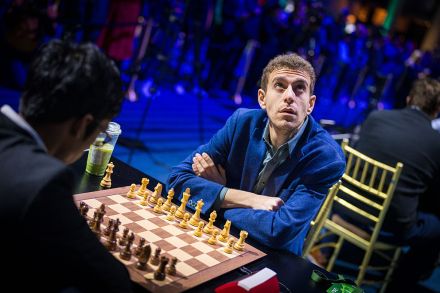
Joanna Kavenna is very serious about games. Her novels have a certain playful quality, even her debut Inglorious, where the humour and allusions are Mittel-european. More markedly ludic are her Lewis Carroll-esque fantasy about quantum physics, A Field Guide to Getting Lost and the Philip K. Dickish tech-dystopia of Zed. In Seven, however, it’s not just the style but the subject. As if to make clear that games are neither childish nor mere distractions, there is a pointed reference to Johan Huizinga’s study Homo Ludens¸ published on the eve of the second world war. The narrator here is working for a formidable philosopher in Oslo, whose current project is entitled

Tarot isn’t very old or esoteric – but it does work

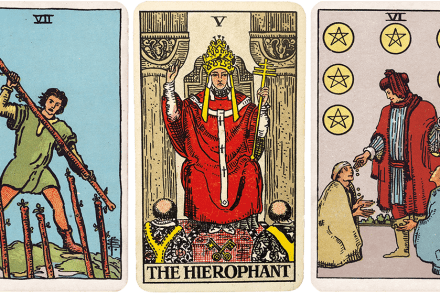
Among my many fake and useless skills, I’m a reasonably decent tarot reader. I can do one for you now if you like. A very simple three-card spread: your cards are the Seven of Wands, the Hierophant and the Six of Pentacles. There are lots of vaguely drippy ways of interpreting a three-card spread: past-present-future, or mind-body-spirit; I usually prefer to think of the cards as representing first, the mess you’re in; second, how you got there; and third, how you might plausibly manage to get your way out. And you, reader, are in a bit of a mess.  If you look up the Seven of Wands online or in

Dear Mary: How do I greet friends without hugs or handshakes?

Q. Now we are instructed to mingle again, I’m sure I’m not alone in being surprised to find an awkwardness on meeting or departing from friends and relations. The lack of handshake or hug has us all twitching. I struggle to find the right socially distanced replacement; the ‘namaste’ praying hands gesture seems rather mutton dressed as lamb for those of us who are the wrong generation for a gap year experience. Do you think the over-arm bowling gesture might give the right spirit of cheeriness and connection without actual body contact?— L.O.G., Petersfield, Hampshire A. Nice idea and thank you for sharing it, but the gesture is somewhat niche