Gambling

The sport of kings

From our UK edition

Queen Victoria disapproved heartily of the racing set and of her son Bertie’s involvement in the sport. But she must have noted a dinner conversation with Bismarck reported to her by Disraeli. The German Chancellor had asked if racing was still encouraged in England. Never more so, said Disraeli, to which Bismarck responded: There will never be socialism in England. You are safe so long as the people are devoted to racing. Here a gentleman cannot ride down the street without 20 persons saying to each other, ’Why has that fellow a horse and I have not one?’ In England the more horses a nobleman has, the more popular he is.
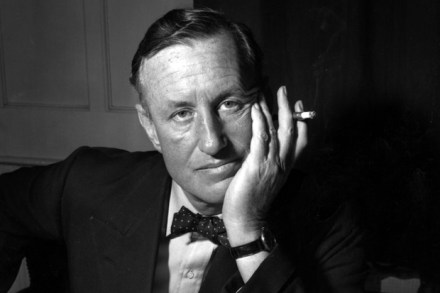
If I were prime minister, by Ian Fleming

From our UK edition

This article was first published in The Spectator on 9 October, 1959. I am a totally non-political animal. I prefer the name of the Liberal Party to the name of any other and I vote Conservative rather than Labour, mainly because the Conservatives have bigger bottoms and I believe that big bottoms make for better government than scrawny ones. I only once attended a debate in the House of Commons. It was, I think, towards the end of 1938 when we were unattractively trying to cajole Mussolini away from Hitler. I found the hollowness and futility of the speeches degrading and infantile and the well-fed, deep-throated ‘hear, hears’ for each mendacious platitude verging on the obscene.

No man is an island

From our UK edition

Bit of Kant, bit of Kierkegaard, bit of motorcycle maintenance. That’s one take on The World Beyond Your Head, Matthew Crawford’s philosophical polemic about how virtual reality is impinging on real reality. Actually, his targets in this book are Descartes and John Locke, with whom, he reckons, the rot started when it comes to thinking about the human person as a cerebral calculating machine, divorced from his own body and from the world around him. But he’s got it in for corporate capitalism, too, and its manipulation of our attention by hijacking every communal space — aural and visual — to get us to buy things. Perhaps I’m not quite winning you round here to this book, which I really, really like, and really, really want you to read. Let me try again.

The missed New Year opportunities I would have rowed the Atlantic for

From our UK edition

 Gstaad The very end of 2014 laid an egg, and an expensive one at that. I missed David Tang’s bash in London because I thought it too much to fly over for a cocktail party, but my restraint cost me quite a lot. It would have been worth rowing across to see Tony Blair schmoozing my old proprietor Lord Black. Two more wrong choices followed: I skipped Jemima Goldsmith’s party as well as her brother Ben’s wedding for a shindig of my own —one that turned out to be a bust. None of my gels turned up, but a lot of strangers did, and, to add insult to hurt feelings, a waiter told me at 3.30 a.m. that it was time to wrap it up. The party invitation read from 10.30 until dawn. He must have been on a different time zone and I told him so.

Are the Qataris ready for the curse of Canary Wharf?

From our UK edition

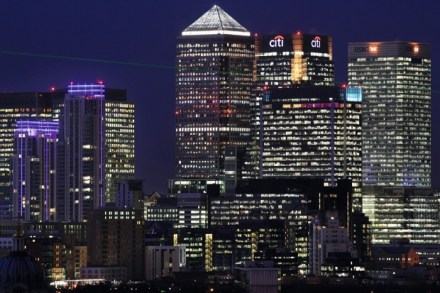
I’ve written before of a ‘curse of Qatar’ that might explain misfortunes attending the Gulf state’s UK investments, of which the seven-years-delayed Chelsea Barracks redevelopment is an example. I also claim to have coined ‘curse of Canary Wharf’, a phenomenon afflicting not only financial tenants of the Docklands complex but visitors such as Gordon Brown, who never lived down his speech congratulating Lehman Brothers on ‘the contribution you make to the prosperity of Britain’ at the opening of the doomed bank’s office tower there. So the prospect of a renewed Qatari bid for Songbird, the corporate owner of Canary Wharf, fills me with foreboding.

Why I’m glad there’s no British Las Vegas

From our UK edition

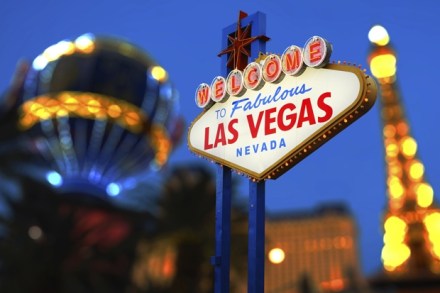
I didn’t realise that the Rialto Bridge has a moving walkway and muzak, that the gondolas beneath it float on a clear blue pool, and that the school of Tiepolo had so many apprentices available to paint hotel ceilings. ‘Still in Venice, Martin?’ you’re thinking. ‘Surely that was last month?’ Well no, your intrepid columnist has moved from the old world to the new, and reports this week from the desert frontier where unfettered capitalism meets the lowest human urges: Las Vegas. It’s an overwhelming experience, so forgive me if my grip on what’s happening at home — reactions to David Cameron’s CBI conference speech, for example, and the rejected Qatari bid for Canary Wharf — is a little hazy.

A casino clash worthy of James Bond reaches its climax in the High Court

From our UK edition

It is said that all you really need to know about casinos is that the house always wins. I wouldn’t bet on it this week. The supposed iron law of gambling is being tested in the more salubrious surroundings of the High Court, and cardsharps and casinos across the world are agog to see what happens. Phil Ivey vs Crockfords of Mayfair pits an American widely regarded as the world’s best poker player against Britain’s oldest and smartest casino. Although not, in this case, very smart in the intelligence sense. Ivey, 38, is suing the casino’s owner, Malaysia’s £21 billion Genting Group, after it refused to pay his £7.7 million winnings on a remarkable streak over four sessions in August 2012. The company says he was cheating.

Labour’s sports betting levy will hit poor punters

From our UK edition

Harriet Harman has set the hare running this morning by proposing a levy on sports betting. The shadow sports minister Clive Efford said: ‘We believe it is right that businesses that make money from sport should contribute to sport. We are consulting on whether we should introduce a levy on betting, including online betting, to fund gambling awareness and support for problem gambling but also to improve community sports facilities and clubs.’ Harman and Efford have also singled out the Premier League. They propose that its voluntary levy on broadcast deals (worth £5.5bn) be turned into a ‘proper tax’, which would raise £275m for grassroots football. The improvement of grass roots sport is a noble ambition, and one supported by the gambling industry.

Fear and libertarianism in Las Vegas

From our UK edition

Great God, Vegas is an awful place. I realised this the moment I arrived. My cab driver — who’d been perfectly agreeable en route from the airport — mistook my post-flight sluggishness for reluctance to give him a tip, and drove off angrily cursing me as I fumbled in my pockets. The line just for the check-in desk was about a mile long. Everyone was fat and drunk and dressed for the beach. Outside it was too hot: 105°F at 5 p.m. Inside, it was too cold from the relentless air-conditioning. Everywhere had the style and charm and tastefulness of Redditch. By day three I’d had enough. ‘Don’t stay in Vegas more than three days,’ people had warned me. And people were right. It’s more than enough. Four days would definitely drive you mad.

The gambler’s daily grind

From our UK edition

Lord Doyle is a shrivelled English gambler frittering away his money and destroying his liver in the casinos of Macau. Aptly, since he is in a place filled with mock-Venetian canals and poor reproduction paintings, he himself is a fake: the man is not a real lord, and the money is not his own. He is a disgraced solicitor of modest origin, who ran off with a client’s savings after befriending her. Lawrence Osborne’s novel is a bleak and enjoyable account of someone who, perhaps through unacknowledged guilt, finds bitter solace in losing and in driving himself towards extinction.

Cheltenham Gold Cup predictions: Peter Oborne, Robin Oakley, and more

From our UK edition

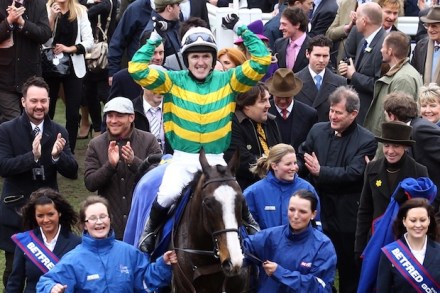
The jewel in the crown of the Cheltenham Festival – the Gold Cup – starts this afternoon at 3.20. And, unsurprisingly, today is also one of the biggest betting days of the year, with both bookies and punters hoping to recoup their losses – or improve on their winnings. We asked some of our experts who they will be putting their money on. Peter Oborne, The Spectator’s associate editor: Willie Mullins and Ruby Walsh is the combination to follow at this festival, on which basis I will be backing On His Own at decent odds of around 20-1. Robin Oakley, writer of The Turf column: I am going for Triolo D'Alene. Alysen Miller, producer of CNN’s racing programme, Winning Post: On paper Bobs Worth is the one to beat.

Where the Whigs went

From our UK edition

A book about one of the London clubs, published to mark its 250th anniversary, might be regarded as of extremely limited public appeal, designed only for the enjoyment of its members, 800 of whom have subscribed more than 900 copies (one blenches to think why members might want more than one copy). But Brooks’s, halfway up St James’s Street, has always felt that its history deserves wider public interest, partly because of its association with the life and gambling of Charles James Fox and partly because it has been so central to the formation of the 19th-century Whig party. (This book includes the rather amazing statistic that, during the Melbourne administration in the 1830s, nearly half the members were sitting MPs and every member of the cabinet belonged to Brooks’s).

The so-called “crack cocaine of gambling” is a myth. Trust Ed Miliband to believe in it.

From our UK edition

The puritan, as devotees of Baltimore's finest know, is greatly exercised by the fear that someone, somewhere, might be enjoying themselves. Ed Miliband is a puritan. And a hopeless, nagging, fish-faced puritan at that. A ninny, in other words. The Labour leader has a rare gift. He knows, you see, how you should spend your money. What's more, if you fail to spend your cash in the proper Miliband-approved manner he thinks he should be - nay is! - entitled to coerce you into changing your miserable behaviour. Of course he is not alone in that. Many politicians are far too free and easy in these matters. But there is a special teeth-grinding awfulness to the way in which Miliband seeks to coerce this fine country's citizens that never fails to annoy me.

Portrait of the week | 27 June 2013

From our UK edition

Home George Osborne, the Chancellor of the Exchequer, outlined cuts of £11.5 billion from departmental spending for the tax-year beginning in 2015. David Gauke, a Treasury minister, gave a ‘firm commitment’ in a letter to backbenchers to introduce a transferable tax allowance of £750 between spouses and civil partners paying tax at the basic rate. This would benefit them by £150 a year at most, and not before the next election. Sir Mervyn King, retiring after ten years as governor of the Bank of England, was to be created a life peer. Mark Harper, the minister for immigration, broke his foot by falling off a table while dancing with his wife in a bar in Soho.

Investment special: Confessions of a stock picker

From our UK edition

My name’s Freddy and I’m an online gambling addict. The problem started a few years ago when I opened an account on Betfair.com. At first it was small bets on football games, maybe the odd greyhound. A fiver here, a tenner there. Click, click, click. It was fun. Pretty soon, however, the hobby had developed into a minor obsession. I moved on to the harder stuff: cricket, tennis, even X Factor results. I had some wins but more losses: £20; £30; oops, there goes a hundred. Click, click, click. Then I downloaded the Betfair app onto my phone. Tap, tap, tap. I realised things had gone too far when I had almost all my savings on Andy Murray to win a quarter-final somewhere. He did, happily. But I got short odds — and it was Andy Murray, for goodness sake.

Cricket’s the loser

From our UK edition

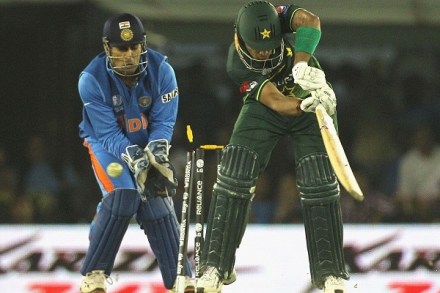
Cricket glorifies some cheats. W.G. Grace often batted on after being clean bowled; such was the public demand to watch him. Douglas Jardine’s bodyline tactics revolutionised fast bowling: eventually making it acceptable to target the batsman rather than the wicket. Fielders “work” the ball. Batsmen stand their ground when convention asks them to walk. Cheating is part of cricket. But match fixing? The culprits live forever in infamy, and deservedly so. The cricketing authorities (the ICC) believed that match fixing had died ten years ago; but the News of the World’s sting on the Pakistan team in 2010 demolished those hopes. The sting suggested that the problem was deep. Rumours abounded around the globe.

Prohibition Doesn’t Work: Cricket & Gambling Edition

From our UK edition

The News of the World's revelations about connivance between cricketers and bookmakers is dismaying; the story can't alas, be considered wholly surprising. If proved - and on the face of it there's every reason to suppose that the allegations are accurate - then it's difficult to see how Salman Butt and the other players implicated can escape heavy punishment (and perhaps in the skipper's case a lifetime ban). The consolation, in as much as there is one, is that the evidence points to spot-fixing rather than match-fixing. Saying that the former is not as serious as the latter does not mean it's unserious. It just means that matters could be worse. And perhaps they are, given how much we don't know.

The Lessons of Madoff

From our UK edition

Actually, as Megan explains, the lesson of Bernie Madoff's scam is that there really aren't any lessons that can be drawn. As she puts it, "Everyone just screwed up". That leaves us in the unsatisfying position of having no-one, apart from the remarkable Mr Madoff, of course, to blame. Sometimes stuff really does just happen and there aren't any deep and meaningful lessons to learn or "underlying" or "contributory" villains to blame. As Megan says, this disconcerts, since it deprives us of the endlessly satisfying consolations of sweet vindictiveness and righteous indignation. A con-man is a con-man is a con-man. His status as such does nothing to advance the case against George W Bush or Milton Friedman or the market or anything else. Me?

Hold the Front Page: Morals Uncorrupted by Sensible, Liberal Policy

From our UK edition

Credit where credit's due, Labour's attitude towards gambling has been vastly more sensible than one had any right to expect. The Economist reports: New laws which came into force in Britain at the beginning of September allow the creation of licensed internet casinos where people can gamble on games such as poker and blackjack. Until now, gamblers could try their luck at them only on servers located offshore. The change is aimed squarely at encouraging the development of an internationally competitive internet gambling industry in Britain. The government reckons that online casino operators will be willing to come under the watchful eye of its regulators (and tax collectors) in exchange for more legitimacy with their customers.