Gambling

Football is now going hog-wild for legal betting

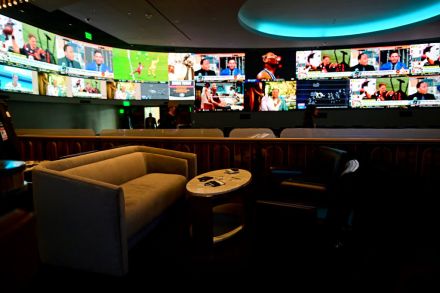
A new football season has fans reaching for their wallets and e-wallets. Americans now bet more than $100 billion a year on the NFL through legal sportsbooks like FanDuel and DraftKings. Illegal gambling adds billions more. According to the American Gaming Association, 73.5 million bettors will make an NFL wager this year. Fifty million of us have skin in the game thanks to fantasy football teams that pay off in cash and bragging rights. Until recently, the men who run pro sports pretended that fans loved the Lions, Bengals and Bears out of sheer team spirit and a love of tailgating.
betting

What does ‘Barstool conservative’ even mean?

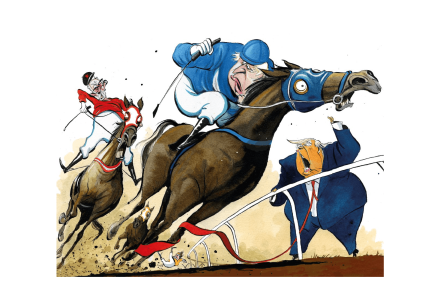
Welcome to Thunderdome: have you placed a bet yet on if Chris Christie actually shows up to the debate with a pair of brass knuckles? It certainly would be entertaining to see the New York and New Jersey guys just ignore the rest of the field and tangle — it’d be enough to justify having the debate itself. But Trump might skip it, which makes the prospect of a DeSantis/Newsom debate the most interesting possibility on the horizon — and presents a make-or-break chance for the Florida governor. Meanwhile, Republicans struggle with how to aim their message in a time where culture war is the dominant narrative but perhaps not the most salient one.

dave portnoy

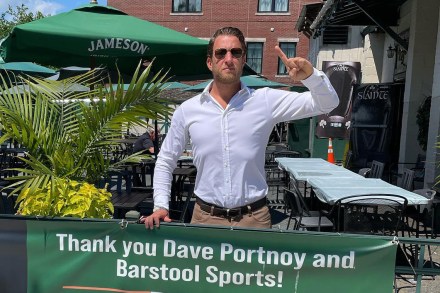
Dave Portnoy’s inevitable return to owning Barstool Sports

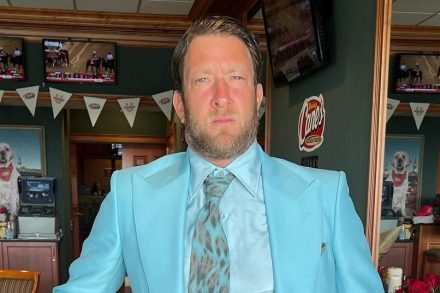
Dave Portnoy is back as the sole chieftain of Barstool Sports. Penn Entertainment, which bought 36 percent of the company in 2020 and increased its stake to 100 percent in February 2023, sold the company back to its founder Tuesday, “in exchange for certain non-competes and other restrictive covenants.” In other words: Penn basically gave the company back to Portnoy for free. Rarely does buyer’s remorse work out so well.   Founded in Boston in 2003 as a print publication dedicated to fantasy sports and gambling, and initially completely produced by Portnoy, Barstool Sports quickly became a juggernaut in the sports and culture landscape.

dave portnoy barstool sports

Microbetting will change sports and gambling forever

In the five years since the Supreme Court struck down a federal law banning sports gambling in most states, the sports landscape, at least in terms of the way events are covered, has been radically altered, and in many ways, changes are yet to come. Seemingly every week, a new sportsbook app arrives on the market. Broadcasts of sports are now inundated with updates about odds, point spreads and proposed parlays from analysts that fans are invited to wager on. Prior to the Supreme Court decision, gambling was the dirty little secret of the sports establishment. Of course gambling happened, and in places like Las Vegas it was legit, but it was considered tawdry among the more buttoned-down members of the sports mainstream.

microbetting

Our nanny state holds back Britain’s young

From our UK edition

Clever people often believe that their cleverness gives them the right to control other people. Nowhere is this more manifest than in nanny state Britain.  So fixated was Public Health England on shielding us from our own bad decisions that when an infectious disease arrived on our shores the quango was woefully unprepared. Junk food advertising bans were prioritised over protecting us against an epidemic.  And so determined are politicians to insulate us from hardship that they attempt to regulate anything that moves. Arguably the most troubling recent development concerns the tacit raising of the age of majority. Since 1969 it has been accepted that we are treated as adults by law from 18. The age had broadly trended down over the years.

We need the nanny state to stop gambling ruining men’s lives

From our UK edition

My own relationship with the gambling industry is almost entirely framed by horse-racing. If I’m at a race, I’ll put a couple of quid each way on a horse I like the look of with a bookie. If I’m absent from the event, I’ll go for an Irish trainer and a name I like. My family had a weakness for betting on races; my grandmother spent happy hours studying form, and my grandfather had his own stool in the betting shop. As an activity, this does have the possibility you can lose your shirt – and lots of people did and do. But it’s a world – a whole world – away from contemporary joyless gambling on fixed-odds betting terminals, where the scope for human skill and insight is precisely zero. You can never, ever, beat the system.

The unstoppable march of the gambling giants

There’s an old adage in the gambling business: “You never hear anyone say ‘I used to be a bookie but then I went broke.’” So if you’re betting on the DraftKings sportsbook app going under soon, even though the company lost $242 million in the fourth fiscal quarter of last year, you’re as big a sucker as the people who think they’re going to get rich by hitting a ten-team parlay. The company brought in $855 million in revenue in the same time period, up 81 percent from the previous quarter, and increased its user base to 2.6 million, up 31 percent. It only lost money because it spent a fortune on advertising and promotions, which, given the other numbers, have clearly been successful.

gambling

In defence of having a flutter

From our UK edition

It was the end of May 1983, half term week. I was meant to be revising for my O-levels, which were to begin the following Monday, but instead was mooching around town, a teenager ready to be led astray. And when I bumped into a couple of similarly unfocused classmates, that’s exactly what happened.  Instead of studying, they’d been seduced by gambling – specifically, betting on the horses. And now they were trying to seduce me. ‘You’ll love it,’ I was promised as they led me into a Ladbrokes, where the air was thick with fag smoke and booming with racetrack commentary.  They explained the procedure to me – the races were displayed by their start time, this was the list of runners on the board and those sets of two numbers were their odds.

New York’s ‘hypocritical’ crackdown on bar gambling

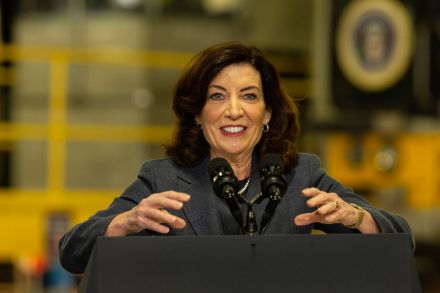
It’s Super Bowl Sunday in New York. You’re at a bar having some beers with your friends, watching the youngest quarterback matchup ever. You think the Eagles have got this in the bag. In fact, you think they’ll win 33-28 — so you hand the bartender five bucks and enter the establishment’s squares gambling pool, where you’re betting on the final digits of what the score will be. Suddenly, the door bursts open. The cops are here. They shout “we hear there’s gambling going on in this establishment!” and slap the owner with a massive fine. A nightmare? Sure.

kathy hochul sports gambling

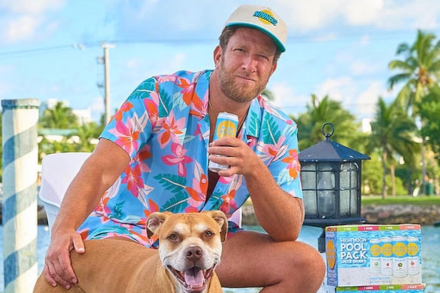
Dave Portnoy is the degenerate gambling king

Why do people in the media keep trying to make a story out of Barstool Sports head honcho Dave Portnoy being exactly the person he claims to be? It just keeps happening. Most recently comes a pathetic attempt at a New York Times exposé that does little more than expose Portnoy for being everything his listeners, readers and fans know him to be: a mouthy, opinionated, over-the-top degenerate gambler and the court jester of a sports and gambling conglomerate that has become a dominating cultural force under his leadership. The Times apparently thinks their readership is unaware of all of this, and deems it noteworthy that he has had to climb out of the pit of gambling-fueled bankruptcy in the past. I'm only surprised that his losses were only $30,000, not ten times that.

dave portnoy

You can’t kick Dave Portnoy out of a movement he was never a part of

Dave Portnoy, of Barstool Sports fame, became somewhat of a celebrity to the right during Covid thanks to the Barstool Fund, which helped small businesses stay afloat during lockdowns, and which he promoted through a number of Fox News appearances. Matthew Walther, writing at the Week, went so far as to proclaim him “the future of the conservative movement” in “Rise of the Barstool Conservatives.” While Walther’s piece correctly captured the Barstool conservatives’, and particularly Portnoy’s, views on abortion and other social matters — very bright lines in the sand between social conservatives and their Barstool brethren — that didn’t stop the idea from gaining steam. Portnoy even interviewed Trump ahead of the 2020 election.

dave portnoy

Bookies turn on Boris

From our UK edition

Betting markets are famously more reliable than pundit prognostications or political polls. Steerpike was intrigued, therefore, to note this morning that bookmakers are now saying that Boris will not be party leader by Tory conference next autumn. On the Betfair exchange overnight, the price has moved towards Boris Johnson being gone by autumn as the favourite outcome. At the same time, 2022 is now evens to be the year in which Boris is replaced in No. 10. The more interesting market, though, is who will replace Johnson as Conservative leader. On Betfair’s Sportsbook, the favourite is Chancellor Rishi Sunak at 2/1. He’s followed by Liz Truss at 7/2 and then the perennially ambitious Michael Gove is at 6/1.

Was Deliveroo the most embarrassing flop in City history?

From our UK edition

The market emphatically endorsed my negative opinion of the Deliveroo share offer, which bombed from its offer price of 390p to close at 282p before Easter. The biggest London IPO since the commodity giant Glencore went public in 2011 now also stands as the most embarrassing flop in living City memory. Goldman Sachs and JP Morgan Cazenove, the deal’s bookrunners, must have known it was in jeopardy when they knocked more than a billion off their first indicative valuation after UK institutional investors lined up to say they wouldn’t touch it. But 70,000 Deliveroo app users, having failed to read that signal, bought into the ‘community offer’ — and have lost an average of £200 each.

The coup that nearly cost the bookies £10 million

From our UK edition

Since coup conspirators nearly won £10 million from the bookies, the sport has divided into two camps. Some grinned and wished good luck to the schemers in their efforts to worst the Old Enemy; others insisted with sober faces that it was a scandal which besmirched racing and diddled honest punters who weren’t in the know. With most racing eyes firmly fixed on the Dublin Racing Festival on 7 February, bookmakers became aware overnight of potentially huge liabilities on three horses in obscure races, each saddled by a different trainer, who had been linked together at long prices in multiple trebles and doubles. Their panic grew as first Fire Away, trained by Laura Morgan, won the 1.25 Class 4 novice chase at Musselburgh by 19 lengths.

Letters: How to repair the Church of England

From our UK edition

Save on bishops Sir: The Church of England is once again missing the point if its financial crisis will result in the closure of parish churches and redundancy of clergy (‘Holy relic’, 6 February). Radical action is required, but the focus should be elsewhere. A starting point would be to amalgamate the vast majority of dioceses. Why is East Anglia served by the C of E dioceses of Ely, Norwich, St Edmundsbury and part of Peterborough when the Roman Catholics manage more than adequately with a diocese for East Anglia? Time to unite and benefit from economies of scale. But it should go much further: halve the number of bishops, diocesan and suffragan, and axe some of the non-jobs with fancy names which seem to proliferate in and around the centre.

In defence of gambling

From our UK edition

Doing good doesn’t always work out as expected. A regular entering his local pub takes pity on an old lady seemingly fishing with a bent stick and string in a kerbside pool of rain. He invites her in for a drink. As she raises her gin and Dubonnet, he asks amiably: ‘So how many did you catch today?’ ‘You’re the eighth,’ she replies. Imagine another pub scene. As lockdown is relaxed, a customer’s order of three pints of bitter and two G&Ts is refused by the landlord: ‘Sorry, Squire, but according to my government boozometer that takes you over your permitted weekly Alcoholic Spending Limit of £100. You signed for two rounds on Sunday.

Born out of suffering: the inspiration of Dostoevsky’s great novels

From our UK edition

A death sentence, prison in Siberia, and chronic epilepsy. The death of his young children, a gambling addiction, and possible manic depression. Few writers endure such dark lives or possess such bright creativity as Fyodor Dostoevsky. His incomparable experiences inform many of his novels’ most powerful scenes, from accounts of innocent suffering and crazed revolutionaries to nightmarish epileptic fits. He intended to reflect on his traumatic life by writing a memoir but, aged 59, he died of a pulmonary haemorrhage. In 1867, Dostoevsky had four months to write two novels (which amounted to 752 pages) Noting this literary vacuum, Alex Christofi challenges himself to write a sort of third-person memoir for Dostoevsky.

How I won €160 by mistake

From our UK edition

My French friend André speaks perfect English and is the kindest of men. After reading last week about my futile efforts to place a bet on the French state betting terminal in the village bar, he put himself out during the week to have a word with one of the bar staff. He gave her my description and told her to expect me to appear in the bar the following Sunday afternoon in time for the Prix de l’Arc de Triomphe. And he drew an assurance from her that she would help me decipher the betting-form multiple-choice hieroglyphics. Or, better still, take a verbal betting instruction over the counter. I know next to nothing about horses other than that they are frightened of crisp packets and can deliver a terrific kick if you loiter behind them.

French gambling is a mystery to me

From our UK edition

Feeling oddly confident, clairvoyant even, I entered a bar to place a bet on Sunday’s Prix de l’Arc de Triomphe. I had researched the internet for advice on how to place a bet in France and I knew I wanted to bet on a couplé gagnant, that is to say make a prediction of the first two horses past the post. Feeling almost supernaturally confident, I thought I would follow up with a wilder bet called a trio ordre, adding a third horse from among the outsiders. Because my desire to bet large on a classic horse race was overwhelming, and my conviction that I would win grandiose, I think I was a bit off my head. Was this grandiosity perhaps a small manifestation of the vast irrational impulse that has apparently gripped the world?

Now get off your sofa to help save the arts

From our UK edition

Along, cold weekend brought a haul of business news more bad than good. The worst was from aero-engine maker Rolls-Royce, which announced a £5.4 billion half-year loss — adverse currency movements plus a collapse in new orders and engine-repair work — and warned that in the ‘plausible downside scenario’ of an extended slump in global aviation, the company might cease to be a ‘going concern’. That’s a horrendous prospect for what’s left of British engineering. And unlike recent losses on a similar scale at BP, there’s no consolation in terms of long-term repositioning of the business: in short, the fewer jets flying, the grimmer Rolls’s future.