French politics

The turbulent life of the Marquis de Morès – the 19th-century aristocrat turned populist thug

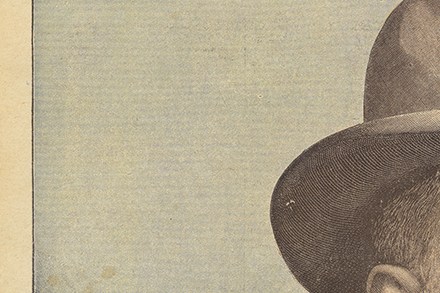
The Marquis de Morès (1858-96) was a man of many abilities, but balancing a chequebook was not one of them. Bested (savaged, frankly) by the Chicago meat-packing lobby and frustrated in his attempt to build a railroad across Indochina, the soldier, duelist and self-styled ‘economist’ returned to his native France in 1886, caused havoc and invented fascism (if we allow the Italian historian Sergio Luzzatto to have his way) – only to meet his nemesis much closer to home.
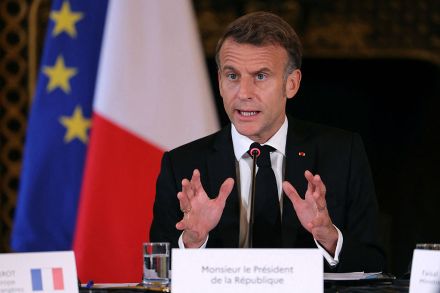
Macron’s story has become a Shakespearean tragedy

From our US edition

This week has been a tale of two presidents. On the one hand there is Donald Trump, who has masterminded a peace deal between Israel and Hamas which, the world hopes, will end the conflict in Gaza. Even Trump’s long-standing detractors acknowledge his role in bringing the warring parties to the negotiating table. "Trump's unique style and crucial relationships with Israel and the Arab world appear to have contributed to this breakthrough," explained the BBC. It hasn’t been such a good week for Emmanuel Macron. On the contrary it’s been the most humiliating few days of his eight and a half years in office. On Monday his Prime Minister, Sébastien Lecornu, tendered his resignation after 27 days in office. It was the shortest premiership in the 67 years of the Fifth Republic.

Macron

Macron’s France is descending into chaos

As expected, the government of François Bayrou has lost its vote of confidence in the National Assembly. Three hundred and sixty-four MPs voted to bring down the centrist coalition government, ten months after Michel Barnier’s administration collapsed in similar circumstances. On that occasion 331 MPs cast their ballots against the Prime Minister. Bayrou has been a marked man since he unveiled his budget proposals in July, the objective of which was to slash €44 billion (£38 billion) in spending by 2026 in order to reduce France’s huge public debt. MPs from across the political spectrum condemned his budget. During an afternoon of impassioned debate in parliament, Bayrou had warned MPs: ‘You can get rid of the government, but you can’t get rid of reality.

Trump, le Pen and the legal war on politics

From our US edition

A few days ago, Raphaël Glucksmann, a French Member of the European Parliament and co-president of the left-wing Place Publique party, proposed that the United States return the Statue of Liberty to France.  In a speech on March 16, he argued that the US, under the Trump administration, no longer embodies the values of democracy and freedom that the statue represents.  Glucksmann said, “We’re going to say to the Americans who have chosen to side with the tyrants, ‘Give us back the Statue of Liberty.’ We gave it to you as a gift, but apparently you despise it. So it will be just fine here at home.” Be careful what you wish for.

Le Pen

Heartbreaking scenes: Annihilation, by Michel Houellebecq, reviewed

Michel Houellebecq’s ninth and longest novel, anéantir, was published in France at the beginning of January 2022 with an initial print run of 300,000 copies. Translations into Italian, German and Spanish appeared a few weeks later. Only now, though, is it available in English, a belatedness all the more regrettable because, like several of Houellebecq’s novels, it is set a little in the future (Submission, for example, foreseeing the islamisation of France, was published in 2015 and set in 2022). Houellebecq has always maintained an absolute faith that love alone saves Annihilation looks forward to the presidential election of 2027, correctly assuming that Emmanuel Macron, never named but clearly referenced, would have won a second term in 2022.

Enemy of the Disaster: Selected Political Writings of Renaud Camus, reviewed

Everybody who knows nothing else about the French writer Renaud Camus knows that – as Wikipedia immediately asserts and as therefore is repeated every time he is mentioned in the press – he is ‘the inventor of the Great Replacement, a far-right conspiracy theory’. Until now, actually reading Camus has not been possible in English, so thoroughly has he been shunned by the mainstream media. Here, at last, are some of his core political essays in translation, published by a small press in America, that will make such dishonesty blatant in future. It is in that way, for good or ill, an essential publication, as few can genuinely be said to be. These are not the writings of Camus that I myself enjoy the most.