Free speech

The neo-Marxist takeover of our universities

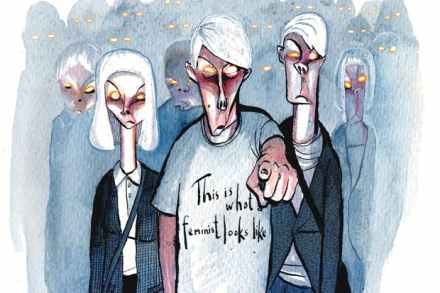
According to Greg Lukianoff and Jonathan Haidt, America’s universities have succumbed to ‘safetyism’, whereby students are protected from anything that might cause them anxiety or discomfort. In their book The Coddling of the American Mind, published this week, they attribute the spread of ‘trigger warnings’, ‘safe spaces’ and ‘bias hotlines’ on campus to a misplaced concern about the psychological fragility of students. In their view, millennials aren’t ‘snowflakes’, but imagine themselves to be on account of having been surrounded by over-protective parents and teachers.

neo-marxist stepford students universities

Millennials aren’t taking offence. They’re hunting for victims

In a recent column, I vowed to return to a point made in passing. To refresh your memory, the American magazine the Nation printed a formal apology for running a harmless 14-line poem by a white writer about homelessness. The poet’s sins: using the word ‘cripple’ and adopting a voice lightly evoking what I gather we’re now to call ‘AAVE’: African-American Vernacular English. Facebookers were incensed, comments huffy. The poet apologised, too. I decried this ritual progressive self-abasement as cowardly and undignified. But it’s worth taking a second look at that story as a prime example of screaming emotional fraudulence in the public sphere.

antifa snowflakes millennials

Conservatives are wrong about free speech

‘There. I said it.’ That phrase, and the attitude it strikes, says something pretty specific. It doesn’t just say: here’s what I think. It says: ‘Here’s what I think, and, you know what? It’s what nobody except me dares to say in public.’ It says: I’m brave. It says: I speak truth to power. It says: here I am on the battlements. It also says: I’m a grade-A chocolate-coated plonker. And though most people are too fly these days, too aware of the lurking threat of Craig Brown, to use that form of words, there’s a good deal of there-I-said-it-ism about these days. In particular, when it comes to the issue of ‘free speech’.

Ben Shapiro, the child prodigy gone right

Liberty University, Jerry Falwell’s Evangelical Christian finishing school, gathers three times a week for “convocation”, a worship service with guest speakers from all backgrounds. Attendance is mandatory, but students say the man delivering today’s sermon would have filled the 8,000-capacity venue regardless. Because today, the Ben Shapiro show has come to Liberty. A lot of people don’t like Shapiro. His critics on the right dislike him even more than his critics on the left - “the alt-right think I’m a cuck Jew,” he tells his podcast audience. A touch of jealousy there, perhaps – Shapiro may be a bit soft for many of his rivals on the internet. What really hurts, however, is that he’s a bigger deal than all of them now. And his fans worship him.

ben shapiro liberty

Universities’ war against truth

From our UK edition

Young people today are very reluctant to assume that anything is certain, and this reluctance is revealed in their language. In any matter where there might be disagreement, they will put a question mark at the end of the sentence. And to reinforce the posture of neutrality they will insert words that function as disclaimers, among which the favourite is ‘like’. You might be adamant that the Earth is spherical, but they will suggest instead that the Earth is, ‘like, spherical?’ Whence came this ubiquitous hesitation? As I understand the matter, it has much to do with the new ideology of non-discrimination.