Free speech

Sister act: did Kerri Greenidge sign the Harper’s letter or not?

Have you met the Greenidge sisters — Kirsten, Kerri, and Kaitlyn? They are quite the trio. Kirsten, the eldest, is a playwright who teaches at Boston University; Kerri, the middle one, is a historian and the director of American Studies at Tufts University; and youngest Kaitlyn is the author of the award-winning We Love You, Charlie Freeman who also writes for the New York Times. Fancy that? Kerri has found herself in hot water this week after she signed the now notorious Harper’s letter in defense of free thought and free expression. She appears to have been stunned by the hostile reaction the letter received. Within hours of its publication she tweeted: ‘I do not endorse this @harpers letter. I am in contact with Harper’s about a retraction.

Kerri Greenidge, Photo: Twitter

Harper’s vs Vox — and the bonfire of the liberal values

Cockburn is long enough in the tooth to recall when it was uncontroversial to defend the 'free exchange of information and ideas.’ Not so many moons ago, it seemed obvious to the point of boring to say that 'the way to defeat bad ideas is by exposure, argument, and persuasion, not by trying to silence or wish them away.’ Not anymore. In 2020, that is edgy stuff, as the group of 150 writers who just wrote a joint letter to Harper’s have proved. Their letter, a defense of free expression, makes the perfectly clear and fair point that ‘as writers, we need a culture that leaves us room for experimentation, risk taking, and even mistakes. We need to preserve the possibility of good-faith disagreement without dire professional consequences.

vox

We’re facing a tsunami of censorship

From our UK edition

It’s open season on mavericks and dissenters at the moment. If you publicly challenge any of the sacred nostrums of the social justice left and you work in a school, a college, a university, an arts company, a public broadcasting organisation, a tech company, a charity, a local authority or, indeed, Whitehall, you are at risk of being cancelled. How do I know? Because in February I set up the Free Speech Union to protect those being targeted in this way and in the past month we’ve been contacted by people in all of these fields who have either been fired, suspended or are ‘under investigation’ for having said or done something controversial, usually on Facebook or Twitter. And by ‘controversial’ I don’t mean they’re guilty of hate speech.

Conservatives talk about cancel culture too much

If you are on the right I suspect you have heard leftists saying something like this: ‘Thousands of people are dying from coronavirus, the Chinese and Indians are fighting, young black men are being killed on the streets and all conservatives can talk about is “cancel culture”. What is up with that?’Well, in the past few weeks there have been attempts, many successful, to force people out of their jobs for discussing social science studies and genetic research, for saying all lives matter, for questioning whether the killing of George Floyd was racially motivated, for publishing a US senator’s opinion piece, for making edgy jokes, for refusing to ‘walk around with a BLM sign’, for wearing blackface to a Halloween party two years ago et cetera.

canceled cancel culture

The death of free speech

From our UK edition

Oh, to be in America, where cultural decay and self-destruction compete equally with hyper-feminist and anti-racist agendas. Gone with the Wind is now off limits and Robert E. Lee’s statue in Richmond is unlikely to remain standing (I give it a week at most). And over here poor old Winnie is also in the you-know-what. Why didn’t anyone tell me Churchill was a Nazi? The Cenotaph also has to go; those guys it honours were racists. Two weeks ago in these here pages Douglas Murray said it all about a US import we can do without. Alas, when Uncle Sam sneezes, the British bulldog gets the flu. The scenes may be less dramatic in the UK, but the hypocrisy is the same, if not greater.

Black mass: the Georgetown Lecture Fund’s odd diversity campaign

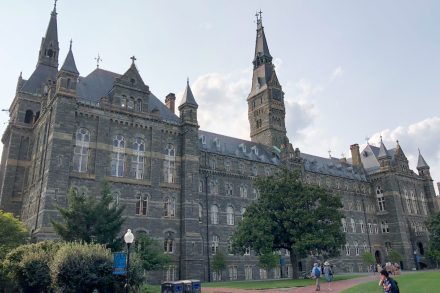
The New York Times’s opinion editor resigned in disgrace earlier this month following a newsroom revolt over the publication of an op-ed by Sen. Tom Cotton. The op-ed 'put black New York Times staffers in danger', the newspaper's reporters lamented in nearly identical tweets, because it called for using the National Guard to put down the riots in nearly every major American city. The incident perfectly framed what happens when weak-minded college students who are seldom exposed to opposing or controversial viewpoints graduate into the nation's top newsrooms. The campuses themselves aren't faring much better. Members of Generation Z are thought to be more culturally conservative than their millennial counterparts, but Georgetown students must have missed the memo.

Georgetown University's Healy Hall

The snowflakes turn to ice

About a year ago, I went to see my friend John R. MacArthur, the publisher of Harper’s magazine, in his office in New York. When I reached him, he was in a state. One of his authors had used the word ‘tartly’ — the adverb, meaning sharply or sourly — and one of his junior editors had ruled that the word was problematic. The junior editor thought it might be connected to the word ‘tart’ — the noun, meaning prostitute — and therefore misogynistic. ‘See what I have to put up with?’ he asked. Rick was laughing but it wasn’t altogether a joke.

media

Facebook is right. Twitter is wrong

Twitter CEO Jack Dorsey opened up a Pandora’s box two days ago by dropping a fact-check on a tweet by Donald Trump regarding mail-in ballots. That raised all sorts of hell from a bombastic President, as well as more questions than answers. There are several problems with Twitter deciding to put its thumb on the scale of ‘truth’ on its social platform. The site has previously come under enormous scrutiny over widely perceived political and ideological bias. The charges against the company include its unfair and unbalanced actions in banning conservative or politically right-leaning accounts, as well as shadow-banning and limiting views and engagements on trending topics which it deems problematic.

facebook

Xi’s useful idiots against free speech

On December 30, Ai Fen, director of the emergency department at Wuhan Central Hospital, got the lab results back about one of her patients who had a flulike illness. The words she read on the report made her blood run cold: ‘Sars coronavirus’. She circled the word ‘Sars’, took a photo and emailed it to a doctor at a neighboring hospital. Within hours, the photo had been sent to dozens of people in the Wuhan medical community. One of them sent a series of messages to a private group on WeChat, advising his colleagues to take precautions, and someone took screenshots of those messages and shared them more widely.

useful idiots

America has turned into a bad joke

From our UK edition

Gstaad     Rumours about the virus are flying around this village. First there was talk of a hotel being temporarily quarantined, then a shindig given by a fat social climber where one of the guests was said to be infected. So far these seem to have been false alarms but still the fat old rich who don’t ski are panicking, staying indoors and incommunicado. This is good news. Even better news is that I’ve been skiing with my son and have never had a better time, although he did have to wait for me at times. The snow was unexpectedly good and there was plenty of it. My trouble is that I look down from a south-facing verandah and see green fields.

Why the Free Speech Union is taking on an Oxford college

From our UK edition

The Free Speech Union has submitted a letter of complaint to the Rector of Exeter College after the Oxford history professor Selina Todd was barred from addressing a conference at the college on Saturday. Todd was stopped from speaking about the women's liberation movement at an event that she had helped organise after trans activists complained about some of her views.  The Rector, Professor Sir Rick Trainor, has acknowledged the letter and said the matter will be investigated under the College’s complaints procedure.

How far should we go to defend free speech?

From our UK edition

This week sees the official launch of the Free Speech Union — an organisation that stands up for the speech rights of its members. It’s my baby, but a number of people have come on board as directors, including Douglas Murray and Professor Nigel Biggar. I’ve also had a lot of help behind the scenes from people who got in touch after reading about it in this column. I was on the Today programme on Monday to talk about it and have done a number of interviews since. By the time you read this, I’ll be recovering from the launch party, scheduled for Wednesday night. So far, it’s going pretty well.

Why ‘safe spaces’ are nowhere to be seen on Japan’s university campuses

From our UK edition

A part-time lecturer and friend of mine was reported to his university last month for making ‘inappropriate comments’ in the teacher’s room. These comments, related to his sceptical views on man-made climate change. The accuser, another part-time lecturer irate at such heresy, clearly wanted my friend to be sacked. Had this been a British or American university, I would have gravely worried about my friend’s position. Luckily for him, it happened in Tokyo. So his job is safe. Why? I know exactly how this complaint will have been received: politely, of course, and with the Japanese equivalent of ‘Thank you for bringing this matter to our attention’. And I know what action will have been taken: absolutely none.

Four defences of free speech that everyone should read

From our UK edition

Every generation, and individual, has to rediscover the arguments for free speech for themselves. Some people learn from major incidents. Some when the censors come for someone close to them, or an opinion that they hold. Others come to believe in free speech because they realise that while being offended on occasion might be terrible, it is nowhere near as terrible as any system designed to make being offended impossible. Fortunately there are short-cuts to finding the best defences of free speech. The English language provides an especially rich tradition on which to draw. From many centuries of literature allow me to list just four works: two classic, two modern.

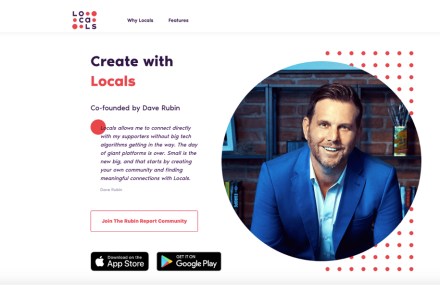
Dave Rubin is here to solve ‘95 percent’ of the internet’s problems

The dream of a free internet — if it was ever more substantial than a fantasy — is crumbling. This decade began with the Arab Spring and the belief that technology powered movements for liberty across the globe could triumph over despotism. Instead the decade closes with the growing realization that technology is driving events in unpredictable ways. Confused, people are left feeling less not more in control of their lives. And a sketch is being made — however faintly — for a new form of despotism: Big Tech. Big Tech is unaccountable, opaque and deeply embedded within the lives of billions. Since 2016 it has been dumped on from both the left and the right, and former Big Tech workers.

locals dave rubin

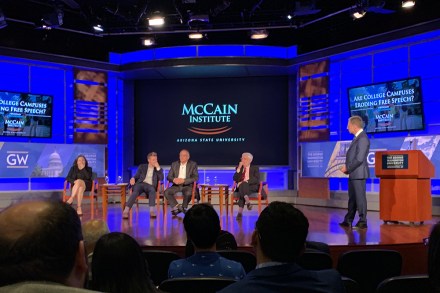
Are college campuses eroding free speech?

Campus debates over free speech have raged through the pages of the New York Times and Wall Street Journal in recent years, as columnists turn their sights upon university quads. With all this attention, President Trump signed an executive order in March to limit funding for schools failing to support freedom of expression. To learn more, Cockburn stopped by a debate on Tuesday on the resolution, 'Are college campuses eroding free speech?'.Hosted by the McCain Institute, Robby Soave, associate editor of Reason, and FIRE vice president Samantha Harris argued in the affirmative, while Wesleyan University president Michael Roth and Georgetown’s Free Speech Project director Sanford Ungar argued — somewhat — against the proposal.

free speech

Calm down! Your freedom of speech is not under threat

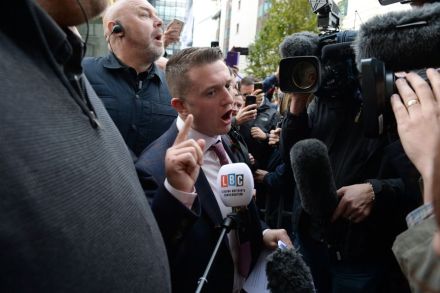
In the UK, leading far-right figure Tommy Robinson Yaxley Lennon has had his Paypal closed down, his Twitter account banned and, most recently, his Instagram and Facebook accounts removed. Very much like in the US last year when probable white supremacist Alex Jones had his Twitter, Facebook and YouTube shut down, or when Facebook did a cull of almost 600 US political pages before the 2018 midterm elections. As usual, the tinfoil hat-wearing alt-right Nazis are crying out that free speech is under threat. This ridiculous overreaction always makes me laugh. These people have no idea what free speech is. They assume that freedom of speech means you are free to say whatever you want without severe consequences! Imagine that?!

free speech

Ohio State lecturer bans students from saying ‘illegal immigrants’

A little row at Ohio State University, which Cockburn would like to document, if he may. Victor Espinosa, a lecturer in sociology at Ohio State University, has been telling students that they are forbidden from using the term ‘illegal immigrant’ to describe immigrants who did not enter the country through the legal method. Because – drum roll – it is offensive. Mr Espinosa has written to at least one student telling them they ‘will not be allowed to use the term illegal to refer to an unauthorized immigrant’ because it ‘dehumanizes, marginalizes and racializes the people it seeks to describe.

ohio state illegal immigrant

Why is Tommy Robinson banned from America?

What does Tommy Robinson, reformed soccer hooligan and English nationalist, have in common with Daniel Pipes, unreformed policy wonk and president of the pro-Israel Middle East Forum? Islam, that’s what. Not that Robinson and Pipes are joining the Sons of the Prophet. Rather, they’re joining forces against Islamist influence in their societies, and against two related, and perhaps more serious problems: the stifling of debate about Islamism and immigration, and how unaccountable social media companies censor the opinions they dislike, even if those opinions have broken no law. On Wednesday, Pipes and the MEF hosted British speakers for a panel in Washington, DC on ‘de-platforming’. The location was kept secret, for security reasons.

tommy robinson stephen yaxley-lennon

Free speech and expensive schools in South Dakota

In nearly every state, the legislature is nervous about the public universities it finances. And fair enough. Apart from sports, the state colleges in America tend to make the national news only when protests break out, and protests tend to be driven by a radicalism that reveals the school protesters are far to the left of the legislatures of even the more liberal states. Such national news embarrasses the legislators, who send querulous letters to the school officials, with distant threats of cutting state funding. Which tempts those officials to surrender preemptively to activists, in the hope of avoiding protests. Conservatives in America typically blame the radicalism of college administrators for, say, the academic banning of conservative speakers on campus.

university of south dakota