Franklin Roosevelt

The Spectator’s role in the birth of America

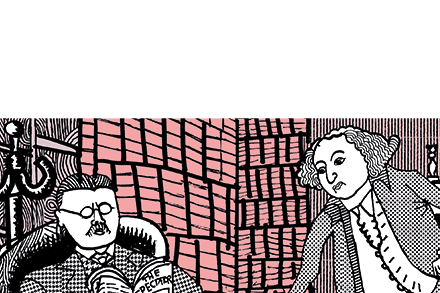
The Spectator was there at the founding of America. George Washington had six copies of the original 18th-century Spectator at his Mount Vernon estate and read them often. He shared with Joseph Addison, The Spectator’s co-publisher, an interest in how to educate ideal citizens: men and women with wit and grit. Young Washington read The Spectator in the hope of bettering himself, too. Both of his older half-brothers had been educated in England and he wished also for the manners and polish of an English gentleman. For the pioneering, self-improving men who would go on to create an independent America, the 18th-century Spectator was both an education and a guide. ‘I bought it, read it over and over, and was much delighted with it,’ wrote Benjamin Franklin in his autobiography.
Trump only harms himself by floating the idea of a third term

From our US edition

Donald Trump this weekend floated the idea of running for a third term. Unless he’s doing it in 1940 when Franklin D. Roosevelt did, it’s unconstitutional. I don’t mean unconstitutional for Judge Boasberg or Judge Chutkin or some zealot in robes in San Francisco or Seattle. I mean unconstitutional in capital letters for any judge, including a 9-0 vote on the Supreme Court. The legal background here is straightforward. When FDR ran for a third term in 1940 and for a fourth in 1944, there was no legal or constitutional prohibition against doing so. There was simply a well-established norm, begun when George Washington returned to Mount Vernon after two terms. That norm was respected by every subsequent president. Until FDR.

A consequential, divisive, troubling election about big issues

From our US edition

Republicans and Democrats, who disagree so virulently on so much, at least agree on two things. Both say it is the most consequential election in US history. (They might want to check on 1860.) And both believe the other side’s triumph would be catastrophic. It would have dangerous consequences for decades, they say, and might be impossible to correct. They are half right, perhaps more, and what they are right about is scary. This election is the most consequential since Franklin D. Roosevelt defeated Herbert Hoover amid the Great Depression. That election was consequential because it and the following one, in 1936, locked in the Democratic Party coalition that effectively governed the country for the next seventy-five years.

e pluribus unum election