France

Anatomy of a fiasco: how Britain’s pandemic defences failed

From our UK edition

In October, a panel of 21 experts from across the world gathered for the first of what promised to be a series of reports assessing readiness for pandemics. ‘Infectious diseases know no borders,’ warned the Global Health Security Index. ‘So all countries must prioritise and exercise the capabilities required to prevent, detect and rapidly respond to public health emergencies.’ Every country was called to be transparent about its capabilities ‘to assure neighbours it can stop an outbreak from becoming an international catastrophe’. Two countries were held up as the best examples: Britain and the United States. If a league table were drawn up of countries that most failed to contain Covid deaths, the US and the UK would be pretty near the top.

What angry young French men want

From our UK edition

Chatting on the café terrace with my new friends Didier and Emile made me aware that certain political ideas, which before the Covid-19 pandemic I had comfortably assumed belonged on the wilder shores of political discourse, are now mainstream among the under thirties. I felt a little envy, perhaps, for Didier’s undoubting conviction that questions of equality, gender, race and white supremacy were the ultimate verities for humankind. But a single word often betrays a great design, and his supplementary advocation of voluntary euthanasia for the chronically sick and elderly indicated all too clearly in which direction his ideal post-Covid society would be headed.

Is left the new right?

From our UK edition

I took a table on the terrace of the reopened bar and ordered une pression from the waitress. ‘Back to normal, thank goodness,’ I ventured to the chap sitting alone at the next table. He was staring at the centimetre of lager remaining in the bottom of his glass. The cheapness of his clothes and the loneliness enveloping him like a caul was contradicted by his youthful glamour. ‘Normal?’ he said. ‘Normal doesn’t work. You can shove your old man’s normal up your backside.’ My sociable, celebrant spirit recoiled from the aggression. ‘I only meant that it was good to see the bars and shops open again,’ I said lamely.

My hairdresser cured my depression

From our UK edition

I walked to the salon in fiery sunshine. Gorgeous, zaftig Elody was wearing a short satin dressing gown of silver and gold. She was alone. ‘Ça va?’ she said, helping me into the gown. ‘Black dog,’ I said. ‘What is black dog?’ she said. ‘Cafard,’ I said. ‘A black ox trod on my foot.’ I sat in the chair, removed my glasses and stared in the mirror. The straps of my black face mask made my ears stick out. And strewth, the hair. ‘Two owls and a hen, four larks and a wren,’ I said. Elody speaks no English and my French is rudimentary. ‘What?’ she said. I had a stab at translating the limerick into French. She stared at me via the mirror with rapt, sceptical attention.

Rules for a deconfinement dinner party

From our UK edition

The most visible local landmark is a solitary two-headed Jurassic mountain called Le Bessillon, six miles long and 800 metres tall at the highest peak. These are unimpressive vital statistics for a mountain perhaps, but the Bessillon exerts a tremendous, almost uncanny presence on us all. The foreign correspondent and his wife have bought an 800-tree olive farm on a nearby hillside. From their outside dining table this great primeval slab and its forested sides can be seen in profile, like a finely drawn illustration in a Victorian encyclopedia. Between the dining table and the mountain is nothing but oak forest and pylons, and beyond it more oak forest until a distant village on a plateau. (The elegance of French electricity pylons and barbed wire makes me laugh.

The best way to cope with rejection is to write about it

From our UK edition

With more than a dozen acclaimed novels to her name, not to mention short stories, poetry, a memoir and a Booker nomination, you might think that Michèle Roberts could have counted on being published for life. But as so many ‘established’ authors know painfully well, in that ever-hungry-for-the-new world there’s no such thing as tenure. So when her latest novel elicits a lack-lustre response from her agent before being ‘sweetly’ but flatly turned down by her publisher, a stunned Roberts finds herself processing the humiliation in the only way she knows how — by writing about it. ‘My past successes counted for nothing,’ she mournfully observes: ‘There was only this smashed-up present.

My first post-lockdown party

From our UK edition

France is divided into a red zone and a green zone. We’re green. Green for go. From this morning we no longer need a signed and dated permit to leave the house; we can socialise with up to ten other people at a time; and we can travel up to 60 miles in any direction. In theory we could fill a minibus and go on a beano down to the coast tomorrow. And in spite of the government ordering bars and restaurants to remain closed, the village beer bar unexpectedly opened for business last Saturday, and the lights were on in the poshest village restaurant where people inside could be seen tucking in. Perhaps, in truth, the delicate decision about when to open the bars and restaurants has been quietly devolved to the local mayors’ offices.

League of nations: the race out of lockdown

From our UK edition

Uppsala Last week, Europe started its liberation from lockdown — and it all feels like a study in national political identity. Belgium took its first step towards ‘deconfinement’ but no one seems exactly sure what that means. France is opting for complexity rather than simplicity. Italy’s national plan for the easing of its lockdown is more convoluted still, but few regions bother to follow it anyway. Spain, goes a national joke, went more slowly and started with a reopening of the siesta. And in Germany, everyone is praising the country’s scientific approach to the pandemic, but as soon as they were allowed to roam freely again, many Germans headed for the beer gardens. Governments say their approach is ‘guided by the science’.

In praise of French doctors

From our UK edition

From my hospital bed in Hyères I could look out of the window and see the old town and Edith Wharton’s old house, the Castel Sainte-Claire, away on the hillside. Christophe, a male nurse, came in to welcome me and take my temperature, pulse and blood pressure. He was masked and gloved against possible infection from the old Covid Dix-Neuf and he spoke English. As he slipped on the finger thermometer and inflatable sleeve, he reminisced about his rugby-playing days. Thirty-five years ago, he said, he had competed against an English team who played rugby with a violence that was incredible.

Covid statistics are just politics by other means

From our UK edition

Statistics is the continuation of politics by other means, to misquote Clausewitz. One hundred and fifty years after the crushing of the revolutionary Paris Commune, historians still clash aggressively about the death toll. Was it as high as 40,000 or as low as 10,000? It matters because the Paris Commune is a shibboleth, a great left-wing site of memory and martyrdom, made famous by Karl Marx’s pamphlet The Civil War in France. He presented the Paris Commune as the first great experiment in communist government. Its crushing by the army of the conservative Adolphe Thiers is depicted in left-wing folk memory as the ‘reactionary, repressive forces of capitalism’ ending an idyllic experiment in socialism.

It’s a mistake to compare our Covid death toll with Spain and France

From our UK edition

Covid statistics are like complex machinery; if you don’t read the instructions you won’t operate them properly. Which is why the claim by some media outlets that the UK now has the second highest number of Covid deaths in Europe, should be handled with caution. It is true that on Wednesday the official UK Covid-19 death toll increased by 4,419 to 26,097 after the government included deaths outside hospitals for the first time. The figures were revised respectively by Public Health England since the first UK death in March. According to the Guardian, ‘The change comes after weeks of criticism of the way that the UK had been reporting its coronavirus death toll, which made effective comparisons with other European countries impossible.

How the French view their weekly clap for carers

From our UK edition

Once a week we break French emergency law and have a friend round for drinks on the terrace. The terrace overlooks the village rooftops as if it were a box at the theatre. Two weeks ago we were pleasantly lit up, when, at one minute to eight, the villagers below came out on to their terraces or stood at their windows and front doors to make a noise in support of the ‘essential’ workers: nurses, doctors, carers, postmen, shopkeepers, council workers, and so on. Some banged saucepans together or beat them with wooden spoons. Some blew horns of one kind or another, including what sounded to me like one of those long prayer horns blown by Tibetan monks from monastery rooftops.

Paris’s banlieues are burning once again

From our UK edition

One of the persistent misconceptions of the riots that swept through France in the autumn of 2005 is that they were solely the result of the deaths of two youths as they ran from the police. The deaths of the teenagers on October 27 in Clichy-Montfermeil provoked unrest in the north-eastern Parisian suburb but it was what happened three days later that led to three weeks of nationwide riots and the declaration of a state of emergency by the then president of France, Jacques Chirac. According to Gilles Kepel in his 2015 book, Terror in France: genesis of the French Jihad, it was a stray tear gas grenade fired by police that landed close to the entrance of a mosque that lit the touch paper.

Don’t bank on a V-shaped recovery

From our UK edition

Last week, Britain and France were treated to an avalanche of financial statistics jostling with the macabre daily litany of Covid casualty numbers. All are premised on a V-shaped recovery in which the severity and rapidity of the Covid recession is matched by a rapid bounce back. But the French above all should be aware of a historical parallel that suggests caution regarding the V-shaped recovery. But first the size of the problem. In Britain, the Office for Budget Responsibility produced the most pessimistic scenario for the British economy compared to those of KPMG, Morgan Stanley and the OECD. Based on a three-month lockdown it projects a 2020/21 budget deficit of 14 per cent falling back to a 2.

France’s citizens’ climate convention has come back to bite Macron

From our UK edition

Those of us who are sceptical about the worth of citizens’ assemblies have been noting with interest the upshot of the French citizens’ convention for the climate which delivered its recommendations this week. The thing about these assemblies of randomly selected citizens mulling over thorny issues is that they’re a brilliant way for elected politicians to shift the responsibility for really unpopular policies onto someone else. Except they can go horribly wrong. President Macron used this device to deal with the threat from the gilets jaune, back in those distant days when citizens could actually assemble in France.

Didier Raoult — leader of the hydroxychloroquine cult

Professors of medicine do not usually look as if they have emerged from the pages of Asterix, or alternatively as if they were the drummer of a 1960s rock band just emerged from drug rehabilitation for the 17th time: but that is how Prof Didier Raoult, recently elevated to the rank of the most famous infectious disease doctor in the world, looks. If you type 'Didier' in your search engine, up comes Raoult, before even the soccer player, 'Drogba'. When infectious disease doctors are more famous than footballers, you know that an epidemic is serious.  Raoult says that he adopted his appearance to irritate his colleagues, which is another specialization of his, one at which he is undoubtedly very good.

didier raoult hydroxychloroquine

I was relishing the lockdown a week ago, but now I need urgent hospital treatment

From our UK edition

In France the rule for going for a walk stipulates an hour in duration or a kilometre in distance. We are fortunate here in having a 40-minute circular walk that starts at the front door, most of it on a footpath, though beginning with a steep climb that makes me pant like a greyhound after a course. Then the path levels and runs pleasantly through olive groves and vineyards. One is never out of sight of houses and at three points along the route house dogs — in order: a pair of Weimaraners, a Jack Russell and a pedigree sheepdog — enjoy intimidating passers-by by throwing themselves in a frenzy of barking at the wire boundary fences containing them. Otherwise the route is bucolic and quiet enough to quieten the mind and exhaust the frail old mongrel.

Coronavirus is straining an already fractured EU

From our UK edition

When EU finance ministers ended their crisis meeting this morning, they had spent 16 hours trying to establish what collective help, if any, they wish to offer to the countries most affected by the epidemic: Spain and Italy. They agreed on not a thing. Instead, the meeting broke up acrimoniously with Italy, Spain and France demanding that the European Central Bank issue ‘coronabonds’ to help finance economic recovery – while Germany, the Netherlands and others resisted. So we see the EU split along the same lines as did the 2008/09 crisis, and indeed along the same fault lines that have been growing ever wider over the past three decades.

Annie Ernaux looks back at her teenage self – and sees a stranger

From our UK edition

How can you recover the teenage girl you were? Not just recall the memories and recount the events — this dress worn at that party, the taste of that alcohol on this boy’s mouth — but restore the world in which these things took place, and the self who acted and was acted upon. Is it possible to be your own Orpheus and yank the Eurydice of your former self from the underworld of forgetting? This is the problem that Annie Ernaux sets herself in this slim, transfixing memoir of young adulthood and first sexual experience. It’s 2014 and Ernaux is looking at a picture. The picture was taken in 1958 and the girl in it is 17. The girl is Ernaux, and also she isn’t.

Could coronavirus lead to Frexit?

From our UK edition

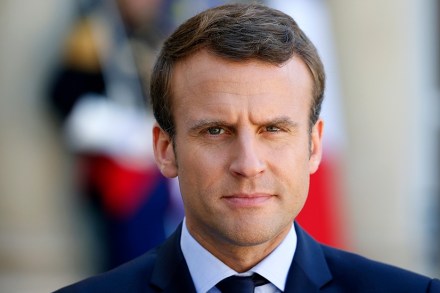
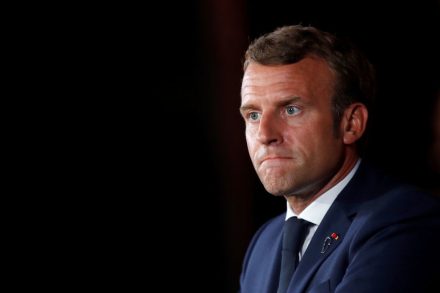
Is France flirting with the idea of Frexit again? Coronavirus is currently provoking a chorus of ‘reprendre le contrôle’ (take back control) across the political spectrum. The epidemic is laying bare France’s dependence on outside states for essentials such as masks, medicines, test kits and ventilators. Even arch-Europhile Emmanuel Macron visiting a French mask manufacturer declared this week: ‘We have to produce more in France, on our territory, from now on to reduce our dependency… we must rebuild our national and European sovereignty’. His reference to Europe is not unusual, but highlighting national sovereignty is. The second ‘take back control’ stimulant comes from growing irritation with the European Union.