France

Churches are more Covid-secure than trains or takeaways

From our UK edition

Monday night’s murderous gunman in Vienna is officially described as ‘Islamist’. Brahim Aioussaoi, the man accused of murdering worshippers in a Nice cathedral last week, arrived (reported the BBC) with ‘three knives, two phones and one Quran’. These would seem to be the basic toolkit required. A friend who lives in southern France tells me that although the latest lockdown measures prevent church services being held, so serious is the terrorist threat to churches that many are guarded by police. So it seems natural that President Macron of France warns of the danger to French Catholics and speaks of ‘Islamist terrorist folly’. Each of his three chosen words rings true, and the link between them cannot be avoided.

France vs Islamism: how does Macron hope to prosecute his war?

From our UK edition

Montpellier France is under attack. Two weeks ago, Samuel Paty, a middle school teacher, was decapitated in a leafy suburb of Paris after showing his students cartoons of the prophet Mohammed published by Charlie Hebdo in 2015. Last week, there were three killings at the Basilica of Notre-Dame in Nice, and after that, an Orthodox priest in Lyon was shot and gravely wounded. ‘Tell my children I love them,’ were the dying words of Simone Barreto Silva, a 44-year-old mother of three and herself an immigrant, killed in Nice. France has gone to ‘war’ with Islamic ‘separatists’, Interior Minister Gérald Darmanin has claimed.

The best response to Islamism is Christianity

From our UK edition

It has become normal to think of the Islamist attacks in Europe as attacks on a secular way of life. The beheading of the teacher in Paris, the murders in Notre-Dame in Nice and the shootings in Vienna are presented as a struggle between radical Islamism and a particular kind of enlightened secularism born of the French Revolution. That’s the way Emmanuel Macron sees it; that’s the way most educated atheists across Europe see it. But what they forget is that Enlightenment ethics — the ideas of tolerance and fairness — have their foundation in Christianity. And the best response to violent Islamism isn’t humanism, but the idea of a loving, merciful Christian God.

Life, liberty and the pursuit of laïcité

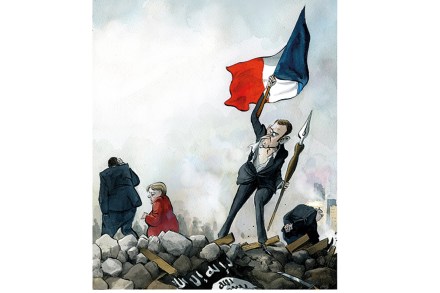
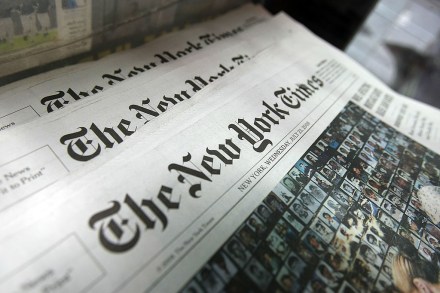
The French were asking for it, weren’t they? All that laïcité is the political equivalent of a short skirt. What did Marianne think would happen if she went out like that?The very act of being French, Politico tells us, ‘incites’ Muslims to murderous rage. A New Yorker writer explains that Charlie Hebdo cartoons are ‘effectively hate speech’, which effectively implies that Samuel Paty, the teacher who showed the cartoons to his pupils in a class on free speech, got what he deserved. The New York Times tells us that there are fine people on both sides: the real victims of Islamist terrorism in France are French Muslims, who are left feeling uncomfortable.

Laïcité

Portrait of the week: Shopping bans in Wales, soft drinks in Scotland and stowaways at sea

From our UK edition

Home Wales, entering a 17-day ‘firebreak’, closed most shops by law but then tried to stop supermarkets selling ‘non-essential’ items such as bedding, kettles and smoke alarms. At the beginning of the week, Sunday 25 October, total deaths (within 28 days of testing positive for the coronavirus) had stood at 44,745, including 1,166 reported in the past week, compared with 819 the week before. In England, Nottingham entered the most severe restrictions,Tier 3, taking the number of people so restricted to 7.9 million (in Liverpool, Greater Manchester, Lancashire, South Yorkshire and Warrington).

Portrait of the week: A Manchester stand-off, a Presidential showdown and a Brexit culture clash

From our UK edition

Home After ten days spent trying to persuade Andy Burnham, the Mayor of Greater Manchester, to accede to the city entering Tier 3 (which entails the closing of pubs and betting shops), Boris Johnson, the Prime Minister, announced that it would happen anyway, from 23 October. ‘I am deeply sorry,’ he said. Manchester had wanted £65 million in support first. Liverpool complained that it was not allowed to keep gyms open when Lancashire was. The nine million people of London languished in Tier 2, forbidden to meet anyone at home or in a pub, except if they pretended it was a business meeting. Scotland hatched plans for its own tiers.

Can Macron stem the tide of Islamism in France?

From our UK edition

Just over a week ago, Emanuel Macron said he wanted to end ‘Islamist separatism’ in France because a minority of the country’s estimated six million Muslims risk forming a ‘counter-society’. On Friday, we saw yet another example of this when a  history teacher was decapitated in the street on his way home in a Paris suburb. Samuel Paty had discussed the free speech in the classroom and shown cartoons of Mohammed. Some parents had protested, leading to a wider fuss - and, eventually, his murder. M Paty was murdered, Macron said, ‘because he taught the freedom of expression, the freedom to believe or not believe.’ The president is now positioning himself as the defender of French values, determined to drain the Islamist swamp.

Tiphaine Auzière and the panic inside the Élysée

From our UK edition

Will the presidency of Emmanuel Macron open the door to a political dynasty in France? He has no children, so that’s a problem. But wait. There’s Brigitte Macron, who has three. Albeit, all from the union she abandoned to marry Emmanuel, her pupil. Meet the youngest of Mme Macron’s three children, Tiphaine Auzière, 36, a lawyer, social entrepreneur, and République En Marche activist. Merely six years younger than Macron himself, Tiphaine is the striking cover girl (alongside her mum, the First Lady of France) of Paris Match magazine this week. And it doesn’t take profound insight to imagine that with important regional elections next year, she’s running for something.

How I won €160 by mistake

From our UK edition

My French friend André speaks perfect English and is the kindest of men. After reading last week about my futile efforts to place a bet on the French state betting terminal in the village bar, he put himself out during the week to have a word with one of the bar staff. He gave her my description and told her to expect me to appear in the bar the following Sunday afternoon in time for the Prix de l’Arc de Triomphe. And he drew an assurance from her that she would help me decipher the betting-form multiple-choice hieroglyphics. Or, better still, take a verbal betting instruction over the counter. I know next to nothing about horses other than that they are frightened of crisp packets and can deliver a terrific kick if you loiter behind them.

Letters: The sorry state of BBC sport

From our UK edition

Misplaced Trust Sir: Charles Moore is as ever bang on target (The Spectator’s Notes, 26 September). National Trust members have had a raw deal this year, but so have many loyal staff and volunteers. It should not surprise any visitor to a National Trust property that a very rich person built it and lived there. No doubt they achieved great financial wealth by being quick-witted, entrepreneurial and above all ruthless in their dealing. They likely exploited everyone irrespective of race or creed. How many mill owners sent ‘boys’ up chimneys, down mines and into the machinery to clear blockages? The National Trust is a curator of buildings, artefacts and estates. They do not have a remit to delve into the background of their benefactors and make judgments.

My debt to Royaumont

As ruins go, Royaumont is as good as any. French roads also being what they are, Royaumont is about 45 minutes from Saint-Denis, the cathedral in Paris where the kings of France are buried, and perhaps 20 minutes from Chantilly, where as much English as French is spoken on the racecourse. Beginning his reign in the 13th century, King Louis IX chose Royaumont as the site of one of the Cistercian abbeys he was building. Dying while on crusade in North Africa, he probably never saw what was reputed to be the most magnificent of all Cistercian abbeys in the whole country, the rival of Mont Saint-Michel or Fontevrault. Royalty notwithstanding, the Vatican singled him out for canonization.

royaumont

The lockdown battle of Marseilles is a warning for Boris

From our UK edition

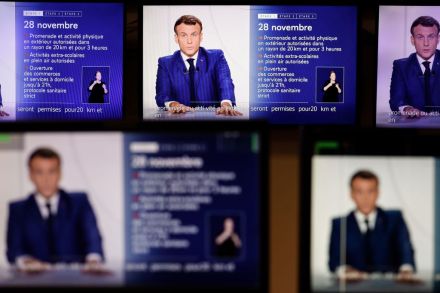
From the vantage point of Downing Street, Boris Johnson may feel reassured that the further measures against Covid-19 he imposed this week, along with the extraordinary fines with which he has decided to enforce restrictions across the country, appear to have public support. Indeed, one poll suggested that upwards of 60 per cent of the population believe the government did not go far enough last week when it ordered pubs to close at 10 p.m. But the Prime Minister should not be fooled by that apparent backing. Before he commits himself to any further action he needs to look to Marseilles, where President Emmanuel Macron has come unstuck after trying to impose similar measures.

French gambling is a mystery to me

From our UK edition

Feeling oddly confident, clairvoyant even, I entered a bar to place a bet on Sunday’s Prix de l’Arc de Triomphe. I had researched the internet for advice on how to place a bet in France and I knew I wanted to bet on a couplé gagnant, that is to say make a prediction of the first two horses past the post. Feeling almost supernaturally confident, I thought I would follow up with a wilder bet called a trio ordre, adding a third horse from among the outsiders. Because my desire to bet large on a classic horse race was overwhelming, and my conviction that I would win grandiose, I think I was a bit off my head. Was this grandiosity perhaps a small manifestation of the vast irrational impulse that has apparently gripped the world?

Is my phobia of upmarket restaurants misplaced?

From our UK edition

Scotching my bright idea of a stiff gin for Dutch courage in the bar across the road, Catriona bounded straight for the door of the Colombe d’Or. My restaurant phobia was fast upon me and I followed her into the bourgeois holy of holies more slowly than a nudist climbing through a barbed wire fence. We were half an hour early and directed to the bar. Here my plea for strong spirits was again denied and I had to make do with champagne. Speechless with ecstasy — this was her birthday treat — Catriona toddled off with her flute to cast her eye over the Miros, Matisses and Chagalls in the dining room. I sat alone on the windowsill in the bar where Picasso and Yves Montand and James Baldwin had once parked their famous arses and I mourned.

This is what cinema is for: Netflix’s Cuties reviewed

From our UK edition

Cuties is the subject of a moral panic and a hashtag #CancelNetflix. It tells the story of Amy (Fathia Youssouf), an 11-year-old Franco-Senegalese girl living in Paris, who learns that her father is taking a second wife. (Polygamy is widespread in west Africa, but you wouldn’t know it from mainstream cinema. You wouldn’t know much from mainstream cinema.) The film deals with the lead-up to the wedding. Amy watches the suffering of her mother (the superb Maïmouna Gueye), who must prepare the house for the interloper, scattering cushions over the marital bed, and the bombast of her small brother, who eats cereal and is learning to be a misogynist. (I suspect the baby will get there too, in the end. But he will have to learn to talk first.

Why French car-boot sales are good for my mental health

From our UK edition

Hairpin bends in a stony forest. Downhill. Steep, then steeper. Smooth frictionless tarmac. I’ve got the car barely under control. A narrow bridge over a ravine. Single file only. A van hurtling uphill. A recessed drain — unavoidable. Bang, crash, wallop. The car continues but feels mortally wounded. We limp to a passing place 50 yards further down the hill and I cut the engine. I get out and inspect the damage. A back tyre is as flat as a dab. It’s not my car. I open the boot hoping to uncover the requisite tools and spare wheel. Jack, spare wheel, warning triangle — present. Excellent. Wheel brace? Unfortunately not. Bugger. Phone signal? One bar. From time to time. I call Michael, a neighbour. A French ring tone, then his voice. Thank the Lord.

The pleasures — and pain — of dog-walking

From our UK edition

The old dog was in a companionable frame of mind and she trotted along at my side, glancing up now and then at my face with a grin, perhaps with happiness at being out and about in a pleasant temperature in a changing season. Each evening we tread the same 40-minute circuit out of the village and back. Along the route are several doggy equivalents of a message board, of which she is a fanatical reader and contributor. Her evening walk is the highlight of her day. Otherwise the old girl sleeps. The circuit is a popular one with other dog walkers. There is, for example, a French girl of about 15 who is Nature’s last word in animal beauty. It is better for me to look at the ground as we pass otherwise I have suicidal thoughts. She has a hairy mongrel.

How the Atlantic twisted the truth

The Atlantic has stunk up an otherwise beautiful Labor Day weekend with a uniquely ugly story. Anti-Trump editor-in-chief Jeffrey Goldberg claims that Donald Trump snubbed a World War One American cemetery in France because ‘it’s filled with losers’, and the Doughboys buried there are ‘suckers’. Goldberg also asserts that ‘Trump rejected the idea of the visit because he feared his hair would become disheveled in the rain’ on November 10, 2018.President Trump categorically rejected the Atlantic’s tale. He called it a ‘total lie. It’s fake news. It’s a disgrace.’‘I was ready to go to a ceremony,’ Trump told journalists at Joint Air Base Andrews Thursday night.

cemetery losers atlantic

Our lady of hope

From the kitchen of her apartment on the Quai de la Tournelle in Paris, the journalist and broadcaster Agnès Poirier could see the bright yellow plumes of smoke rising into the sky. Notre-Dame de Paris was on fire, and suddenly, in that tourist-crowded, hyper-expensive ‘cradle of France’, nothing was certain — ‘democracy, peace and fraternity’ — anymore. The following morning, children living on or near the Île de la Cité took to school little plastic bags filled with blackened bits of roof picked up from balconies and pavements (as well as probably quite a lot of lead dust) which ‘dated back to the Crusades’.

notre-dame poirier

Sources: Atlantic editor Jeffrey Goldberg weeps in his office ‘all the time’

This week, the Atlantic’s Jeffrey Goldberg dropped what could be his biggest piece since he won a major award for drawing bogus links between Saddam Hussein and al-Qaeda. The piece claims that during a 2018 visit to France President Trump canceled a visit to an American war cemetery, dismissing the dead who lie there as 'suckers' and 'losers' unworthy of passing beneath his presidential shadow. Outsiders have expressed skepticism of the story for many reasons. For starters, in Goldberg’s account, Trump also questioned America’s pointless and enormously costly involvement in World War One. If Trump really said that, it would be an unprecedented display of historical knowledge and insight on the President’s part.