France

The Bataclan trial is forcing France to confront some difficult questions

From our UK edition

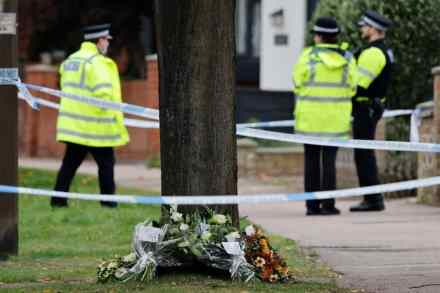
It's a stroke of good fortune for France that Salah Abdeslam is a coward. Had he not been he would have died with the other nine members of the Islamist terror cell (one of whom was his brother) when they attacked Paris on the evening of 13 November 2015. Instead of detonating his suicide vest, Abdeslam dumped it in a dustbin and then called a friend in Belgium and asked to be collected. He spent the next four months hiding in a suburb of Brussels before police tracked him down. It's rare for a potential suicide bomber to be taken alive. In most cases all we have to judge them by is a theatrical video message filmed shortly before their death. The capture of Abdeslam therefore has been a boon. The trial is now in its third week and is expected to last until May.

The case against Aukus

From our UK edition

Just weeks after the denouement of the West’s misadventure in Afghanistan, Boris Johnson is again committing Britain to a risky international venture. Aukus, the naval partnership between the United States, Australia and the United Kingdom, appears to tie Britain to an Indo-Pacific strategy that is militarily and geopolitically flawed. In December 1941, the catastrophic sinking of the then imperious new battleship HMS Prince of Wales along with the battlecruiser HMS Repulse off the coast of Malaya led to the loss of Singapore and brought the curtains down on Britain’s Asian Empire. Britain was over-stretched and unable to commit resources to the defence of the Pacific. History rarely repeats itself exactly.

The beauty of the Normandy memorial

From our UK edition

As the cross-Channel ferry noses into Ouistreham, I have a perfect view westward along the D-Day beaches. The excitement of arrival is heightened by the fact that this is the first time I have travelled to the Continent since Covid struck. Not since the age of 17 have I been absent from what the English call ‘Europe’ for so long — although of course, living in England, I have been in Europe all the time. My first objective on this trip is to see the new British Normandy Memorial at Ver-sur-Mer, the very place where my father landed with the first wave of the 6th Green Howards shortly after H-hour, 7.25 a.m., on D-Day in 1944. Located atop a high coastal bluff, the memorial commands a spectacular view of the Normandy beaches.

The foreign policy amateur

Since Joe Biden was elected in part as a salve for Donald Trump's perceived foreign policy blunders, it seems reasonable nine months in to go searching for the Biden Doctrine, to assess his initial foreign policy moves, to see what paths he has sketched out for the next three years. ...is that a tumbleweed? Well, OK, there was Afghanistan, Biden's most significant foreign policy action. Biden won election in November and took office in January. There was ample time for replanning and renegotiating anything that had been left behind by Trump, especially since Biden and his team had muddled in Afghanistan during the Obama era and knew well the mess they'd helped create. The rush for the last plane out was a fully expected unexpected event.

biden foreign policy

Biden’s big UN whopper

President Joe Biden walked into the grand UN General Assembly chamber this morning with a list of asks, an appeal for greater cooperation among the world’s great powers and a bit of controversy trailing behind him. Biden’s first UN address came at a difficult time in American diplomacy. The European Union, led by an irate France, is livid over a $60 billion US-Australian nuclear submarine deal that European leaders view as skeevy and duplicitous. And last month’s American troop exit from Afghanistan remains a sore point for contributing nations in the Nato coalition, some of which wanted more time to evacuate their own nationals. Biden, however, sidestepped all of these disputes.

un

The EU should keep out of France’s spat with Australia

From our UK edition

Ursula von der Leyen has demanded a full investigation. EU officials are considering pulling out of technology talks with the US. And negotiations over a trade deal with Australia have been put in doubt.  Over the last 24 hours, the full might of the European Union has been deployed on the side of France in the row over a cancelled submarine contract and the creation of the Australian-US-UK defence pact.  But hold on. Why exactly is the EU getting behind what is, after all, just an export order for a French arms manufacturer?

Ticking off the French was strategic genius

In December 2020, in the aftermath of the presidential election, Jake Sullivan, President-elect Joe Biden’s national security adviser, urged European officials to delay a European Union vote on a proposed economic agreement with China, called the Comprehensive Agreement on Investment. Sullivan, communicating with French and German officials, explained that the incoming Biden administration wanted to have 'early consultation' with the Europeans on China, and urged them to hold off until Biden took office to devise a common approach toward Beijing. Resisting the pressure from Biden, the European Commission announced that the agreement was concluded in principle, pending approval by the European Parliament.

french

Biden is losing Nato

From our UK edition

The forming of the Australia-UK-US (Aukus) military alliance in the Pacific shows how everything Trump can say, Biden can do. The problem is, Biden isn’t doing it very well. Biden’s administration, like Trump’s, is committed to building its Pacific alliances while sustaining Nato. Yet on Australia as in Afghanistan, the Biden team are doing exactly what they accused Trump of: unpicking the frayed bonds of Nato without a clear idea of what might replace it. The government has three tasks: to keep American workers at work, win contracts for American exports, and secure America’s interests overseas. Two cheers for Biden for getting the Trump memo on the first two points.

The real reason France was excluded from Aukus

From our UK edition

The fallout from Australia’s cancellation of its submarine contract with France and the new trilateral Indo-Pacific security pact between Australia, the US and the UK continues. France has recalled its ambassadors from Canberra and Washington (though significantly not from London) for ‘immediate consultations’; the well-worn diplomatic gesture of discontent. This is the first occasion ever in over two centuries of Franco-American friendship.  Last night in another outburst of petulance, the French embassy in Washington cancelled the gala to celebrate Franco-American friendship. The festivities were to mark the 240th anniversary of the crucial Battle of the Capes when the French navy defeated its British counterpart in defence of American independence.

Aukus is a disaster for the EU

From our UK edition

It is hard to overstate the importance of the so-called Aukus alliance between the US, the UK and Australia — and the implicit geopolitical disaster for the EU. The alliance is the culmination of multiple European failures: naivety at the highest level of the EU about US foreign policy; Brussels’s political misjudgements of Joe Biden and his China strategy; compulsive obsession with Donald Trump; and the attempt to corner Theresa May during the Brexit talks. If you treat the UK as a strategic adversary, don’t be surprised when the UK exploits the areas where it enjoys a competitive advantage. The EU has outmanoeuvred itself through lazy group-think.

Macron’s ambitions have been torpedoed by Aukus

From our UK edition

Today France is outraged. First, explicitly because Australia has broken a large contract to have a French company design their submarines and for that contract to be switched to a US-UK substitute. Secondly, sotto voce, because Emmanuel Macron’s Indo-Pacific strategy has been shaken by an Australian, American and British strategic agreement entitled Aukus, to which France has not been invited. What are the facts of the matter? In 2016 Australia signed a contract with France to buy 12 conventional French-designed diesel-electric submarines for the Australian navy. The contract worth €35 billion was badged by the French as ‘the contract of the century’. In reality, only €8 billion was to go to the 60 per cent state-owned French company Naval Group.

I rather enjoy my chemotherapy sessions

From our UK edition

With a French health card everything is free for us cancer patients, even taxis to and from the hospital. ‘This is the longest taxi ride I’ve ever taken in my life,’ I said to last week’s driver, Virginie, on the outward leg of our three-hour round trip to the hospital at Marseille. ‘Your poor French state though,’ I added. ‘Good for us taxi drivers though,’ she pointed out. She was around 50 years of age. Her summer frock revealed a powerful upper back. She wanted to talk about her four girls aged between 13 and 19. The first three had been always obedient and polite, but the youngest was a terror. She’d had more trouble with the 13-year-old than with the other three put together. It’s like being in a war, she said.

Macron is playing Eric Zemmour’s tune

From our UK edition

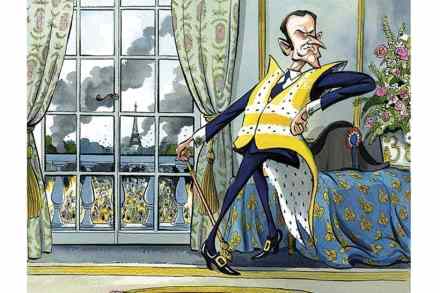
In a big speech yesterday, Macron presented himself in almost Nixonian terms as guardian of law and order. He said he would rewrite the penal code and double the number of police on the streets. But only if he’s re-elected. He further promised at least ten specific security measures and €500 million in additional spending. Ever the triangulator, he mixed hard with soft — promising also a parliamentary oversight body to clamp down on police brutality. Nobody can accuse Macron of lacking policies, though they’re mostly more show than go. His attempt to co-opt the security agenda is thus far merely rhetorical.

Hidalgo has trashed Paris. Can she do the same for France?

From our UK edition

Anne Hidalgo, the socialist mayor of Paris, whose reign has submerged the city in debt and rubbish, is the latest no-hoper to declare her candidacy for the 2022 presidential election. She’s in fifth place in the polls, although these are rarely credible at this stage and currently ignore several candidates for reasons that seem obscure. Hidalgo, the daughter of Spanish immigrants, is to run on a platform of social justice. She says she is doing so with humility, although this is not a characteristic that has so far been evident in her personality. Ruthless ambition comes closer.  It is rather obvious that Hidalgo has zero chance of finishing in the top two of the first round of voting next April.

A tale of refugees from ‘Brexit Britain’

From our UK edition

In the New Year I was introduced to a couple who had fled Britain impulsively on New Year’s Eve with just a suitcase each to escape ‘Brexit Britain’. They rented a terraced house in our quartier of the village and had us round for supper, and I also went there to watch football on the laptop. They appeared to live modestly and frugally, wore the same clothes every day, and spent their days walking ceaselessly in the blazing countryside armed with shepherd’s crooks. Had they done the right thing, we privately wondered, fleeing their native land merely to prove their allegiance to the ideal of a politically and culturally united Europe?

The West’s Islamist capitulation

From our UK edition

On Monday, Tony Blair addressed a military think tank in London and stated that the West should continue to intervene in countries under threat from Islamist extremism. According to the former PM, who led Britain as it joined the American invasions of Iraq and Afghanistan, an isolationist policy would serve no purpose because:  Islamism, both the ideology and the violence, is a first-order security threat and, unchecked, it will come to us even if centred far from us... Its defeat will come ultimately through confronting both the violence and the ideology, by a combination of hard and soft power. His declaration was along the lines of the one he made in October 2015 at the 9/11 Memorial Museum in New York City.

France’s provocateur is coming to London

From our UK edition

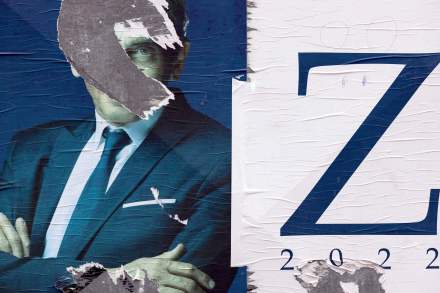
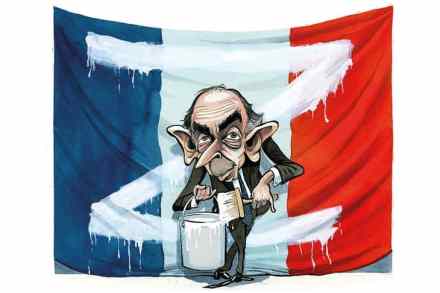
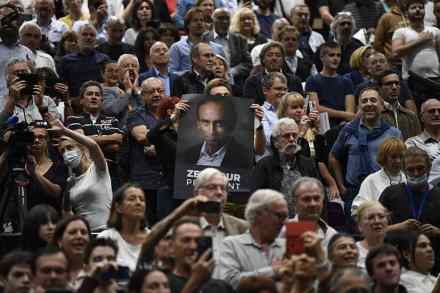
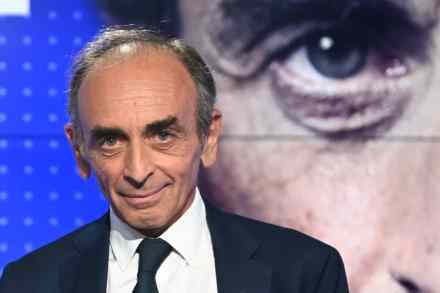
Five years ago, London’s affluent French poured their dosh into the campaign of Emmanuel Macron. This time around, supporters of France’s rising provocateur are trying a similar tactic. Eric Zemmour is the Tucker Carlson of French media. A potential rival to Marine Le Pen, he is planning a visit to London in October. His undeclared but badly concealed French presidential campaign has the backing of 'Generation Z', a shadowy group of French political consultants and fundraisers, who are looking at the monied expatriates of South Kensington and seeing potential campaign money. If Macron’s people aren’t spooked by Zemmour, they aren’t acting like it I profiled Zemmour in the magazine in March.

Was I the picture of evil incarnate?

From our UK edition

Not long after Catriona and I first met, her husband painted my head and shoulders portrait in oils as I sat next to an open window in Provence with my shirt off. The result was an astonishing and rather brilliant study of spiritual depravity. But I was too amazed and humbled to have my portrait painted in oils by a professional artist of international repute to much care about the result. Nor had I expected a photographic likeness. And at the same time I was genuinely delighted that at least I didn’t look like a bourgeois. Later the painting arrived in Devon in the post, beautifully and expensively framed, and I hung it in pride of place above the mantelpiece. But the image of a man so obviously rejoicing in evil had a universally disquieting effect on those who saw it.

Is the EU trying to hamstring the French military?

From our UK edition

Much recent discussion has focussed on the collapse of Afghanistan and the decline of the West. The humiliating American-led Western retreat from Kabul is most poignant for the signal it sends to other ‘protected’ states, present-day and future. The Chinese Communist Party’s mouthpiece, Global Times, mockingly jibed in its editorial at the history of America abandoning its allies and warning how this might be an omen for Taiwan. But the Afghan smokescreen has obscured another aspect of Western decline: a European Court of Justice ruling of 15 July enforcing the same restrictions on ‘work time’ for member states’ military personnel as for any other worker, except on clearly specified military operations.

Afghanistan could fatally undermine Macron’s election strategy

From our UK edition

To nobody’s great surprise, France’s Minister of Health, Olivier Véran, announced last week that the Covid Passport may have to be extended beyond 15 November – the initial expiry date of the government’s controversial measure, first introduced in July. I’ll hazard a guess that come April 2022 the French will still have to show their passport to enter cafes, shopping centres, sports clubs and cinemas. April, of course, is the date of the presidential election and Emmanuel Macron is banking on his response to Covid helping him to secure a second term. His belief is that the electorate, particularly the over-50s, will be reluctant to change presidents in the midst of a pandemic. Better the devil, and all that.