France

The inconvenient truth about France’s forest fires

From our UK edition

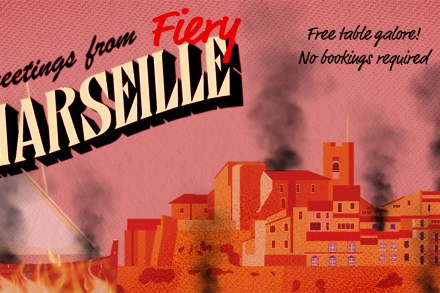
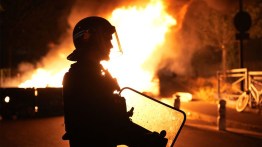
Montpellier Last month the Prime Minister of France, Elisabeth Borne, visited the south-west of the country to offer her support to firefighters tackling a series of large forest fires. It was also a good opportunity to broach a subject close to her heart. ‘More than ever,’ she warned, ‘we must continue to fight against climate change and to adapt. A new plan for adapting to climate change will be put out for consultation at the beginning of the autumn’. Borne isn’t alone in connecting the forest fires that have ravaged much of France this summer to climate change. Newspapers such as Liberation have also linked the two. Last week the paper published an article in which it referenced the United Nation’s World Meteorological Organization.

Zemmour is his own worst enemy

From our UK edition

Eric Zemmour is back. The bogeyman of French politics spent the summer licking his wounds after his far-right Reconquest party was wiped out in June’s parliamentary elections, but on Sunday he addressed several thousand supporters at a rally in the south of France. It is, hopes Zemmour, an opportunity to relaunch his political career and judging by his recent media appearances he won’t be watering down his right-wing rhetoric. Railing against immigration, environmental extremists and the sanctions on Russia, Zemmour picked up from where he left off in the spring. When it was put to him by one interviewer that he had paid the price electorally for focusing too much on immigration, Zemmour replied: ‘I was wrong electorally, but history will prove me right.

What kompromat does Trump have on Macron?

From our UK edition

Did Donald Trump have kompromat on Emmanuel Macron within the secret files seized by the FBI from his Mar-a-Lago Xanadu? One of the files is known to have been titled ‘Info re: President of France’. And Trump is known to have bragged for years that he knew details of Macron’s sex life. Well, possibly. There’s plenty of circumstantial evidence to suggest that Macron is not entirely conventional in the sexuality department, not least in his marriage to his former drama teacher, 25 years his senior.

Could Macron trigger British blackouts?

From our UK edition

‘We are living the end of an era of abundance,’ according to Emmanuel Macron, ‘the end of the abundance of products and technologies, the end of the abundance of land and materials, including water.’ It is hard to see how water has become less abundant, being the ultimate renewable resource, which evaporates before falling back to Earth as rain. Rewind a year and people in parts of Europe, you may remember, were complaining about a super-abundance of water – in the form of the Rhineland floods. But let’s leave that aside and assume that Macron’s remarks were more immediately prompted by a shortage of energy.

Europe’s new migrant crisis

From our UK edition

Earlier this month I spent a week in Sicily, driving south from Palermo to Agrigento and then east to Syracuse and Messina. It was my first visit to Sicily in 17 years and, given the media reports, I had expected to find the island crowded with migrants from Africa. In fact, I saw none, other than those I glimpsed in a fenced-off processing centre at the quayside in Agrigento, the first port of call for many migrants who arrive in Sicily. Last week the local paper in Agrigento drew on official government figures to reveal that so far in 2022, 45,664 migrants have landed on Italian territory, an increase of 40 per cent on the same period last year.

Why was Henrietta Maria, Charles I’s beautiful wife, so reviled?

From our UK edition

On 15 June 1645, as Thomas Fairfax’s soldiers picked over the scattered debris on the Naseby battlefield, they made a sensational discovery. Amid the corpses and musket balls, dismembered limbs and severed swords there nestled a carrying case of personal letters and papers. It was nothing less than the king’s private correspondence. The cache included letters between Charles I and his queen, Henrietta Maria – his always opened ‘My deare harte’ – which discussed in detail the tactics and strategies of the war. Never ones to miss a PR opportunity, the Parliamentary high command ordered that a selection should be published with a guiding commentary.

Liberté, égalité, nudité: France’s new sexual politics

From our UK edition

Montpellier France is going through a sexual civil war. After the great carnal outburst of the free-loving soixante-huitards, some have reverted to abstinence and prudishness, while others are pushing sexuality to new extremes. The crisis in French sexuality has exposed itself this summer as the clothes have come off. It’s not always a pretty sight, and not just because it isn’t true that French people don’t get fat. Major confusion on the shifting boundaries of corporal and sexual expression has grown into a peculiar conflict, exposing a national sexual neurosis.

What’s the point of the NHS if it doesn’t work?

From our UK edition

We left prepared. Bottles of water, protein snacks, phone chargers, portable Scrabble (even the teenagers can look at the internet for only so long). And we left early: our crossing was at 2 p.m., and by 9 a.m. we were already on the M25. Six-hour queues, we’d been warned. Armageddon on the M2. Somewhere around Maidstone, I got a text. P&O Ferries: ‘We regret our sailings are delayed by up to 45 minutes.’ Uh-oh. But as we descended into Dover, zero sign of trouble. We sailed through check-in. ‘So sorry there’s a bit of a delay,’ said the man in the booth. No worries, said we, pathetically grateful not to be stuck in a lorry park. On to French customs. Again, not a queue in sight.

Europe’s looming energy wars

From our UK edition

This summer marks a truce. But if, as expected, Liz Truss becomes prime minister, it is almost inevitable that tensions over the Northern Ireland protocol will resurface. Britain has been threatened with trade barriers if it tears up the protocol, with implications for import and export industries. But one possible consequence has been largely overlooked, in spite of the gathering energy crisis: the trade in gas and electricity. Imported power via undersea interconnectors is the forgotten but fast-growing element of our electricity system. In 2019, 6.1 per cent of our electricity was imported.

Dear America: moving to Europe won’t solve all your problems

“In Europe people wear breathable clothes made out of natural materials, in the USA people wear plastic.” “In Europe people sleep indoors, not in tents on the street like Los Angeles.” “Unfortunately people have a lot of reactions to gluten in the US and zero issues in Europe” “How can you avoid looking like an American tourist in France?” Scroll through your news feed and you’ll witness a lot of Americans, usually those who pride themselves on their progressive views, indiscriminately romanticizing “Europe.” In the wake of the endless Covid restrictions and after Roe v. Wade was overturned, there’s been endless social media chatter about how to move from the US to Europe.

europe

My debt to Boris Johnson

From our UK edition

Back in 1997 when I was narked on by a fellow journalist (Simon Walters, currently of the Times, then of the Express) for taking class As on the Prime Minister’s press plane, I sought to restore my reputation by giving an interview to a maverick young libertarian on the Telegraph. Boris Johnson wrote up our encounter favourably, along the classic out-of-Alexander-Pope-by-way-of-William-Rees-Mogg lines of ‘Who breaks a butterfly on a wheel?’ and ever since then I’ve found it hard to think altogether badly of him.

The hidden benefit of an electric car

From our UK edition

Hello, and welcome to episode one of What’s in My Frunk?, the first in an occasional Spectator series of news and advice for the electronic motorist. In this edition we’ll be discussing one of the unexpected benefits of owning an electric car. The space under the bonnet vacated by the engine often provides a small but usable secondary storage area. This is the ‘frunk’, a portmanteau word combining ‘front’ and the American word ‘trunk’. Now that even Land Rover Defenders have carpeted boots, your frunk is great for transporting anything wet or dirty – wellingtons, charging cables, takeaways or body parts from your last hit.

The joy of a children’s choir

From our UK edition

All afternoon I had been horizontal next to an electric fan, sometimes sleeping, sometimes awake and sometimes halfway between those two states. By six o’clock the temperature had relented from 38 degrees to a comparatively easier 27 and I heard ice cubes tinkling into a glass. Catriona called up the stairs, offering gin. I said I’d rather a pot of tea and that His Lordship would rise and come downstairs for it. So I put on my shorts, went down and joined her out on the terrace for the six o’clock shape-changer. For a pleasant change Catriona had no evening invitations or work commitments. We sat side by side sipping and looking out over the village rooftops and watched the wheeling acrobatics of the swifts and martins.

Macron’s Russian oil plan is bound to fail

From our UK edition

It will drain Vladimir Putin of funds for his war machine. It will bring down inflation. And it might even be enough to stop the global economy from tipping into recession. As President Macron put forward his wheeze for solving the energy crisis this week, he no doubt had plenty of persuasive arguments. He appears to have brought the rest of the G7 on board for his plan for a global cap on the price of oil. There is just one problem. Like most price controls, it is not going to work. Indeed. It will only make the crisis worse. Of course, everyone can see where Macron is coming from. Ever since Russia invaded Ukraine, and embargos started to be placed on its energy, the price of oil has soared. From $74 a year ago it has risen to $117 a barrel and could go a lot higher still.

In praise of a solidly, wonderfully French hotel

From our UK edition

Nothing in the beach hotel was made of plastic. It wasn’t advertised as being a plastic-free hotel, but we noticed it. Nor was there a television in the room nor air conditioning nor a ‘no smoking’ notice on the wall nor a list of hotel rules. Instead there was a wall of books in the reception area, ashtrays from the golden age of smoking, sea breezes and an air of greater liberty. When I presented myself at reception to check in, the woman didn’t want to see a credit or identity card – my Christian name was credential enough. She led us up the marble-slatted stairs, unlocked the door with an old-fashioned key, wished us a very pleasant stay, and went away again.

Don’t bet against Emmanuel Macron

From our UK edition

It’s nice to be back on the old continent again, especially after getting within a couple of hundred yards of the phoniest bunch of Hollywood East types, fakes with names such as Pelosi, Schumer, Schiff and their ilk. It meant that I flew out of the Bagel without mixed feelings for a change. America has become unrecognisable, a violent land where a Democratic Congress winks at riots and intimidations by the left, and where career criminals are seen as victims. It is a place in which one’s livelihood can end with one slip of the tongue. And they call it a free country.

Boris is falling into the Macron trap

From our UK edition

You can’t blame Boris Johnson for jetting off to Kyiv last week for another meet-and-greet session with Volodymyr Zelensky. He got a warmer reception from the Ukrainian President than he would have in Doncaster, the town he snubbed in order to grandstand on the international stage. Johnson was scheduled to have made an appearance at the conference of northern Conservatives, where organisers had hoped he would woo Red Wall voters by explaining how, two and a half years after they loaned him their vote, he intends to ‘level up’ their town. But to the consternation of many MPs, Johnson decided he had more important issues on the other side of Europe with his ‘great friend’ Zelensky.

Russia slogs through the Donbas

A brutal artillery battle: that’s what the latest phase of Russia’s war on Ukraine has become. Vladimir Putin failed in his original goal of seizing the entire country swiftly, beginning with the capital of Kyiv, and installing a puppet government. When Ukrainian resistance prevented that, Putin shifted to a smaller, more achievable objective: establishing complete control over two eastern provinces, Luhansk and Donetsk, which border Russia and are jointly known as the Donbas region. That’s where the war is being fought now, with an uncertain outcome. Victory will depend on who wins the artillery battle. Russia has more blunt firepower; Ukraine has more precise, longer-range weapons — or at least it will have them when more NATO supplies reach the frontlines.

artillery

Macron’s Plan B

From our UK edition

Emmanuel Macron is about to activate his Plan B.  If he cannot control the National Assembly, after the current round of legislative elections, he will simply bypass it,  creating a new ‘people’s assembly’ with which he might appear to consult the French. This would obviate the need to refer or defer to the elected members of the National Assembly, for which he’s never had much respect. On Sunday night’s talk shows, Macron’s team were already explaining how such a body would keep him ‘in touch’ with voters should the actual elected politicians in the actual Assemblée decline to co-operate with the president.

Macron vs the deep state

From our UK edition

French diplomats are on strike today. But will anyone notice? Not to be immodest, I am especially well qualified to comment on French diplomacy. Some time ago, between gigs in Washington DC, I was employed as a consultant by the French embassy there. The embassy is a modern building in Georgetown, conveniently near all the best restaurants, although the food at the embassy itself was both fabulous and cheaper than McDonalds. The wine list was, obviously, exceptional. I was not allowed to see deeply into the embassy’s most sensitive operations (there was a mysterious wing that seemed to be entirely occupied by spooks) but must admit that in the scientific service where I worked as an astonishingly well-paid editor, there was very little sign of stress.