France

French racism is not the problem

From our UK edition

Last week we learned that a woman in a park in Skegness was dragged into the bushes and raped by a 33-year-old male. The man had arrived in the UK illegally on a small boat just 40 days earlier. If you have open borders and no checks on who is arriving, an uptick in crime will inevitably occur Strangely, I can find little anger about this. The story was reported in a couple of papers but there were no fulminating editorials or emergency questions in the House. Jess Phillips hasn’t found room to grandstand about it. Nor have Yvette Cooper, Stella Creasy or any of those other Labour MPs who like to shake their heads in disgust as the Home Secretary explains that the British taxpayers can’t forever foot the hotel bills of illegal migrants.

Let’s flush away the idea of a return to state-owned water

From our UK edition

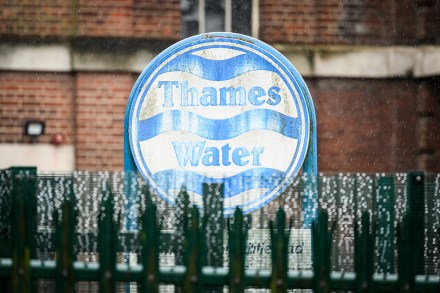
Water, water everywhere in the media this week, as the Thames Water utility – crippled by debt and shamed by Niagaras of raw sewage – reached the brink of collapse. Anticipating government intervention if Thames’s owners cannot inject sufficient new equity, pundits decried the 1989 privatisation of English and Welsh water – which passed from conventional shareholders to private equity and foreign sovereign wealth that combined to extract £72 billion of dividends while loading the industry with £60 billion of debt and allegedly denying it new reservoirs and leak-free pipes. Put like that, the fate of water – a resource so natural that some say it should be immune from all financial alchemy – is indefensible.

The French riots threaten the state’s very existence

From our UK edition

How dangerous are riots to the very existence of the French state? Most commentators avoid the question and concentrate on causes. The more whimsical attribute cause to that clichéd French historical reflex of insurrection; the sociologists to poverty and discrimination in the banlieues (suburbs); the far-left to French institutional racism and right-wing policies; conservative politicians to excess immigration, the ghettoization of France and the state’s retreat from enforcing law and order. But a growing chorus now evokes an unmentionable potential consequence: civil war. Of most concern is that those voices include groups with first-hand knowledge of the state of the country: the police, the army, domestic intelligence.

How they treat trans children across the pond

England's National Health Service made the major announcement last week that they would limit the prescription of puberty-blocking drugs for transgender children to clinical trials. A report released by the NHS on June 9 states that "there is not enough evidence to support their safety or clinical effectiveness as a routinely available treatment and that they should only be accessed as part of research." The decision is the latest consequence of a multi-year review into how the medical community in England should treat children who suffer from gender dysphoria.

LGBT activists gather outside the Stonewall Inn (Photo by Spencer Platt/Getty Images)

The beauty of rosé and roses

From our UK edition

What an idyllic setting. We were amidst the joys of high summer in England, with just enough of a breeze to save us from the heat of the sun, and the further help of a swimming pool. Water without, wine within. We were also surrounded by roses, England’s flower, luxuriating in their beauty and innocence. Experts have applauded my friends’ rose-husbandry. It seemed to this non-expert that they have not merely created a good rose garden; they have triumphed with a great one. Yet other thoughts intruded. Godparents are supposed to abjure the devil. Might Satan not sue for breach of contract? Roses makes one think of Henry VIII. I have recently been reading C.J. Sansom: so much better than Hilary Mantel. His Henry is wholly convincing as a study of corruption and evil.

The Franco-Prussian war changed the map of Europe – so why are we so ignorant about it?

From our UK edition

Is there a single major European conflict of the past 200 years that gets so little attention in this country as the Franco-Prussian War of 1870-71? In 1961 Michael Howard brought out his history of the war, but Howard and the odd battlefield tourist apart, Rachel Chrastil’s bibliography – strong on contemporary memoirs, strong in fact on everything from the miraculous appearances of the Virgin Mary and the cult of St Radegund to the transmission of smallpox – is curiously thin when it comes to British interest.

Wikipedia does more justice to this fascinating story than this film: Chevalier reviewed

From our UK edition

Chevalier is a biopic of Joseph Bologne, Chevalier de Saint-Georges, whom you’ve probably never heard of, as I hadn’t. He was an 18th-century French-African virtuoso violinist and composer who wowed everyone in his day – in 1779, John Adams, then the American ambassador to France, called him ‘the most accomplished Man in Europe’ – but was erased from history and is only lately being rediscovered. Fascinating, you would think, and he was fascinating. Even a cursory look at his Wikipedia entry is thrilling. But this is not a fascinating or thrilling film. It is handsomely mounted yet strangely bland and strikes too many false notes. I was going to say it’s as if Disney had made it but then remembered: this is Disney.

The Britishness of Bordeaux

From our UK edition

Burgundy or Bordeaux? We were discussing that unending question during dinner over the weekend. I think that there is only one answer: ‘Yes.’ ‘But which, you clot?’ ‘Either. Better still, both.’ It is so much a matter of sentiment, and of which great bottle you have been lucky enough to drink most recently. But there is an argument, which is nothing to do with quality, that Bordeaux – claret – is more British. This is as true in North Britain as in England. There are various versions of a well-known piece of doggerel. My favourite is: ‘Proud and erect the Caledonian stood / Auld was his mutton but his claret good.

Haunted by Old Russia: Rachmaninoff’s lonely final years

From our UK edition

Ask a roomful of concert pianists to pick their graveyard moment in Rachmaninoff’s Piano Concerto No. 3 (1909) and they’ll almost certainly point to five or so pages halfway through the last movement where an ant nest of piano notes infests a sparse orchestral threnody. When an elderly Vladimir Horowitz performed this passage – lank, dyed pageboy hair framing his Bela Lugosi face, hands darting over and under each other like butterflies – he looked more like a weaver at his loom than a virtuoso at his instrument. There are flickers of concentration, but the overall impression is one of extreme insouciance. ‘I am a Russian composer, and the land of my birth has influenced my temperament and outlook’ The originator of this style of playing was Sergei Rachmaninoff himself.

Does Johnny Depp have a future in Hollywood?

Since his notorious legal battle with Amber Heard, Johnny Depp has had an eclectic career, which has seen him go on tour with the musician Jeff Beck, announce his intention to direct a film about the painter Modigliani (in which he will reunite with his Donnie Brasco co-star Al Pacino, who will play the art collector Maurice Gangnat) and take on the role of Louis XV in the equally controversial actor-cum-director Maïwenn’s biopic of the king’s mistress Jeanne du Barry. The latter film, which premiered at Cannes this year, is widely regarded as Depp’s comeback after the bruising revelations in the court case — which he won, but with such damage done to his reputation that to large sectors of public opinion, he is now little more than a pariah.

After decades of waiting, China goes on the diplomatic offensive

China has been an epicenter of diplomacy over the last month and American officials can’t help but take notice of the shift. Statesmen flying to China, hat in hand, to sign business deals with Chinese firms or enlist Chinese diplomats to assist in solving international disputes gives the foreign policy graybeards ulcers. The general rule seems to be: what’s good for China is bad for the United States. There’s no question that China’s Xi Jinping has had a good few weeks. After being occupied with a nationwide Covid-19 disaster that lasted for three years, Xi, a man whose entire legacy depends on China transforming into a superpower on par with or perhaps even surpassing the US, isn’t wasting any time before injecting his country back into the diplomatic arena.

syria peace

Macron’s China controversy is a big nothingburger

French president Emmanuel Macron, the self-appointed leader of Europe, is having a not so great week. His multi-day visit to China and successive meetings with Xi Jinping were high on pomp but low on deliverables. But it was during the plane ride back to Paris, when he gabbed with journalists, that he got into trouble. Seated aboard France’s version of Air Force One, Macron presented himself as a leader with an independent streak who believes Europe can't follow the United States like docile little ducklings. His interview wasn’t remarkable, yet foreign policy commentators and politicians are hung up on his remarks about China and Taiwan.

emmanuel macron

Macron tries to be the Xi whisperer

God bless Emmanuel Macron for his perseverance and self-confidence. The French president seeks to lead Europe and turn the continent into a strong, independent player in its own right. And he is eager to take on the hard, thankless diplomatic work that few of his peers are willing to do. Whether it was his ploy in 2019 to connect then-US president Donald Trump and then-Iranian president Hassan Rouhani on the phone or his months-long, intensive personal dialogue with Russian President Vladimir Putin before the war in Ukraine, Macron invests a lot of time and capital into these gambits. Unfortunately for him, many of them fail to accomplish anything of substance. Macron wasn’t able to convince Rouhani to speak with Trump (although Trump reportedly agreed to the call).

napoleon macron tantrum diplomacy

Is Macron heading for his Margaret Thatcher moment?

From our UK edition

There was a sense of foreboding in France at the start of this week. After the anarchy of last Thursday and the extraordinary violence in western France on Saturday, where radical environmentalists fought a pitched battle with police, what would the next seven days bring?  Much of the media speculated that the 10th day of action organised by unions in protest at the government’s pension reform bill would result in the sort of scenes witnessed across France five days earlier, with city halls torched, shops sacked and police stations attacked. Jean-Luc Mélenchon, the leader of the left-wing La France Insoumise, was accused by the government on Monday of tacitly encouraging the disorder. Yesterday, he called for protestors to make their point peacefully.

Can Macron get through the day without insulting the Brits? 

From our UK edition

The editorial in today’s Le Figaro heralds the dawn of a 21st century Entente Cordiale and the newspaper carries an interview with Rishi Sunak. Speaking ahead of today’s Anglo-French summit in Paris, Sunak says he wants to ‘open a new chapter with France’.   Le Figaro pins the blame for the deterioration in relations between the two countries since the last summit in 2018 on the British, specifically Boris Johnson and his ‘anti-French populism’. The French believe that is now a thing of the past with Sunak in No. 10. This conveniently overlooks the fact that if Johnson was the bête noire of the French, Emmanuel Macron hasn’t exactly been the most diplomatic leader.

Is French still the language of love?

From our UK edition

There are so many ways to express love in French that it's easy to make faux pas. My faux pas over the five decades I've been speaking French are legend – at least in the family. Best to keep them there. Most people know that ‘Je vous aime’ means ‘I love you’ and covers one or more people. If you say ‘Je t'aime’, the informal expression of love for one person, you've got to be careful. Especially in today's world where ‘hooking up’ is more common than rabbits breeding.  We speak a lot of Franglais in our family – we're creative and lazy when it comes to language. With bilingual grandchildren it’s inevitable. A few years back, one grandson came up with ‘On y go’ for ‘Allons-y’. We all prefer his version.

France’s protestors are just getting started

From our UK edition

There was another protest in Paris on Saturday. According to the organisers, Jean-Luc Melenchon’s La France Insoumise, 150,000 turned out on a crisp winter’s afternoon to opposeEmmanuel Macron’s pension reform. The French President wants to lower the retirement age from 64 to 62. But independent analysis put the numer at the protest at 14,045. It was the latter. I was there. I’m now something of a seasoned observer of the French street protest. From Yellow Vests to Covid Passports, and from the far right to the far left, I’ve rubbed shoulder with all manner of disgruntled French citizen. Yesterday’s protest was one of the jollier.

The Christmas when Parisians ate the zoo

From our UK edition

Even if you don’t like Christmas, it’s hard to deny that Christmas dinner is one of the best meals of the year. But for Parisians in 1870, the Christmas meal took an unexpected and macabre turn. While we may think of Paris as being the city of light, good food and fine wine, it’s also the city that once produced a Christmas Day menu of stuffed donkey head, elephant consommé and roasted camel – all courtesy of the Jardin des Plantes zoo. In the late stages of the Franco-Prussian war, Paris found itself surrounded by enemy forces. The Germans aligned themselves with Prussia with a plan to bombard and starve Parisians into submission. All supplies to the city were cut off, meaning there was no meat, fresh vegetables, butter, milk or cheese to be found.

The delusion that unites Biden and Macron

Friday, and it was hard to tell whether we were witnessing a clash of civilizations or a reconvergence. After a state dinner with Joe Biden in Washington, France's president Emmanuel Macron touched down in New Orleans, that most French of American cities, where he was greeted on the tarmac by a jazz band. If you've ever wanted to see a Frenchman cut a rug, now is your chance (though it was Macron's wife Brigitte who seemed the looser of the two). From there, Macron was off to the French Quarter, where he received a personal tour from New Orleans mayor LaToya Cantrell. And really, I just hope they did it right. I hope they took him to Bourbon Street and emerged on that one block with Larry Flynt's strip club and the giant sign: "Relax. It's just sex." (Told you it was French.

The Europeans are complaining, again

All is not well in the transatlantic relationship. This might come as a surprise given that the United States and Europe have been remarkably unified on Europe’s most urgent security crisis in the post-Cold War era. Despite Russian President Vladimir Putin’s attempt to inject division into the pro-Ukraine coalition by throttling gas supplies to Europe, the West is sticking to its guns, maintaining sanctions on Moscow until either the war ends or Russian troops are forced to withdraw. This consensus, however, has masked disputes between Washington and its European allies that are becoming more difficult to manage.