France

A culinary tour of southern France and northern Spain

If I’d known what a whole monkfish looks like, I would never have ordered it. It was only weeks later that I saw a picture of the horrid creature: small, wicked eyes, prehistoric head, skin like rusty medieval armor and a gaping mouth overflowing with jagged teeth. Truly the stuff of nightmares. We’d popped over the border from France into San Sebastián, Spain, for a bite of dinner, selecting a spot a stone’s throw from the Baroque exuberance of Santa Maria del Coro. The daily special was monkfish, and for some reason — perhaps an excess of sun that day — the image that came to mind was, inaccurately, that of the innocent red mullet. The daily special in a fishing town is bound to be fresh, so it seemed fair to give it a try.

france

With Diana Henry

From our UK edition

41 min listen

Diana Henry is a critically acclaimed, multi-award winning cook, food writer and author of 12 books including the classic cookbook 'Roast Figs, Sugar Snow', which has just been updated and re-released twenty years after it was first published. Diana also writes for newspapers and magazines, and presents food programmes on TV and radio. On this podcast Diana shares childhood memories of her mother's baking, how 'Little House on the Prairie' influenced her writing and when, on a French exchange trip, she learned how to make the perfect vinaigrette. Presented by Olivia Potts. Produced by Linden Kemkaran.

How Africa fell out of love with France

From our UK edition

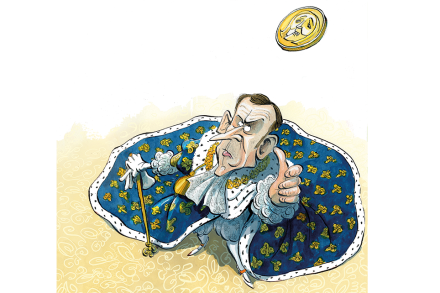
On Wednesday last week, a new Gabonese military junta installed itself, having ousted President Ali Bongo, whose family have ruled the country since 1967. Just two days earlier, the French President Emmanuel Macron gave a speech to his ambassadors in which he spoke of an ‘epidemic of putschs’ in what was formerly France’s greatest sphere of post-colonial influence. Although most of these states have been independent for decades, Paris kept them firmly in the French orbit There have now been six coups d’état in francophone sub-Saharan Africa in three years – Mali, Chad, Guinea, Burkina Faso, Niger and now the small but wealthy nation of Gabon.

Letters: The Lucy Letby killings shouldn’t mean we lose trust in all NHS managers

From our UK edition

Murder mystery Sir: I once made a diagnosis of a very rare condition too late to cure the patient. She was nevertheless grateful and thanked me, though my conceit evaporated when she asked: ‘What took you so long?’ I suspect the managers at the Countess of Chester Hospital must feel as I did (‘Hospital pass’, 26 August). Murder was not on the top of their differential diagnoses. Many senior clinicians who have had leadership roles in NHS hospitals bear the scars of conflicts with management, though perhaps not as deep as those of the Chester paediatricians.  We would nevertheless acknowledge that most managers are dedicated, conscientious professionals committed to the success of their hospitals.

The joy of French motorways

From our UK edition

The news that Heineken, the Dutch brewer, has sold its business in Russia to a local buyer for a token $1 – at a loss of €300 million, but with job guarantees for 1,800 Russian workers – raises moral issues about when and how multinationals should withdraw from pariah states. A database compiled by Yale professor and corporate responsibility campaigner Jeffrey Sonnenfeld, tracking 1,586 foreign operators in Russia since the invasion of Ukraine, counts 534 as having made a clean exit versus 219 (including BT and some smaller UK-listed companies, alongside a plethora of Chinese names) ‘digging in’ for business as usual.

Enforce the borders, stop the boats, save lives

From our UK edition

Rishi Sunak has failed in his pledge to ‘Stop the Boats’, and the £480 million deal he signed with France in March is nothing more than a gargantuan waste of money. In fact, the French have intercepted fewer migrants in the Channel this year than they did in 2022. If the Prime Minister is truly committed to stopping the boats he must look to Australia and not France for inspiration. It is ten years this summer since Australia solved its own small boat problem. It did so with determination, courage and a refusal to be cowed by howls of outrage from those who champion a borderless world.

The ‘historic’ national dishes which turn out to be artful PR exercises

From our UK edition

In 1889, Raffaele Esposito, the owner of a pizzeria on the edge of Naples’s Spanish Quarter, delivered three pizzas to Queen Margherita, including one of his own invention with tomatoes, mozzarella and basil, their colours taken together resembling the Tricolore. The Italian queen loved the pizza, and Esposito duly named it after her. In that restaurant today hangs a document from the royal household, dated 1889, declaring the pizzas made by Esposito to be found excellent by the queen. And so was born the Pizza Margherita, a dish now synonymous with Naples. The queen’s seal of approval in the wake of Italian unification, which had proved difficult for Naples, came to represent the embracing by the governing royal family of an impoverished city by way of their cheapest street food.

The weaponisation of Jane Birkin

From our UK edition

Jane Birkin, who died this week at the age of 76, appeared to be a delightful woman – attractive, adventurous and stoic. Nevertheless, I had to look twice at the Daily Mail headline on Monday which screeched 'Jane Birkin, a true style icon who put today's trashy celebs to shame'. Are they talking about the same Jane Birkin, I wonder? The one whose first film role, when still a teenager, was as a naked, nameless model ‘romping’ in a threesome with David Hemmings and Gillian Hills? I mean, talk about nice work if you can get it – but pretty ‘trashy’ if you want to fling around words like that about actual human beings, which I generally don’t.

Love in idleness: The Four Corners of the Heart, by Françoise Sagan, reviewed

From our UK edition

Do not be alarmed. You have not suffered a blow to the head. Françoise Sagan, the author of the 1954 phenomenon Bonjour Tristesse (published when she was 18; two million copies sold), is indeed no longer with us. She died in 2004, aged 69. Yet here is her brand new novel, recovered by her son Denis Westhoff from the mass – and presumably mess – of her papers. Perhaps better described as an unfinished story, there’s a romantic charm, innocence and otherworldliness to this book of a kind unlikely to be found in a contemporary novel. But it’s also an uncomfortable read in parts, no matter how ironic the text is supposed to be.

The fine art of French rioting

From our UK edition

Marseille One of the benefits of holidaying during a riot is you feel remarkably safe. Ruffians have no interest in you while they can be having fun at the expense of a much more exciting foe, the police. And besides, there are Lacoste stores to be raided: they have no time for your wallet. The other major benefit is you can get a table anywhere. We had the best seat in France last week: the first-floor balcony of La Caravelle, an old-school bar overlooking Marseille’s historic port and the perfect vantage point for taking in the fine art of French rioting. The choreography unfolded in fits and starts. The police vans snaked around the water’s edge in military formation. Out filed the riot cops, their tessellated body armour making them look like mutant woodlice.

Why Europe riots

From our UK edition

Montpellier A spectre is haunting Europe. In France, Sweden, Germany, Belgium and even Switzerland, the rule of law is being challenged by the rule of gangs. Disaffected young people cut off from society feel nothing but nihilistic contempt for it. Higher temperatures and social media are creating a heated summer. Judging from recent events in Paris and Stockholm, this year could be the worst so far. The rise of gang violence is associated with immigration. Europe has shown itself incapable or unwilling to control the influx of migrants, some of them genuine asylum seekers, others simply opportunists. Nor have European politicians succeeded in dealing with the problems created by immigration, despite spending billions on social projects.

French racism is not the problem

From our UK edition

Last week we learned that a woman in a park in Skegness was dragged into the bushes and raped by a 33-year-old male. The man had arrived in the UK illegally on a small boat just 40 days earlier. If you have open borders and no checks on who is arriving, an uptick in crime will inevitably occur Strangely, I can find little anger about this. The story was reported in a couple of papers but there were no fulminating editorials or emergency questions in the House. Jess Phillips hasn’t found room to grandstand about it. Nor have Yvette Cooper, Stella Creasy or any of those other Labour MPs who like to shake their heads in disgust as the Home Secretary explains that the British taxpayers can’t forever foot the hotel bills of illegal migrants.

Let’s flush away the idea of a return to state-owned water

From our UK edition

Water, water everywhere in the media this week, as the Thames Water utility – crippled by debt and shamed by Niagaras of raw sewage – reached the brink of collapse. Anticipating government intervention if Thames’s owners cannot inject sufficient new equity, pundits decried the 1989 privatisation of English and Welsh water – which passed from conventional shareholders to private equity and foreign sovereign wealth that combined to extract £72 billion of dividends while loading the industry with £60 billion of debt and allegedly denying it new reservoirs and leak-free pipes. Put like that, the fate of water – a resource so natural that some say it should be immune from all financial alchemy – is indefensible.

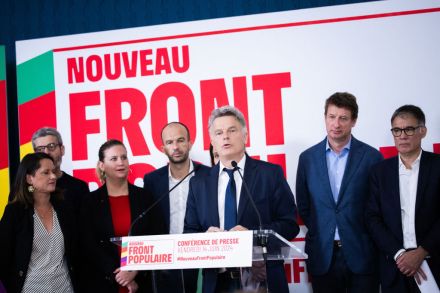
The French riots threaten the state’s very existence

From our UK edition

How dangerous are riots to the very existence of the French state? Most commentators avoid the question and concentrate on causes. The more whimsical attribute cause to that clichéd French historical reflex of insurrection; the sociologists to poverty and discrimination in the banlieues (suburbs); the far-left to French institutional racism and right-wing policies; conservative politicians to excess immigration, the ghettoization of France and the state’s retreat from enforcing law and order. But a growing chorus now evokes an unmentionable potential consequence: civil war. Of most concern is that those voices include groups with first-hand knowledge of the state of the country: the police, the army, domestic intelligence.

How they treat trans children across the pond

England's National Health Service made the major announcement last week that they would limit the prescription of puberty-blocking drugs for transgender children to clinical trials. A report released by the NHS on June 9 states that "there is not enough evidence to support their safety or clinical effectiveness as a routinely available treatment and that they should only be accessed as part of research." The decision is the latest consequence of a multi-year review into how the medical community in England should treat children who suffer from gender dysphoria.

LGBT activists gather outside the Stonewall Inn (Photo by Spencer Platt/Getty Images)

The beauty of rosé and roses

From our UK edition

What an idyllic setting. We were amidst the joys of high summer in England, with just enough of a breeze to save us from the heat of the sun, and the further help of a swimming pool. Water without, wine within. We were also surrounded by roses, England’s flower, luxuriating in their beauty and innocence. Experts have applauded my friends’ rose-husbandry. It seemed to this non-expert that they have not merely created a good rose garden; they have triumphed with a great one. Yet other thoughts intruded. Godparents are supposed to abjure the devil. Might Satan not sue for breach of contract? Roses makes one think of Henry VIII. I have recently been reading C.J. Sansom: so much better than Hilary Mantel. His Henry is wholly convincing as a study of corruption and evil.

The Franco-Prussian war changed the map of Europe – so why are we so ignorant about it?

From our UK edition

Is there a single major European conflict of the past 200 years that gets so little attention in this country as the Franco-Prussian War of 1870-71? In 1961 Michael Howard brought out his history of the war, but Howard and the odd battlefield tourist apart, Rachel Chrastil’s bibliography – strong on contemporary memoirs, strong in fact on everything from the miraculous appearances of the Virgin Mary and the cult of St Radegund to the transmission of smallpox – is curiously thin when it comes to British interest.

Wikipedia does more justice to this fascinating story than this film: Chevalier reviewed

From our UK edition

Chevalier is a biopic of Joseph Bologne, Chevalier de Saint-Georges, whom you’ve probably never heard of, as I hadn’t. He was an 18th-century French-African virtuoso violinist and composer who wowed everyone in his day – in 1779, John Adams, then the American ambassador to France, called him ‘the most accomplished Man in Europe’ – but was erased from history and is only lately being rediscovered. Fascinating, you would think, and he was fascinating. Even a cursory look at his Wikipedia entry is thrilling. But this is not a fascinating or thrilling film. It is handsomely mounted yet strangely bland and strikes too many false notes. I was going to say it’s as if Disney had made it but then remembered: this is Disney.

The Britishness of Bordeaux

From our UK edition

Burgundy or Bordeaux? We were discussing that unending question during dinner over the weekend. I think that there is only one answer: ‘Yes.’ ‘But which, you clot?’ ‘Either. Better still, both.’ It is so much a matter of sentiment, and of which great bottle you have been lucky enough to drink most recently. But there is an argument, which is nothing to do with quality, that Bordeaux – claret – is more British. This is as true in North Britain as in England. There are various versions of a well-known piece of doggerel. My favourite is: ‘Proud and erect the Caledonian stood / Auld was his mutton but his claret good.

Haunted by Old Russia: Rachmaninoff’s lonely final years

From our UK edition

Ask a roomful of concert pianists to pick their graveyard moment in Rachmaninoff’s Piano Concerto No. 3 (1909) and they’ll almost certainly point to five or so pages halfway through the last movement where an ant nest of piano notes infests a sparse orchestral threnody. When an elderly Vladimir Horowitz performed this passage – lank, dyed pageboy hair framing his Bela Lugosi face, hands darting over and under each other like butterflies – he looked more like a weaver at his loom than a virtuoso at his instrument. There are flickers of concentration, but the overall impression is one of extreme insouciance. ‘I am a Russian composer, and the land of my birth has influenced my temperament and outlook’ The originator of this style of playing was Sergei Rachmaninoff himself.