Football

The then and now of footballers’ pay

From our UK edition

I must have missed the memo when it became compulsory for major football matches to operate as a marketing opportunity for the game’s marquee players, but that was what we got at Kiev after Liverpool were outmuscled and outplayed by a flinty-eyed Real Madrid. After Ronaldo announced that his time at Madrid was in the past, then our very own Gareth Bale, he of the annoying man-bun and sublime skills, in a rather graceless piece of scene-stealing, decided to ask for a transfer. Live on TV. Well, you do the math. He is on £300,000 a week (or £600,000 depending on who you trust), but assuming someone somewhere has to come up with a lot of loot. In a timely coincidence, Bale’s remarks come just as an excellent book is published by my friend Jon Henderson.

The Spectator Podcast: Health Cheque

From our UK edition

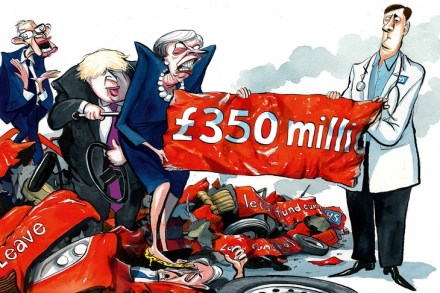
In this week’s issue, the Spectator reveals that the government is planning a significant yearly increase in the NHS’s budget. But, Lara Prendergast asks in the podcast, isn’t this the £350 million a week bus pledge? And how will the government pay for this (00:40)? We also talk about the difficulties in modern adoption with Prue Leith (15:30), and finally, we talk to Martin Tyler and Mark Palmer on whether this year’s World Cup, held in Russia, is set to be the most political ever (26:35). One of the most infamous images of the EU referendum campaign was that bus. The one which promised £350 million to the NHS each week if we were to leave. Many thought it fantasy, but is that promise now coming true?

Cowboys vs Indians

From our UK edition

Difficult to know quite what to make of The Hundred, which has the feel of being knocked up on the back of a packet of Senior Service and anyway sounds like a film about a heroic battle rather than the name of a new cricket thrash coming to a Test ground near you sometime in 2020. My only hope is that the ECB will call on the bikini girls to march round the ground signalling the change of overs. But I’m old-fashioned like that. The tournament is scheduled for the ‘school holidays’ to pack in the kids, but in my day the school holidays were when people went away, to spend rain-swept hours in the Morris Minor on the prom at Exmouth. Chennai it wasn’t. But maybe I’m old-fashioned about the hols as well.

My football lesson

From our UK edition

Every now and again my Tube ride to work on the District line is enlivened by children on a school outing. Presumably they are heading for the Science Museum or possibly the National Gallery. Often, they have different coloured badges stuck to their jumpers. As far as I can work out, if, for example, you are a red, then you’re meant to sit with other reds, and sometimes the teacher barks instructions such as: ‘Could the reds try to be a little quieter please?’, or asks: ‘Blues, how many more stops until we get there?’ This last question gives rise to a piercing shriek as a dozen or so blues shout out their answers, sometimes coinciding with the doors opening at Fulham Broadway, giving commuters just enough time to rush off in search of a child-free carriage.

Morally bankrupt sport fans will forgive any abuse

From our UK edition

The death of Zac Cox is more than a horrible industrial action but a metaphor for modern sport: the scale of its corruption and the readiness of  its fans to tolerate the intolerable as long as we are entertained. Mr Cox was 40 and working on a World Cup stadium in Qatar when a catwalk collapsed underneath him. He fell 130 ft and didn’t stand a chance. To the authorities he was a nobody, and his death was an embarrassing inconvenience. A report into the accident was completed within 11 days, but the firms building the stadium did not pass it on to his family in Britain. One of the contractors, the German firm Pfeifer, had the brass neck to tell the Guardian it was an internal document and therefore a private matter. That’s the way it rolls in the Gulf.

Arsenal’s problem? French bureaucracy

From our UK edition

It's ending in jeers for Arsène Wenger as his relationship with the club he began managing in 1996 hits rock bottom. In those twenty two years he has given Arsenal fans like me some glorious highs but many more gruesome lows. Nothing has been quite as bad as Sunday's capitulation in the final of the Carabao Cup. It wasn't just that Arsenal lost 3-0 to Manchester City, more the fact the players were indifferent to the outcome. In the aftermath Wenger did what he does best, blamed the officials and tried to have us believe his boys were robbed.

Team spirit and terrorism

From our UK edition

Alastair Campbell is a man of many parts.   Journalist, spin doctor extraordinaire, diarist and now novelist. For this, his third novel, he has teamed up with the former professional footballer Paul Fletcher to produce a very readable thriller. The division of labour seems to be that Campbell has done most of the writing while Fletcher has supplied behind-the-scenes colour. The late Martin McGuinness is among those credited with having advised. It is set in February 1974, around the general election that brought Harold Wilson back to power and also the year when the IRA’s mainland bombing campaign reached its height.

The secret of Östersund, the tiny Swedish team who beat Arsenal

From our UK edition

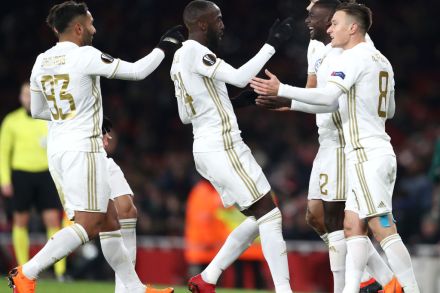
Last night, a tiny and almost penniless Swedish football club beat Arsenal 2-1 at home. The story of Östersund Football Club is quite unlike any other in sport: I wrote about it in my Daily Telegraph column a while ago when they hadn’t really featured on a British radar. This morning, with Arsene Wenger in despair at his team’s complacency, a lot of people will be wondering what happened. The answer is an inspiring one, full of lessons for politics and life in general.  Östersund is a tiny vodka-belt town in the frozen north of Sweden with a population smaller than the capacity of the Emirates stadium. It has no football tradition, or didn’t before Daniel Kindberg, a local businessman, was crazy enough to try to start a team there.

Stop trying to make football perfect

From our UK edition

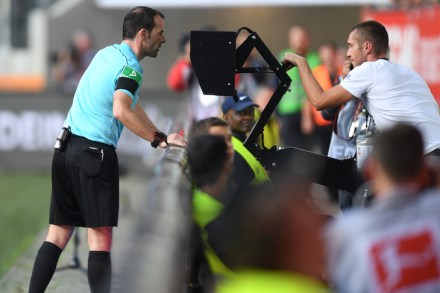
They’ve got this new thing in football. It’s called the Video Assistant Referee and it is designed to make the game, at the highest level, pristine and free from human error. This is, to my mind, a mistaken aspiration in a game that relies on human error for its excitement, especially when the England goalkeeper Joe Hart is playing. Anyway, what happens is this. When the referee isn’t sure about some crucial incident on the pitch, he summons another referee via a headset to help him. The other referee is many miles away, watching the match on the television. The ref stops the game and wanders over to have a look at a video screen by the side of the pitch.

The Spectator Podcast: The digital inquisition

From our UK edition

On this week’s episode, we examine Twitter’s mob mentality, get to the heart of PTSD, and look at how Russia is preparing for this year’s World Cup. First up: At the end of 2017 it would’ve be hard to guess that the name of everyone’s lips during the sunrise days of the new year would be Toby Young. But thanks to a government appointment and a series of ill-advised tweets, his brief stint at the Office for Students has dominated the news cycle. In the magazine this week, Lara Prendergast writes about how our digital footprints could come back to bite us, whilst Rod Liddle laments the rise of trial by twitter. To debate the issue, we were joined by spiked editor Brendan O’Neill and the Guardian’s Dawn Foster.

Political football

From our UK edition

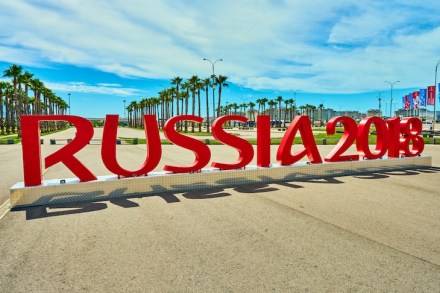
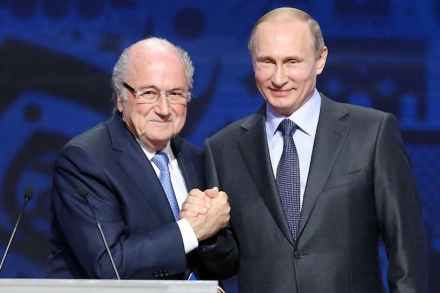
Authoritarian regimes love grand international sporting events. There’s something about the mass regimentation, the set-piece spectacle, the old-fashioned idea of nation states competing for glory that appeals to leaders who wish to show off the greatness of their country to the world. Berlin ’36, Moscow ’80, Sochi ’14 — nothing says ‘we’re here, get used to it’ better than a giant sporting jamboree. The 2018 football World Cup doesn’t offer quite the same degree of validation as an Olympic Games. But for Vladimir Putin, it’s still a major opportunity to demonstrate not only Russia’s new-found greatness but also its continued membership of the civilised world.

2018 will be the year of Russia and Putin and the World Cup | 29 December 2017

From our UK edition

Next year will be the year of Russia and Putin and the World Cup. It promises to be as smooth and successful as Putin’s Winter Olympics in 2014 (now overshadowed by Russia’s ban from the 2018 games). Lots of glittering infrastructure, well-policed fans and lavish hospitality to cover a multitude of sins. Who will win? Brazil skated through their interminable qualifying group to win by 10 points over the nearest rival, Uruguay. Does that mean the rest of South American football is poor? After all, England drew with Brazil the other day. But Brazil were playing Harlem Globetrotter football, sauntering around with 75 per cent possession. It will all be different in Russia. Southgate’s young England side can, you feel, nevertheless spring a surprise.

Women on top | 7 December 2017

From our UK edition

Boy came to me the other night in a state of dismay. ‘Dad, I just turned on Match of the Day to watch England vs Kazakhstan and guess what: they never mentioned this, but it’s the women’s game.’ What bothered him was not so much being forced to watch a slower, less athletic, duller version of real football — though obviously that too — as that the BBC was being so utterly disingenuous about it. This policy of pretending there’s absolutely no difference between men’s and women’s international sporting fixtures has, I know, been operational for some time. But for those of us living outside the PC metropolitan bubble — i.e. most of the BBC’s actual audience — it still feels insulting, hectoring and dishonest.

England are probably going to win the World Cup

From our UK edition

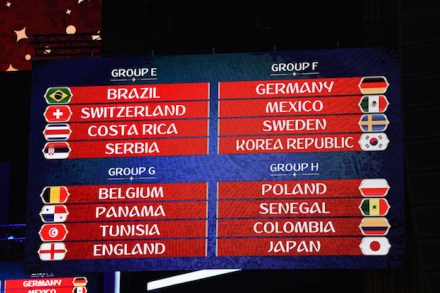
England, Belgium, Tunisia, Panama: it doesn’t make an acronym as alluring as the ‘England Algeria Slovenia Yanks’ headline The Sun ran at this stage in 2009, but English football fans will have breathed a sigh of relief after being placed in a group we might call BTEC - Belgium Tunisia England Canal folk (Panama) - because it certainly wasn’t the hardest option out there. A cautious optimism must now seep into the England set-up. Encouraging draws against Germany and Brazil proved that this generation are more dour and pragmatic than the extravagant ensemble that preceded them.

Man City’s ‘cosmic’ football isn’t matched by the rest of the Premier League

From our UK edition

What a privilege it is to watch Manchester City in the age of Pep Guardiola. I can’t recall a club side so lauded so early in the season, but the lavish praise seems justified. Could his Midas touch be young England’s best hope in Russia? Noel Gallagher, yes him, has been speaking about the ‘cosmic’ football City are playing under Pep, and who are we to argue? Guardiola seems to be getting the best out of Stones, Walker and Sterling. These three plus the Tottenham backbone of Kane, Dele Alli and Dier bringing their club form to the national team, along with the young England talent that did so well in the international age-group tournaments, could add up to a thrilling new team. But we have been here before… As for the rest of the Premier League?

Football needs more Pep talks

From our UK edition

So West Ham took the least surprising option and sent for David Moyes. Same old same old. I have a feeling that if Theresa May fell on her, or anyone else’s, sword, we’d send for David Moyes and that familiar figure would be shuffling up Downing Street with his wrinkly-eyed grin, proclaiming outside No. 10: ‘We’re in a relegation battle here.’ He wouldn’t be wrong either. Looking at West Ham’s lacklustre performances, with players sometimes putting on a bit of a reluctant jog in vague pursuit of opponents sprinting past, it’s easy to imagine them in the dressing room with a fag and some of owner David Sullivan’s old top-shelf magazines.

Turning rejects into champions – the miracle of Östersund FC

From our UK edition

In my Daily Telegraph column today, I write about the incredible story of Östersund football club. It hasn’t quite been picked up in Britain yet, but I suspect it will one day be made into a Moneyball-style film: about how a small-time English coach was hired to move to a small subarctic town in Sweden with a small budget, and assembled a team of misfits on £600-a-week. But his tactics, and his faith in his ability to get the best out of people, saw them not only win the Swedish Cup but they are now taking on the biggest clubs in Europe. So this town, the size of Inverness, a seven-hour drive north of Stockholm, where winter ends in May and starts in October, is now chartering aircraft to take fans to Spain where their club plays Athletic Bilbao on Thursday next week.

Death hovers over the scrum

From our UK edition

Rugby’s autumn internationals are almost upon us and dark thoughts hover over lovers of the sport. One day soon a professional rugby player will die playing the game. The players are fitter, bigger, stronger, faster and too powerful and it is no longer a 15-man game. It is a 23-man game: more than half the team gets replaced so the intensity and impact never subsides. Rule changes around the breakdown to encourage attack have had the opposite effect, meaning that defences line up across the pitch, no space is created and every game is 80 minutes of unsustainable collisions. Seasons go on longer, players get no rest and they keep smashing into each other.

Football focus

From our UK edition

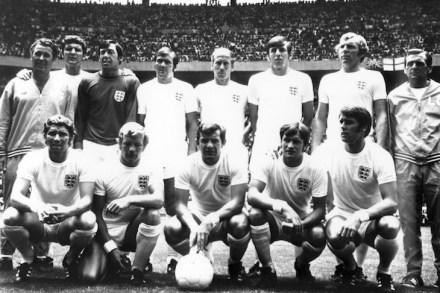
The early 1970s was football’s brute era of Passchendaele pitches and Stalingrad tactics. The gnarled ruffians of Leeds United — wee hatchet man Billy Bremner, the graceful assassin Johnny Giles, Norman ‘Bites Yer Legs’ Hunter — embodied the age. Not that you’d guess this from the badge on the club’s shirt: the letters LU were styled into a grinning emoji in goofy yellow. In 1973, the club kit (pristine white, which they had changed to a decade earlier to mimic the lordly Real Madrid) was designed by Admiral, the company that dreamed up the wallet-emptying concept of the replica shirt. Admiral went in for hectic piping and busy collars.

Why the England team is so unexciting

From our UK edition

During a riveting session at the Cheltenham Literary Festival with sporting brainboxes Mike Brearley and Matthew Syed, discussion touched on the Ringelmann effect. This is the tendency for members of a group to perform less well together than individually. Old Ringelmann observed it in tug-of-war in the early 20th century. On their own the athletes pulled a big weight. In a team they grunted, grimaced but didn’t pull so much. They were skiving; sheltering behind teammates. You can bet Ringelmann would be rubbing his hands over the state of the England football team. After a seemingly interminable World Cup qualifying campaign full of the dreariest football imaginable, England flopped across the line for Russia.