Football

The Spectator Podcast: Fat Britannia

From our UK edition

On this week’s Spectator Podcast, we discuss Britain’s obesity crisis, the upcoming German election and the England team’s footballing woes. First up, Britain’s obesity problem is worsening, says Prue Leith in her Spectator cover piece. The UK is the sixth fattest nation on earth and more than a quarter of the population is obese. Yet despite this worrying epidemic, precious little is being done. So how can we fix this crisis? Spectator Health’s Christopher Snowdon, Professor Graham MacGregor, Chairman of Action on Sugar, and Professor Francesco Rubino, from Kings College London, have some answers. In her cover piece, Prue Leith writes: Part of the UK’s problem is that we see government intervention as nannying.

Why English footballers are so useless

From our UK edition

It is late in the evening. You’re in a bar. You’ve had quite a bit to drink but you are conversing with the fragrant young lady you found hanging around in there. You find her quite attractive and are possibly keen for things to proceed. What should you say to her, to speed things along? Wayne Rooney’s contribution is unbeat-able: ‘Are those tits real?’ That’s certainly the gambit I would go with if I ever find myself in a similar situation with, say, Princess Michael of Kent or Shami Chakrabarti. Wayne said it to ‘party girl’ Laura Simpson shortly before he got charged with drink-driving. Now he’s in trouble with the police and his wife, Coleen. I don’t think Coleen is too bothered about the driving charge.

Learning? It’s a walk in the park

From our UK edition

A hot, still day in Middlesbrough in early July 1970, the junior school summer term running down like an unplugged fan. Coming up soon would be the 11-plus, although we didn’t know it then and wouldn’t know it until the morning before the exam. All we knew or cared that fragrant, baking month was that soon we’d be free for six weeks. I think the teachers felt the same way. They were dilatory and listless, indulgent of our misbehaviour, the usual insistence upon discipline melting away in the heat. Why bother? That’s what the teachers must have thought. Why cram anything more into them with the holidays coming up? That month we’d already been let loose to play football at times when we were meant to be doing other stuff.

2017: The year football went from a beautiful game to a caricature of its worst excesses

From our UK edition

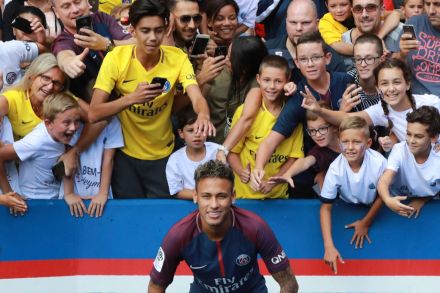
Football is theatre, that much has always been obvious; but it’s also business. And though the rules of the game haven’t changed much on-field since 16th century Etonians codified the random kicking of an inflated pigskin, off the field the game has been in constant evolution. This summer has demonstrated, once again, that football is as much about ritual performances of capitalist peacocking as it is about twenty-two men going head to head. As the transfer window creaks closed today, it is worth reflecting on an historic summer. Neymar’s £200m transfer from Barcelona to Paris Saint-Germain more than doubled the world transfer record and created a domino of wildly inflated transfers – including 20-year-old Ousmane Dembele’s £135.

What has the Premier League ever done for us? | 19 August 2017

From our UK edition

Football’s back, I’m afraid, and, in the imperishable words of David Mitchell, every kick in every game matters to someone, somewhere. Still, it’s the Premier League’s 25th anniversary, so a good time to take stock. There’s no doubt that with Sky’s help the PL has sexed up the English game and moved it once and for all from being the preserve of the working man. When I started going to matches half a century or so ago, the stadiums were awful, the food terrible, and the football not that great. A game could be intimidating; not for the fainthearted, or women, or people who weren’t white. Now that has changed out of all recognition, almost entirely for the better.

Letters | 17 August 2017

From our UK edition

The education gap Sir: It is disappointing that Toby Young (‘Parents, not schools, are key to the knowledge gap’, 5 August) conforms to the ‘Close the gap’ mentality that obsesses Ofsted and leftish thinking in state schools. Young deplores ‘the attainment gap between disadvantaged and non-disadvantaged 16-year-olds in England’. I prefer to get away from the tendentious terms ‘disadvantaged’ and ‘non-disadvantaged’ pupils and stick to the idea of high- and low-attaining pupils. Left-inclined schools have various ways of closing this gap in attainment. One is to impose limits on how abler pupils can be challenged.

What has the Premier League ever done for us?

From our UK edition

Football’s back, I’m afraid, and, in the imperishable words of David Mitchell, every kick in every game matters to someone, somewhere. Still, it’s the Premier League’s 25th anniversary, so a good time to take stock. There’s no doubt that with Sky’s help the PL has sexed up the English game and moved it once and for all from being the preserve of the working man. When I started going to matches half a century or so ago, the stadiums were awful, the food terrible, and the football not that great. A game could be intimidating; not for the fainthearted, or women, or people who weren’t white. Now that has changed out of all recognition, almost entirely for the better.

Even in the cesspit of elite football, the Neymar deal has a pungent whiff to it

From our UK edition

In a quiet season for business news, the giant cesspit that is the world of elite football can be relied upon to provide a money story with a pungent whiff to it. I refer to the transfer of the 25-year-old Brazilian known only as Neymar from Barcelona to Paris St Germain for a world-record fee close to £200 million. When Neymar was bought by Barcelona from Santos of Brazil in 2013, a £200 million break clause was inserted in his contract in the belief that no club in the world could possibly afford to buy him out. But PSG has done so even though Spanish football authorities refused to facilitate the payment, in the belief that it might breach ‘financial fair play’ rules designed to prevent clubs spending beyond their means.

Football wants the ‘somewheres’ to get lost

From our UK edition

Some years ago, when Millwall played West Ham United, the Millwall fans sang the following song (to the tune of ‘When The Saints Go Marching In’, if you want to hum along): ‘Oh east London, is like Bengal. Oh east London is like Bengal. It’s like the back streets of Delhi. Oh east -London is like Bengal.’ They haven’t sung it for two or three years, but only because Millwall haven’t played West Ham. I mean, I don’t think that Millwall’s supporters have gradually thought better of it and decided that the ditty was perhaps racist and demeaning, or are worried about the relative geography of Delhi and Bengal. If we (Millwall are my team) played West Ham tomorrow, I think we’d still sing it.

Girl power: give women’s sport the credit it deserves

From our UK edition

England won the cricket World Cup for the fourth time. Huzzah! England reached the semi-finals of the European football championship. Huzzah again! Or you can, as some have preferred, say well, it’s not really England, is it? It’s England women — and that’s not the same thing at all. Ten points for observation, eh? I remember when I first noticed. But there’s less power, less speed and it’s altogether less thrilling a spectacle than the men’s versions, they say. Anya Shrubsole, the demon fast bowler who secured the win for England by taking six wickets in the final, only bowls at 70 mph; she’d be cannon fodder in a men’s game.

In defence of Neymar’s transfer fee

From our UK edition

A season ticket at the Parc des Princes, home to Paris Saint-Germain, will set you back somewhere between £336 and £2,116, with individual tickets ranging from £25 to over £100, depending on how good your eyesight is. But this is a small price to pay in order to watch footballing luminaries like Edinson Cavani, Ángel di María and Dani Alves light up a league that has long been the sickly cousin of the European superpowers. Indeed, if you’re a PSG fan, this cost will be nothing compared to the phenomenal resurrection, started in 2011, of a European superpower that appeared to be in terminal decline.

Low life | 1 June 2017

From our UK edition

My latest bed partner is a seven-year-old lad. That first night we slept together in my double bed, I hardly got a wink. Vivid dreams made him lash out at me in his sleep with kicks and flailing arms. In the morning I opened my eyes and his clear blue eyes, three inches from mine, were studying me. ‘Did you have nightmares, Oscar?’ I said. The eyes considered. ‘Not nightmares,’ he said judiciously. ‘Dreams.’ ‘What about? You were kicking and punching me all night,’ I said. ‘I dreamt Dominic came to my school, and we didn’t do any work, we just played football all day.’ Dominic was Oscar’s best friend at his old school. Dominic is a gigantic boy and a Newcastle United supporter.

Lessons and games

From our UK edition

‘Kokkinakis banged your girlfriend. Sorry to tell you that, mate,’ the Australian tennis player Nick Kyrgios remarked to his opponent Stan Wawrinka during a match in Montreal in 2015. He was referring to Thanasi Kokkinakis, who had partnered Wawrinka’s girlfriend in mixed doubles. After Kyrgios’s remark, Wawrinka’s game went to pieces, and he soon retired from the match with a ‘back problem’. Was Kyrgios’ gambit unethical? That is the sort of problem that occupies David Papineau in this mixed bag of essays. Papineau, a philosophy professor at universities in London and New York, is obsessive even by the standards of sports obsessives.

BA’s disaster plan failed as soon as the smoke started coming out of its servers

From our UK edition

The science of ‘disaster recovery planning’, together with the related art of ‘crisis PR’, is a core discipline of 21st-century management, both in the corporate world and for agencies of the state. Business schools teach it; consultants sell it; hospitals role play it; the Cabinet Office runs a college in Yorkshire devoted to it; every company board worth its salt has a risk committee demanding bulletproof evidence of it. So a disaster on the scale of the computer breakdown that caused much distress to British Airways passengers last weekend is not just unusual: it is completely bizarre, and nothing said by BA chief executive Alex Cruz has come close to explaining it.

Metal fatigue in the golden generation

From our UK edition

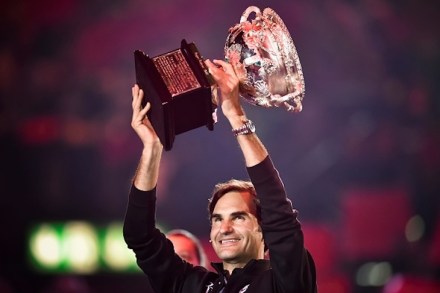
Not a bad week for Roger Federer then: first pootling along being cool and rich in a morning suit at the Philippa Middleton wedding, then being named in the world’s tennis top five again, with his increasingly elderly chums. It’s the first time all five (Murray, Djokovic, Federer, Nadal and ‘Stan the Man’ Wawrinka) have been over 30. Indeed, the only player born in the 1990s to reach a grand slam final is Milos Raonic; no spring chicken at 27. This is an astonishing time in tennis; a golden generation indeed. We have come a long way since Lleyton Hewitt beat David Nalbandian 3-0 to win Wimbledon. Nalbandian won just six games. That was in 2002; not so long ago, though it feels like a lifetime.

Letters | 18 May 2017

From our UK edition

Libyan solution Sir: Boris Johnson correctly reports glimmers of hope in Libya, but to say its problems can be solved by political will risks falling into the same trap of wishful thinking that has hobbled the international community’s intervention there (‘Libya’s best hope’, 13 May). To fix Libya, its political process must be restructured to incentivise cooperation between its various factions. One thing nearly all Libyans can agree on is that the country’s oil should flow freely, since oil revenues pay for everybody’s fuel, medicine and salaries. In recent years, oil production has been repeatedly blockaded by criminal militias and politicians alike; sometimes by the same people engaged in people-trafficking.

Why are football fans such patsies?

From our UK edition

I have been called every name under the sun by a great many people since my defence of Arsenal manager Arsène Wenger was published in the Spectator on Thursday. Naturally, most of the abuse has been online, but a little came my way on more traditional media. A caller to BBC Radio Ulster, for example, branded me 'disgusting'. My favourite insult came from Piers Morgan, whom I admire tremendously. Without any trace of irony, he dismissed me to his six million Twitter followers as an 'agent provocateur'. But perhaps, coming from him, this wasn’t really an insult. According to the vast majority of my abusers, my crime was not my support for the embattled Wenger, although it must be said not everyone agreed with my position.

Low life | 11 May 2017

From our UK edition

I was sitting between mother and daughter on the sofa, and we were having a ‘wee night’ as Glaswegians put it. Having a wee night roughly means ‘celebrating’. Yesterday the daughter finished the final exam of her English degree. On the low table in front of us were three gin and tonics, two packets of fags, a souvenir ashtray from Dracula’s castle in Transylvania, a packet of transparent French cigarette papers, a plastic syringe with hash oil rammed up one end, a disposable lighter, a portable Bluetooth speaker, and an open laptop. Mother and daughter were taking it in turns to choose music videos on YouTube.

Stand up for Arsène

From our UK edition

I had 20 good years supporting Manchester United but now I follow Arsenal, and I find the treatment of the magnificent Arsène Wenger by large sections of my fellow fans mystifying and depressing. I supported Manchester United because when Rupert Murdoch bought top-tier English football in the early 1990s and started marketing it aggressively at the middle classes — who, like me, had previously had no interest in the sport — United were the only logical choice. They played pulsating, swaggering football and often scored thrilling wins from seemingly impossible situations.

Was the Borussia Dortmund bus bombing motivated by greed?

From our UK edition

It seems the rush to blame the Borussia Dortmund bus bombing on Islamist extremists was wrong. German police have now arrested a 28 year-old man in connection with the incident; and despite initial assumptions that this assault was the work of Islamic terrorists, it appears this latest suspect has no connection with Islamic State. A week ago, it all seemed fairly straightforward: a letter had been found at the crime scene, claiming the attack had been carried out on behalf of Islamic State, and an Iraqi living in Germany had been detained by the police.