Food

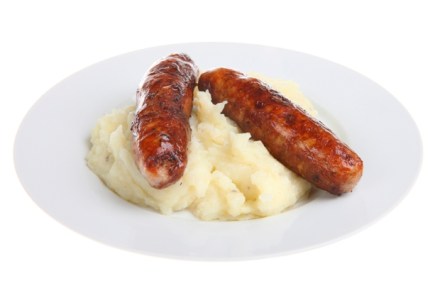
The best new cook books include recipes for Toad-in-the-hole, braised Pilot Whale and seal soup

From our UK edition

Timing is everything, and few cookbooks come at an apter moment than Mamushka (Mitchell Beazley, £25) by the excellently named Ukrainian-born Olia Hercules. It is too easy to pun on her strengths, but in these flamboyant recipes and stories, Hercules lifts up not just the cooking of her country but that of others in the former Eastern Bloc out of grey culinary oblivion. ‘Mamushka’ is an invented word, used by Hercules to describe the strong women in her life; her mother, aunts and cousins, not all Ukrainian but with roots in Bessarabia, Siberia, Armenia and Uzbekistan. All were great cooks, and Hercules says she includes very few of her own recipes. This food is as special as Hercules promises — and she writes beautifully about it, too.

The Pit of hipsterdom

From our UK edition

Penny is an all-day café in the former Pit Bar in the basement of the Old Vic, a famous and charismatic theatre on the road to south London. I love the Old Vic on its pavement peninsula on The Cut by Waterloo. Sirens screech past; after a particularly calamitous accident, you can hear them from the stalls. (Best to see a musical here; A took me to Kiss Me, Kate when we married, to show he understood me.) It feels — although this may be a lie — like theatre for The People, as they might be but almost never are. It is fierce, shabby and rigorous, although during the 1980 Peter O’Toole Macbeth the laughter carried as far as the trains chugging out to Dorking.

I went to Pedro’s Tex Mex Cantina to claim my racist sombrero

From our UK edition

Pedro’s Tex-Mex Cantina is a fantastical shack near a ring road in Norwich. It was recently asked to stop handing out sombreros at the University of East Anglia Freshers’ Fair, because anti-racist activists (henceforth known as ‘morons’) at the UEA Freshers’ Fair reckon the sombrero is racist, and gave the staff of Pedro’s Tex-Mex Cantina a lecture about ‘cultural appropriation’, which they took well; that is, they did not set fire to the UEA Freshers’ Fair, which is what I would have done. This is where we are with progressive politics, Spectator reader, although I think you knew that anyway.

The young entrepreneurs making the best of Spain’s crisis

From our UK edition

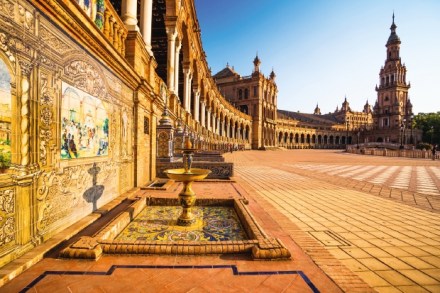
There was much talk about the anti-austerity party Podemos when we visited Andalucía in June. It was hot and sunny, and the orange trees smelt wonderful, but at the same time, youth unemployment sat at 49 per cent, second only to Greece, and that seemed to be what people wanted to chat about. Podemos, which means ‘we can’ in Spanish, does seem to have generated some hope for bright but frustrated young things, many of whom have given up hope of ever finding a professional job. In Seville, a story was doing the rounds about a low-paid receptionist job that had received 2,000 applications, although tales like this were apparently not unusual.

How hard can it be to remove all plastic from your supermarket shop? You might be surprised

From our UK edition

The UK produces 3.6 million tonnes of plastic waste every year, 1.5 million tonnes of which takes the form of packaging that passes through households like mine. So the government has taken a stand. This week, large shops became required by law to charge 5p for every single-use plastic carrier bag they give out. According to Defra, supermarkets gave out 8 billion, or 57,000 tonnes, of plastic bags in 2013. And I’m more than happy to embrace my ‘bag for life’. But how much difference will it really make, however, given the overabundance of plastic packaged products that will go inside it?

High steaks

From our UK edition

Smith & Wollensky is a restaurant from The Shining: a terrifying American steak joint by the Thames, four months old, with a £10 million refurbishment and no passing trade; it sits opposite the Georgian houses in John Adam Street, like a cow biting into a wedding cake, wondering what went wrong. It seats possibly 400 people; when I went on Sunday evening four tables were taken — one by a pointy-beard convention — and a whole floor was closed but still lit. I love this: the spectral restaurant; the restaurant from your nightmares; the restaurant at the edge of an apocalypse, boasting of butchering — and ageing — its ‘patriotic’ meat on site.

Foodies without the faff

From our UK edition

I cannot review the Gay Hussar every time the Labour party behaves like a self-harming teenager (‘I don’t want to be elected, anyway!’) so I went to Portland instead. Portland is a spectral restaurant on Great Portland Street; it is a good place to feel numb. The name is neutral, bespeaking nothing beyond a vague acknowledgement of its surroundings, which is Fitzrovia and its traffic pollution; Portland, on the whole, is so understated the critic struggles to get a grip on its mysteries, as if sliding down a glacier towards ducks.

La Baule

From our UK edition

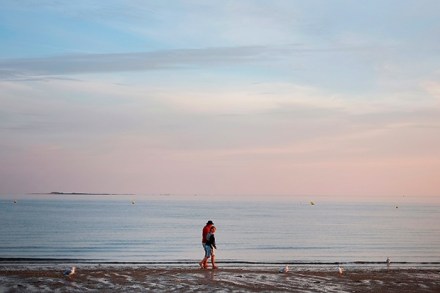
The reaction of the chap on the door at Le Bidule told me that they weren’t used to seeing English stag parties in La Baule. His eyes narrowed and a scowl spread across his face. Marching up to our sober stag, dressed for the evening in typical Gallic attire, he finger-wagged aggressively at the beret, fake moustache and string of garlic. ‘Ça, ça et ça — non,’ came straight from the de Gaulle school of diplomacy. The response to my timid ‘Pourquoi?’ left us in little doubt: if we wanted our aperitif, the outfit had to go. No, La Baule is not your typical stag destination. The 12km-long beach on Brittany’s southern coast was a place of un-realised holiday potential until the late 19th century.

Comic relief

From our UK edition

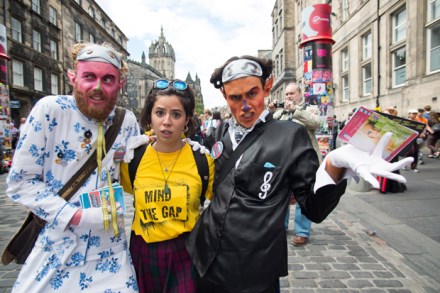
Mum’s, or to use its full title, Mum’s Great Comfort Food, is a restaurant in Edinburgh designed to soothe itinerant performance artists. For, in the fag days of August, as the Fringe dies — it will be reanimated next year by the blood of Citizen Puppet and Nicholas Parsons — assorted actors and comics and cabaret artists and mime artists and circus artists and ballet dancers and tap dancers and flute players and face painters and sketch performers and one-woman-show specialists (expiating rejection by standing in bins) and the guy who dresses up as Darth Vader are more ulcer than human being; and that is before we get to the clowns, who are in a special sub-section of desolation, even if Puddles Pity Party did get five stars.

Diary – 27 August 2015

From our UK edition

There are many good reasons for being in Edinburgh in August, when the population doubles and nobody looks twice if you walk down the street in a sequinned basque with a man dressed as a leopard on a leash. One of those reasons is a certain kind of lunch — an assortment of natives augmented by visiting actors, writers, journalists and any other good talkers who happen to be passing. And so to the elegant New Town flat of journalist Katherine O’Donnell with campaigner and memoirist Paris Lees, actor Rebecca Root, novelist and journalist Ben McPherson and human geographer Jo Sharp. The first question is, of course, ‘What have you seen that’s good?’ Because that is the only question on everyone’s lips during the festival.

The Guardian declares war on the Sunday roast

From our UK edition

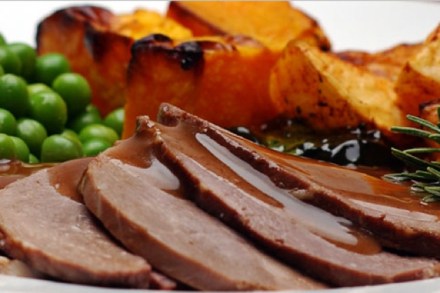
A time will come when the Guardian declares war on your favourite food. The lefty bible has so far deemed HP sauce to be the condiment of 'the establishment', tea drinkers to be on the same level as 'colonialism and the class system' and barbecues to be approaching racist. Now, the Sunday roast has had its comeuppance. In a head to head titled 'Should Sunday roast dinners still be on the menu?', Philip Hoare -- a cultural historian -- writes in the Guardian that the traditional roast is an 'oppressive outmoded practice'. He says that just the thought of a roast dinner evokes 'received memories of oppression and an enslaved work force'.

The dangerous food fad

From our UK edition

[audioplayer src="http://rss.acast.com/viewfrom22/thecleaneatingcult/media.mp3" title="Ian Marber, Isabel Hardman and Lara Prendergast discuss the cult of clean eating" startat=40] Listen [/audioplayer]The supermarket aisle has become a confusing place. It used to be full of recognisable items like cheese and butter; now you find yourself bamboozled by all manner of odd alternatives such as ‘raw’ hummus, wheat-free bread and murky juices. You have to stay pretty alert to make sure you pick up a pint of proper milk, rather than a soy-based alternative or one free from lactose. Supermarkets have become shrines to ‘clean eating’, a faith that promises happiness, healthiness and energy. Food is to be worshipped — and feared.

Our holiday in a French Butlins

From our UK edition

I’m currently at a French campsite in the Languedoc, having been persuaded by my wife that it would be a good place to spend our summer holiday. She described the campsite as ‘a French Butlins’, which she knew would appeal to me. If I can’t afford to stay at the Hotel du Cap, which I can’t, I’d prefer to be at the bottom of the social pyramid rather than somewhere in the middle. But her main argument was that it would be incredibly cheap —cheaper, even, than renting a house in Cornwall. We’re paying about £100 a day for a ‘chalet’ that sleeps six. There was simply no way we could be disappointed. Well, yes and no. I’ll start with the positive. The staff are remarkably well-mannered.

Jamie in chains

From our UK edition

Jamie’s Italian is squeezed into the Devonshire Arms on Denman Street, Soho, borne on the duplicitous winds of TV shows and book deals. It’s an odd fit, like a Flump meeting Dante. The Devonshire was a pub at the end of the world, a Victorian dystopia made of violence and despair. Now Jamie Oliver — an aghast teenager running to fat even as he declares war on the Turkey Twizzler and the civilisation that wrought it — has sucked it into his empire of Jamie’s Italians (there are 41, from Aberdeen to Gatwick), installed a roof terrace and written ‘Established 2014’ over the door. At first glance, Jamie has done nothing to the Devonshire Arms. It is still a grim London pub, now struck down with a late-term identity crisis.

In search of the platonic gazpacho

From our UK edition

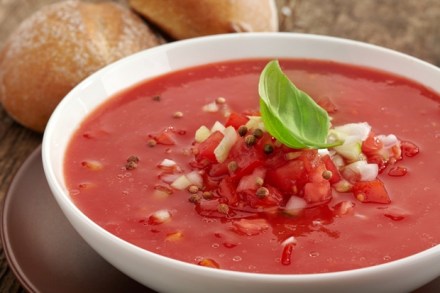
We were eating tapas and talking about Spain. Leaving caviar on one side, when jamón ibérico is at its best, there is nothing better to eat. In the Hispania restaurant, it is always at its best. Nothing could match it, although Hispania’s cured leg of beef, the anchovies, the black pudding and the blood pudding all gave their uttermost. But there was one marginal disappointment. Gazpacho is one of the world’s great dishes, and like several others — haggis is the obvious comparison — it began as a food for the poor, only using cheap and readily available ingredients. Early recipes call for only stale bread, water, olive oil — and garlic. Most modern gazpachos would include tomato, peppers and onion, but the garlic is essential.

Diary – 6 August 2015

From our UK edition

My Cambodian daughter and her husband have just got married again. Wedding One was a Buddhist affair in our drawing room, complete with monks, temple dancer, gold umbrellas, brass gongs, three changes of costume and a lot of delicious Cambodian food. That was family only, so this time she had the works: the full meringue, 200 guests, village church (she sees no conflict between Buddhism and Christianity), marquee, fireworks. Time was when wedding guests were the parents’ chums and the bride and groom went off as soon as the cake was cut and the bouquet thrown. Now the parents’ friends don’t get a look in. Not on day two either, when the couple’s friends return for the hangover party. So on day three we had local oldies’ day.

Something fishy

From our UK edition

Selfridges is skilled at making things that are not hideous (women) look hideous (women dressed as Bungle from Rainbow or a tree, after shopping at Selfridges). So I was not surprised to discover that it has summoned a ‘pop-up’ restaurant to its roof. It is called Vintage Salt and it is based on a Cornish fishing village. Not a real one, such as Newlyn, but a fake one, such as Padstow, which is based on Selfridges anyway. Selfridges shoppers do not want reality but a half-remembered contortion of something they read in Vogue while having their hair dyed banana yellow in St John’s Wood High Street in the company of a chihuahua smarter than they are. The portal is an express lift in Fragrance.

Oporto

From our UK edition

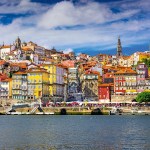
‘When he’s away, the thing he misses about Porto is the tripe.’ I was talking to Eduarda Sandeman, wife of George Sandeman, chairman of the eponymous port firm. Despite his illustrious name, George Sandeman isn’t from Oporto (as the British call it). His family are from Jerez and he was educated in England. He speaks English and Spanish fluently but he told me that he is still teased by his wife for his imperfect Portuguese. It’s a hard language to pronounce — a bit like Spanish spoken by a Russian. George’s love of tripe, though, marks him out as a true son of Oporto. The inhabitants of the city are known as Tripeiros — tripe eaters. This name dates back to 1415, when the Portuguese army were trying to take Ceuta in Morocco.

Trattoria tour

From our UK edition

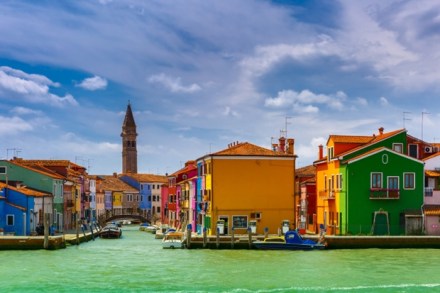
The Gatto Nero — or ‘Black Cat’ — is in Burano, a tiny island in the Venetian lagoon. It is close to ‘haunted’ Torcello, with its ancient campanile and its branch of the Cipriani restaurant. (The only equivalent thing I can imagine is a branch of Soho House at Dracula’s castle, or possibly Chernobyl.) I like the name Black Cat; it reminds me of the Blue Parrot in Casablanca. I like that you must leave San Marco, with its tat and wonders combining queasily, to get here; I like the brightly coloured houses like Bratz dolls fighting; it looks, to me, like Notting Hill with fish, lace and a soul. I like that the Black Cat has a black cat; or at least it used to. I do not see it today. Perhaps it left suddenly, or died?

Chelsea carnivores

From our UK edition

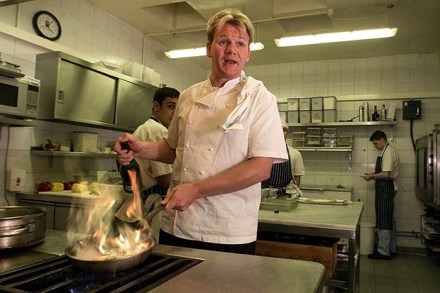
The Maze Grill is on a sinister street in Chelsea, between a small Tesco — a boutique Tesco? — and a shop selling ugly sculptures of cats. The Chelsea Physic Garden, with its poisoned plants and amazingly posh Sunday walkers, is nearby. I cannot walk in the Physic Garden without hearing the howls of property developers from the skies, longing to destroy it, because what is it for, this garden and its small carnivorous plants, these tiny, dangerous Chelsea-ites? The Maze Grill is the fifth restaurant of that brand from Gordon Ramsay, who operates 25 restaurants globally from Las Vegas to Raqqa, alongside his more important sideline of shouting at people as they chop fish on television.